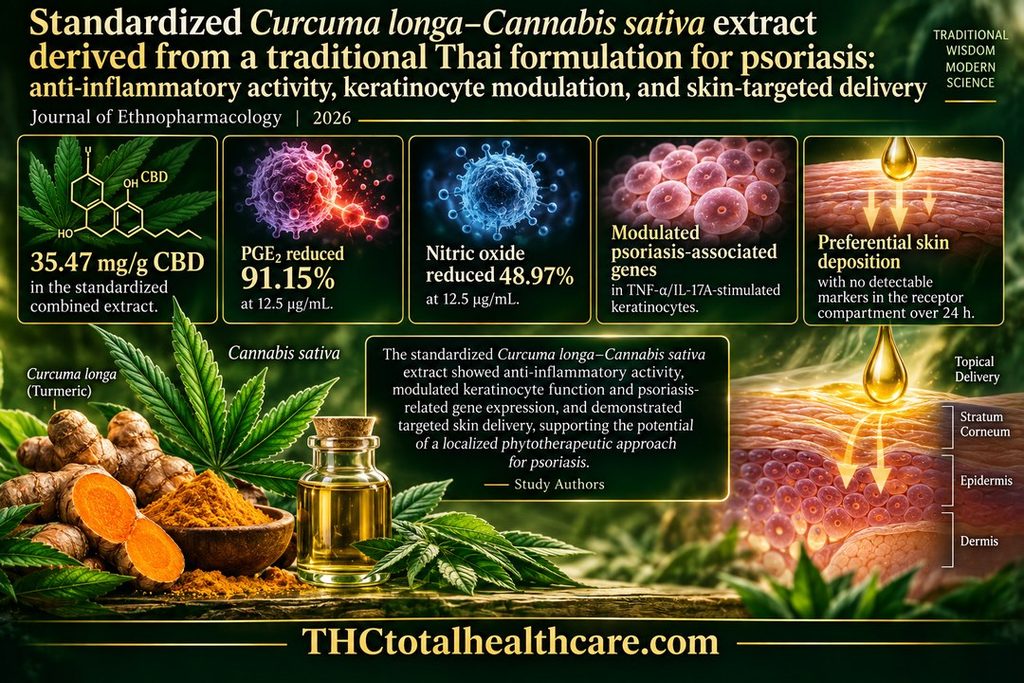
Standardized Curcuma longa-Cannabis sativa extract derived from a traditional Thai formulation for psoriasis: anti-inflammatory activity, keratinocyte modulation, and skin-targeted delivery

A new study tested a standardized combination of Curcuma longa (turmeric) and Cannabis sativa derived from a traditional Thai topical formulation for psoriasis. The combined extract contained curcuminoids, ar-turmerone and cannabidiol, including 35.47 mg/g CBD, and was evaluated for anti-inflammatory activity, effects on psoriasis-related keratinocytes and its ability to remain concentrated in the skin.

At 12.5 µg/mL, the combined extract reduced nitric oxide production by 48.97% and PGE₂ production by 91.15%. It also altered psoriasis-associated gene expression in TNF-α/IL-17A-stimulated keratinocytes, showing activity against several biological processes involved in psoriasis.

The skin-delivery experiments found strong deposition of the extract’s markers in the skin, with none detected in the receptor compartment during the 24-hour test. The authors concluded that the standardized turmeric–cannabis combination showed anti-inflammatory, psoriasis-relevant and skin-targeted activity supporting further development as a localized phytotherapeutic approach for psoriasis.

“Ethnopharmacological relevance: Curcuma longa rhizomes and Cannabis sativa leaves are traditionally combined in Thai topical remedies using cottonseed oil. However, the pharmacological basis and dermal delivery of this combination remain unclear.

Aim of the study: This study evaluated a standardized Thai CL-CS combined extract (CLCS) by integrating phytochemical characterization, psoriasis-relevant biological activities, and ex vivo skin deposition and permeation, with comparison to the single extracts.

Materials and methods: CLCS was standardized by validated HPLC using curcuminoids, ar-turmerone, and cannabidiol as markers. Anti-inflammatory activity was evaluated in RAW264.7 macrophages, while psoriasis-relevant activity was assessed in TNF-α/IL-17A-stimulated HaCaT keratinocytes. Skin deposition and permeation were evaluated using porcine ear skin and Franz diffusion cells.

Results: CLCS contained bisdemethoxycurcumin (18.79 ± 1.54 mg/g), demethoxycurcumin (12.89 ± 1.02 mg/g), curcumin (22.12 ± 1.62 mg/g), ar-turmerone (75.35 ± 3.94 mg/g), and cannabidiol (35.47 ± 2.39 mg/g). IC50 values were 41.22 ± 1.70 and 22.91 ± 0.51 μg/mL in HaCaT and RAW264.7 cells, respectively. At 12.5 μg/mL, CLCS inhibited NO and PGE2 production by 48.97 ± 0.88% and 91.15 ± 3.66%, respectively, and modulated psoriasis-associated genes. Cottonseed oil containing 20% DG achieved the highest skin deposition of BCM, DCM, and CM, with no detectable markers in the receptor compartment over 24 h.

Conclusions: Standardized CLCS exhibited anti-inflammatory and psoriasis-relevant activities and preferential skin deposition, supporting its potential as a localized phytotherapeutic approach for psoriasis.”

https://pubmed.ncbi.nlm.nih.gov/42772617

“The present study provides an integrated chemical, biological, and skin-targeted delivery evaluation of a standardized CLCS co-extract derived from a traditional Thai topical formulation. The extract was successfully standardized by its characteristic bioactive constituents derived from both botanical components. CLCS demonstrated anti-inflammatory and psoriasis-relevant biological activities”

https://www.sciencedirect.com/science/article/abs/pii/S0378874126012833?via%3Dihub
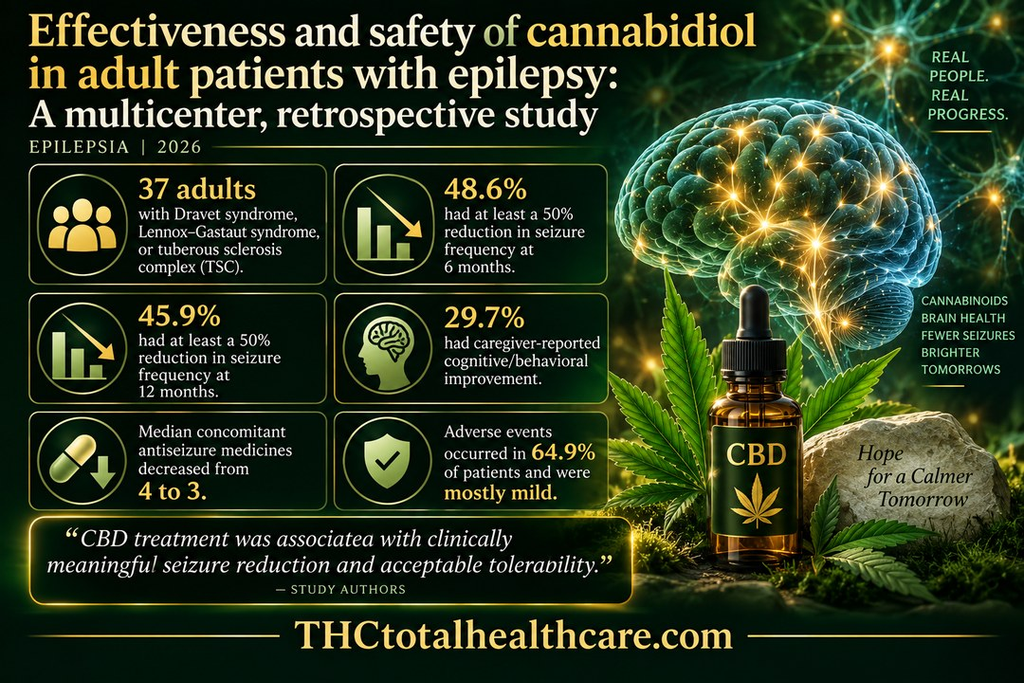
Effectiveness and safety of cannabidiol in adult patients with epilepsy: A multicenter, retrospective study

A new multicenter study found that cannabidiol was associated with substantial seizure reductions in adults living with severe, drug-resistant forms of epilepsy. The study followed 37 adults with Dravet syndrome, Lennox–Gastaut syndrome, or tuberous sclerosis complex who received CBD for at least 12 months.

After six months, 48.6% of patients had at least a 50% reduction in seizure frequency; after 12 months, 45.9% still met that threshold. Caregivers also reported improvements in alertness, behavior, interaction, or daily functioning in 29.7% of patients, while the median number of other antiseizure medications fell from four to three.

The authors concluded that CBD was associated with “clinically meaningful seizure reduction and acceptable tolerability” in this real-world adult population. Adverse events occurred in 64.9% of patients but were mostly mild, and 81.1% remained on CBD at 12 months.

“Objective: Cannabidiol (CBD) has demonstrated promising effectiveness and tolerability as adjunctive treatment in patients with severe childhood epilepsies. This study investigated the effectiveness and tolerability of CBD in adults with a history of Dravet syndrome (DS), Lennox-Gastaut syndrome (LGS), or tuberous sclerosis complex (TSC).

Methods: This was a multicenter, retrospective, observational study in adults with diagnosis of DS, LGS or TSC who received at least 12 months of CBD treatment. Medical records were reviewed and baseline characteristics, treatment retention, seizure frequency, cognitive behavioral improvements, concomitant ASM usage, and adverse events were assessed.

Results: Thirty-seven patients (median age 25 years; 67.5% male) with diagnosis of DS, LGS or TSC received CBD for at least 12 months. The CBD median maintenance dose was 10.45 mg/kg/day (IQR 7.455 – 13.975) (median maximum dose 11 mg/kg/day); median follow-up time was 28 months (IQR 22.75-58.25). Seizure frequency was reduced by ≥50% in 48.6% of patients at 6 months and 45.9% at 12 months. No statistically significant differences in median maintenance dose were observed across seizure reduction categories. During CBD treatment, caregivers reported subjective improvements in cognition in 29.7% of patients. Treatment with CBD was significantly associated with a reduction in the median number of concomitant ASMs at the end of follow-up (4 [3, 4]) vs. 3 [3, 4] (p = 0.022). AEs occurred in 64.9% of patients and were mostly mild; 16.2% had AEs leading to treatment discontinuation.

Significance: We present a series of adult patients treated with CBD according to label. The results are similar to those described in children. CBD treatment was associated with clinically meaningful seizure reduction and acceptable tolerability in this real-world cohort of adults with drug-resistant developmental and epileptic encephalopathies. These findings support the potential role of CBD in complex adult DEE populations while highlighting the need for prospective controlled studies to better define its independent treatment effect.

Plain language summary: This study looked at the long-term use of cannabidiol (CBD) in 37 adults with Dravet syndrome, Lennox-Gastaut syndrome, or tuberous sclerosis complex. After 12 months, almost half of the patients had at least a 50% reduction in seizures. Some caregivers also reported improvements in cognition and behavior. Patients were able to reduce the number of other antiseizure medicines they were taking. Side effects were common but mostly mild, although a small number of patients stopped treatment because of them. Overall, CBD appeared effective and reasonably well tolerated, but further controlled studies are needed.”

https://pubmed.ncbi.nlm.nih.gov/42765195

“CBD has demonstrated promising effectiveness and tolerability in adult patients with a history of DS, LGS, or TSC. Treatment with CBD was associated with reductions in seizure frequency and in concomitant ASMs, which could improve treatment retention and reduce AEs. The findings support a growing body of evidence highlighting the efficacy of CBD across age groups and epilepsy etiologies in real-world clinical practice.”

https://onlinelibrary.wiley.com/doi/10.1002/epi4.70331

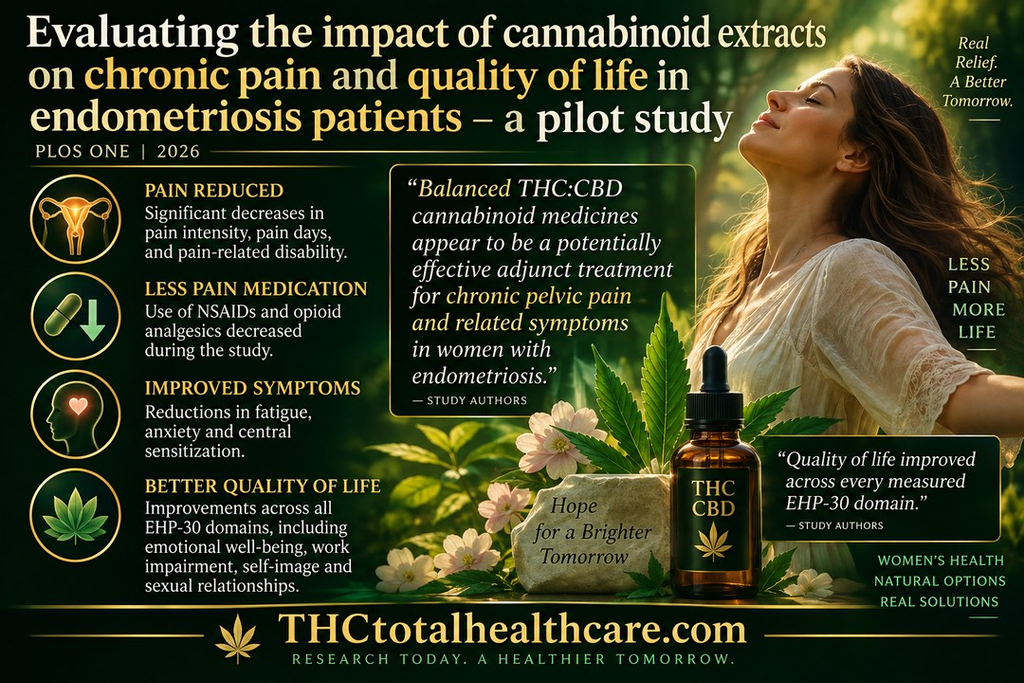
Evaluating the impact of cannabinoid extracts on chronic pain and quality of life in endometriosis patients – a pilot study

Women with endometriosis and chronic pelvic pain experienced significant improvements after adding a balanced oral THC cannabis extract to their existing treatment. In this prospective pilot study, 27 women completed three months of treatment, with benefits appearing within the first month and continuing through the study period.

Pain intensity fell significantly, along with the number of pain days and the need for conventional pain medicines. Use of both NSAIDs and opioid analgesics decreased, while fatigue, anxiety, central sensitization and pain-related disability also improved.

Quality of life improved across every measured EHP-30 domain, including pain, emotional well-being, work impairment, self-image and sexual relationships. The authors concluded that balanced THC cannabinoid medicines appear to be a potentially effective adjunct treatment for chronic pelvic pain and related symptoms in women with endometriosis.

“Endometriosis is a chronic gynecological disorder characterized by persistent pain and impaired quality of life, with limited effective treatment options. Emerging evidence indicates that cannabinoids may provide analgesic and symptom-relieving effects in chronic pain conditions.

This prospective single-center cohort study investigated the effects of standardized oral cannabis extracts (cannabinoid-based medicinal products, CBMPs) on pain and quality of life in women with endometriosis.

Thirty premenopausal women aged 18-45 years with confirmed endometriosis and chronic pelvic pain were enrolled; 27 completed the 3-month treatment period. Participants received oral CBMPs containing a balanced THC: CBD ratio. Pain intensity, frequency of pain episodes, analgesic use, fatigue, anxiety, central sensitization, disability, and quality of life were assessed using validated questionnaires (VAS, EHP-30, PDI, CFS, GAD-7, CSI).

Significant improvements were observed after one month of treatment, with continued benefit over three months. Pain intensity decreased markedly (p = 0.0004), accompanied by reductions in the number of pain days and analgesic use, including both NSAIDs (e.g., ibuprofen, diclofenac) and opioid analgesics (e.g., tramadol, tilidin, oxycodone) (p < 0.001). Fatigue (p = 0.0013), anxiety (p < 0.0001), central sensitization (p < 0.0001), disability (p < 0.0001), and overall quality of life (EHP-30) improved significantly.

Treatment was well tolerated; side effects were predominantly mild (severity score 1 on a 0-3 scale) and transient, occurring mainly during the titration phase and declining thereafter. Although limited by its single-center design, lack of placebo control, and short follow-up, this study provides preliminary evidence that oral CBMPs may represent a safe and effective adjunct therapy for managing pain and related symptoms in women with endometriosis. Larger randomized controlled trials are warranted to confirm these findings and establish optimal dosing strategies.”

https://pubmed.ncbi.nlm.nih.gov/42771648

“In conclusion, oral CBMPs with balanced THC: CBD ratios seem to be a safe and potentially effective adjunct therapy for chronic pelvic pain and related symptoms in women with endometriosis. By targeting both nociceptive and neuropsychological aspects of the condition, CBMPs can supplement existing pharmacological and lifestyle strategies, providing a more comprehensive approach to symptom management. These findings establish a basis for future controlled studies to refine dosing, investigate mechanisms, and assess long-term outcomes in this complex patient group.”

https://journals.plos.org/plosone/article?id=10.1371/journal.pone.0356768

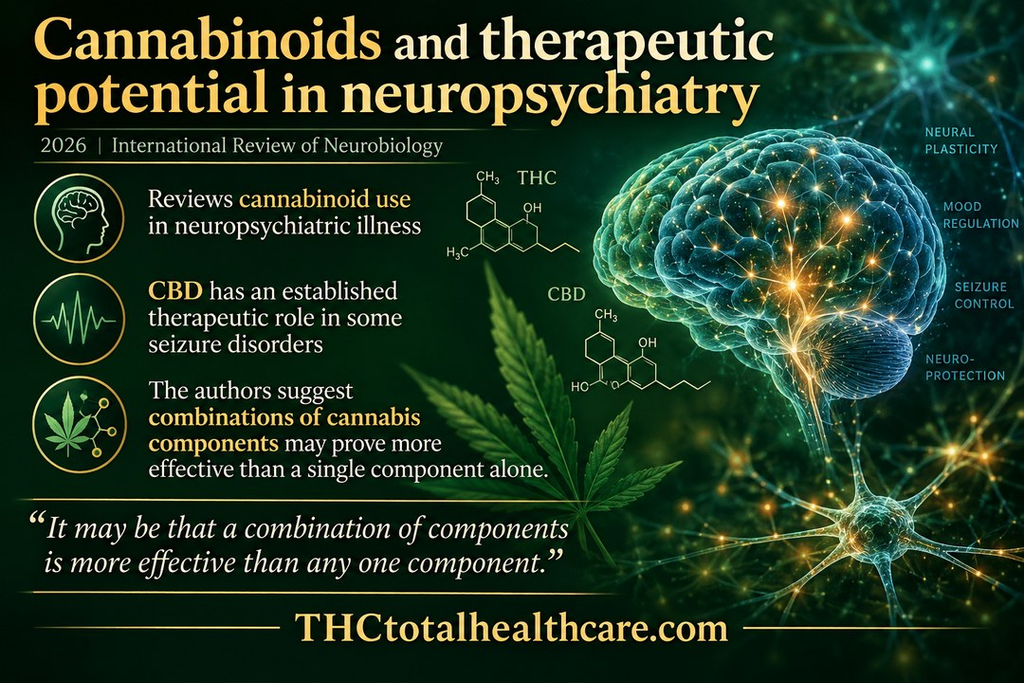
Cannabinoids and therapeutic potential in neuropsychiatry

Cannabinoids are already used therapeutically in several areas of medicine, and a new review examines how that potential may extend into neuropsychiatry. The authors look beyond cannabis as a single drug, focusing instead on its individual cannabinoids and how different components may contribute to neurological and psychiatric effects.

The review highlights cannabidiol as the cannabinoid with the clearest established role in certain seizure disorders, while examining the broader literature on cannabinoids in neuropsychiatric illness. The authors argue that cannabis is more pharmacologically complicated than any one cannabinoid and that its therapeutic potential may depend on interactions among multiple plant components.

One of the review’s most important points is that combinations of cannabis components may ultimately prove more useful than isolated compounds alone. Rather than dismissing cannabis as having no medical utility in neuropsychiatry, the authors call for approaches that better investigate and use the therapeutic attributes of the plant.

“Cannabinoids have therapeutic utility in some specific areas of medicine, including as an anti-nausea adjunct for chemotherapy and as an anti-inflammatory agent, among others. However, as a therapeutic agent in neuropsychiatric conditions, the data is more limited. Cannabis itself is viewed as a recreational drug of abuse with no medical utility; however, the reality may be more complex when considering individual components of the plant.

Cannabinoid components may have some benefit as therapeutic agents in neuropsychiatry, with cannabidiol most often purported to be a therapeutic agent for some seizure disorders. However, recent studies suggest that the cannabis plant is proving to be broader and more complicated in how it delivers potential therapeutic effects. It may be that a combination of components is more effective than any one component.

This chapter reviews the medical usage of cannabinoids in neuropsychiatric illness, as reported in the literature, and proposes future approaches that may more effectively avail the attributes of this plant.”

https://pubmed.ncbi.nlm.nih.gov/42767714

“Cannabinoid treatments are carving a noteworthy niche in the pharmaceutical repertoire, offering new hope for conditions that have been historically difficult to manage, such as comorbid anxiety and epilepsy.”

https://www.sciencedirect.com/science/chapter/bookseries/abs/pii/S0074774226001303?via%3Dihub

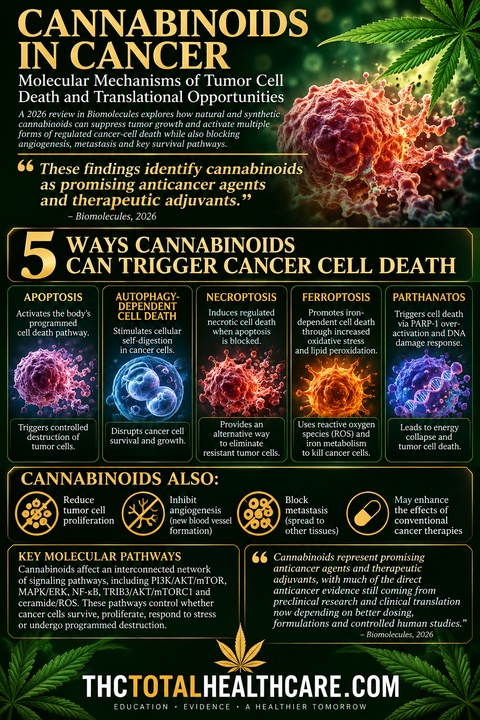
Cannabinoids in Cancer: Molecular Mechanisms of Tumor Cell Death and Translational Opportunities

Cannabinoids can attack cancer cells through far more than a single mechanism. This 2026 review describes how natural and synthetic cannabinoids can suppress tumor-cell growth, angiogenesis and metastasis while activating multiple forms of regulated cancer-cell death, including apoptosis, autophagy-dependent cell death, necroptosis, ferroptosis and parthanatos.

The researchers detail an interconnected network of molecular pathways affected by cannabinoids, including PI3K/AKT/mTOR, MAPK/ERK, NF-κB, TRIB3/AKT/mTORC1 and ceramide/ROS signaling. These pathways control whether cancer cells survive, proliferate, respond to stress or undergo programmed destruction, giving cannabinoids multiple potential points of attack against malignant cells.

The review also finds that cannabinoids may enhance conventional anticancer treatments by engaging complementary cell-death pathways. The authors conclude that cannabinoids represent promising anticancer agents and therapeutic adjuvants, with much of the direct anticancer evidence still coming from preclinical research and clinical translation now depending on better dosing, formulations and controlled human studies.

“Cannabinoids are terpenophenolic compounds derived from Cannabis sativa L. that exert a broad range of biological and pharmacological activities. Increasing evidence highlights their potential as modulators of cancer progression specifically through the suppression of tumor cell growth, angiogenesis, and metastasis across multiple tumor models.

This review provides a comprehensive overview of the molecular mechanisms by which natural and synthetic cannabinoids induce regulated cancer cell death.

Current evidence demonstrates that cannabinoids regulate multiple forms of cancer cell death, including apoptosis, autophagy-dependent cell death, necroptosis, ferroptosis, and parthanatos. These effects are mediated through complex and interconnected signaling pathways such as TRIB3/AKT/mTORC1, PI3K/AKT/mTOR, MAPK/ERK, NF-κB, ERK/JNK/p38-MAPK, and ceramide/Raf1/ERK/ROS.

In addition to their direct antitumor effects, cannabinoids can enhance the efficacy of conventional anticancer therapies through the coordinated regulation of complementary cell death pathways. They also provide clinically relevant supportive benefits in palliative care, alleviating chemotherapy-induced nausea, cachexia, and mood or sleep disturbances.

Collectively, these findings identify cannabinoids as promising anticancer agents and therapeutic adjuvants, predominantly in the preclinical setting. However, significant challenges remain regarding their safety, optimal dosing, formulation, and clinical efficacy. Further mechanistic studies, rigorous preclinical research, and well-designed clinical trials are required to establish the translation of cannabinoid-based therapies into precision oncology.”

https://pubmed.ncbi.nlm.nih.gov/42793092

“The cannabis plant, a member of the Cannabaceae family, has been traditionally utilized for centuries for spiritual and remedial healing.”

“The anticancer activity of cannabinoids was discovered in 1975 by Munson et al.. Cannabinoids suppress cancer cell proliferation, angiogenesis, tumor invasion, metastasis, and stemness while inducing different modes of cell death pathways.”

“In summary, this review highlights the growing body of evidence supporting the ability of cannabinoids to induce multiple forms of cell death across a broad spectrum of cancer types. Through the modulation of diverse molecular and signaling pathways, cannabinoids have emerged as promising anticancer agents, mostly in preclinical models, with the potential to target tumor growth, survival, and progression, ultimately triggering diverse cell death mechanisms.”

https://www.mdpi.com/2218-273X/16/9/1260

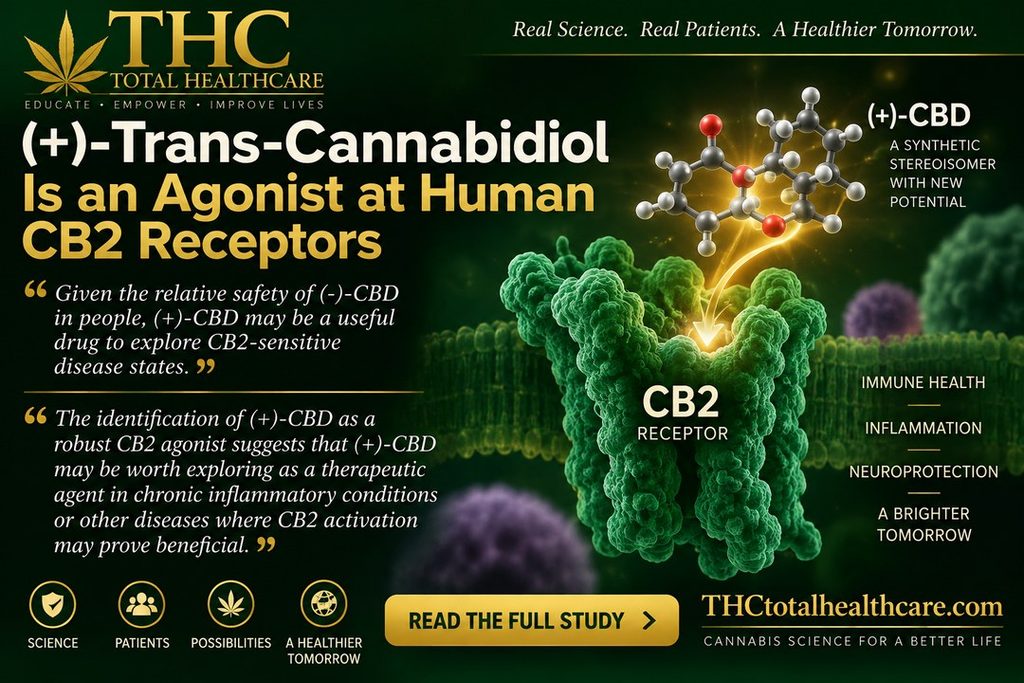
(+)-Trans-Cannabidiol Is an Agonist at Human CB2 Receptors

A new 2026 study reports that (+)-trans-cannabidiol [(+)-CBD] acts as an agonist at human CB2 cannabinoid receptors, activating a major receptor of the endocannabinoid system involved in immune and inflammatory signaling.

Researchers found that (+)-CBD produced a strong, concentration-dependent CB2 response, reaching roughly 90% of the maximum effect produced by the reference cannabinoid agonist CP55940. Additional testing indicated that the compound acts through the receptor’s primary, or orthosteric, binding site.

The findings show that different molecular forms of cannabidiol can interact with cannabinoid receptors in very different ways. The researchers conclude that (+)-CBD may deserve further study in CB2-sensitive disease states, adding another layer to our understanding of how cannabinoid chemistry can influence the human endocannabinoid system.

“(-)-trans-Cannabidiol ((-)-CBD) is a principal phytocannabinoid from Cannabis sativa. (-)-CBD has complex pharmacology but is a relatively weak inhibitor of CB1 and CB2 receptor signaling. Cannabidiol has two chiral centres and thus four stereoisomers. (+)-trans-CBD ((+)-CBD) has a higher affinity than (-)-CBD at CB1 and CB2, but its pharmacodynamic effects at these receptors are incompletely described.

We examined the activity of (+)-CBD at human CB1 and CB2 receptors using a fluorescence-based assay of membrane potential in AtT20 cells stably expressing CB1 or CB2 receptors.

(+)-CBD produced a rapid, concentration-dependent hyperpolarization in CB2-expressing cells (pEC50 6.63 ± 0.08) with a maximal effect 90% of the response to CP55940. The CB2 response was blocked by pertussis toxin pretreatment and competitively inhibited by the CB2 antagonist AM630 (Schild slope 1.1 ± 0.1). (+)-CBD was a low-efficacy, low-potency CB1 agonist and inhibited somatostatin-receptor effects at high concentrations (10-30 μM). (+)-CBD had no effect on the membrane potential of AtT20 wild-type cells. In silico modeling of ligand interactions with CB2 indicated that (+)-CBD but not (-)-CBD formed an H-bond with Ser285, a residue crucial for agonist activation of CB2.

Our data suggests (+)-CBD acted as a CB2 agonist via the orthosteric binding site on the receptor. Synthetic CBD, including (+)-CBD, has previously been administered in clinical trials, presumably without consideration of its potential CB2 agonist activity.

Given the relative safety of (-)-CBD in people, (+)-CBD may be a useful drug to explore CB2-sensitive disease states.”

https://pubmed.ncbi.nlm.nih.gov/42745361

“This study emphasizes the importance of understanding the molecular actions of the enantiomers of chiral cannabinoids. Although the safety of (+)-CBD cannot simply be assumed to be the same as (−)-CBD, the identification of (+)-CBD as a robust CB2 agonist suggests that (+)-CBD may be worth exploring as a therapeutic agent in chronic inflammatory conditions or other diseases where CB2 activation may prove beneficial.”

https://bpspubs.onlinelibrary.wiley.com/doi/10.1002/prp2.70325

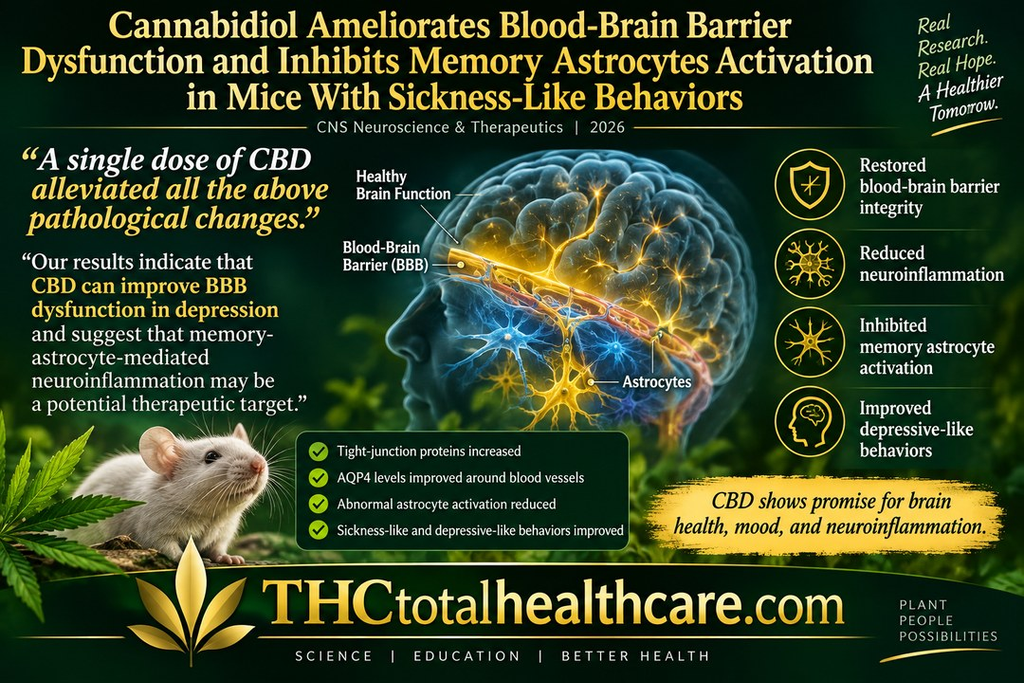
Cannabidiol Ameliorates Blood-Brain Barrier Dysfunction and Inhibits Memory Astrocytes Activation in Mice With Sickness-Like Behaviors

A new 2026 study published in CNS Neuroscience & Therapeutics found that cannabidiol (CBD) improved blood-brain barrier dysfunction, reduced neuroinflammation, and alleviated depressive-like behaviors in mice. The researchers found that sickness-like mice showed weakened blood-brain barrier integrity, reduced protective tight-junction proteins, abnormal astrocyte activation, and increased inflammation in the brain.

A single dose of CBD improved these changes, restoring important blood-brain barrier markers while reducing abnormal astrocyte activity and neuroinflammation. The researchers also identified a particularly interesting target called “memory astrocytes”—astrocytes that can respond more rapidly and strongly when exposed to a second inflammatory challenge.

The study found that CBD inhibited this memory-astrocyte-associated secondary inflammatory response, helping protect the blood-brain barrier and improve behavior. The researchers concluded that CBD may improve blood-brain barrier dysfunction associated with depression and identified memory-astrocyte-mediated neuroinflammation as a potential therapeutic target.

“Background: Blood-brain barrier (BBB) dysfunction has been increasingly implicated in the pathophysiology of depression; however, effective therapeutic strategies targeting this pathology remain limited. This study aimed to investigate the effect of cannabidiol (CBD) on improving depressive-like behaviors and BBB impairment, as well as its underlying mechanism.

Methods: Depressive-like behaviors in mice were assessed via exploratory and despair-like tests. BBB integrity was evaluated by examining tight junction protein expression in endothelial cells and AQP4 reduction from the perivascular membrane. Astrocyte activation and neuroinflammation were also measured. The therapeutic effects of a single CBD dose were examined.

Results: Mice with depressive-like phenotypes showed reduced exploratory behavior and increased despair-like behavior. In the BBB, the expression of tight junction proteins in endothelial cells was downregulated; in astrocytes, decreased AQP4 expression was observed, abnormal activation was enhanced, and neuroinflammation was elevated. A single dose of CBD alleviated all the above pathological changes. Further studies demonstrated that CBD exerted its effects by inhibiting memory astrocyte-associated secondary neuroinflammation, thereby alleviating depressive-like behaviors in mice with depressive-like phenotypes.

Conclusion: Experimental results show that CBD treatment can improve BBB dysfunction in depression and further indicates that targeted inhibition of memory astrocytes-mediated neuroinflammation may promote the treatment of depression.”

https://pubmed.ncbi.nlm.nih.gov/42747207

“Cannabidiol (CBD), a natural extract from cannabis, possesses multiple biological functions including cardioprotection, anti-inflammation, anti-cancer, anti-oxidation, and neuroprotection. Additionally, it plays indispensable roles in relieving depression and regulating BBB function]. CBD ameliorates depression by upregulating brain-derived neurotrophic factor, inhibiting neuroinflammation, alleviating oxidative stress, and modulating neurotransmitter transmission.”

https://onlinelibrary.wiley.com/doi/10.1002/cns.71168

Medical Cannabis and the Hallmarks of Cancer: A Critical Narrative Review

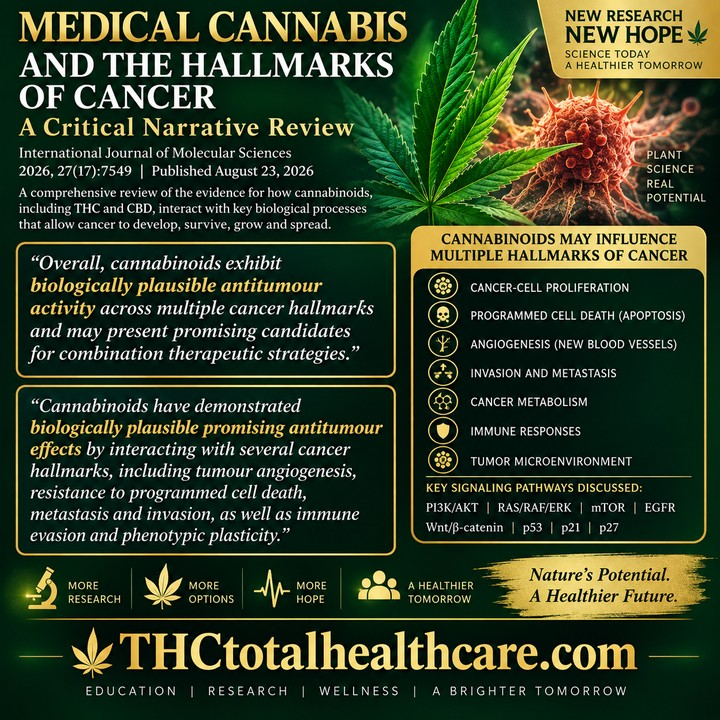
A 2026 critical narrative review examines medical cannabis through one of the most important frameworks in cancer biology: the hallmarks of cancer. Rather than looking only at symptom relief, the authors reviewed evidence for how cannabinoids, including THC and CBD, may interact with biological processes that allow cancer to develop, survive, grow and spread.

The review discusses cannabinoid effects involving cancer-cell proliferation, programmed cell death, angiogenesis, invasion, metastasis, tumor metabolism, immune responses and the tumor microenvironment. It also examines major cancer-related signaling pathways, including PI3K/AKT, RAS/RAF/ERK, mTOR, EGFR, Wnt/β-catenin and p53.

Taken together, the research shows that cannabinoids can influence multiple hallmarks of cancer through several interconnected mechanisms. The authors describe the evidence as showing biologically plausible antitumor activity and highlight cannabinoids as an important area for continued cancer research and development.

“Cancer remains a highly complex and heterogeneous disease, causing major morbidity and mortality worldwide despite advances in diagnosis and treatment. The hallmarks of cancer enlighten the biological mechanisms supporting tumourigenesis and malignant evolution, while helping to identify potential therapeutic targets.

Medical cannabis has mostly been used in oncology for supportive care, but increasing preclinical evidence suggests interference with cancer-related signalling pathways.

This narrative review summarizes the current evidence on cannabinoids, in particular the phytocannabinoids cannabidiol (CBD) and Δ9-tetrahydrocannabinol (THC), framing their prospective anticancer effects in the hallmarks of cancer.

Preclinical studies imply that CBD exerts antiproliferative effects by modulating oncogenic signalling pathways, including EGFR, PI3K/AKT, RAS/RAF/ERK, mTOR and Wnt/β-catenin, while also influencing tumour suppressor pathways involving p53, p21 and p27, causing cell cycle arrest. CBD has additionally been shown to promote programmed cell death via mitochondrial dysfunction and autophagy, altering cancer metabolism as well. Furthermore, CBD has shown anti-invasive and antiangiogenic properties and also appears to modulate immune responses and interactions with the tumour microenvironment, including emerging links with the microbiome.

Overall, cannabinoids exhibit biologically plausible antitumour activity across multiple cancer hallmarks and may present promising candidates for combination therapeutic strategies.

Nonetheless, the current evidence remains predominantly preclinical, and robust translational studies and clinical trials are needed to clarify their pharmacokinetic and pharmacodynamic profiles, determine their clinical efficacy and safety while assessing their potential integration into multimodal cancer treatment.”

https://pubmed.ncbi.nlm.nih.gov/42737454/

“Cannabinoids have demonstrated biologically plausible promising antitumour effects by interacting with several cancer hallmarks, including tumour angiogenesis, resistance to programmed cell death, metastasis and invasion, as well as immune evasion and phenotypic plasticity.”

“Cannabinoids can interfere with several biological mechanisms involved in cancer development and progression and even though their role in oncology remains mostly supportive with predominance in symptom control, preclinical studies increasingly suggest that cannabis can also influence tumour biology.”

https://www.mdpi.com/1422-0067/27/17/7549

Toxic and repellent effects of hemp leaf extracts and cannabidiol against adult female yellow fever mosquitoes, Aedes aegypti

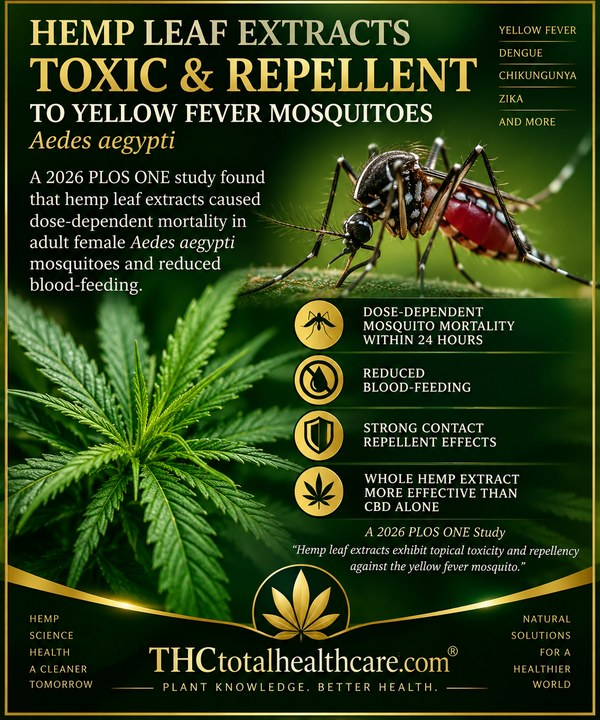
A 2026 study published in PLOS ONE found that hemp leaf extracts were both toxic and repellent to adult female Aedes aegypti mosquitoes, the species responsible for transmitting diseases including yellow fever, dengue and chikungunya. Researchers observed dose-dependent mosquito mortality within 24 hours after direct exposure to the hemp extract.

The hemp extract also reduced blood-feeding and produced strong contact-repellent effects. Importantly, isolated cannabidiol (CBD) did not reproduce the full activity of the whole extract, suggesting that other cannabinoids, terpenes or additional hemp compounds may contribute to the effect.

The findings add to growing research into hemp-derived compounds as potential plant-based tools for insect and mosquito control. The authors concluded that hemp leaf extracts showed both topical toxicity and repellency against yellow fever mosquitoes, with effects that could not be duplicated by CBD alone.

“Hemp (Cannabis sativa) derived products have emerged as potential sources of novel biopesticides.

We recently demonstrated that a hemp leaf extract was toxic to larvae of the yellow fever mosquito Aedes aegypti, and that cannabidiol (CBD) was the primary larvicidal component of the extract.

Here we evaluated the toxic and repellent effects of a hemp leaf extract and CBD against adult female Ae. aegypti.

Toxicity was assessed using an acute topical assay in which mosquitoes received a 500 nL application to the thorax and mortality was recorded at 24 h. Repellency was then evaluated using two complementary bioassays: (i) a no-choice membrane blood-feeding assay to quantify feeding deterrence, and (ii) a mosquito airborne repellency test (MART) to assess spatial repellency.

Topical application of CBD-rich hemp leaf extract induced dose-dependent mortality in adult Ae. aegypti with a LD50 of 22.13 µg/mosquito at 24 h. When CBD isolate was tested at its equivalent doses in the extract, it caused significantly lower mortality than the hemp extract.

In the membrane blood-feeding repellency assay, the hemp leaf extract repelled mosquitoes in a dose-dependent manner, whereas CBD produced weaker effects even at higher equivalent doses. In the MART assay, the hemp extract did not elicit spatial repellency, suggesting low volatility of the repellent compounds.

Taken together, our results demonstrate that CBD does not fully explain the adulticidal or repellent effects of the CBD-rich hemp leaf extract against adult female Ae. aegypti suggesting that other compounds contribute to the bioactivity of hemp leaf extracts against adult female mosquitoes.”

https://pubmed.ncbi.nlm.nih.gov/42743102

“This study demonstrates that hemp leaf extracts exhibit topical toxicity and repellency against the yellow fever mosquito, Ae. aegypti, and that these effects cannot be duplicated by CBD alone. The greater toxicity of the hemp leaf extract compared to the CBD isolate suggests important contributions by other compounds in the extracts. When repellency of the extract or CBD was evaluated, mosquitoes were only repelled when direct contact with the treated surface was allowed. Nevertheless, the hemp leaf extract was more effective than the CBD isolate, again pointing to the involvement of other compounds in adult repellency.

Our findings advance our understanding of the potential uses of hemp and CBD against adult female Ae. aegypti. Identifying the additional components of the leaf extract that contribute to toxicity and repellency in adult female mosquitoes will be essential for evaluating the potential of hemp-based products in integrated mosquito management strategies. In addition, future research evaluating the human and environmental safety of using hemp-derived products as biopesticides is needed.”

https://journals.plos.org/plosone/article?id=10.1371/journal.pone.0354696

UK Medical Cannabis Registry: An Updated Analysis of Inflammatory Arthritis

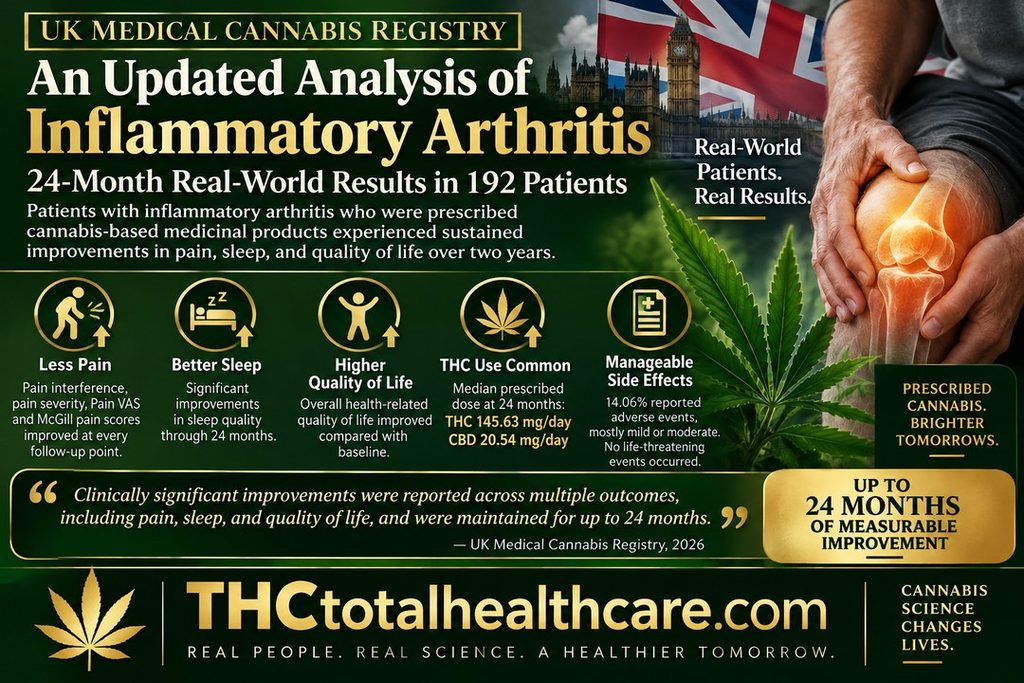
A new analysis from the UK Medical Cannabis Registry reports sustained improvements in pain, sleep, and health-related quality of life among patients with inflammatory arthritis who were prescribed cannabis-based medicinal products.

The study followed 192 patients for up to 24 months. Improvements were reported across multiple pain measures at every follow-up point, including pain severity, pain interference, and overall pain scores. Sleep quality and general quality of life also improved compared with baseline.

Notably, many patients were prescribed THC-containing products, including dried cannabis flower and oils. The findings add long-term real-world evidence that prescribed cannabis medicines may help some people living with inflammatory arthritis.

“Aim: Cannabis-based medicinal products (CBMPs) are an emerging therapeutic option for pain in inflammatory arthritis, yet clinical evidence remains limited. This study aimed to evaluate changes in pain-specific and general health-related outcomes in patients with inflammatory arthritis treated with CBMPs and to characterize the safety profile by examining the incidence and nature of adverse events.

Methods: Patients treated with CBMPs for inflammatory arthritis-associated pain for ⩾24 months were identified from the UK Medical Cannabis Registry. Primary outcomes included changes in patient-reported measures: Brief Pain Inventory (BPI), Pain Visual Analogue Scale (Pain VAS), Short-Form McGill Pain Questionnaire 2 (SF-MPQ-2), EuroQol 5-dimension 5-level (EQ-5D-5L), Generalized Anxiety Disorder-7 (GAD-7), and Single-Item Sleep Quality Scale (SQS) at 1, 3, 6, 12, 18, and 24 months vs baseline. Adverse events were recorded and analysed. Statistical significance was set at P < .050.

Results: A total of 192 patients met inclusion criteria. The CBMP initiation was associated with improvements in BPI Interference, BPI Severity, Pain VAS, SF-MPQ-2, SQS, and EQ-5D-5L index values at all follow-up time points (P < .010) and in GAD-7 scores up to 3 months (P < .001). Twenty-seven patients (14.06%) reported 296 adverse events: 126 (42.57%) mild, 132 (44.59%) moderate, and 38 (12.84%) severe. No life-threatening events occurred.

Conclusion: The CBMP therapy was associated with reductions in pain and improvements in health-related quality of life among individuals with inflammatory arthritis. Although causality cannot be inferred from this observational design, these findings support the need for randomized controlled trials to determine the efficacy of CBMPs for inflammatory arthritis-related pain.”

https://pubmed.ncbi.nlm.nih.gov/42724108

“Overall, results of this study demonstrate reductions in pain severity and improvements in HRQoL for patients receiving CBMP treatment for chronic pain linked to inflammatory arthritis over a period of 24 months of follow-up. The CBMPs were generally well-tolerated, although the risk of AE and individual responses should be considered before commencing CBMP treatment.”

https://journals.sagepub.com/doi/10.1177/11795441261480709