Effectiveness and safety of cannabidiol in adult patients with epilepsy: A multicenter, retrospective study

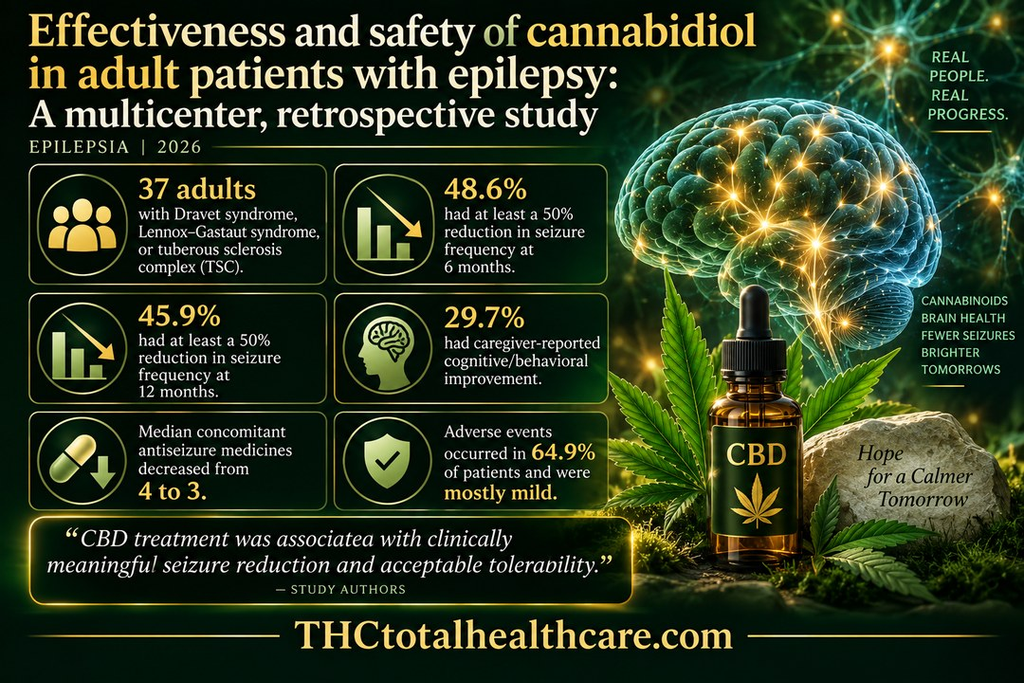
A new multicenter study found that cannabidiol was associated with substantial seizure reductions in adults living with severe, drug-resistant forms of epilepsy. The study followed 37 adults with Dravet syndrome, Lennox–Gastaut syndrome, or tuberous sclerosis complex who received CBD for at least 12 months.

After six months, 48.6% of patients had at least a 50% reduction in seizure frequency; after 12 months, 45.9% still met that threshold. Caregivers also reported improvements in alertness, behavior, interaction, or daily functioning in 29.7% of patients, while the median number of other antiseizure medications fell from four to three.

The authors concluded that CBD was associated with “clinically meaningful seizure reduction and acceptable tolerability” in this real-world adult population. Adverse events occurred in 64.9% of patients but were mostly mild, and 81.1% remained on CBD at 12 months.

“Objective: Cannabidiol (CBD) has demonstrated promising effectiveness and tolerability as adjunctive treatment in patients with severe childhood epilepsies. This study investigated the effectiveness and tolerability of CBD in adults with a history of Dravet syndrome (DS), Lennox-Gastaut syndrome (LGS), or tuberous sclerosis complex (TSC).

Methods: This was a multicenter, retrospective, observational study in adults with diagnosis of DS, LGS or TSC who received at least 12 months of CBD treatment. Medical records were reviewed and baseline characteristics, treatment retention, seizure frequency, cognitive behavioral improvements, concomitant ASM usage, and adverse events were assessed.

Results: Thirty-seven patients (median age 25 years; 67.5% male) with diagnosis of DS, LGS or TSC received CBD for at least 12 months. The CBD median maintenance dose was 10.45 mg/kg/day (IQR 7.455 – 13.975) (median maximum dose 11 mg/kg/day); median follow-up time was 28 months (IQR 22.75-58.25). Seizure frequency was reduced by ≥50% in 48.6% of patients at 6 months and 45.9% at 12 months. No statistically significant differences in median maintenance dose were observed across seizure reduction categories. During CBD treatment, caregivers reported subjective improvements in cognition in 29.7% of patients. Treatment with CBD was significantly associated with a reduction in the median number of concomitant ASMs at the end of follow-up (4 [3, 4]) vs. 3 [3, 4] (p = 0.022). AEs occurred in 64.9% of patients and were mostly mild; 16.2% had AEs leading to treatment discontinuation.

Significance: We present a series of adult patients treated with CBD according to label. The results are similar to those described in children. CBD treatment was associated with clinically meaningful seizure reduction and acceptable tolerability in this real-world cohort of adults with drug-resistant developmental and epileptic encephalopathies. These findings support the potential role of CBD in complex adult DEE populations while highlighting the need for prospective controlled studies to better define its independent treatment effect.

Plain language summary: This study looked at the long-term use of cannabidiol (CBD) in 37 adults with Dravet syndrome, Lennox-Gastaut syndrome, or tuberous sclerosis complex. After 12 months, almost half of the patients had at least a 50% reduction in seizures. Some caregivers also reported improvements in cognition and behavior. Patients were able to reduce the number of other antiseizure medicines they were taking. Side effects were common but mostly mild, although a small number of patients stopped treatment because of them. Overall, CBD appeared effective and reasonably well tolerated, but further controlled studies are needed.”

https://pubmed.ncbi.nlm.nih.gov/42765195

“CBD has demonstrated promising effectiveness and tolerability in adult patients with a history of DS, LGS, or TSC. Treatment with CBD was associated with reductions in seizure frequency and in concomitant ASMs, which could improve treatment retention and reduce AEs. The findings support a growing body of evidence highlighting the efficacy of CBD across age groups and epilepsy etiologies in real-world clinical practice.”
https://onlinelibrary.wiley.com/doi/10.1002/epi4.70331

Whole Plant Cannabinoid Nonpharmaceutical Treatment Protocols for a Young Male With Dravet Syndrome

Dravet syndrome is a severe childhood epilepsy that can remain difficult to control despite multiple medications. This case report describes a young male treated with whole-plant cannabinoid protocols and documents substantial improvements in seizure control along with broader gains in daily functioning and quality of life. The report highlights the potential value of individualized, whole-plant cannabis approaches in treatment-resistant epilepsy and adds to the clinical history of cannabinoid use in Dravet syndrome.

“Objective: This case report describes the outcomes of a novel, conservative approach for a young male patient with Dravet syndrome, which is a genetic epileptic encephalopathy resulting in frequent and recalcitrant seizures and developmental delays.

Clinical features: A male infant began to experience seizures before 7 months of age, and genetic testing revealed an SCN1A mutation, confirming the diagnosis of Dravet syndrome. At age 7, despite standard polypharmacy consisting of antibiotics, steroids, and antiepileptic drugs, he continued to suffer from approximately 25 to 28 daily tonic-clonic refractory seizures.

Intervention and outcome: The clinical objective was to restore the function of the endocannabinoid system by integrating very low-dose, whole-plant extracted, naturally chiral, hemp-derived phytocannabinoid formulations, and broad environmental and dietary modifications. Within the first week of treatment, the patient had only 1 to 2 mild seizures per day. Four years later, all pharmaceuticals were discontinued, and by age 12, the patient’s daily hemp formulation was reduced to as-needed status. At the time of this writing, the patient was 16 years of age and had an average of 7 to 10 very mild petit mal seizures per month. The whole plant hemp formulations generated no observable side effects.

Conclusion: This case study demonstrates conservative comanagement of a patient with a catastrophic seizure disorder using novel nonpharmaceutical comanagement strategies.”

https://pubmed.ncbi.nlm.nih.gov/42152927

“The objective of this case report is to describe 10 years of treatment effects of whole plant hemp cannabidiol (CBD) extracts in a young male patient with Dravet syndrome, who was responding poorly to the standard polypharmacy approach.”

“Chronic seizure activity in a young male patient was reduced after the introduction of whole plant extracted hemp and diet modifications”

https://www.sciencedirect.com/science/article/abs/pii/S1556370725000379

Real-world effectiveness and tolerability of highly purified cannabidiol in patients with monogenic developmental and epileptic encephalopathies with highly active epilepsy

“Developmental and epileptic encephalopathies (DEEs) represent a group of disorders characterized by developmental slowing or regression together with seizures, that are often drug-resistant.”

“With this background, we investigated the effectiveness and tolerability of highly purified CBD in a cohort of monogenic DEEs, focusing on patients with highly active epilepsy.”

“Taken together, these findings suggest that CBD represents a valid therapeutic option for patients with DEEs and highly active epilepsy, providing meaningful seizure reduction even in the most treatment-refractory cases.”

“Our study shows that highly purified CBD may represent a feasible treatment option for patients with DEEs and highly active epilepsy.”

https://www.epilepsybehavior.com/article/S1525-5050(26)00157-5/fulltext

Cannabinoid Therapies in Less-Common Disorders: Clinical Evidence and Formulation Strategies

“Background/Objectives: Cannabinoids are increasingly recognised for their therapeutic potential beyond well-established indications such as chronic pain, multiple sclerosis, and specific epileptic syndromes. Recent advances have highlighted their possible role in less-common or orphan diseases, opening new avenues for pharmaceutical research and clinical application. 

Methods: This review provides a critical synthesis of the most recent evidence (2020-2025), available in PubMed and Scopus, regarding the use of cannabinoids in conditions including refractory epilepsies beyond Dravet and Lennox-Gastaut syndromes, movement disorders such as dystonia and Tourette syndrome, rare dermatological diseases like epidermolysis bullosa, and emerging data in Crohn’s disease. 

Results: Negative outcomes, such as those reported in Fragile X syndrome trials, are also discussed as instructive examples of methodological and pharmacological challenges. Particular attention is given to the optimisation of pharmaceutical formulations and advanced separation technologies, including oromucosal sprays, transdermal gels, and novel nanocarrier systems, which aim to overcome issues of bioavailability and variability in patient response. Finally, safety concerns, regulatory aspects, and the need for robust clinical trials are addressed. 

Conclusions: Overall, cannabinoids represent a promising yet underexplored therapeutic option in rare and complex disorders, warranting further investigation supported by innovative pharmaceutical approaches.”

https://pubmed.ncbi.nlm.nih.gov/41745121

 “Thus, cannabinoids may play an important role in the development of innovative therapies, particularly in the treatment of less-common diseases that often lack effective therapeutic options.”

https://www.mdpi.com/2079-9721/14/2/83


Antiseizure Effects of Cannabidiol in Combination With Cannabigerol in the Maximal Electroshock Seizure Model

“Current antiseizure therapy for epilepsy is only effective in about 70% of the patient population.

Previous studies had shown that the addition of small amounts of tetrahydrocannabinol (THC) made cannabidiol (CBD) much more potent in the maximal electroshock seizure (MES) model.

The current study investigated the effects of combining CBD with the non-psychotoxic cannabinoid cannabigerol (CBG) in the MES model in mice.

Mice were administered (i.p.) CBD or CBG or a combination of both before undergoing the MES procedure. Dose-response and dose-toxicity curves were generated for each compound and combinations.

It was found that CBG has antiseizure properties and that it potentiates the effects of CBD.

By using a 1:1 ratio combination of CBD and CBG, the ED50 for CBD was reduced by over 50% and the TD50 for CBD was reduced by 40%, indicating increased toxicity. This suggests that the interaction between CBD and CBG may be additive in nature. Both drugs showed little toxicity at therapeutic doses.

This is the first study to provide detailed dose-response data for CBG as well as CBG in combination with CBD in a seizure model and suggests that the two drugs could act in a similar manner to suppress seizures.”

https://pubmed.ncbi.nlm.nih.gov/41588555

“The present study determines dose–response and dose–toxicity relationships for the non-psychotoxic cannabinoids CBG and CBD in the MES model and finds that CBG has antiseizure effects on its own and can potentiate the antiseizure effects of CBD, possibly in an additive manner. This suggests that CBG and CBD could use similar mechanisms for their antiseizure effects. This study is the first to present antiseizure effects of CBG as well as provide detailed dose–response and dose–toxicity data of CBG in combination with CBD.”

“Cannabinoids have been examined as potential antiseizure drugs but psychotoxic effects and low potency have been problematic. The present study determines dose–response and dose–toxicity relationships for the non‐psychotoxic cannabinoids CBG and CBD in the MES model and finds that CBG has antiseizure effects on its own and can potentiate the antiseizure effects of CBD, possibly in an additive manner. This suggests that CBG and CBD could use similar mechanisms for their antiseizure effects. This study is the first to present antiseizure effects of CBG as well as provide detailed dose–response and dose–toxicity data of CBG in combination with CBD.”

https://onlinelibrary.wiley.com/doi/10.1111/bcpt.70194

Medical Cannabis and Epilepsy: The Evidence

“Epilepsy is a serious neurological condition that can affect individuals of all ages. Treatment is far from perfect, and roughly 30% of patients can experience seizures that are resistant to antiseizure medications.

Interestingly, the cannabis plant, specifically the phytocannabinoids, cannabidiol and delta-9-tetrahydrocannabinol, has been shown to possess anticonvulsant properties and are effective in the treatment of seizures.

The clinical evidence base for cannabis for epileptic conditions has been growing in the last few decades with studies aiming to establish the clinical efficacy and safety profile of the plant. Despite the advancements that are being made, clinicians and medical regulatory bodies are still reluctant for epilepsy patients to use cannabis. Thus, it is essential that individuals are educated about the therapeutic properties of cannabis and the clinical evidence base to help patients gain access to cannabis medicines.”

https://pubmed.ncbi.nlm.nih.gov/41284246

“Evidence has shown that the plant possesses a range of therapeutic properties and has suggested its use as a potentially effective treatment for a variety of medical conditions. Consequently, the evidence base for the medicinal use of cannabis has been significantly growing over the years.”

https://www.magonlinelibrary.com/doi/full/10.12968/hmed.2024.0903

Real-world efficacy and safety of cannabidiol in developmental and epileptic encephalopathies

pubmed logo

“Objective: Highly purified cannabidiol (CBD) is approved as adjunctive therapy for seizures associated with Dravet syndrome (DS), Lennox-Gastaut syndrome (LGS), and tuberous sclerosis complex (TSC), although its role in other developmental and epileptic encephalopathies (DEEs) remains unexplored. The aim of this study was to assess the real-world use, efficacy, and safety of CBD across a broad cohort of patients with DEEs, including off-label indications.

Methods: In this retrospective study, we evaluated 107 patients with DEEs treated with CBD for ≥3 months between 2020 and 2024. Data on seizure frequency, tolerability, retention, and non-seizure outcomes were collected. Efficacy was defined as ≥50% or ≥75% seizure reduction. Statistical analyses explored predictors of response.

Results: Patients had LGS (55.1%), DS (16.8%), TSC (8.4%), or other DEEs (19.6%), with a genetic etiology in 56.1%. At a median follow-up of 20 months, 69% achieved ≥50% seizure reduction, and 21% achieved ≥75% reduction. Patients with LGS, TSC, and other DEEs showed higher efficacy and retention rates compared to DS. Genetic or unknown etiology was associated with better outcomes (p = 0.011). Combination with valproate was associated with reduced efficacy (p = 0.006), while combination with clobazam had no significant effect on efficacy nor safety. Non-seizure improvements included increased alertness (56%), improved sleep quality (25%), and enhanced motor performance (14%). Adverse events occurred in 33.6%, mostly mild and transient; 9% discontinued due to side effects.

Significances: This study confirms the effectiveness and good tolerability of CBD in a real-world DEE population, including off-label use. These findings support expanding CBD indications and underscore the need for prospective studies targeting both seizure and developmental outcomes.

Plain language summary: This study looked at the use of cannabidiol (CBD), a cannabis-based medicine, in 107 people with severe forms of epilepsy called developmental and epileptic encephalopathies (DEEs). With CBD add-on, about two-thirds of patients had fewer seizures, and some caregivers noticed improvements in alertness, sleep, or movement. Most patients tolerated the treatment well, but some experienced side effects, and a few had to stop taking it. While the results are promising, more research is needed to confirm how effective and safe CBD is for different types of DEEs, especially those not currently approved for treatment with CBD.”

https://pubmed.ncbi.nlm.nih.gov/41165013/

“After a median follow-up of 20 months, CBD was globally effective and safe in 107 patients with LGS, DS, TSC, and other DEEs.”

https://onlinelibrary.wiley.com/doi/10.1002/epi4.70149

Efficacy and safety of cannabidiol in children with developmental and epileptic encephalopathies: A systematic review

pubmed logo

“Background: Developmental and epileptic encephalopathies (DEEs) constitute rare epileptic conditions characterized by treatment-resistant seizures, neurodevelopmental delay, and various comorbidities. None of the currently available drugs have proven effective in suppressing epileptiform activity in those conditions.

Objectives: We aimed to assess the efficacy and safety of cannabidiol in children with DEEs through a systematic review.

Methods: We searched MEDLINE, Cochrane Central Register of Controlled Trials, trial registries, and reference lists of included studies. We conducted the last search on March 9, 2024. All study types investigating pharmaceutical cannabidiol in children with DEEs were considered eligible, with no language or date restrictions. Risk of bias was assessed using RoB2 and ROBINS-I V2.

Results: Of the 722 records identified, 14 met the inclusion criteria. The included studies varied in design and involved a total of 682 children. Cannabidiol was administered to a maximum dose of 50mg/kg/day. Almost all studies reported positive outcomes with cannabidiol, leading to a reduction of a 50% or above in seizure frequency in at least 20% of patients included in 11 studies. Adverse events were relatively common across studies and included somnolence, loss of appetite, diarrhea, fatigue, and increased serum aminotransferases. Most of them were mild to moderate and reversible.

Conclusions: Cannabidiol is generally well tolerated and has been shown to effectively reduce seizure frequency in children with DEEs whose seizures are refractory to concomitant antiepileptic medications. Future research should explore the long-term effects of cannabidiol on seizure control, developmental outcomes, and quality of life in this population.”

https://pubmed.ncbi.nlm.nih.gov/41135306/

https://www.seizure-journal.com/article/S1059-1311(25)00269-9/abstract

Molecular targets of cannabinoids and their derivatives in epilepsy – a review with focus on CBD

pubmed logo

“In recent years, cannabinoids and their derivatives have been tested for efficacy in epilepsy therapy and related disorders. Many of them may help alleviate ailments associated with seizures. An in-depth study of cannabinoid derivatives and the receptors on which they operate give us a chance for more effective use of these substances in epilepsy therapy.

Many studies point to the beneficial synergy of cannabinoids with chemotherapeutics and the increase in effectiveness of the latter. As a result, both alternatives to drug treatment and support for the pharmacotherapy are being developed.

In this review, we focused on compounds such as Δ9-THC, CBDV, Δ9-THCA, Δ9-THCV, H2CBD and their receptors as well as on CBD’s actions, and the enzymes, ion channels, and transporters engaged in the fundamental causes of epileptic seizures.

Treating epilepsy and drug-resistant epilepsy are the two common medical uses of cannabinoids. We looked at approximately 150 current scientific articles from peer-reviewed journals to explore the molecular effects of cannabinoids in these applications. Our goal was to improve physician awareness of factors influencing treatment decisions and potential adverse reactions to minimize medical errors and optimize patient care.”

https://pubmed.ncbi.nlm.nih.gov/41098593/

“In conclusion, while CBD now stands as a recognized and effective treatment for specific forms of epilepsy, a deeper, integrated understanding of its comprehensive mechanisms, validated efficacy across diverse populations, and long-term safety profile remains essential. Continued collaborative efforts among scientists, clinicians, and policymakers, coupled with stringent critical appraisal of evidence, will be key to unlocking the full and safe potential of cannabinoids in epilepsy therapy.”

https://www.frontierspartnerships.org/journals/acta-biochimica-polonica/articles/10.3389/abp.2025.15251/full

Cannabidiol combined with GABAergic drugs but not with sodium channel blockers prevents the development of drug-resistance seizures in a preclinical model

pubmed logo

“Drug resistance affects 30% of patients with epilepsy. Cannabidiol (CBD) decreases the expression of drug-resistant seizures in specific syndromes. However, it is unknown if CBD prevents the development of drug-resistant condition in epilepsy.

This research was conducted to investigate if subchronic administration of CBD with sodium channel blockers modifies the mortality associated with clonic-tonic seizures and the development of the drug-resistant phenotype induced by subchronic administration of 3-mercaptopropionic acid (3-MP) in rats. These effects were compared with those elicited by antiseizure medications acting on the GABAA receptors.

Male Wistar rats were used to evaluate CBD combined with different antiseizure medications (phenobarbital, diazepam, valproic acid, lamotrigine and oxcarbazepine) during the repetitive administration of 3-MP. The mortality rate and development of drug-resistant seizures were estimated. Computational experiments explored interactions between CBD and sodium channel blockers in the NaV1.7 receptor.

Subchronic administration of CBD alone did not modify neither the mortality rate nor the development of drug-resistant seizures. CBD combined with phenobarbital or diazepam reduced the mortality rate and prevalence of drug-resistant seizures. In contrast, coadministration of CBD with valproic acid or lamotrigine did not modify neither the mortality rate nor the expression of drug-resistant seizures. Contrariwise, combining CBD with oxcarbazepine at ED50 increases the incidence of drug-resistant seizures. Computational experiments suggested that CBD acting on NaV1.7 interferes with the action of sodium channel blockers and precludes their inhibitory effects.

Our results indicate that repeated administration of CBD with GABAergic antiseizure medications, but not sodium channel blockers, decreases the mortality and prevents the development of the drug-resistant phenotype induced by repeatedly provoked severe seizures.”

https://pubmed.ncbi.nlm.nih.gov/41050418/

“The present study confirms that CBD alone does not modify the mortality rate induced by severe seizures. Our results also support that CBD combined with GABAergic drugs but not with sodium channel blockers reduces the mortality rate during the repetitive induction of clonic-tonic seizures and prevents the development of drug-resistance seizures in a preclinical model.”

https://www.frontiersin.org/journals/pharmacology/articles/10.3389/fphar.2025.1644018/full