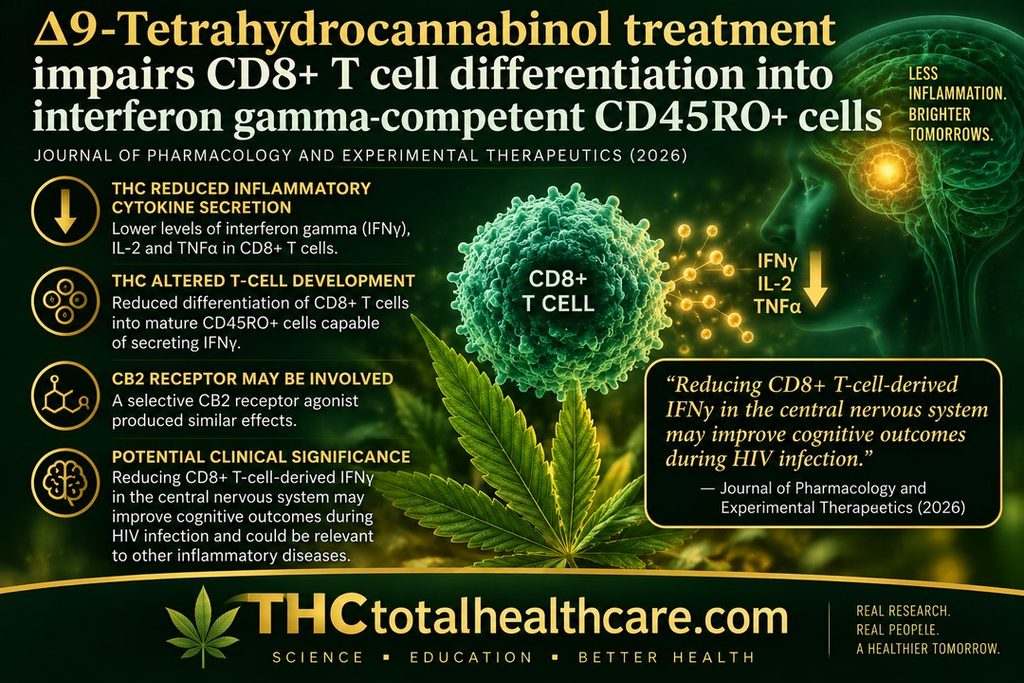
Δ9-Tetrahydrocannabinol treatment impairs CD8+ T cell differentiation into interferon gamma-competent CD45RO+ cells

New research published in The Journal of Pharmacology and Experimental Therapeutics shows that Δ9-tetrahydrocannabinol (THC) can alter the development of CD8+ T cells involved in inflammatory immune responses. Researchers found that THC reduced secretion of interferon gamma (IFNγ), interleukin-2 (IL-2), and tumor necrosis factor alpha (TNFα), three signaling molecules involved in immune activation and inflammation.

Rather than simply preventing cells from producing IFNγ, THC appeared to change how the T cells developed. THC reduced the differentiation of CD8+ T cells into mature CD45RO+ cells capable of secreting IFNγ. A selective CB2 receptor agonist produced similar effects, suggesting that activation of the cannabinoid CB2 receptor may play an important role in THC’s immune-modulating activity.

The researchers examined these effects partly because IFNγ-producing CD8+ T cells contribute to persistent neuroinflammation associated with HIV-associated neurocognitive disorders. They concluded that reducing CD8+ T-cell-derived IFNγ in the central nervous system may potentially improve cognitive outcomes during HIV infection, while noting that the findings may also have relevance to other inflammatory diseases involving IFNγ-producing CD8+ T cells.

“Chronic human immunodeficiency virus (HIV) infection results in a persistent state of neuroinflammation, even with combined antiretroviral therapy. Neuroinflammation contributes to pathology termed HIV-associated neurocognitive disorder, which is exacerbated by interferon gamma (IFNγ)-producing CD8+ T cells in the central nervous system.

Many people living with HIV self-report using Cannabis sativa to mitigate symptoms of chronic infection and side effects of treatment. C. sativa is composed of various phytocannabinoids, including Δ9-tetrahydrocannbinol (THC), which possesses immune-modulating properties.

This study aims to determine whether C. sativa use by people living with HIV, and specifically THC, affects IFNγ secretion by CD8+ T cells.

We found that HIV status does not influence T cell IFNγ responses, and C sativa use modestly reduces the average secretion of IFNγ by CD8+ T cells from HIV+ donors. Treatment of CD8+ T cells with THC and the selective cannabinoid receptor 2 agonist, JWH-015, reduced T-cell cytokine secretion, with THC eliciting greater suppression than cannabidiol.

These results suggest that THC treatment does not directly impair IFNγ gene expression or protein production, as determined by polymerase chain reaction and flow cytometry. However, THC treatment impaired CD8+ T cell differentiation into IFNγ-competent CD45RO+ cells.

These studies are of clinical relevance because reduction of CD8+ T-cell-derived IFNγ in the central nervous system may improve cognitive outcomes during HIV infection. Furthermore, these findings may be generalizable to other inflammatory diseases in which IFNγ-producing CD8+ T cells have been implicated.

SIGNIFICANCE STATEMENT: Δ9-Tetrahydrocannbinol (THC) treatment reduces CD8+ T cell interferon gamma (IFNγ) secretion isolated from HIV- and HIV+ individuals. THC and the selective cannabinoid receptor 2 agonist, JWH-015, both reduced CD8+ T cell secretion of IFNγ, interleukin 2, and tumor necrosis factor α, suggesting the involvement of cannabinoid receptor 2. Although THC treatment does not suppress IFNγ mRNA or protein levels, it reduces the number of IFNγ-secreting cells by impairing CD8+ T-cell differentiation into IFNγ-competent CD45RO+ cells.”

https://pubmed.ncbi.nlm.nih.gov/42748512

https://jpet.aspetjournals.org/article/S0022-3565(26)01210-3/abstract

Need this THC study explained? thcXplained.com
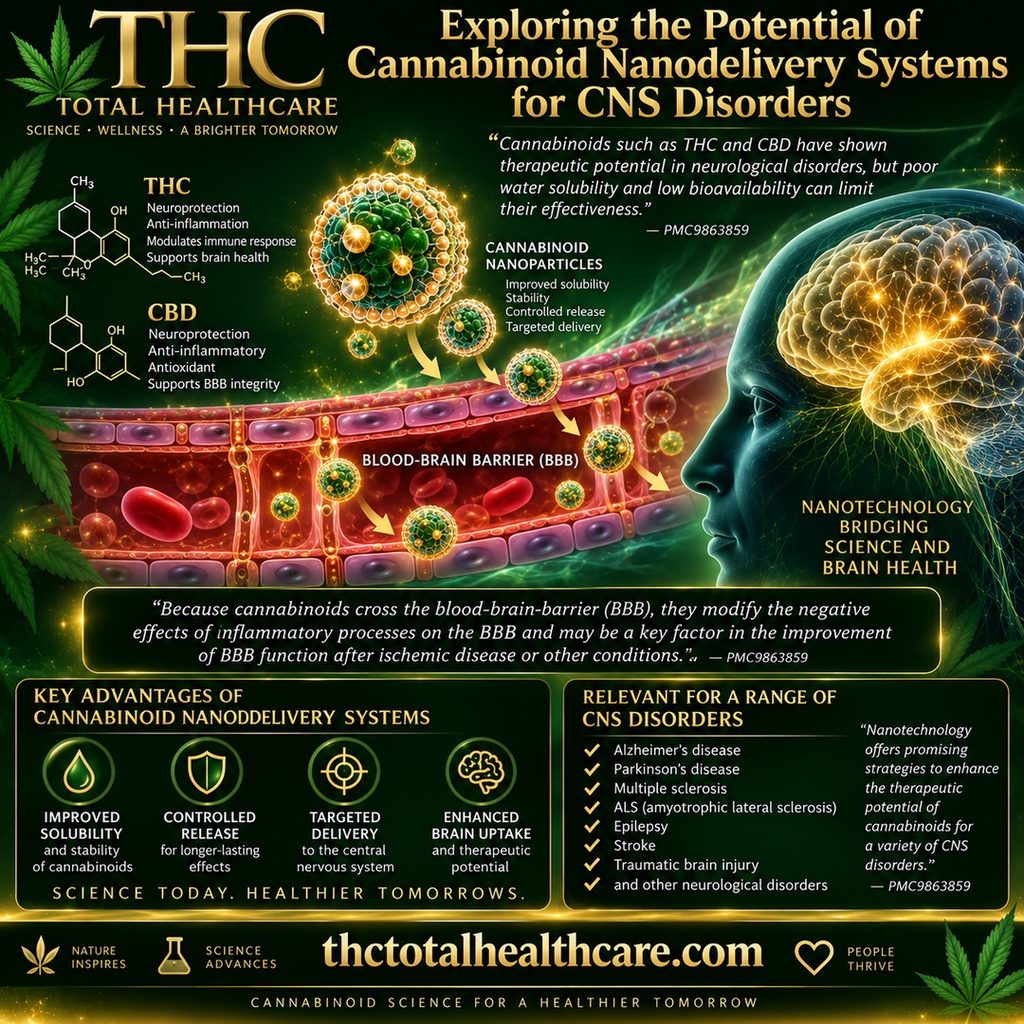
Exploring the Potential of Cannabinoid Nanodelivery Systems for CNS Disorders

Cannabinoids such as THC and CBD have shown therapeutic potential in neurological disorders, but poor water solubility and low bioavailability can limit their effectiveness. This review explores how nanotechnology may overcome these barriers by improving cannabinoid stability, controlled release and targeted delivery to the central nervous system, including strategies designed to enhance passage across the blood-brain barrier.

“Cannabinoids have a major therapeutic value in a variety of disorders. The concepts of cannabinoids are difficult to develop, but they can be used and are advantageous for a number of diseases that are not sufficiently managed by existing treatments. Nanoconjugation and encapsulation techniques have been shown to be effective in improving the delivery and the therapeutic effectiveness of drugs that are poorly soluble in water. Because the bioavailability of cannabinoids is low, the challenge is to explore different administration methods to improve their effectiveness. Because cannabinoids cross the blood-brain-barrier (BBB), they modify the negative effects of inflammatory processes on the BBB and may be a key factor in the improvement of BBB function after ischemic disease or other conditions. This review discusses various types of cannabinoid administration, as well as nanotechnologies used to improve the bioavailability of these compounds in CNS diseases.”

“The growing acceptance of Cannabis and cannabinoids has led to an increasing number of clinical trials testing various nanoproducts. CNS disorders are key therapeutic targets for cannabinoids, and nanoformulation platforms for cannabinoid nanoconjugates provide efficient transport across the BBB. Selected examples of cannabinoid nanoconjugates have shown enhanced bioavailability and improved bio-efficacy with promising outcomes in biomedical applications. We expect to see many results from clinical trials in the near future to evaluate the adverse effects and effectiveness of this treatment. However, precise delivery of these nanoformulations to pathological sites inside the brain remains a challenge.”

https://pmc.ncbi.nlm.nih.gov/articles/PMC9863859/

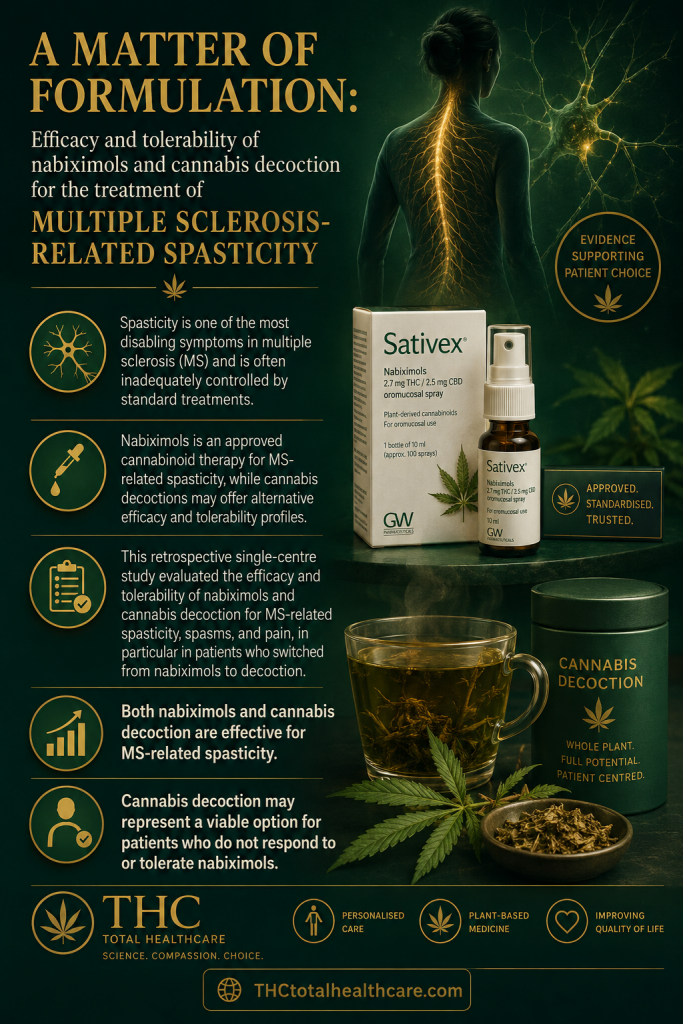
A matter of formulation: Efficacy and tolerability of nabiximols and cannabis decoction for the treatment of multiple sclerosis-related spasticity

Cannabinoid medicines are used to help manage multiple sclerosis-related spasticity, but formulation can influence both effectiveness and tolerability. In this study, both nabiximols and cannabis decoction were effective for MS-related spasticity, while cannabis decoction may represent a viable option for patients who do not respond to or tolerate nabiximols.

“Background: Spasticity is one of the most disabling symptoms in multiple sclerosis (MS) and is often inadequately controlled by standard treatments. Nabiximols is an approved cannabinoid therapy for MS-related spasticity, while cannabis decoctions may offer alternative efficacy and tolerability profiles.

Methods: This retrospective single-centre study evaluated the efficacy and tolerability of nabiximols and cannabis decoction for MS-related spasticity, spasms, and pain, in particular in patients who switched from nabiximols to decoction. Patients initiating nabiximols between 2013 and 2024 were included. Modified Ashworth Scale (mAS), Numerical Rating Scale (NRS) for spasticity and pain, and Penn Spasm Frequency Scale (PSFS) were assessed at baseline and follow-up. Efficacy was analysed using within-group and mixed-model approaches, and Cox regression evaluated discontinuation risk.

Results: Sixty-three patients were included; 39 (61.9%) discontinued nabiximols and 14 switched to cannabis decoction. Both treatments significantly improved spasticity, spasms, and pain. In switchers, cannabis decoction led to significant improvements across all outcomes. Nabiximols showed a higher, though not statistically significant, discontinuation rate, with adverse effects reported in 27.0% versus 14.3% for cannabis decoction. Longer disease duration was associated with discontinuation due to inefficacy, while tetraspasticity predicted switching to cannabis decoction.

Conclusions: Both nabiximols and cannabis decoction are effective for MS-related spasticity. Cannabis decoction may represent a viable option for patients who do not respond to or tolerate nabiximols. Differences in cannabinoid composition and pharmacokinetics may explain variations in outcomes. Prospective studies are needed to confirm these findings and optimize treatment strategies.”

https://pubmed.ncbi.nlm.nih.gov/42594706

https://www.msard-journal.com/article/S2211-0348(26)00463-3/abstract

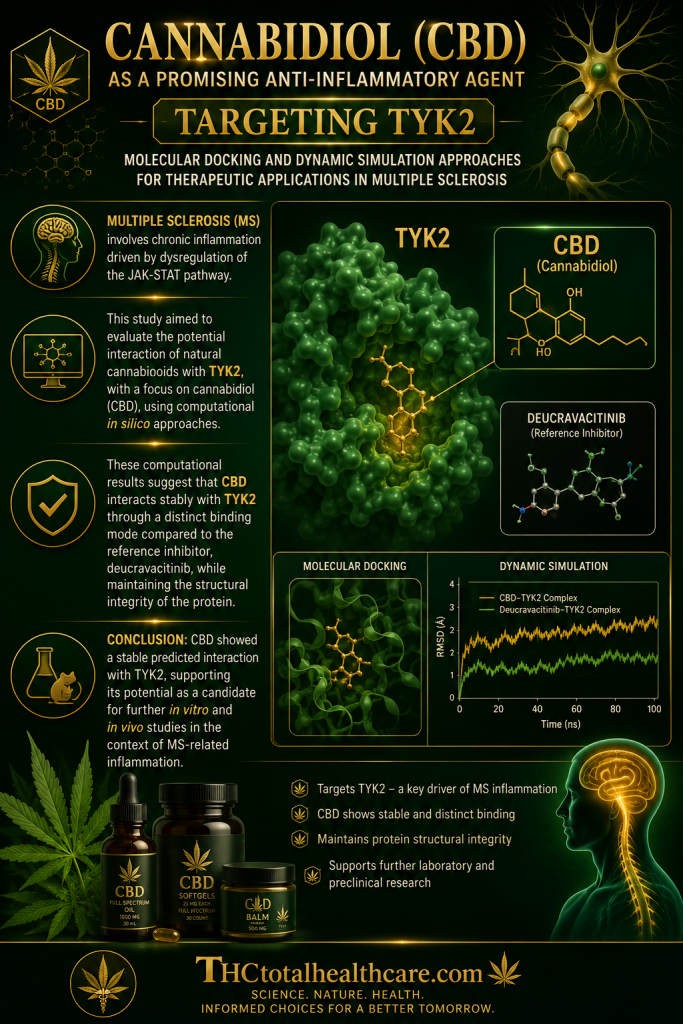
Cannabidiol as a Promising Anti-Inflammatory Agent Targeting TYK2: Molecular Docking and Dynamic Simulation Approaches for Therapeutic Applications in Multiple Sclerosis

TYK2 is an important regulator of inflammatory signaling and has emerged as a therapeutic target in autoimmune diseases including multiple sclerosis. In this computational study, cannabidiol (CBD) showed favorable binding and stable interactions with TYK2, supporting further investigation of CBD as a potential anti-inflammatory compound targeting pathways involved in MS.

“Introduction: Multiple sclerosis (MS) involves chronic inflammation driven by dysregulation of the JAK-STAT pathway. This study aimed to evaluate the potential interaction of natural cannabinoids with TYK2, with a focus on cannabidiol (CBD), using computational in silico approaches.

Methods: A combined molecular docking and molecular dynamics (MD) workflow was used. Cannabinoid ligands and the TYK2 structure (JH2 domain) were prepared and docked in MOE, followed by 20 ns MD simulations under NVT and NPT conditions in GROMACS. Complex stability and ligand-protein interactions were analysed.

Results: CBD showed a competitive docking score (-7.31 kcal/mol) and a refined RMSD of 0.9198 Å. MD simulations revealed a stable CBD-TYK2 complex, with RMSD fluctuations of 0.15-0.20 nm, which were lower than those observed for the reference inhibitor, deucravacitinib. RMSF analysis revealed a slight increase in local flexibility in specific regions without affecting the overall stability of the protein. The radius of gyration remained stable throughout the simulation, indicating that the protein’s compactness was preserved. Hydrogen bond analysis showed fewer but transient interactions for CBD, consistent with a binding mode dominated by hydrophobic interactions.

Discussion: These computational results suggest that CBD interacts stably with TYK2 through a distinct binding mode compared to the reference inhibitor, deucravacitinib, while maintaining the structural integrity of the protein.

Conclusion: CBD showed a stable predicted interaction with TYK2, supporting its potential as a candidate for further in vitro and in vivo studies in the context of MS-related inflammation.”

https://pubmed.ncbi.nlm.nih.gov/42576587

https://www.eurekaselect.com/article/157501

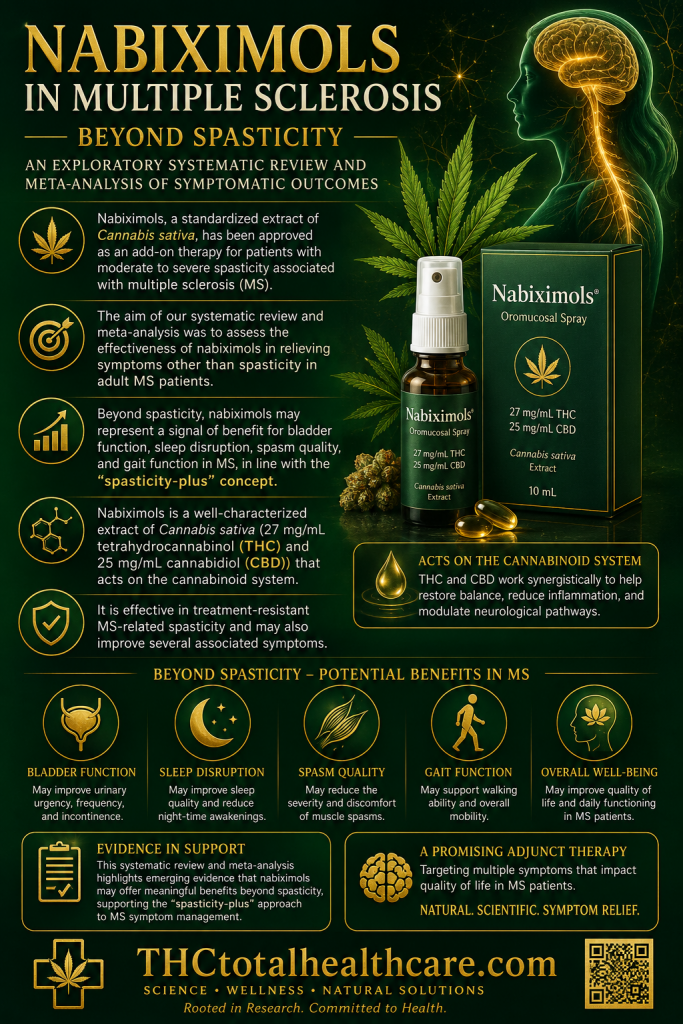
Nabiximols in Multiple Sclerosis: Beyond Spasticity-An Exploratory Systematic Review and Meta-Analysis of Symptomatic Outcomes

Nabiximols, a prescription cannabis-based oral spray containing approximately equal amounts of THC and CBD, is already used for treatment-resistant multiple sclerosis-related spasticity, but its benefits may extend further. In this systematic review and meta-analysis of 49 studies, nabiximols significantly improved bladder function, sleep disruption, spasm quality, gait function, and patients’ overall impression of change. The researchers concluded that nabiximols may provide broader symptomatic benefits in MS beyond spasticity, supporting the emerging “spasticity-plus” concept.

“Background/Objectives: Nabiximols, a standardized extract of Cannabis sativa, has been approved as an add-on therapy for patients with moderate to severe spasticity associated with multiple sclerosis (MS). Moreover, current Italian treatment algorithms suggest that cannabis-based therapies may have further relevance in the management of MS. The aim of our systematic review and meta-analysis was to assess the effectiveness of nabiximols in relieving symptoms other than spasticity in adult MS patients. 

Methods: A systematic search was conducted in Web of Science, MEDLINE (via PubMed), Cochrane CENTRAL and Embase on September 10, 2025. Study selection was performed according to the predefined PROSPERO protocol (CRD42022329952). Data were combined into a common denominator and examined using a random-effects model with meta-regression expressed as mean difference (MD) and a 95% confidence interval (CI). Risk of bias was assessed using the Cochrane risk of bias instrument (RoB2) and the Risk Of Bias In Non-randomized Studies of Interventions (ROBINS-I) tool. 

Results: Of the 49 eligible articles, 25 were included in the statistical analysis (2949 patients). Significant improvements in spasm quality (MD = -16.87; 95% CI = (-29.75)-(-3.99)), bladder function (MD = -16.38; 95% CI = (-22.18)-(-10.58)), sleep disruption (MD = -15.75; 95% CI = (-22.02)-(-9.49)) and gait function (timed walk MD(s) = -5.31; 95% CI(s) = (-9.88)-(-0.74)) were observed. Time-dependency was not significant. The subject global impression of change (SGIC) improved significantly after the first month (odds ratio (OR) = 1.69; 95% CI = (1.30)-(2.18)). 

Conclusion: Beyond spasticity, nabiximols may represent a signal of benefit for bladder function, sleep disruption, spasm quality, and gait function in MS, in line with the “spasticity-plus” concept. However, the evidence certainty was low to very low, and these findings should be considered exploratory.”

https://pubmed.ncbi.nlm.nih.gov/42506315

“Nabiximols is a well-characterized extract of Cannabis sativa (27 mg/mL tetrahydrocannabinol (THC) and 25 mg/mL cannabidiol (CBD)) that acts on the cannabinoid system. It is effective in treatment-resistant MS-related spasticity and may also improve several associated symptoms. Moreover, nabiximols has shown encouraging results in the treatment of various symptoms such as pain, gait function, sleep disruption, bladder function, fatigue, and tremors.”

https://www.mdpi.com/2076-3271/14/3/346


Cannabidiol and other non-psychotropic cannabinoids from Cannabis sativa as therapeutics for microglial-mediated neuroinflammation and neurodegeneration

Microglia are central regulators of inflammation in the brain, and their chronic overactivation is increasingly linked to neurodegenerative diseases. This review examines cannabidiol and other non-psychotropic cannabinoids from Cannabis sativa and highlights their ability to reduce microglial activation, suppress inflammatory signaling, and protect neural tissue from damage. The evidence suggests that these cannabinoids may act on several pathways involved in neuroinflammation and neurodegeneration, supporting their potential as therapeutic agents for conditions in which persistent brain inflammation drives disease progression.

“Non-psychotropic phytocannabinoids produced by Cannabis sativa, including cannabidiol, cannabigerol, cannabichromene and their varin and acidic analogs, are emerging as promising modulators of neuroinflammation, particularly through actions on microglia, the brain’s resident immune cells.

These compounds engage numerous receptors, ion channels, and intracellular signaling systems in microglia associated with neuroinflammation, and therefore are promising therapeutic candidates to treat chronic microglial inflammation-mediated neurodegenerative disorders.

Despite substantial public and scientific interest, comprehensive evaluation of their mechanistic diversity, disease-relevant potential, and translational gaps across neurodegenerative disorders remains limited. Commonly, gaps also exist between cannabis breeders’ and cultivators’ knowledge of phytocannabinoid diversity and translational scientists’ understanding of therapeutic potential.

In this review, we first provide an in-depth overview of the main non-psychotropic phytocannabinoids, their biosynthesis, and the genetics that control their production in cannabis. We then summarize the known mechanisms of action for each cannabinoid in microglial-expressed molecular targets and signaling pathways relevant to neuroinflammation.

Lastly, we review the effects of non-psychotropic phytocannabinoids in pre-clinical models and clinical trials of four neuroinflammation-associated neurodegenerative diseases: Alzheimer’s disease, Parkinson’s disease, multiple sclerosis, and Huntington’s disease.

Current evidence supports meaningful biological activity and complex cannabinoid-specific polypharmacology, yet substantial gaps persist, especially for cannabinoids other than cannabidiol; addressing these gaps in disease-relevant models will be essential for translating these compounds into future therapeutic strategies. Further, we anticipate the summarized information will foster collaboration between cannabis breeders/cultivators and applications scientists for therapeutic evaluation and development of emerging non-psychotropic phytocannabinoids.”

https://pubmed.ncbi.nlm.nih.gov/42121212

https://link.springer.com/article/10.1186/s42238-026-00445-5

Anti-Neuroinflammatory Cannabinoid Acids as a New Therapeutic Approach for Multiple Sclerosis

“Neuroinflammation is a hallmark of multiple sclerosis (MS). MS is marked by glial cell activation, autoreactive T cells, and the release of pro-inflammatory cytokines and free radicals. Current therapeutic strategies aim to modulate the immune response using disease-modifying therapies, to slow disease progression.

The specific aims of this study were: (a) to investigate the effect of cannabinoid acids on the release of glial neuroinflammatory mediators, (b) to examine the effect of intraperitoneally administered cannabinoid acids on symptoms of MS, and (c) to evaluate their effects on microglial and astrocyte activation and CD4+ T cell infiltration into the spinal cords of MS mice.

Exposure of BV2 microglia to cannabinoid acids attenuated lipopolysaccharide (LPS)-induced expression of inducible nitric oxide synthase by 40-90% it also reduced the release of nitric oxide and interleukin-17A. Among the cannabinoid acids tested, cannabidiolic acid (CBDA) significantly increased tumor necrosis factor alpha (TNFα) secretion by up to 40% in LPS-stimulated BV2 cells. Intraperitoneal administration of CBDA also resulted in a twofold increase in TNFα secretion in splenocytes isolated from MS mice, compared to untreated MS controls.

This study provides evidence that CBDA significantly reduces neurological scores, while both cannabinoid acids attenuate microgliosis, astrogliosis, and CD4+ T cell migration in lumbar spinal cord sections of MS mice. These compounds cross the blood-brain barrier (BBB) and act directly within the central nervous system. The consistent elevation of TNFα in the presence of CBDA across three experimental models suggests a distinctive immunomodulatory role for CBDA, with potential therapeutic implications in MS.”

https://pubmed.ncbi.nlm.nih.gov/41976267

“Cannabinoid acids, including tetrahydrocannabinolic acid (THCA) and cannabidiolic acid (CBDA), are precursors of the main active cannabinoids tetrahydrocannabinol (THC) and cannabidiol (CBD), respectively. CBDA and THCA are the main cannabinoids found in cannabis and have attracted attention for their potential immunomodulatory properties.”

“Our findings provide direct evidence supporting immunomodulatory effects of CBDA and THCA in both in vitro and in vivo models, highlighting their potential therapeutic relevance in MS.”

https://www.mdpi.com/1420-3049/31/7/1227

A sesquiterpene-rich essential oil from Cannabis sativa L. attenuates symptoms and neuroinflammation in experimental autoimmune encephalomyelitis model through a CB2-mediated signalling

“Background: The efficacy of cannabinoid-based medication as analgesic and neuroprotective in multiple sclerosis (MS) has been described, but little is known on other cannabis active compounds, such as terpenes.

Purpose: To investigate the therapeutic potential and molecular mechanism of non-psychotropic Cannabis sativa L. essential oil (EO) in an animal model of MS.

Methods: Chemical composition of EO was analyzed using GC-MS and GC-FID. Mouse model of experimental autoimmune encephalomyelitis (EAE) was employed to evaluate EO efficacy on pain (hot and cold plate test, von Frey test), motor disability (clinical score, rotarod), emotional alterations (sucrose splash test, tail suspension test, open field, light-dark box test) (n = 11). Tissues and LPS-stimulated BV2 cells were analyzed by Western blot, immunofluorescence, Luxol Fast Blue (LFB), hematoxylin and eosin (H&E) staining, UHPLCHRMS analysis.

Results: β-caryophyllene, α-humulene, and caryophyllene oxide were the most abundant EO constituents. Intranasal administration of EO attenuated thermal and mechanical hypersensitivity, promoted motor function recovery, and induced antidepressant- and anxiolytic-like effects in EAE mice. EO increased LFB staining and MBP content while reducing H&E staining. In spinal cord and hippocampal tissues, EO reduced proinflammatory microglia (CD11b/IBA-1 ratio), restored the IL-17/IL-10 balance, and promoted a shift of microglia toward an anti-inflammatory phenotype by increasing CD206 and FoxP3 expression. Mechanistically, EO markedly upregulated CB2 receptor expression in both EAE mice and LPS-stimulated BV2 cells. The protective effect of EO was abolished by a CB2 antagonist (AM630) but not by CB1 blockade (AM251).

Conclusion: Intranasal EO alleviates EAE symptoms and comorbidities through a CB2-mediated attenuation of neuroinflammation and demyelination.”

https://pubmed.ncbi.nlm.nih.gov/41875735

“Studies on the use of medical cannabis in the treatment of MS suggest a reduction in pain and spasticity and most clinical trials have shown symptom improvement with cannabis-based drugs administration”

“Present findings provide the first evidence that a sesquiterpene-rich EO obtained from non-psychoactive C. sativa mitigates EAE neurological symptoms, alleviating pain hypersensitivity, motor disability and mood-related comorbidities through a CB2-mediated anti-neuroinflammatory mechanism.”

https://www.sciencedirect.com/science/article/pii/S0944711326003041?via%3Dihub

Enhancing the endocannabinoid system to treat residual disease in relapse-free multiple sclerosis

“The recent introduction of High-Efficacy Therapies (HETs) in clinical practice has drastically reduced the frequency of acute inflammatory episodes and relapses, in patients with Multiple Sclerosis (MS), gradually shifting the interest of clinicians toward preventing disease progression and treating symptoms associated with the residual disease. This article summarizes the output of a recent meeting (June 2025, in Rome) among an Italian group of neurologists, who discussed about published evidence supporting the involvement of the endocannabinoid system (ECS) in MS spasticity and its associated symptoms. Sharing their clinical experiences about the silent progression of the disease, in patients with Relapse-Free Multiple Sclerosis (RFMS), treated with HETs, authors propose a new algorithm to treat residual disease in RFMS, by enhancing ECS with both cannabinoid agents and lifestyle interventions (diet and physical activity).”

https://pubmed.ncbi.nlm.nih.gov/41859417

“authors developed a treatment algorithm, emphasizing the importance of timely intervention both with an increase in endogenous cannabinoids, through diet and physical activity, and with the use of an exogenous cannabinoid agent such as nabiximols.”

https://www.frontiersin.org/journals/neurology/articles/10.3389/fneur.2026.1747131/full

“Nabiximols (brand name Sativex) is a pharmaceutical-grade, oromucosal spray containing a 1:1 ratio of cannabinoids THC and CBD derived from Cannabis sativa.”

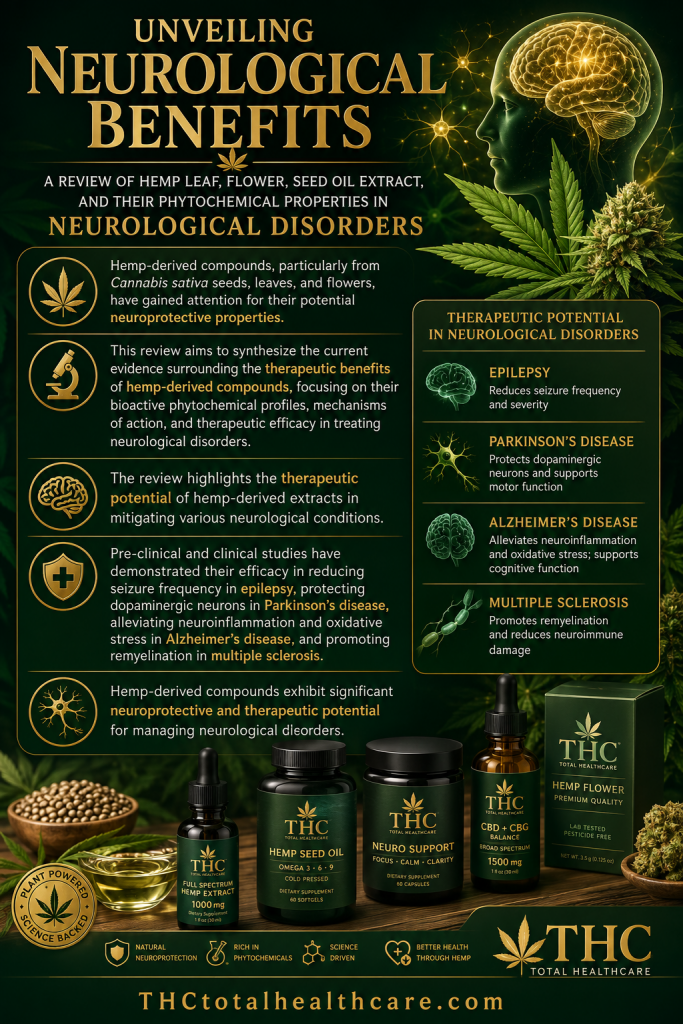
Unveiling Neurological Benefits: A Review of Hemp Leaf, Flower, Seed Oil Extract, and Their Phytochemical Properties in Neurological Disorders

“Neurological disorders such as epilepsy, Alzheimer’s disease, Parkinson’s disease, and multiple sclerosis present significant global health care challenges, with complex pathophysiology and limited therapeutic options that often carry substantial side effects.

Hemp-derived compounds, particularly from Cannabis sativa seeds, leaves, and flowers, have gained attention for their potential neuroprotective properties.

This review aims to synthesize the current evidence surrounding the therapeutic benefits of hemp-derived compounds, focusing on their bioactive phytochemical profiles, mechanisms of action, and therapeutic efficacy in treating neurological disorders.

A comprehensive review of pre-clinical and clinical studies was conducted, analyzing the phytochemical composition of hemp extracts, including cannabinoids (such as cannabidiol, CBD), terpenes, flavonoids, and polyunsaturated fatty acids. We explored their mechanisms of action through interactions with the endocannabinoid system, neurotransmitter receptors, inflammatory pathways, and oxidative stress mechanisms.

The review highlights the therapeutic potential of hemp-derived extracts in mitigating various neurological conditions. Pre-clinical and clinical studies have demonstrated their efficacy in reducing seizure frequency in epilepsy, protecting dopaminergic neurons in Parkinson’s disease, alleviating neuroinflammation and oxidative stress in Alzheimer’s disease, and promoting remyelination in multiple sclerosis.

The entourage effect, where cannabinoids, terpenes, and flavonoids work synergistically, enhances these therapeutic effects. Innovations in extraction technologies have optimized yield and preserved bioactivity, further enhancing clinical relevance.

Hemp-derived compounds exhibit significant neuroprotective and therapeutic potential for managing neurological disorders. However, challenges such as product standardization, safety profiles, and regulatory frameworks must be addressed for clinical translation. Further research is essential to optimize dosing, establish safety parameters, and develop standardized formulations, which will be crucial for fully harnessing the therapeutic potential of hemp-derived products in treating neurological conditions.”

https://pubmed.ncbi.nlm.nih.gov/41468178

https://www.liebertpub.com/doi/10.1177/25785125251410822