Lower Rates of Hepatocellular Carcinoma Observed Among Cannabis Users: A Population-Based Study

Hepatocellular carcinoma (HCC) is the most common form of primary liver cancer and remains a major cause of cancer death worldwide.

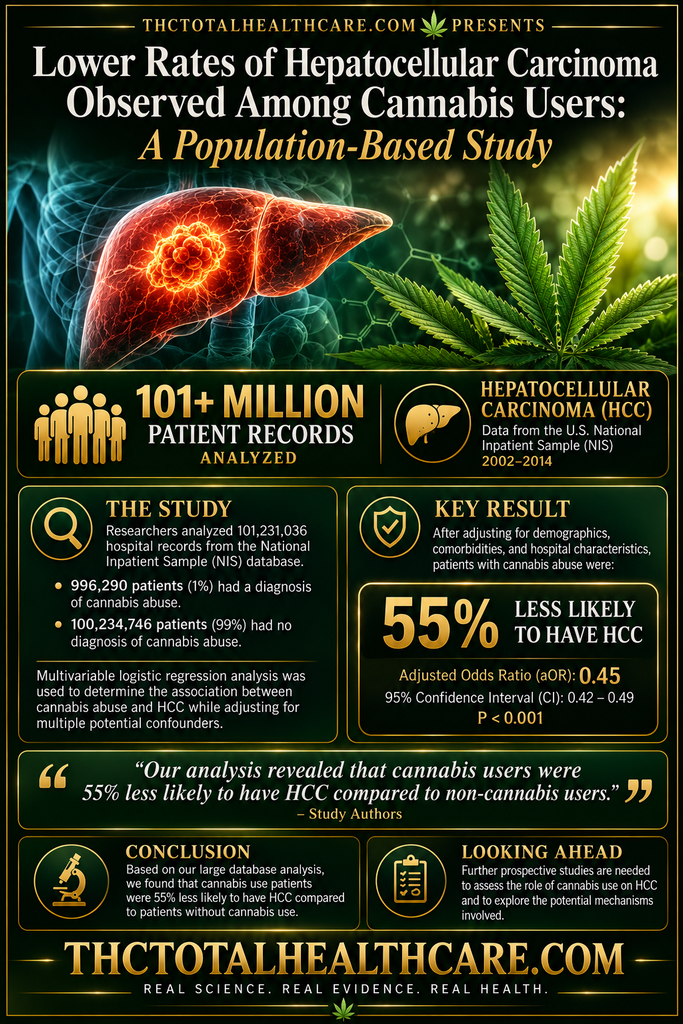
In a population-based study involving more than 101 million U.S. hospital patients, researchers found a striking association between cannabis use and HCC: after adjusting for multiple potential confounding factors, patients with documented cannabis use were 55% less likely to have hepatocellular carcinoma than patients without documented cannabis use.

The study adds large-scale human observational evidence to earlier preclinical research examining cannabinoids and liver cancer.

Background: Hepatocellular carcinoma (HCC) is one of the most common malignancies worldwide and the fourth leading cause of cancer deaths in the world. The association between HCC and cannabis has been identified in mice; however, to our knowledge has not been identified in humans. Therefore, we aim to investigate the relation between HCC and cannabis use in humans.

Methods: Using data from the National Inpatient Sample (NIS) database between 2002 and 2014, we identified the patients with HCC and cannabis use diagnosis using the International Classification of Disease 9th version codes (ICD-9). Then, we identified patients without cannabis use as the control group. We adjusted for multiple potential confounders and performed multivariable logistic regression analysis to determine the association between cannabis abuse and HCC.

Results: A total of 101,231,036 patients were included in the study. Out of the total, 996,290 patients (1%) had the diagnosis of cannabis abuse versus 100,234,746 patients (99%) in the control group without cannabis abuse. We noticed that patients with cannabis abuse were younger (34 vs 48 years), had more males (61.7% vs 41.4%) and more African Americans (29.9% vs 14.2%) compared with the control group (P<0.001 for all). Besides, patients with cannabis use had more hepatitis B, hepatitis C, liver cirrhosis, and smoking, but had less obesity and gallstones, (P<0.001 for all). Using multivariable logistic regression, and after adjusting for potential confounders, patients with cannabis abuse were 55% less likely to have HCC (adjusted Odds Ratio {aOR}, 0.45, 95% Confidence Interval {CI}, 0.42-0.49, P<0.001) compared with patients without cannabis abuse.

Conclusion: Based on our large database analysis, we found that cannabis use patients were 55% less likely to have HCC compared to patients without cannabis use. Further prospective studies are needed to assess the role of cannabis use on HCC.”

https://pubmed.ncbi.nlm.nih.gov/35651376

“Our analysis revealed that cannabis users were 55% less likely to have HCC compared to non-cannabis users.” 

https://www.cureus.com/articles/90568-lower-rates-of-hepatocellular-carcinoma-observed-among-cannabis-users-a-population-based-study#!

Cannabidiol and skeletal muscle insulin resistance: translational implications for exercise and rehabilitation medicine

Cannabidiol (CBD) is being studied for effects that extend beyond the nervous system, including its potential influence on metabolism and skeletal muscle function.

This review examines how CBD may affect insulin resistance in skeletal muscle, with particular attention to inflammation, oxidative stress, mitochondrial function and glucose metabolism. It also considers how these effects could relate to exercise and rehabilitation medicine.

The findings highlight a potential role for CBD in metabolic health and muscle recovery that warrants further investigation.

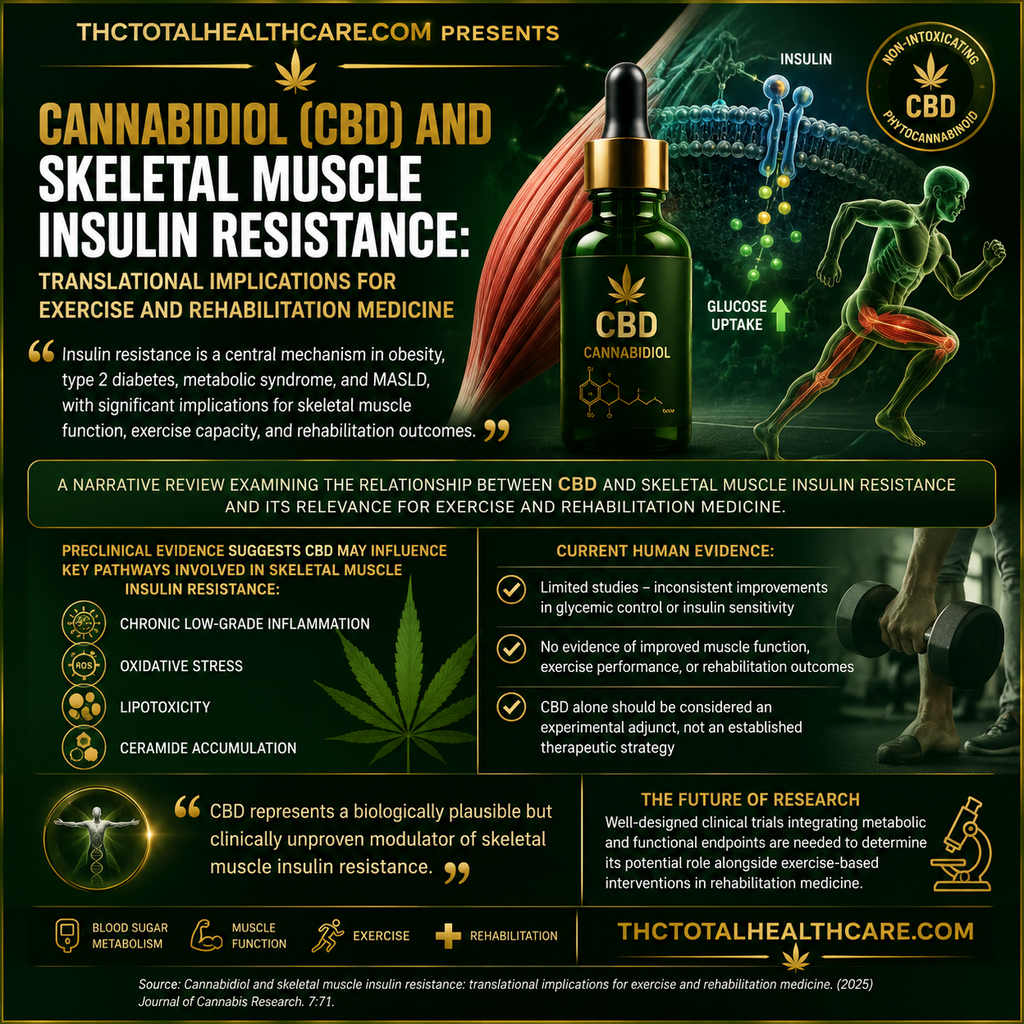
“Insulin Resistance (IR) is a central pathophysiological mechanism underlying obesity, type 2 diabetes mellitus, metabolic syndrome, and metabolic dysfunction-associated steatotic liver disease, with significant implications for skeletal muscle function, exercise capacity, and rehabilitation outcomes. Because skeletal muscle represents the primary site of insulin-stimulated glucose disposal, muscle insulin resistance is a key determinant of both metabolic health and physical performance.

Cannabidiol (CBD), a non-intoxicating phytocannabinoid derived from Cannabis sativa, has attracted increasing scientific interest due to its anti-inflammatory, antioxidant, and pleiotropic signaling properties.

This narrative review aims to examine the relationship between CBD and insulin resistance, with a particular focus on skeletal muscle biology and its relevance for exercise and rehabilitation medicine.

A structured literature search was conducted using major biomedical databases, including PubMed, Scopus, and Web of Science, to identify relevant preclinical and clinical studies. Evidence was synthesized narratively, with emphasis on skeletal muscle insulin resistance, endocannabinoid system signaling, potential mechanisms of CBD action, and clinical outcomes.

Preclinical data suggest that CBD may influence several pathways involved in skeletal muscle insulin resistance, including chronic low-grade inflammation, oxidative stress, lipotoxicity, and ceramide accumulation. However, current human studies remain limited and do not demonstrate consistent improvements in glycemic control or insulin sensitivity with CBD alone. Furthermore, evidence regarding its effects on muscle function, exercise performance, or rehabilitation outcomes is lacking.

In conclusion, CBD represents a biologically plausible but clinically unproven modulator of skeletal muscle insulin resistance. At present, it should be considered an experimental adjunct rather than an established therapeutic strategy. Future research should focus on well-designed clinical trials integrating metabolic and functional endpoints to determine its potential role alongside exercise-based interventions in rehabilitation medicine.”

https://pubmed.ncbi.nlm.nih.gov/42615071

https://www.pagepressjournals.org/bam/article/view/15541

Cannabidiol selectively attenuates lipotoxic immunometabolic inflammation in human macrophages

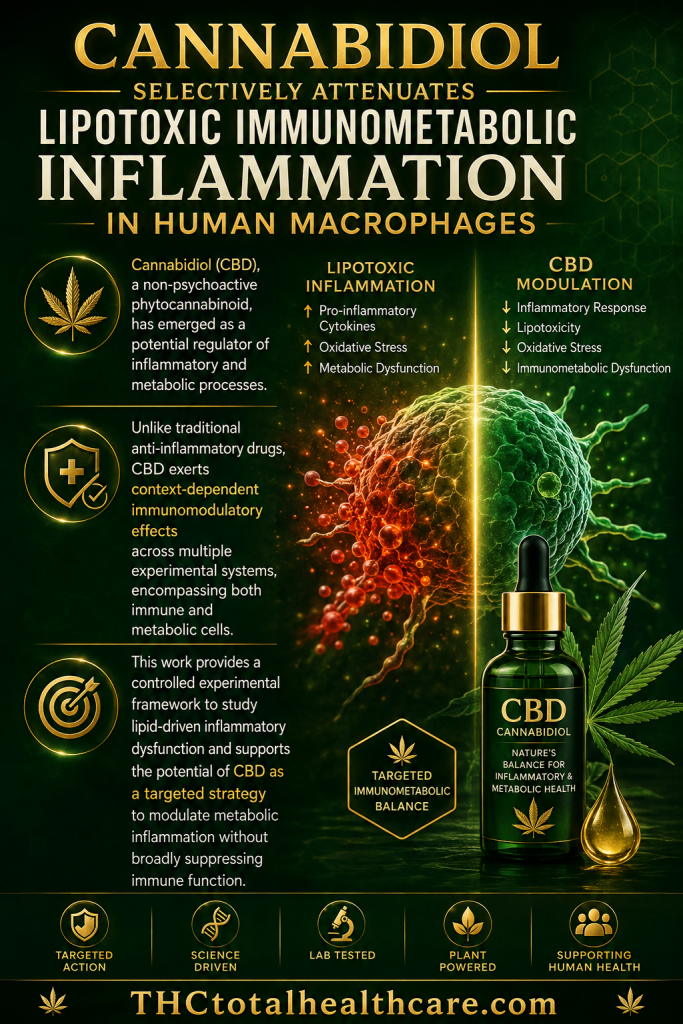
Lipotoxic inflammation caused by excess fatty acids can drive metabolic disease by altering immune-cell function. In human macrophages, cannabidiol (CBD) selectively reduced inflammatory and immunometabolic responses triggered by lipotoxic stress without broadly suppressing normal immune activity. The researchers concluded that CBD may have therapeutic potential for metabolic disorders characterized by chronic lipid-driven inflammation.

“The role of saturated fatty acid-induced immunometabolic stress in macrophage dysfunction during metabolic disease remains incompletely understood, particularly the interplay between inflammatory signaling and intracellular lipid handling.

We employed a tightly controlled palmitic acid (PA)-based lipotoxicity model in PMA-differentiated U937-derived human macrophage-like cells to investigate how lipid excess reshapes inflammatory responses and to evaluate the modulatory effects of cannabidiol (CBD).

PA exposure induced a metabolically stressed yet viable macrophage phenotype, characterized by a broad cytokine remodeling profile. This included induction of classical proinflammatory cytokines such as interleukin (IL)-6, together with activation of inflammasome-associated cytokines IL-1β and IL-18 and additional immunoregulatory mediators, while tumor necrosis factor alpha (TNF-α) contributed to the overall inflammatory profile in a multivariate analysis. These changes were accompanied by a significant, time-dependent storage of intracellular triglycerides (TG) consistent with lipid overload and altered lipid handling.

CBD co-treatment did not compromise cell viability but selectively attenuated PA-induced inflammatory response in a cytokine-dependent manner, with the most significant reduction observed at higher concentrations. In parallel, CBD significantly reduced intracellular TG accumulation under lipotoxic conditions.

Collectively, these findings define a lipotoxicity-associated macrophage phenotype driven by saturated fatty acids and identify CBD as a context-dependent modulator of immunometabolic inflammation.

This work provides a controlled experimental framework to study lipid-driven inflammatory dysfunction and supports the potential of CBD as a targeted strategy to modulate metabolic inflammation without broadly suppressing immune function.”

https://pubmed.ncbi.nlm.nih.gov/42534637

“Cannabidiol (CBD), a non-psychoactive phytocannabinoid, has emerged as a potential regulator of inflammatory and metabolic processes. Unlike traditional anti-inflammatory drugs, CBD exerts context-dependent immunomodulatory effects across multiple experimental systems, encompassing both immune and metabolic cells.”

“Overall, this work supports CBD as a context-dependent modulator of immunometabolism response in PMA-differentiated U937-derived macrophages and provides a controlled experimental framework for studying lipid-driven inflammatory dysfunction in U937-derived macrophages.”

https://www.frontiersin.org/journals/immunology/articles/10.3389/fimmu.2026.1873494/full

Cannabis Oil Prevents Early Hepatic Fibrosis, Inflammation, and Endothelial Dysfunction in a Sucrose-Rich Diet-Induced MASLD Model: Role of Cannabinoid Receptors

Metabolic dysfunction-associated steatotic liver disease (MASLD) can progress from excess liver fat to chronic inflammation, vascular dysfunction, and fibrosis. In this preclinical study, researchers found that cannabis oil prevented several early signs of liver injury in rats fed a sucrose-rich diet, including hepatic fibrosis, inflammation, and endothelial dysfunction. The protective effects were linked in part to cannabinoid receptor signaling, suggesting that compounds within cannabis oil may influence biological pathways involved in the early progression of metabolic liver disease. These findings provide mechanistic evidence for further investigation of cannabinoid-based approaches to preventing or slowing MASLD-related liver damage.

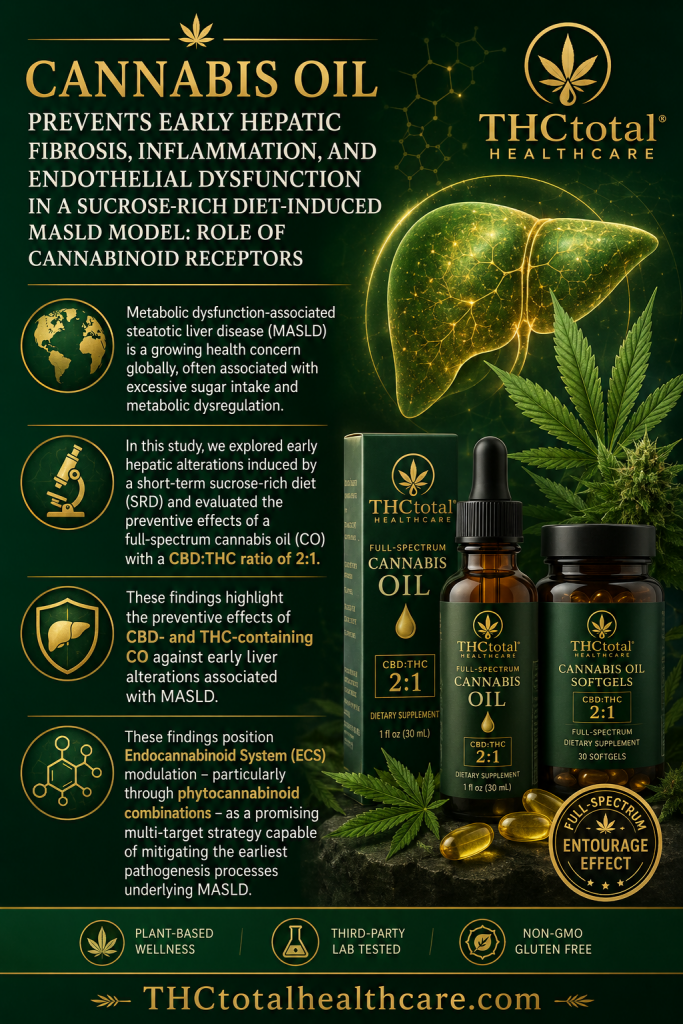
Introduction: Metabolic dysfunction-associated steatotic liver disease (MASLD) is a growing health concern globally, often associated with excessive sugar intake and metabolic dysregulation. In this study, we explored early hepatic alterations induced by a short-term sucrose-rich diet (SRD) and evaluated the preventive effects of a full-spectrum cannabis oil (CO) with a CBD:THC ratio of 2:1.

Methods: Male Wistar rats were assigned to three groups: reference diet, SRD, and SRD plus CO (SRD + CO). CO was administered daily to the SRD + CO group from the onset of SRD exposure and throughout the 3-week experimental period. Liver fibrosis was assessed through hydroxyproline content, total collagen, TGF-β, and CB1R expression. Endothelial dysfunction was evaluated by measuring nitric oxide (NO) levels, endothelial nitric oxide synthase, myeloperoxidase, and VCAM-1 expression. Inflammatory responses were analyzed through hepatic expression of IL-10, TNF-α, PAI-1, MCP-1, F4/80, and CB2R. Transmission electron microscopy was performed on liver tissue to evaluate ultrastructural alterations.

Results: SRD induced significant hepatic fibrosis, endothelial dysfunction, and inflammation. Ultrastructural analysis revealed nuclear alterations, including chromatin condensation, reduced mitochondrial number, intracellular lipid accumulation, increased glycogen deposits, and stromal changes characterized by perisinusoidal and periportal fibrosis with inflammatory cell infiltration. CO administration attenuated these pathological features and was accompanied by modulation of cannabinoid receptor expression.

Conclusion: These findings highlight the preventive effects of CBD- and THC-containing CO against early liver alterations associated with MASLD.”

https://pubmed.ncbi.nlm.nih.gov/42367574

“Phytocannabinoids, such as cannabidiol (CBD) and Δ9-tetrahydrocannabinol (THC), interact with the ECS and various other signaling pathways, providing antioxidant, anti-inflammatory, and antifibrotic properties. Full-spectrum cannabis extracts, which combine phytocannabinoids like CBD and THC, have emerged as therapeutic candidates in preclinical studies for the treatment of liver disorders associated with metabolic dysfunction. Previous studies conducted by our group have demonstrated hepatoprotective and antioxidant effects following the administration of full-spectrum COs in rats fed an SRD for 3 weeks.”

“The present study was designed to evaluate the preventive effects of daily CO administration during the early stages of SRD-induced MASLD.”

“Daily CO administration prevented these alterations and the SRD-induced increase in cannabinoid receptor protein levels.”

“These findings position ECS modulation – particularly through phytocannabinoid combinations – as a promising multi-target strategy capable of mitigating the earliest pathogenesis processes underlying MASLD.”

https://karger.com/mca/article/9/1/163/950066/Cannabis-Oil-Prevents-Early-Hepatic-Fibrosis

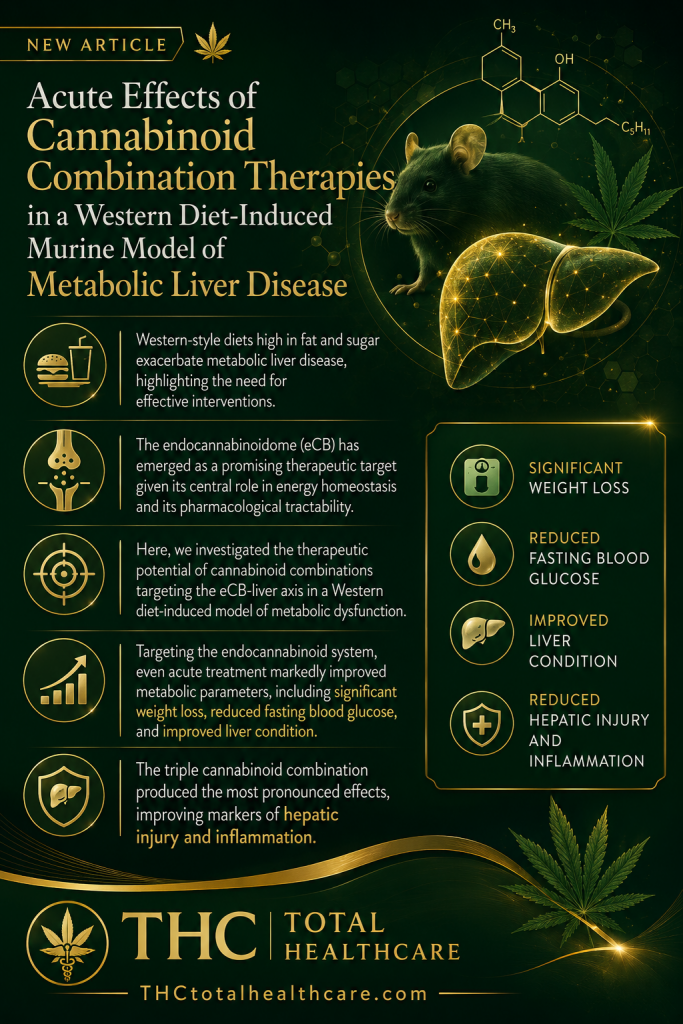
Acute Effects of Cannabinoid Combination Therapies in a Western Diet-Induced Murine Model of Metabolic Liver Disease

Metabolic liver disease is closely tied to inflammation, lipid accumulation, and broader metabolic dysfunction, making it an important target for cannabinoid research. In this preclinical study, researchers tested cannabinoid combination therapies in mice with Western diet–induced metabolic liver disease and found beneficial acute effects on several markers linked to liver injury and metabolism. The results showed that specific cannabinoid combinations could improve aspects of hepatic and metabolic function, supporting the idea that carefully selected cannabinoid profiles may influence multiple pathways involved in fatty liver disease. The study adds to growing evidence that combination cannabinoid therapies may have therapeutic potential in metabolic liver disorders.

“Pharmacological treatment of metabolic-dysfunction-associated steatohepatitis remains challenging due to its complex pathophysiology. The endocannabinoidome (eCB) has emerged as a promising therapeutic target given its central role in energy homeostasis and its pharmacological tractability. Western-style diets high in fat and sugar exacerbate metabolic liver disease, highlighting the need for effective interventions.

Here, we investigated the therapeutic potential of cannabinoid combinations targeting the eCB-liver axis in a Western diet-induced model of metabolic dysfunction.

Two weeks of treatment reduced body weight, improved glycaemic control, and ameliorated liver pathology. These effects were accompanied by decreased liver weight, improved liver enzyme profiles, and reduced histological features of steatosis and injury.

Overall, these findings suggest that modulation of the eCB system can induce acute improvements in metabolic and hepatic parameters under conditions of diet-induced metabolic stress. These results support further investigation into the eCB system as a therapeutic target, particularly to elucidate underlying mechanisms and longer-term effects.”

https://pubmed.ncbi.nlm.nih.gov/42278403

“To our knowledge, this is the first study to investigate the therapeutic effects of combination cannabinoid treatment in a mouse model of metabolic liver disease.

Targeting the endocannabinoid system, even acute treatment markedly improved metabolic parameters, including significant weight loss, reduced fasting blood glucose, and improved liver condition.

The triple cannabinoid combination produced the most pronounced effects, improving markers of hepatic injury and inflammation.

Mechanistically, modulation of the LPI/GPR55 and GPR119/incretin axes highlights the therapeutic potential of targeting the gut–liver axis using small-molecule agonists and endogenous bioactive lipids.”

https://www.mdpi.com/1422-0067/27/11/4872

Immunohistochemical analysis and distribution of lymphocytes and Kupffer cells in the liver of rats with long-term experimental use of hemp seed oil

Hemp seed oil is being studied not only for its nutritional value, but also for its effects on immune activity within the liver. In this long-term animal study, researchers examined lymphocytes and Kupffer cells—key immune cells involved in hepatic defense, inflammation, and tissue maintenance—after prolonged hemp seed oil use. The findings showed measurable changes in the distribution and activity of these immune cells without evidence of harmful disruption, suggesting that hemp seed oil may help modulate liver immune function and support hepatic homeostasis.

Objective: Aim: To conduct histological and immunohistochemical analysis and distribution of lymphocytes and Kupffer cells in the liver of rats with long-term experimental use of hemp seed oil (HSO).

Patients and methods: Materials and Methods: 26 sexually mature male rats (180-230 g, 5-7 months old) were divided into three groups: experimental (n=14, 0.5 ml/kg/day HSO orally for 10 weeks), control (n=6, 0.1 ml/kg/day HSO orally for 10 weeks), and intact (n=6). Histological and immunohistochemical (CD3, CD20, CD56, CD68) studies, alongside quantitative analysis of lymphocyte and macrophage distribution in hepatic lobules, were performed. Statistical significance was assessed using Mann-Whitney and Pearson tests, with p<0.05 considered significant.

Results: Results: After 10 weeks of 0.5 ml/kg/day HSO, 71.43% of experimental rats developed mild fatty liver disease (Kleiner grade S1 steatosis), a significant difference from the control group (p<0.0001). No histological inflammation or necrotic changes in hepatocytes were observed. Small numbers of CD3 lymphocytes were present in portal tracts, without extending into or damaging the adjacent parenchyma. CD20 and NK resident lymphocytes were sparse. Aggregates of CD68-positive Kupffer cells were most common near liver lobule triads. The average number of Kupffer cells (5.79±0.06 per 0.01 mm2) in the experimental group significantly (p<0.001) exceeded the control by 1.49 times, suggesting hyperplasia of specialized macrophages and their increased role in liver immune function.

Conclusion: Conclusions: Ten weeks of experimental use indicates that hemp seed oil is safe to consume at a dose of 0.5 ml/kg/day.”

https://pubmed.ncbi.nlm.nih.gov/42048501

Cannabidiol as a Modulator of the Gut-Liver Axis: Clinical and Pharmacological Insights into Hepatic and Metabolic Disorder Therapies

“A non-intoxicating substance produced from Cannabis sativa, cannabidiol (CBD) has shown promise as a treatment for metabolic and hepatic diseases, primarily due to its capacity to alter the gut-liver axis.

A vital bidirectional communication pathway, the gut-liver axis is where substances produced from the liver affect gut homeostasis and gut-derived microbial products and metabolites influence liver health. Conditions including alcoholic liver disease (ALD), metabolic syndrome, and non-alcoholic fatty liver disease (NAFLD) are mostly caused by dysregulation of this axis.

According to preclinical research, CBD has hepatopro-tective benefits via improving the integrity of the gut barrier, decreasing intestinal permea-bility, altering the gut microbiota, and suppressing inflammatory signaling pathways such NF-κB and NLRP3 inflammasome activation. Furthermore, CBD improves insulin sensitivi-ty and lowers hepatic steatosis via modifying lipid and glucose metabolism via the PPARγ and CB1/CB2 receptor pathways. Its antioxidant qualities also help to lessen cellular dam-age and oxidative stress in hepatic tissues.

Despite these encouraging results, there is still inconsistency in the clinical data because of variations in dosage, formulation, administra-tion method, and patient-specific variables including liver function and microbiota makeup. Furthermore, broad therapeutic usage is restricted by issues with hepatic metabolism, pos-sible drug-drug interactions, and regulatory obstacles.

This review highlights information gaps, critically assesses the available preclinical and clinical evidence, and investigates the mechanisms underlying CBD’s impact on the gut-liver axis. Additionally, it identifies po-tential avenues for future optimization of CBD-based therapies targeting liver and metabol-ic illnesses through personalized medicine, sophisticated delivery methods, and standard-ized clinical trial procedures.”

https://pubmed.ncbi.nlm.nih.gov/41935387

https://www.eurekaselect.com/article/154488


Cannabis oil modulates liver alterations and endocannabinoid system changes in a female rat model of diet-induced MASLD

“Introduction: Metabolic dysfunction-associated steatotic liver disease (MASLD) is closely linked to alterations in liver lipid metabolism, oxidative stress, fibrosis, and dysregulation of the endocannabinoid system (ECS). Although increasing evidence supports a role for cannabinoids in metabolic disorders, most preclinical studies have been conducted in male models, leaving female-specific responses largely unexplored.

Methods: This study evaluated the effects of oral administration of a full-spectrum cannabis oil (CBD:THC 2:1) on MASLD-related alterations and ECS regulation in female Wistar rats fed a sucrose-rich diet (SRD). Rats were assigned to reference diet (RD), SRD, or SRD plus cannabis oil (1 mg/kg/day) for 3 weeks.

Results: SRD-fed rats developed liver steatosis and increased NAFLD activity score (NAS), accompanied by enhanced de novo lipogenesis, reduced mitochondrial fatty acid oxidation, increased oxidative stress, early fibrotic changes, and ECS overactivation. Cannabis oil administration improved liver lipid metabolism, reduced NAS and fibrosis markers, attenuated lipid peroxidation and oxidative stress, increased NrF2 and decreased NF-κB p65 expression, and normalized hepatic CB1 expression and circulating endocannabinoid levels.

Discussion: These findings demonstrate that full-spectrum cannabis oil is associated with improved MASLD-related outcomes and modulation of ECS tone in a female-specific model of diet-induced metabolic liver disease.”

https://pubmed.ncbi.nlm.nih.gov/41883411

“For millions of years, medicinal plants have been employed in the treatment and handling of liver diseases”

 “Our results indicate that cannabis oil with this particular CBD:THC ratio may serve as a natural nutraceutical to help prevent metabolic disorders linked to hepatic steatosis, oxidative stress, liver fibrosis, and MASLD.”

https://www.frontiersin.org/journals/nutrition/articles/10.3389/fnut.2026.1770150/full

Cannabidiol and cannabigerol ameliorate steatotic liver disease via phosphocreatine buffering and lysosomal restoration

Background and purpose: Cannabidiol (CBD) and cannabigerol (CBG) are non-psychoactive phytocannabinoids with emerging therapeutic potential in metabolic dysfunction-associated steatotic liver disease (MASLD). However, the molecular mechanisms underlying their beneficial effects remain incompletely understood. In this study, we assessed the metabolomic and lipidomic impact of CBD and CBG in a mouse model of diet-induced obesity and MASLD.

Experimental approach: Male C57Bl/6 mice fed on a high-fat diet for 14 weeks were treated for 4 weeks with daily intraperitoneal CBD, CBG or vehicle. Assessments included body composition, indirect calorimetry, glucose tolerance, serum biochemistry and VLDL-triglyceride profiling. Hepatic mechanisms were examined by metabolomics, lipidomics, creatine kinase activity, cathepsin activity-based probes and gene/protein expression, with a choline-deficient diet cohort to test phospholipid-dependence of CBG.

Key results: CBD or CBG treatment improved glycaemic control, reduced hepatic triglycerides and normalised serum lipids, without affecting energy expenditure. Metabolomics revealed increased hepatic phosphocreatine and creatine with enhanced creatine kinase activity, indicating phosphocreatine-based energy buffering independent of fatty acid oxidation changes. Lipidomics showed reduced triglycerides and ceramides, with increased phospholipids and lysobisphosphatidic acids, correlating with restored hepatic cathepsin activity and improved lysosomal lipid degradation. CBG was ineffective in choline-deficient MASLD, indicating phospholipid pathway dependence.

Conclusions and implications: These findings identify a novel, endocannabinoid system-independent mechanism by which CBD and CBG enhance hepatic energy buffering and lysosomal function, contributing to improved liver lipid handling and supporting phytocannabinoids as promising MASLD therapeutics.”

https://pubmed.ncbi.nlm.nih.gov/41785476

Cannabidiolic acid as a modulator of lipid metabolism in the liver of rats with metabolic-associated steatotic liver disease

“This study investigated the effects of cannabidiolic acid (CBDA) on hepatic lipid metabolism in a rat model of metabolic dysfunction-associated steatotic liver disease (MASLD), addressing the need for natural therapeutic compounds targeting lipid metabolism disorders.

Male Wistar rats were fed a standard diet or a high-fat diet (HFD) for 8 weeks. During the last 14 days, half of the rats received CBDA intragastrically (0.1 mg/kg BW). The hepatic lipid fractions were analyzed via gas-liquid chromatography, and protein expression was assessed via Western blotting and immunohistochemistry. Compared with the control diet, the HFD significantly increased the expression of fatty acid transporters CD36, FATP5, and FABPpm and elevated the levels of free fatty acids (FFAs), triacylglycerols, diacylglycerols, and phospholipids compared with controls.

CBDA treatment in HFD-fed rats significantly decreased CD36, FABPpm, and FATP5 expression as well as total diacylglycerol and phospholipid concentrations. CBDA also decreased the saturated fatty acid content in the FFA and phospholipid fractions while increasing omega-3 polyunsaturated fatty acids in the diacylglycerol and triacylglycerol fractions.

CBDA ameliorated HFD-induced hepatic steatosis by modulating fatty acid transporter expression, reducing harmful lipid accumulation and improving fatty acid composition.

These findings suggest the potential of CBDA as a therapeutic agent for MASLD through the targeting of multiple dysregulated pathways in hepatic lipid metabolism, potentially limiting disease progression.”

https://pubmed.ncbi.nlm.nih.gov/41792203

https://www.nature.com/articles/s41598-026-41130-0

“Cannabidiolic acid (CBDA) is a non-psychoactive cannabinoid found in raw, fiber-type hemp and cannabis plants”