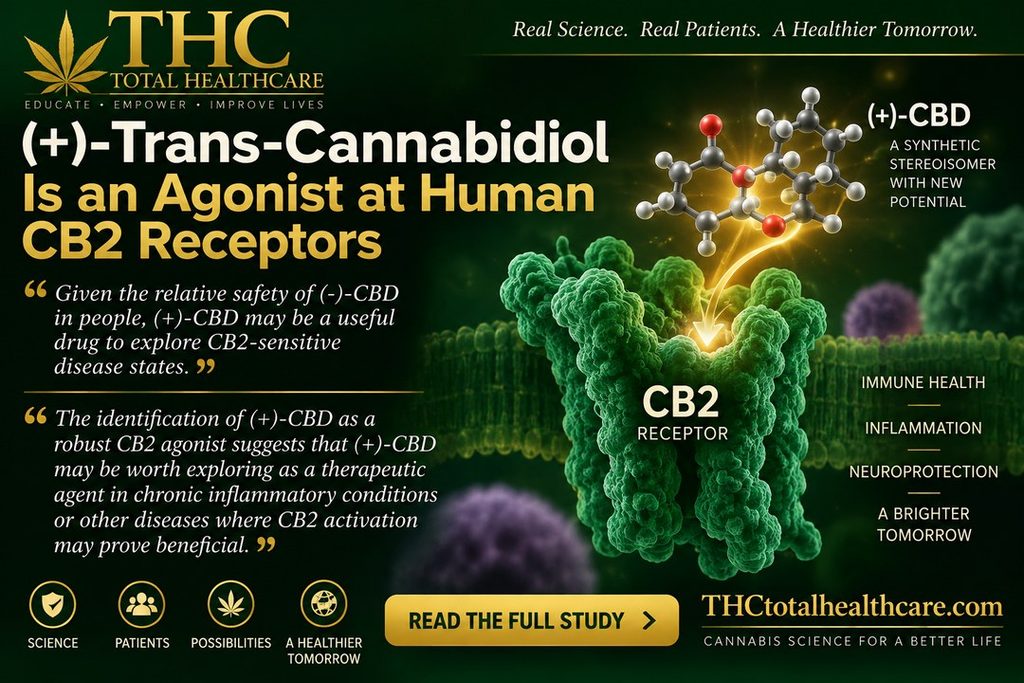
(+)-Trans-Cannabidiol Is an Agonist at Human CB2 Receptors

A new 2026 study reports that (+)-trans-cannabidiol [(+)-CBD] acts as an agonist at human CB2 cannabinoid receptors, activating a major receptor of the endocannabinoid system involved in immune and inflammatory signaling.

Researchers found that (+)-CBD produced a strong, concentration-dependent CB2 response, reaching roughly 90% of the maximum effect produced by the reference cannabinoid agonist CP55940. Additional testing indicated that the compound acts through the receptor’s primary, or orthosteric, binding site.

The findings show that different molecular forms of cannabidiol can interact with cannabinoid receptors in very different ways. The researchers conclude that (+)-CBD may deserve further study in CB2-sensitive disease states, adding another layer to our understanding of how cannabinoid chemistry can influence the human endocannabinoid system.

“(-)-trans-Cannabidiol ((-)-CBD) is a principal phytocannabinoid from Cannabis sativa. (-)-CBD has complex pharmacology but is a relatively weak inhibitor of CB1 and CB2 receptor signaling. Cannabidiol has two chiral centres and thus four stereoisomers. (+)-trans-CBD ((+)-CBD) has a higher affinity than (-)-CBD at CB1 and CB2, but its pharmacodynamic effects at these receptors are incompletely described.

We examined the activity of (+)-CBD at human CB1 and CB2 receptors using a fluorescence-based assay of membrane potential in AtT20 cells stably expressing CB1 or CB2 receptors.

(+)-CBD produced a rapid, concentration-dependent hyperpolarization in CB2-expressing cells (pEC50 6.63 ± 0.08) with a maximal effect 90% of the response to CP55940. The CB2 response was blocked by pertussis toxin pretreatment and competitively inhibited by the CB2 antagonist AM630 (Schild slope 1.1 ± 0.1). (+)-CBD was a low-efficacy, low-potency CB1 agonist and inhibited somatostatin-receptor effects at high concentrations (10-30 μM). (+)-CBD had no effect on the membrane potential of AtT20 wild-type cells. In silico modeling of ligand interactions with CB2 indicated that (+)-CBD but not (-)-CBD formed an H-bond with Ser285, a residue crucial for agonist activation of CB2.

Our data suggests (+)-CBD acted as a CB2 agonist via the orthosteric binding site on the receptor. Synthetic CBD, including (+)-CBD, has previously been administered in clinical trials, presumably without consideration of its potential CB2 agonist activity.

Given the relative safety of (-)-CBD in people, (+)-CBD may be a useful drug to explore CB2-sensitive disease states.”

https://pubmed.ncbi.nlm.nih.gov/42745361

“This study emphasizes the importance of understanding the molecular actions of the enantiomers of chiral cannabinoids. Although the safety of (+)-CBD cannot simply be assumed to be the same as (−)-CBD, the identification of (+)-CBD as a robust CB2 agonist suggests that (+)-CBD may be worth exploring as a therapeutic agent in chronic inflammatory conditions or other diseases where CB2 activation may prove beneficial.”

https://bpspubs.onlinelibrary.wiley.com/doi/10.1002/prp2.70325
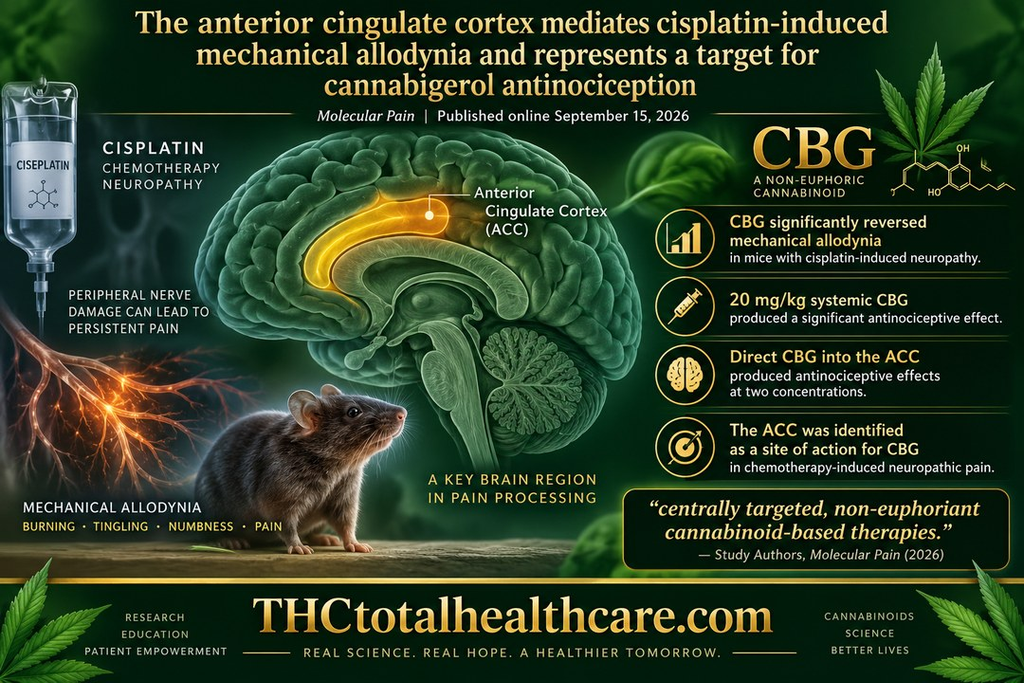
The anterior cingulate cortex mediates cisplatin-induced mechanical allodynia and represents a target for cannabigerol antinociception

Chemotherapy-induced peripheral neuropathy can cause persistent burning, tingling, numbness and pain long after cancer treatment ends. A new 2026 study investigated how the brain contributes to this neuropathic pain and whether cannabigerol (CBG), a non-euphoric cannabinoid, can reduce it.

Using a mouse model of cisplatin-induced neuropathy, researchers found that CBG significantly reversed mechanical allodynia. They also identified the anterior cingulate cortex, a brain region involved in processing pain, as an important part of the neuropathic pain response. Directly administering CBG into this region produced antinociceptive effects.

The findings suggest that CBG can act within central pain-processing circuits and identify the anterior cingulate cortex as a potential target for cannabinoid-based treatment of chemotherapy-induced neuropathic pain. The researchers say the results highlight the potential for “centrally targeted, non-euphoriant cannabinoid-based therapies.”

“Chemotherapy-induced peripheral neuropathy (CIPN) is a prevalent and debilitating consequence of cancer treatment with limited effective therapeutic options. While peripheral nerve injury is a key driver, emerging evidence suggests that maladaptive plasticity within central pain circuits, including the anterior cingulate cortex (ACC), contributes to the maintenance of neuropathic pain.

Here, we tested the hypothesis that the ACC is a critical substrate for cisplatin-induced mechanical allodynia and a target for cannabigerol (CBG)-mediated antinociception.

Adult male C57BL/6 mice received cisplatin (5 mg/kg, i.p., once weekly for four weeks) to induce CIPN. Mechanical allodynia was assessed using electronic von Frey testing.

Systemic administration of CBG (20 mg/kg, i.p.) significantly reversed mechanical allodynia in CIPN mice without affecting baseline thresholds in non-neuropathic animals, indicating a state-dependent effect. Chemogenetic inhibition of ACC neurons using hM4Di DREADDs similarly attenuated mechanical allodynia, identifying the ACC as a functionally relevant component of the CIPN pain state. To determine whether CBG acts within this circuit, bilateral intra-ACC microinjections of CBG (20 nM and 20 µM) were performed, both of which produced transient antinociceptive effects.

These findings demonstrate that the ACC contributes to the maintenance of mechanical allodynia in CIPN and establish this region as a site of action for CBG.

Together, our results support a model in which the ACC represents a convergent cortical mechanism underlying pathological pain and highlight the potential for centrally targeted, non-euphoriant cannabinoid-based therapies.”

https://pubmed.ncbi.nlm.nih.gov/42744343/

“In conclusion, this study identifies the ACC as a hub in the maintenance of mechanical allodynia in a model of CIPN. By demonstrating that chemogenetic inhibition of the ACC reverses hypersensitivity and that both systemic and local administration of CBG produce antinociceptive effects, our findings link circuit-level dysfunction to a pharmacologically targetable mechanism within this region. These results support a model in which increased or dysregulated ACC neuronal activity may represent a convergent feature of pathological pain states. Importantly, these findings demonstrate that CBG can act within the ACC to modulate mechanical allodynia. Future studies identifying the receptor targets and circuit mechanisms through which CBG acts within the ACC will be essential for refining therapeutic strategies for chronic pain.”

https://journals.sagepub.com/doi/10.1177/17448069261491110

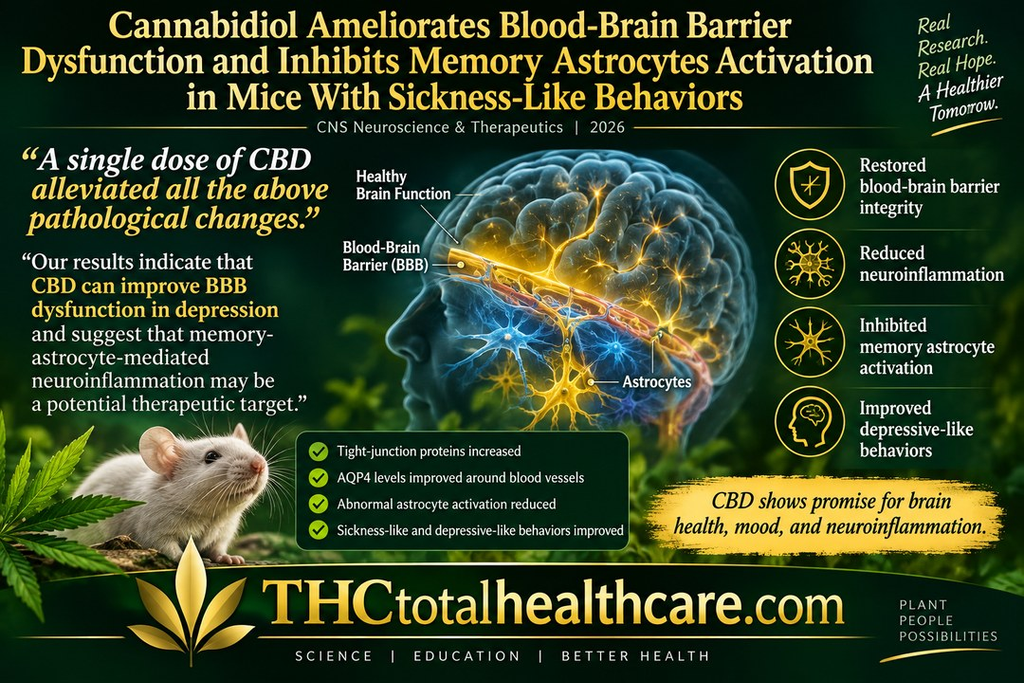
Cannabidiol Ameliorates Blood-Brain Barrier Dysfunction and Inhibits Memory Astrocytes Activation in Mice With Sickness-Like Behaviors

A new 2026 study published in CNS Neuroscience & Therapeutics found that cannabidiol (CBD) improved blood-brain barrier dysfunction, reduced neuroinflammation, and alleviated depressive-like behaviors in mice. The researchers found that sickness-like mice showed weakened blood-brain barrier integrity, reduced protective tight-junction proteins, abnormal astrocyte activation, and increased inflammation in the brain.

A single dose of CBD improved these changes, restoring important blood-brain barrier markers while reducing abnormal astrocyte activity and neuroinflammation. The researchers also identified a particularly interesting target called “memory astrocytes”—astrocytes that can respond more rapidly and strongly when exposed to a second inflammatory challenge.

The study found that CBD inhibited this memory-astrocyte-associated secondary inflammatory response, helping protect the blood-brain barrier and improve behavior. The researchers concluded that CBD may improve blood-brain barrier dysfunction associated with depression and identified memory-astrocyte-mediated neuroinflammation as a potential therapeutic target.

“Background: Blood-brain barrier (BBB) dysfunction has been increasingly implicated in the pathophysiology of depression; however, effective therapeutic strategies targeting this pathology remain limited. This study aimed to investigate the effect of cannabidiol (CBD) on improving depressive-like behaviors and BBB impairment, as well as its underlying mechanism.

Methods: Depressive-like behaviors in mice were assessed via exploratory and despair-like tests. BBB integrity was evaluated by examining tight junction protein expression in endothelial cells and AQP4 reduction from the perivascular membrane. Astrocyte activation and neuroinflammation were also measured. The therapeutic effects of a single CBD dose were examined.

Results: Mice with depressive-like phenotypes showed reduced exploratory behavior and increased despair-like behavior. In the BBB, the expression of tight junction proteins in endothelial cells was downregulated; in astrocytes, decreased AQP4 expression was observed, abnormal activation was enhanced, and neuroinflammation was elevated. A single dose of CBD alleviated all the above pathological changes. Further studies demonstrated that CBD exerted its effects by inhibiting memory astrocyte-associated secondary neuroinflammation, thereby alleviating depressive-like behaviors in mice with depressive-like phenotypes.

Conclusion: Experimental results show that CBD treatment can improve BBB dysfunction in depression and further indicates that targeted inhibition of memory astrocytes-mediated neuroinflammation may promote the treatment of depression.”

https://pubmed.ncbi.nlm.nih.gov/42747207

“Cannabidiol (CBD), a natural extract from cannabis, possesses multiple biological functions including cardioprotection, anti-inflammation, anti-cancer, anti-oxidation, and neuroprotection. Additionally, it plays indispensable roles in relieving depression and regulating BBB function]. CBD ameliorates depression by upregulating brain-derived neurotrophic factor, inhibiting neuroinflammation, alleviating oxidative stress, and modulating neurotransmitter transmission.”

https://onlinelibrary.wiley.com/doi/10.1002/cns.71168

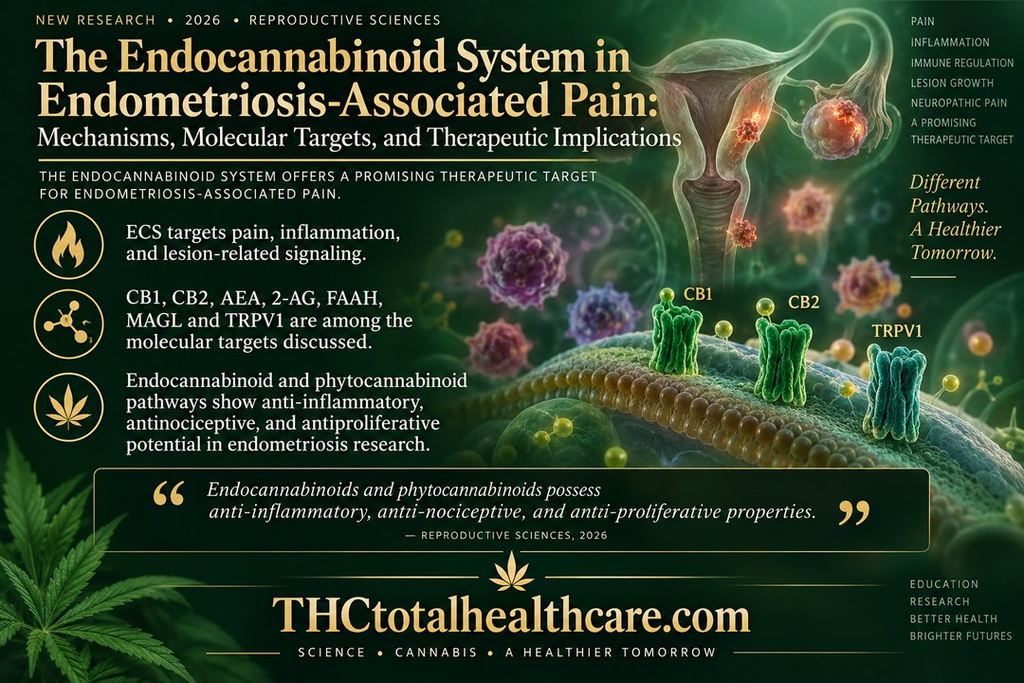
The Endocannabinoid System in Endometriosis-Associated Pain: Mechanisms, Molecular Targets, and Therapeutic Implications

A new 2026 review published in Reproductive Sciences examines the endocannabinoid system (ECS) as a therapeutic target for endometriosis-associated pain, a condition that can cause severe pelvic pain, painful menstruation, painful intercourse, and other chronic symptoms. The authors highlight the ECS because of its established roles in regulating pain, inflammation, and immune activity.

The review found that cannabinoids may influence three major mechanisms involved in endometriosis-associated pain: inflammation, pain signaling and sensitization, and the growth of endometriotic lesions. Cannabinoids interact with both cannabinoid and non-cannabinoid receptors found in endometriotic tissue, while also reducing inflammatory signaling from immune cells such as mast cells and macrophages.

The researchers conclude that the endocannabinoid system is a promising therapeutic target for endometriosis-associated pain, with cannabinoid therapies showing potential to regulate nociception, inflammation, and lesion proliferation. They call for clinical trials to further evaluate cannabinoid-based treatments for people living with endometriosis.

“Endometriosis is a chronic gynecological disorder affecting approximately 10% of reproductive-age women, characterized by the ectopic growth of endometrial tissue and severe pain, including dysmenorrhea, chronic pelvic pain, dyspareunia, dysuria, and dyschezia. Current treatments are limited in efficacy and associated with significant side effects, underscoring the urgent need for novel therapeutic strategies.

The endocannabinoid system (ECS) has emerged as a promising therapeutic target, given its well-established roles in pain modulation, inflammation, and immune regulation. Epidemiological evidence demonstrates that women with endometriosis increasingly use cannabis for symptom self-management, yet the underlying mechanisms remain poorly characterized.

This review integrates preclinical and human evidence to comprehensively evaluate the mechanistic basis of cannabinoid efficacy in endometriosis-associated pain. Evidence from in vitro studies and animal models indicates that cannabinoids target three main mechanisms of endometriosis-associated pain, including inflammation, nociceptive signaling, and lesion proliferation.

Cannabinoids suppress pain signaling and sensitization by interacting with cannabinoid and non-cannabinoid receptors expressed in endometriotic lesions. Cannabinoids attenuate endometriosis-induced inflammation by inhibiting proinflammatory cytokine signaling and reducing the release of inflammatory mediators by mast cells and peritoneal macrophages. Cannabinoids also exert antiproliferative effects in endometriosis models, thereby suppressing the growth of endometriotic lesions.

In conclusion, the ECS is a promising therapeutic target for endometriosis-associated pain, as it regulates nociception, inflammation, and proliferation. These promising findings highlight the potential therapeutic benefits of cannabinoids for endometriosis-associated pain, warranting the need for clinical trials to evaluate the safety and effectiveness of cannabinoid therapies in endometriosis.”

https://pubmed.ncbi.nlm.nih.gov/42745018

https://link.springer.com/article/10.1007/s43032-026-02201-9

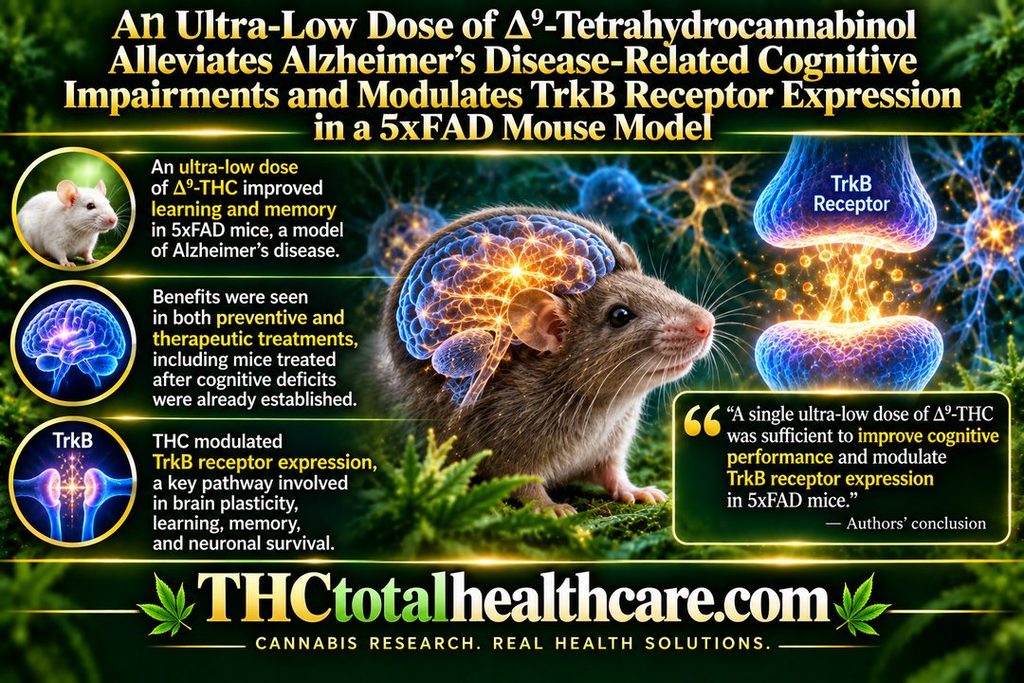
An Ultra-Low Dose of ∆9-Tetrahydrocannabinol Alleviates Alzheimer’s Disease-Related Cognitive Impairments and Modulates TrkB Receptor Expression in a 5XFAD Mouse Model

An ultra-low dose of Δ9-THC improved Alzheimer’s disease-related cognitive impairment in 5xFAD mice, including animals treated after memory problems were already established. The study found improvements in learning and memory without relying on repeated high-dose THC exposure.

The researchers also found changes in TrkB receptor expression, a signaling pathway closely tied to brain plasticity, learning, memory, and neuronal survival. These changes suggest that THC’s effects may involve more than temporary symptom relief and may influence mechanisms connected to cognitive function.

The findings add to a growing body of preclinical research showing that very low doses of THC can produce different biological effects than higher doses, particularly in the aging and Alzheimer’s-disease brain. In this model, a single ultra-low dose was enough to improve cognitive performance and alter a key neurotrophic signaling pathway.

“Alzheimer’s disease (AD) is the most common form of dementia, but there is still no available treatment.

Δ9-tetrahydrocannabinol (THC) is emerging as a promising therapeutic agent.

Using THC in conventional high doses may have deleterious effects. Therefore, we propose to use an ultra-low dose of THC (ULD-THC). We previously published that a single injection of ULD-THC ameliorated cognitive functioning in several models of brain injuries as well as in naturally aging mice.

Here, 5xFAD AD model mice received a single treatment of ULD-THC (0.002 mg/kg) after disease onset and were examined in two separate experiments for cognitive functions, neurotropic, and inflammatory factors in the hippocampus.

We show that a single injection of ULD-THC alleviated cognitive impairments in 6- and 12-month-old 5xFAD mice. On the biochemical level, our results indicate an imbalance between the truncated TrkB receptor isoform and the full receptor, with AD mice showing a greater tendency to express the truncated receptor, and ULD-THC improved this imbalance. We also investigated the expression of three AD-related inflammatory markers and found an ameliorating effect of ULD-THC.

The current research demonstrates for the first time the beneficial effects of a single ultra-low dose of THC in a mouse model of AD after disease onset.”

https://pubmed.ncbi.nlm.nih.gov/36012711

“The current research demonstrates for the first time the beneficial effects of a single ultra-low dose of THC in a mouse model of AD after disease onset. As THC is a cheap, widely available substance already approved for use in other conditions, this research brings us closer to understanding its mechanisms and will possibly lead to new treatments.”

https://www.mdpi.com/1422-0067/23/16/9449/htm

Need this THC study explained? thcXplained.com

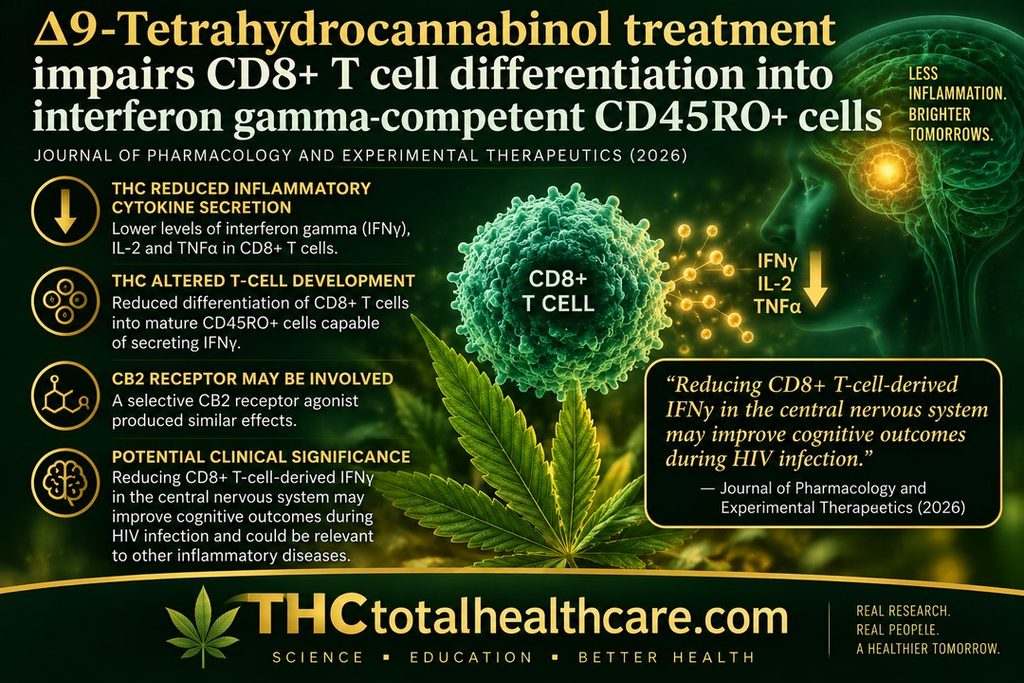
Δ9-Tetrahydrocannabinol treatment impairs CD8+ T cell differentiation into interferon gamma-competent CD45RO+ cells

New research published in The Journal of Pharmacology and Experimental Therapeutics shows that Δ9-tetrahydrocannabinol (THC) can alter the development of CD8+ T cells involved in inflammatory immune responses. Researchers found that THC reduced secretion of interferon gamma (IFNγ), interleukin-2 (IL-2), and tumor necrosis factor alpha (TNFα), three signaling molecules involved in immune activation and inflammation.

Rather than simply preventing cells from producing IFNγ, THC appeared to change how the T cells developed. THC reduced the differentiation of CD8+ T cells into mature CD45RO+ cells capable of secreting IFNγ. A selective CB2 receptor agonist produced similar effects, suggesting that activation of the cannabinoid CB2 receptor may play an important role in THC’s immune-modulating activity.

The researchers examined these effects partly because IFNγ-producing CD8+ T cells contribute to persistent neuroinflammation associated with HIV-associated neurocognitive disorders. They concluded that reducing CD8+ T-cell-derived IFNγ in the central nervous system may potentially improve cognitive outcomes during HIV infection, while noting that the findings may also have relevance to other inflammatory diseases involving IFNγ-producing CD8+ T cells.

“Chronic human immunodeficiency virus (HIV) infection results in a persistent state of neuroinflammation, even with combined antiretroviral therapy. Neuroinflammation contributes to pathology termed HIV-associated neurocognitive disorder, which is exacerbated by interferon gamma (IFNγ)-producing CD8+ T cells in the central nervous system.

Many people living with HIV self-report using Cannabis sativa to mitigate symptoms of chronic infection and side effects of treatment. C. sativa is composed of various phytocannabinoids, including Δ9-tetrahydrocannbinol (THC), which possesses immune-modulating properties.

This study aims to determine whether C. sativa use by people living with HIV, and specifically THC, affects IFNγ secretion by CD8+ T cells.

We found that HIV status does not influence T cell IFNγ responses, and C sativa use modestly reduces the average secretion of IFNγ by CD8+ T cells from HIV+ donors. Treatment of CD8+ T cells with THC and the selective cannabinoid receptor 2 agonist, JWH-015, reduced T-cell cytokine secretion, with THC eliciting greater suppression than cannabidiol.

These results suggest that THC treatment does not directly impair IFNγ gene expression or protein production, as determined by polymerase chain reaction and flow cytometry. However, THC treatment impaired CD8+ T cell differentiation into IFNγ-competent CD45RO+ cells.

These studies are of clinical relevance because reduction of CD8+ T-cell-derived IFNγ in the central nervous system may improve cognitive outcomes during HIV infection. Furthermore, these findings may be generalizable to other inflammatory diseases in which IFNγ-producing CD8+ T cells have been implicated.

SIGNIFICANCE STATEMENT: Δ9-Tetrahydrocannbinol (THC) treatment reduces CD8+ T cell interferon gamma (IFNγ) secretion isolated from HIV- and HIV+ individuals. THC and the selective cannabinoid receptor 2 agonist, JWH-015, both reduced CD8+ T cell secretion of IFNγ, interleukin 2, and tumor necrosis factor α, suggesting the involvement of cannabinoid receptor 2. Although THC treatment does not suppress IFNγ mRNA or protein levels, it reduces the number of IFNγ-secreting cells by impairing CD8+ T-cell differentiation into IFNγ-competent CD45RO+ cells.”

https://pubmed.ncbi.nlm.nih.gov/42748512

https://jpet.aspetjournals.org/article/S0022-3565(26)01210-3/abstract

Need this THC study explained? thcXplained.com

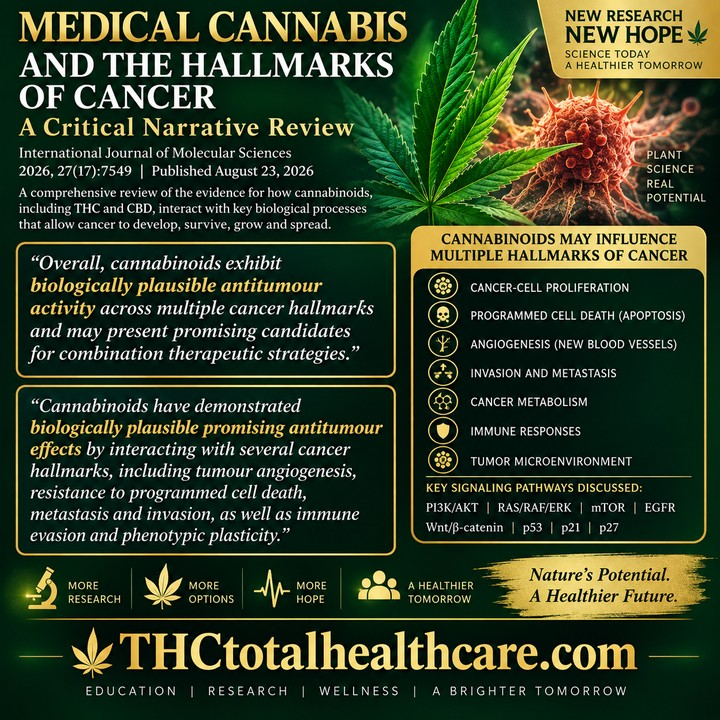
Medical Cannabis and the Hallmarks of Cancer: A Critical Narrative Review

A 2026 critical narrative review examines medical cannabis through one of the most important frameworks in cancer biology: the hallmarks of cancer. Rather than looking only at symptom relief, the authors reviewed evidence for how cannabinoids, including THC and CBD, may interact with biological processes that allow cancer to develop, survive, grow and spread.

The review discusses cannabinoid effects involving cancer-cell proliferation, programmed cell death, angiogenesis, invasion, metastasis, tumor metabolism, immune responses and the tumor microenvironment. It also examines major cancer-related signaling pathways, including PI3K/AKT, RAS/RAF/ERK, mTOR, EGFR, Wnt/β-catenin and p53.

Taken together, the research shows that cannabinoids can influence multiple hallmarks of cancer through several interconnected mechanisms. The authors describe the evidence as showing biologically plausible antitumor activity and highlight cannabinoids as an important area for continued cancer research and development.

“Cancer remains a highly complex and heterogeneous disease, causing major morbidity and mortality worldwide despite advances in diagnosis and treatment. The hallmarks of cancer enlighten the biological mechanisms supporting tumourigenesis and malignant evolution, while helping to identify potential therapeutic targets.

Medical cannabis has mostly been used in oncology for supportive care, but increasing preclinical evidence suggests interference with cancer-related signalling pathways.

This narrative review summarizes the current evidence on cannabinoids, in particular the phytocannabinoids cannabidiol (CBD) and Δ9-tetrahydrocannabinol (THC), framing their prospective anticancer effects in the hallmarks of cancer.

Preclinical studies imply that CBD exerts antiproliferative effects by modulating oncogenic signalling pathways, including EGFR, PI3K/AKT, RAS/RAF/ERK, mTOR and Wnt/β-catenin, while also influencing tumour suppressor pathways involving p53, p21 and p27, causing cell cycle arrest. CBD has additionally been shown to promote programmed cell death via mitochondrial dysfunction and autophagy, altering cancer metabolism as well. Furthermore, CBD has shown anti-invasive and antiangiogenic properties and also appears to modulate immune responses and interactions with the tumour microenvironment, including emerging links with the microbiome.

Overall, cannabinoids exhibit biologically plausible antitumour activity across multiple cancer hallmarks and may present promising candidates for combination therapeutic strategies.

Nonetheless, the current evidence remains predominantly preclinical, and robust translational studies and clinical trials are needed to clarify their pharmacokinetic and pharmacodynamic profiles, determine their clinical efficacy and safety while assessing their potential integration into multimodal cancer treatment.”

https://pubmed.ncbi.nlm.nih.gov/42737454/

“Cannabinoids have demonstrated biologically plausible promising antitumour effects by interacting with several cancer hallmarks, including tumour angiogenesis, resistance to programmed cell death, metastasis and invasion, as well as immune evasion and phenotypic plasticity.”

“Cannabinoids can interfere with several biological mechanisms involved in cancer development and progression and even though their role in oncology remains mostly supportive with predominance in symptom control, preclinical studies increasingly suggest that cannabis can also influence tumour biology.”

https://www.mdpi.com/1422-0067/27/17/7549

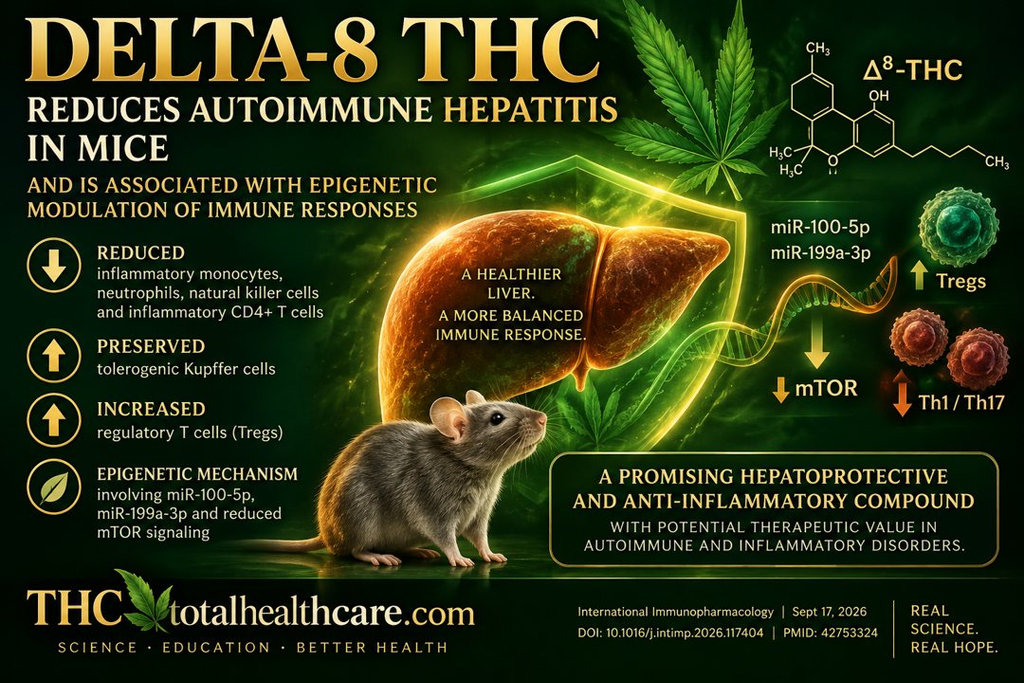
Delta-8-tetrahydrocannabinol ameliorates murine autoimmune hepatitis and is associated with epigenetic modulation of immune responses

A new 2026 study published in International Immunopharmacology found that delta-8-tetrahydrocannabinol (Δ8-THC) significantly reduced autoimmune hepatitis in mice while altering the immune responses responsible for liver inflammation. Researchers found that Δ8-THC reduced inflammatory immune cells and helped preserve immune cells involved in protecting the liver.

The researchers also uncovered a possible mechanism. Δ8-THC increased two microRNAs, miR-100-5p and miR-199a-3p, which suppressed mTOR signaling and shifted CD4+ T-cell development away from inflammatory Th1 and Th17 cells and toward regulatory T cells that help control excessive immune activity.

The authors concluded that Δ8-THC showed both hepatoprotective and anti-inflammatory activity and highlighted its potential therapeutic value for autoimmune and inflammatory disorders. The study adds new evidence that cannabinoids may influence disease not only by reducing inflammation, but by changing the molecular and epigenetic pathways that regulate immune responses.

“Aim of the study: Cannabinoids have gained attention for their ability to modulate immune responses and suppress inflammation. However, the effect of Δ8-THC, a minor cannabinoid found in Cannabis, has not been explored in autoimmune hepatitis. To address knowledge gap, the present study aimed to investigate the hepatoprotective and immunoregulatory properties of Δ8-THC in experimental autoimmune hepatitis and to identify molecular and epigenetic mechanisms underlying its immunoregulatory effects.

Methods: miRNA sequencing and flow cytometric analysis were performed using hepatic immune cells from female C57BL/6 mice treated with ConA (12.5 mg/kg, i.v.) and Δ8-THC (20 mg/kg, i.p.). Differential miRNA expressions were analyzed using the edgeR, and miRNA targets were predicted using Ingenuity Pathway Analysis. Target gene expression was validated by qRT-PCR and Western blot. Functional assays including miRNA mimic/inhibitor transfection and CD4+ T-cell differentiation were performed to validate target gene regulation by miRNAs and its role in CD4+ T-cell differentiation.

Results: Δ8-THC markedly suppressed ConA-induced autoimmune hepatitis by restoring immune homeostasis within the liver through suppression of inflammatory monocytes, neutrophils, and natural killer cells, and preservation of tolerogenic Kupffer cells. In addition, Δ8-THC reshaped the hepatic lymphoid compartment, diminishing inflammatory CD4+ T-cell responses while favoring regulatory T-cell expansion. These effects were associated with the preservation of miR-100-5p and miR-199a-3p expression in the liver, whereas both miRNAs were markedly downregulated following ConA treatment. mTOR, a central regulator of T-cell differentiation, was identified as a target of these miRNAs. Consistent with these findings, Δ8-THC reduced mTOR expression and upregulated hepatoprotective miRNAs in both in vivo and in vitro models. Functional analyses with miRNA overexpression and inhibition approaches verified the direct regulation of mTOR by these miRNAs in T cells and RAW 264.7 cells. In naïve CD4+ T cells, miRNA gain- and loss-of-function experiments demonstrated that miR-100-5p/miR-199a-3p-mediated suppression of mTOR promotes regulatory T-cell differentiation while limiting Th1 and Th17 polarization.

Conclusion: Our results identify Δ8-THC as a promising hepatoprotective and anti-inflammatory compound that ameliorates ConA-induced autoimmune hepatitis by influencing CD4+ T-cell differentiation potentially through the miR-100-5p/miR-199a-3p-mTOR axis, highlighting its potential therapeutic value in autoimmune and inflammatory disorders.”

https://pubmed.ncbi.nlm.nih.gov/42753324

“In conclusion, our findings suggest that Δ8-THC can mitigate ConA-induced hepatitis, potentially through epigenetic regulation involving microRNAs. Specifically, Δ8-THC improved liver function and reduced systemic and intrahepatic inflammation in ConA-exposed mice. These effects were associated with increased expression of miR-100-5p and miR-199a-3p in the liver, suggesting that these miRNAs may regulate mTOR signaling and contribute to the suppression of proinflammatory responses and promotion of anti-inflammatory pathways. Functional studies supported the involvement of these miRNAs in the regulation of mTOR signaling, CD4+ T-cell differentiation, and inflammatory responses.”

https://www.sciencedirect.com/science/article/pii/S1567576926012518?via%3Dihub

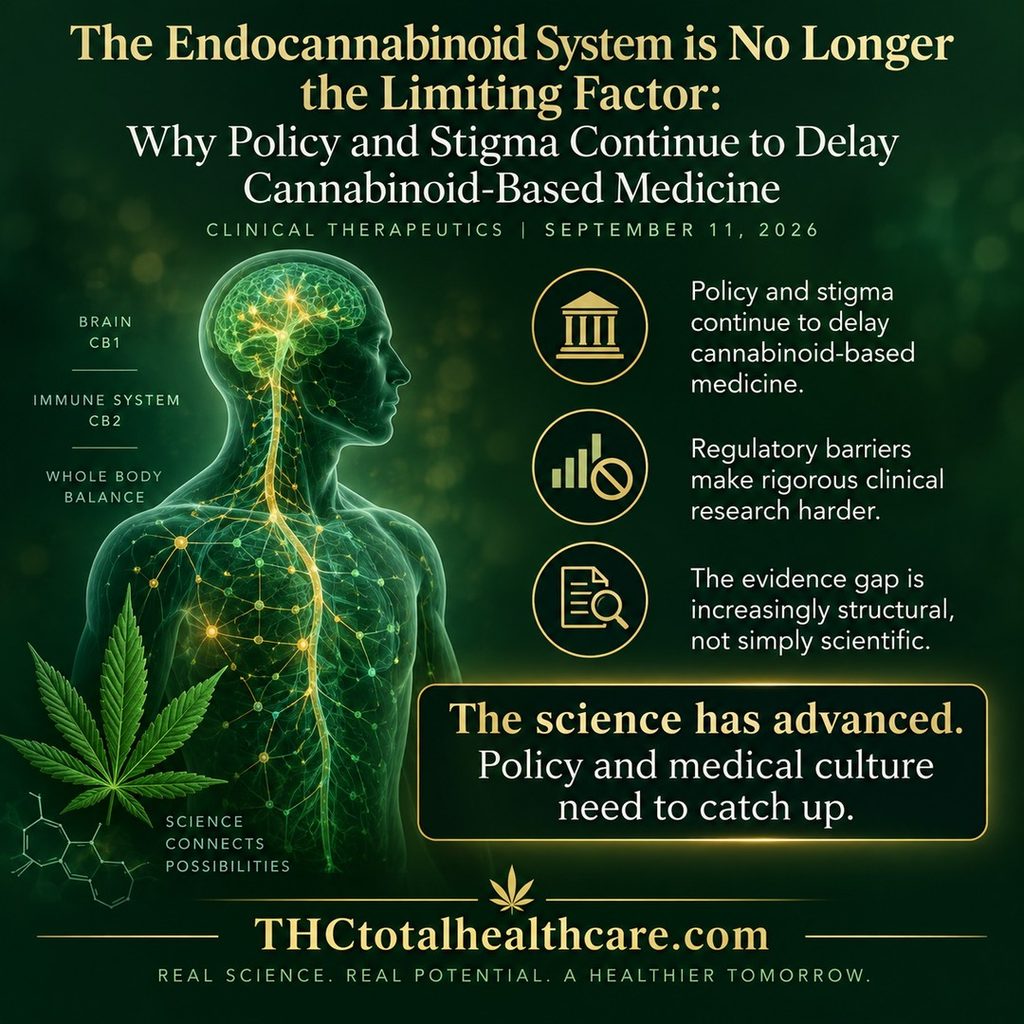
The Endocannabinoid System is No Longer the Limiting Factor: Why Policy and Stigma Continue to Delay Cannabinoid-Based Medicine

The science of the endocannabinoid system has advanced dramatically, but cannabinoid-based medicine is still being held back by forces outside the laboratory. This new Clinical Therapeutics commentary argues that the biological understanding of the endocannabinoid system is no longer the main limiting factor. The larger barriers are now policy, regulation, funding, access, and stigma.

According to the authors, restrictive and fragmented rules make cannabinoid research harder to conduct, while limited access to standardized products complicates rigorous clinical trials. At the same time, stigma within medicine can discourage research, education, prescribing, and open discussion with patients.

The message is simple: the remaining evidence gaps are not purely scientific. They are also structural. If cannabinoid-based medicine is going to move forward, policy and medical culture will have to catch up with what researchers already understand about the endocannabinoid system.

“Purpose: To examine whether the persistent gap between the extensive mechanistic knowledge of the Endocannabinoid System (ECS) and the limited number of high-quality randomized clinical trials of cannabinoid-based therapies primarily reflects scientific uncertainty or, instead, structural regulatory, economic, and social barriers.

Methods: This commentary critically synthesizes historical, regulatory, and contemporary evidence on cannabinoid research, integrating data from regulatory documents, international policy reports, clinical and observational studies, systematic reviews, and qualitative investigations. Particular emphasis is placed on barriers affecting access to standardized products, conduct of randomized clinical trials, public funding, product standardization, and healthcare professionals’ perceptions.

Findings: Although the ECS has been extensively characterized for more than three decades and cannabinoids demonstrate plausible pharmacological mechanisms across multiple therapeutic areas, clinical translation remains disproportionately limited. Persistent regulatory restrictions, inherited from prohibition policies, continue to delay access to standardized research material, increase the cost and complexity of clinical trials, and shift evidence generation toward observational designs. Regulatory fragmentation further compromises product standardization and study reproducibility, whereas persistent social and professional stigma reduces research activity, medical education, prescribing confidence, and patient disclosure, perpetuating a self-reinforcing cycle between limited evidence generation and clinical distrust.

Implications: The principal obstacle to cannabinoid-based medicine is no longer the biological understanding of the ECS but the structural environment surrounding cannabinoid research. Progress toward evidence-based clinical implementation will depend on regulatory harmonization, greater public investment in randomized clinical research, standardized pharmaceutical-quality products, and educational initiatives capable of reducing stigma among healthcare professionals. Recognizing the structural rather than scientific origin of the evidence gap is essential for informing future research priorities, editorial policies, and international regulatory strategies.”

https://pubmed.ncbi.nlm.nih.gov/42728140

“The ECS is no longer the main obstacle to cannabinoid therapeutics. Stigma and regulation continue to delay clinical translation. Standardized clinical research requires international regulatory reform. Medical education is crucial for evidence-based cannabinoid therapies.”

https://www.clinicaltherapeutics.com/article/S0149-2918(26)00317-6/fulltext

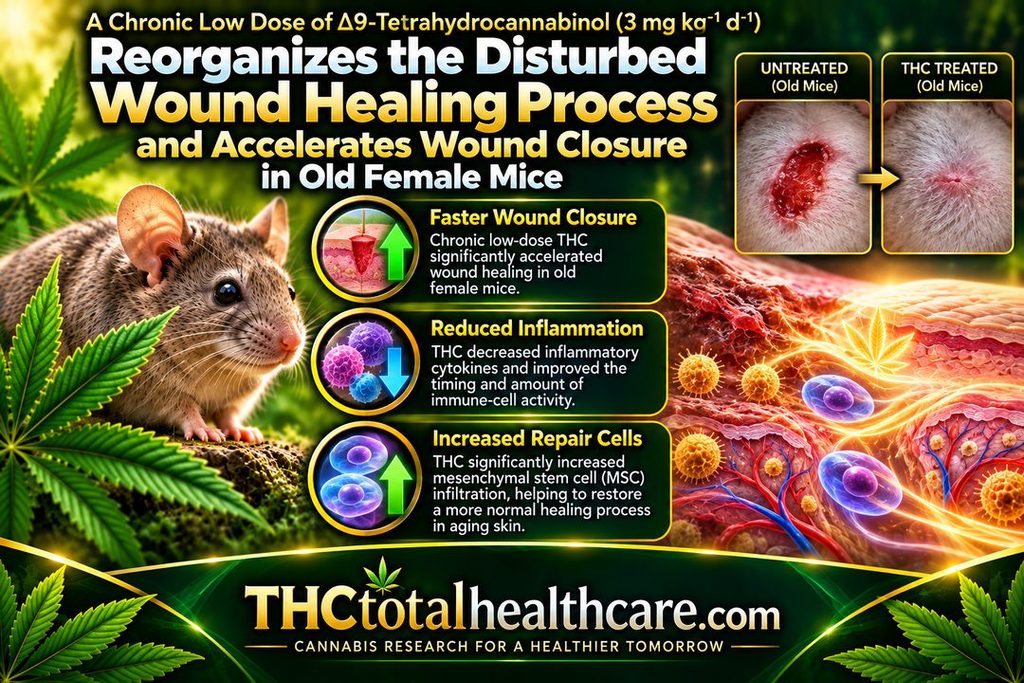
A chronic low dose of Δ9-tetrahydrocannabinol (3 mg / kg / 21 d) reorganizes the disturbed wound healing process and accelerates wound closure in old female mice

A chronic low dose of Δ9-THC accelerated wound closure in old female mice and helped reorganize an age-disrupted healing process. The biggest improvement occurred during the inflammatory phase, when aged wounds normally heal more slowly and remain inflamed longer.

THC changed the timing and amount of immune-cell activity in the wound, reduced inflammatory cytokines, and significantly increased infiltration of mesenchymal stem cells (MSCs) involved in tissue repair. The treatment did not increase growth-factor release, suggesting the benefit came mainly from better coordination of inflammation and cell migration.

The researchers concluded that THC improved wound healing by restoring a more normal sequence of immune-cell infiltration and cytokine release. The findings suggest that stimulating the aging endocannabinoid system may help support skin regeneration and tissue repair in older organisms.

“Wound healing in old mice is characterized by disturbed tissue homeostasis, manifested by delayed immune cell infiltration and reduced growth factor secretion, leading to a delayed onset and prolonged duration of the inflammatory phase.

The endocannabinoid system (ECS) is an important regulator of tissue homeostasis and cell migration and is also considered to be subject to aging processes, which may contribute to observable aging phenomena. Therefore, stimulating the aged ECS could represent a therapeutic option to support tissue regeneration in aging.

Female old mice received a low-dose of medical THC daily for 3 weeks, before four excisional full skin wounds were created. At day 1, 3 and 7 post-surgery, the wound closure rate was analyzed and wound samples were examined immunohistochemically for the numbers of granulocytes, M1-macrophages and mesenchymal stem cells (MSCs). The concentrations of inflammatory cytokines and regenerative growth factors were determined by ELISA.

Administration of THC improved the wound healing rate of old mice between day 1 and 7, which was associated with an altered timing and quantity of infiltrating immune cells and decreased levels of inflammatory cytokines in wound tissue on days 1 and 3 post-injury.

THC treatment significantly increased MSC infiltration but had no effect on the growth factor release.

The present study confirmed the anti-inflammatory activity of THC in vivo.

The THC-treatment improved wound healing in old mice by coordinating the temporal sequence of immune cell infiltration and cytokine release. Thus, restoration of ECS signaling could be an effective strategy to support age-related skin regeneration.”

https://pubmed.ncbi.nlm.nih.gov/40653209/

“A chronic low dose of THC accelerates the wound closure rate during the inflammatory phase in old mice.”

https://www.sciencedirect.com/science/article/pii/S0531556525001615?via%3Dihub

Meed this THC study explained? thcXplained.com