Cannabinoids in Cancer: Molecular Mechanisms of Tumor Cell Death and Translational Opportunities

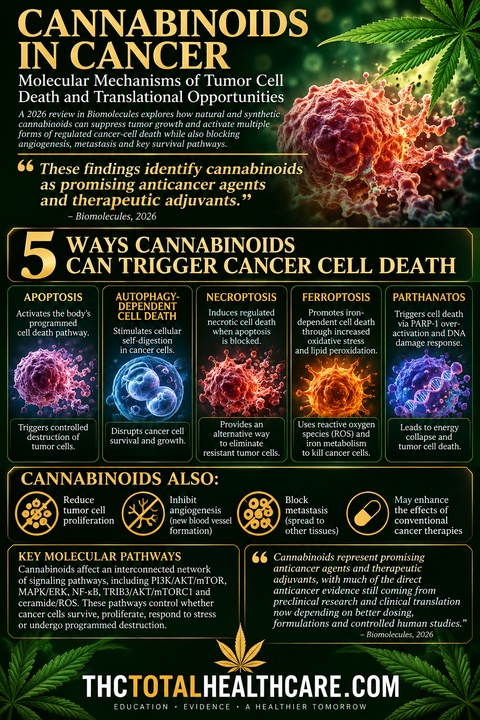
Cannabinoids can attack cancer cells through far more than a single mechanism. This 2026 review describes how natural and synthetic cannabinoids can suppress tumor-cell growth, angiogenesis and metastasis while activating multiple forms of regulated cancer-cell death, including apoptosis, autophagy-dependent cell death, necroptosis, ferroptosis and parthanatos.

The researchers detail an interconnected network of molecular pathways affected by cannabinoids, including PI3K/AKT/mTOR, MAPK/ERK, NF-κB, TRIB3/AKT/mTORC1 and ceramide/ROS signaling. These pathways control whether cancer cells survive, proliferate, respond to stress or undergo programmed destruction, giving cannabinoids multiple potential points of attack against malignant cells.

The review also finds that cannabinoids may enhance conventional anticancer treatments by engaging complementary cell-death pathways. The authors conclude that cannabinoids represent promising anticancer agents and therapeutic adjuvants, with much of the direct anticancer evidence still coming from preclinical research and clinical translation now depending on better dosing, formulations and controlled human studies.

“Cannabinoids are terpenophenolic compounds derived from Cannabis sativa L. that exert a broad range of biological and pharmacological activities. Increasing evidence highlights their potential as modulators of cancer progression specifically through the suppression of tumor cell growth, angiogenesis, and metastasis across multiple tumor models.

This review provides a comprehensive overview of the molecular mechanisms by which natural and synthetic cannabinoids induce regulated cancer cell death.

Current evidence demonstrates that cannabinoids regulate multiple forms of cancer cell death, including apoptosis, autophagy-dependent cell death, necroptosis, ferroptosis, and parthanatos. These effects are mediated through complex and interconnected signaling pathways such as TRIB3/AKT/mTORC1, PI3K/AKT/mTOR, MAPK/ERK, NF-κB, ERK/JNK/p38-MAPK, and ceramide/Raf1/ERK/ROS.

In addition to their direct antitumor effects, cannabinoids can enhance the efficacy of conventional anticancer therapies through the coordinated regulation of complementary cell death pathways. They also provide clinically relevant supportive benefits in palliative care, alleviating chemotherapy-induced nausea, cachexia, and mood or sleep disturbances.

Collectively, these findings identify cannabinoids as promising anticancer agents and therapeutic adjuvants, predominantly in the preclinical setting. However, significant challenges remain regarding their safety, optimal dosing, formulation, and clinical efficacy. Further mechanistic studies, rigorous preclinical research, and well-designed clinical trials are required to establish the translation of cannabinoid-based therapies into precision oncology.”

https://pubmed.ncbi.nlm.nih.gov/42793092

“The cannabis plant, a member of the Cannabaceae family, has been traditionally utilized for centuries for spiritual and remedial healing.”

“The anticancer activity of cannabinoids was discovered in 1975 by Munson et al.. Cannabinoids suppress cancer cell proliferation, angiogenesis, tumor invasion, metastasis, and stemness while inducing different modes of cell death pathways.”

“In summary, this review highlights the growing body of evidence supporting the ability of cannabinoids to induce multiple forms of cell death across a broad spectrum of cancer types. Through the modulation of diverse molecular and signaling pathways, cannabinoids have emerged as promising anticancer agents, mostly in preclinical models, with the potential to target tumor growth, survival, and progression, ultimately triggering diverse cell death mechanisms.”
https://www.mdpi.com/2218-273X/16/9/1260

Medical Cannabis and the Hallmarks of Cancer: A Critical Narrative Review

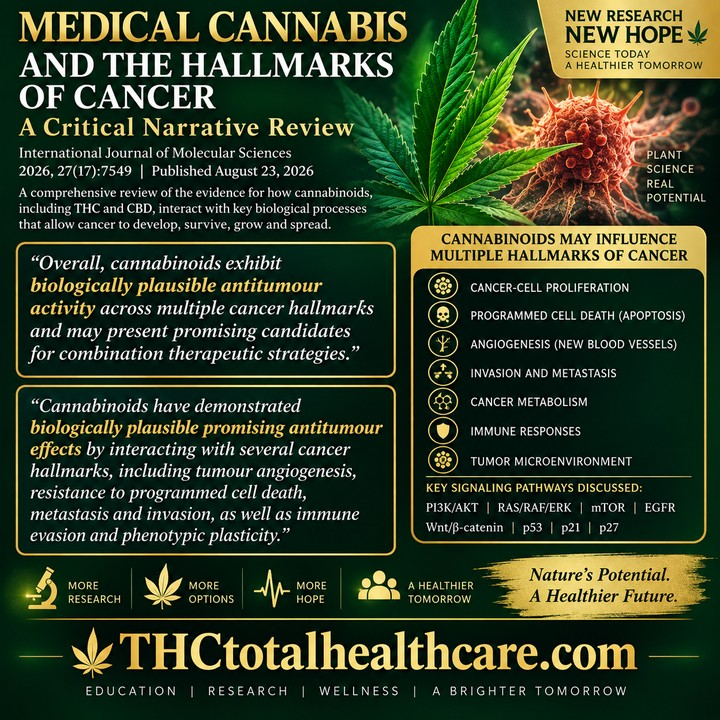
A 2026 critical narrative review examines medical cannabis through one of the most important frameworks in cancer biology: the hallmarks of cancer. Rather than looking only at symptom relief, the authors reviewed evidence for how cannabinoids, including THC and CBD, may interact with biological processes that allow cancer to develop, survive, grow and spread.

The review discusses cannabinoid effects involving cancer-cell proliferation, programmed cell death, angiogenesis, invasion, metastasis, tumor metabolism, immune responses and the tumor microenvironment. It also examines major cancer-related signaling pathways, including PI3K/AKT, RAS/RAF/ERK, mTOR, EGFR, Wnt/β-catenin and p53.

Taken together, the research shows that cannabinoids can influence multiple hallmarks of cancer through several interconnected mechanisms. The authors describe the evidence as showing biologically plausible antitumor activity and highlight cannabinoids as an important area for continued cancer research and development.

“Cancer remains a highly complex and heterogeneous disease, causing major morbidity and mortality worldwide despite advances in diagnosis and treatment. The hallmarks of cancer enlighten the biological mechanisms supporting tumourigenesis and malignant evolution, while helping to identify potential therapeutic targets.

Medical cannabis has mostly been used in oncology for supportive care, but increasing preclinical evidence suggests interference with cancer-related signalling pathways.

This narrative review summarizes the current evidence on cannabinoids, in particular the phytocannabinoids cannabidiol (CBD) and Δ9-tetrahydrocannabinol (THC), framing their prospective anticancer effects in the hallmarks of cancer.

Preclinical studies imply that CBD exerts antiproliferative effects by modulating oncogenic signalling pathways, including EGFR, PI3K/AKT, RAS/RAF/ERK, mTOR and Wnt/β-catenin, while also influencing tumour suppressor pathways involving p53, p21 and p27, causing cell cycle arrest. CBD has additionally been shown to promote programmed cell death via mitochondrial dysfunction and autophagy, altering cancer metabolism as well. Furthermore, CBD has shown anti-invasive and antiangiogenic properties and also appears to modulate immune responses and interactions with the tumour microenvironment, including emerging links with the microbiome.

Overall, cannabinoids exhibit biologically plausible antitumour activity across multiple cancer hallmarks and may present promising candidates for combination therapeutic strategies.

Nonetheless, the current evidence remains predominantly preclinical, and robust translational studies and clinical trials are needed to clarify their pharmacokinetic and pharmacodynamic profiles, determine their clinical efficacy and safety while assessing their potential integration into multimodal cancer treatment.”

https://pubmed.ncbi.nlm.nih.gov/42737454/

“Cannabinoids have demonstrated biologically plausible promising antitumour effects by interacting with several cancer hallmarks, including tumour angiogenesis, resistance to programmed cell death, metastasis and invasion, as well as immune evasion and phenotypic plasticity.”

“Cannabinoids can interfere with several biological mechanisms involved in cancer development and progression and even though their role in oncology remains mostly supportive with predominance in symptom control, preclinical studies increasingly suggest that cannabis can also influence tumour biology.”

https://www.mdpi.com/1422-0067/27/17/7549

Combined Cannabidiol and Δ9-Tetrahydrocannabinol Modulate Inflammation and Nociceptive Signaling in Human Dental Pulp Cells

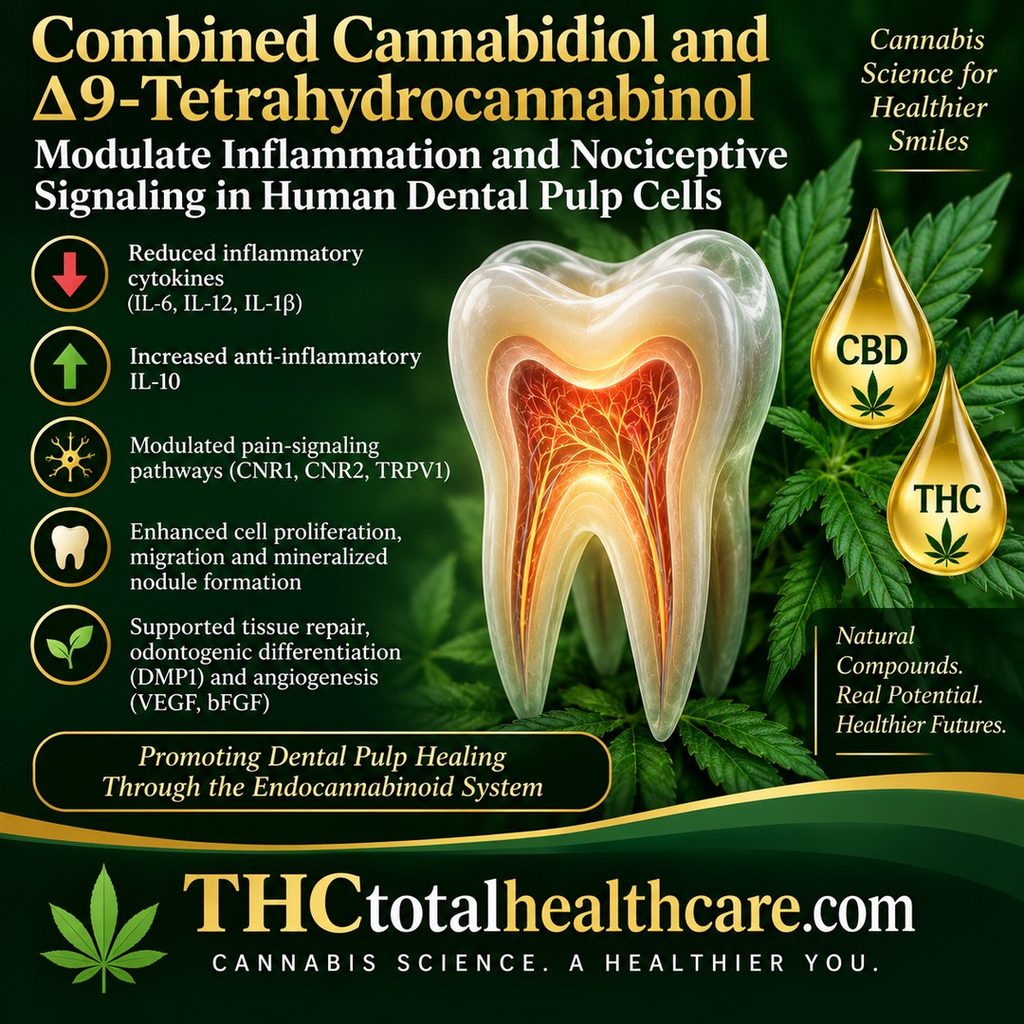
A new study using human dental pulp cells found that combining cannabidiol (CBD) and Δ9-tetrahydrocannabinol (THC) produced stronger anti-inflammatory effects than either cannabinoid alone. The combination reduced the pro-inflammatory cytokines IL-6, IL-12, and IL-1β while increasing the anti-inflammatory cytokine IL-10.

CBD and THC together also influenced important pathways involved in pain signaling and healing. Researchers reported increased expression of the cannabinoid receptors CNR1 and CNR2, modulation of TRPV1, and enhanced cell proliferation and migration. The combination also promoted mineralized nodule formation and increased markers associated with odontogenic differentiation and new blood-vessel formation.

The researchers concluded that combined CBD and THC show promise for promoting dental pulp healing by simultaneously influencing inflammation, nociceptive signaling, tissue repair, angiogenesis, and cell migration. The findings provide new evidence that cannabinoids may have potential applications in future vital pulp therapies designed to preserve and regenerate living dental tissue.

“Introduction: Dental pulp inflammation, caused by caries, trauma, or restorative operations, produces pain and slows regeneration. Cannabidiol (CBD) and Δ9-tetrahydrocannabinol (THC), cannabinoids of Cannabis sativa, have effects on inflammation and pain relief. However, the impact of these factors on dental pulp healing is not understood. This study investigated the combined effects of CBD and THC in controlling inflammation and nociception during dental pulp repair.

Methods: Human dental pulp cells were stimulated with lipopolysaccharide (LPS) and treated with CBD (2.5 μg/mL), THC (0.6 μg/mL), and their combination. Pro-inflammatory cytokines (IL-6, IL-12 and IL-1β) and anti-inflammatory cytokine IL-10 were analysed using qPCR and ELISA, while anti-nociceptive markers (CNR1, CNR2, and TRPV1) were evaluated by qPCR and Western blot. Cell viability, proliferation, and migration assays were performed to evaluate treatment effects on cellular behaviours associated with pulpal repair and regenerative potential.

Results: Compared with either treatment alone, the CBD/THC combination more effectively attenuated pro-inflammatory cytokines IL-6, IL-12, and IL-1β, enhanced CNR1 and CNR2 expression, modulated TRPV1, and increased IL-10 expression. Viability assays determined optimal non-cytotoxic concentrations for treatment. The combination enhanced cell proliferation and migration, promoted mineralized nodule formation, and significantly upregulated markers associated with tissue repair, odontogenic differentiation (DMP1), and angiogenesis (VEGF and bFGF).

Conclusion: Combined CBD and THC show promise for promoting dental pulp healing by modulating inflammation and nociceptive signaling, while supporting odontogenic differentiation, angiogenesis, and cell migration in human dental pulp cells. These findings provide in vitro evidence supporting combined cannabinoid treatment as a therapeutic strategy for vital pulp therapies.”

https://pubmed.ncbi.nlm.nih.gov/42722230

https://www.jendodon.com/article/S0099-2399(26)00500-5/abstract

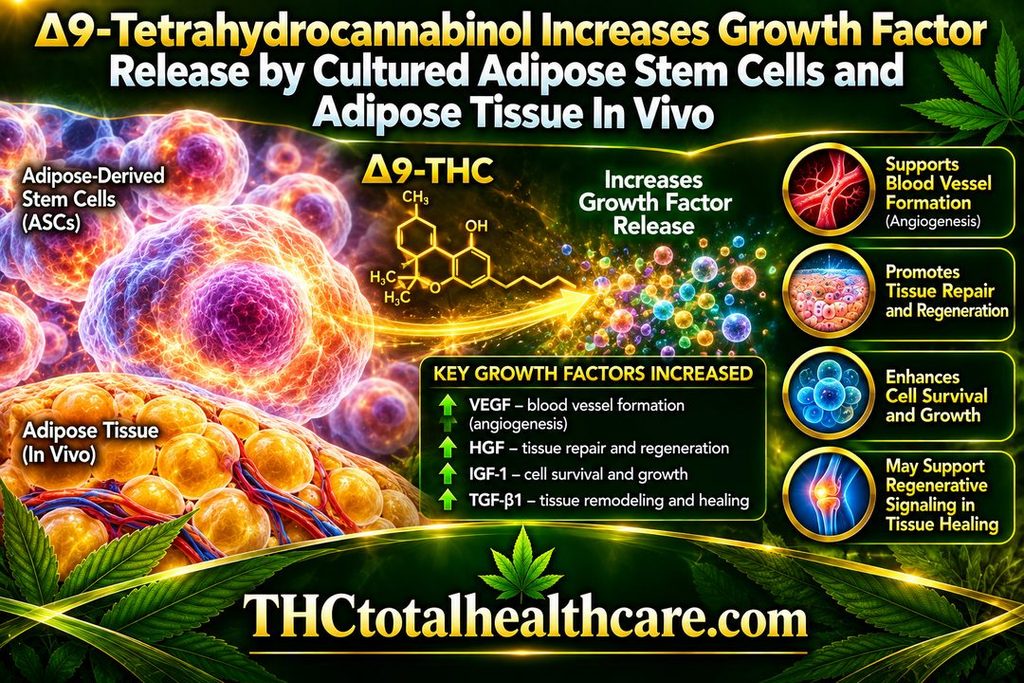
∆9-Tetrahydrocannabinol Increases Growth Factor Release by Cultured Adipose Stem Cells and Adipose Tissue in vivo

Δ9-THC increased the release of growth factors from cultured adipose-derived stem cells and from adipose tissue in vivo. These growth factors are involved in processes such as cell survival, tissue repair, blood-vessel formation, and regeneration.

The researchers found that THC changed the secretory activity of adipose stem cells rather than simply affecting their growth. This suggests that THC may influence how these cells communicate with surrounding tissue and support repair through the factors they release.

The findings point to a potential role for THC in regenerative signaling and tissue-healing biology, particularly through adipose-derived stem cells and the local tissue environment. The study adds another dimension to cannabinoid research by showing that THC can affect not just mature cells, but also the reparative signals produced by stem-cell populations.

“Background: Because of its biocompatibility and its soft and dynamic nature, the grafting of adipose tissue is regarded an ideal technique for soft-tissue repair. The adipose stem cells (ASCs) contribute significantly to the regenerative potential of adipose tissue, because they can differentiate into adipocytes and release growth factors for tissue repair and neovascularization to facilitate tissue survival. The present study tested the effect of administering a chronic low dose of ∆9-tetrahydrocannabinol (THC) on these regenerative properties, in vitro and in vivo.

Methods: Human ASCs were exposed to increasing concentrations of THC. Resazurin conversion was applied to investigate the effect on metabolic activity, cell number was assessed by crystal violet staining, tri-linear differentiation was evaluated by specific colorimetric approaches, and the release of growth factors was analyzed by ELISA. Two groups of mice were treated daily either with a low dose of THC (3 mg/kg) or a vehicle solution. After 3 weeks, adipose tissue was obtained from excised fat deposits, homogenized and tested for growth factor contents.

Results: THC decreased ASC proliferation but increased metabolic activity as well as adipogenic and chondrogenic differentiation. A low concentration of THC (1 µM) enhanced the growth factor release by ASCs. The concentration of these cytokines was also increased in adipose tissue of mice treated with THC.

Conlusion: Our results indicate that chronic activation of the endocannabinoid system promoted differentiation and growth factor release of ASCs, which could be of specific value for enhancing the regenerative potential of adipose tissue.”

https://pubmed.ncbi.nlm.nih.gov/39825991/

“Our findings may offer a new approach for improved application of adipose tissue in regenerative medicine.”

https://link.springer.com/article/10.1007/s13770-024-00692-8

Need this THC study explained? thcXplained.com

Cannabinoid-associated cell death mechanisms in tumor models

“In recent years, cannabinoids (the active components of Cannabis sativa) and their derivatives have received considerable interest due to findings that they can affect the viability and invasiveness of a variety of different cancer cells. Moreover, in addition to their inhibitory effects on tumor growth and migration, angiogenesis and metastasis, the ability of these compounds to induce different pathways of cell death has been highlighted. Here, we review the most recent results generating interest in the field of death mechanisms induced by cannabinoids in cancer cells. In particular, we analyze the pathways triggered by cannabinoids to induce apoptosis or autophagy and investigate the interplay between the two processes. Overall, the results reported here suggest that the exploration of molecular mechanisms induced by cannabinoids in cancer cells can contribute to the development of safe and effective treatments in cancer therapy.”

http://www.ncbi.nlm.nih.gov/pubmed/22614735

Cannabinoids reduce ErbB2-driven breast cancer progression through Akt inhibition

“BACKGROUND:

ErbB2-positive breast cancer is characterized by highly aggressive phenotypes and reduced responsiveness to standard therapies. Although specific ErbB2-targeted therapies have been designed, only a small percentage of patients respond to these treatments and most of them eventually relapse. The existence of this population of particularly aggressive and non-responding or relapsing patients urges the search for novel therapies. The purpose of this study was to determine whether cannabinoids might constitute a new therapeutic tool for the treatment of ErbB2-positive breast tumors. We analyzed their antitumor potential in a well established and clinically relevant model of ErbB2-driven metastatic breast cancer: the MMTV-neu mouse. We also analyzed the expression of cannabinoid targets in a series of 87 human breast tumors.

RESULTS:

Our results show that both Delta9-tetrahydrocannabinol, the most abundant and potent cannabinoid in marijuana, and JWH-133, a non-psychotropic CB2 receptor-selective agonist, reduce tumor growth, tumor number, and the amount/severity of lung metastases in MMTV-neu mice. Histological analyses of the tumors revealed that cannabinoids inhibit cancer cell proliferation, induce cancer cell apoptosis, and impair tumor angiogenesis. Cannabinoid antitumoral action relies, at least partially, on the inhibition of the pro-tumorigenic Akt pathway. We also found that 91% of ErbB2-positive tumors express the non-psychotropic cannabinoid receptor CB2.

CONCLUSIONS:

Taken together, these results provide a strong preclinical evidence for the use of cannabinoid-based therapies for the management of ErbB2-positive breast cancer.”

Cannabinoids inhibit breast tumor growth in vivo and the number of tumors generated per animal.

Cannabinoids inhibit cancer cell proliferation, induce cancer cell apoptosis, and impair tumor angiogenesis in vivo.

Cannabinoids decrease breast cancer metastases in the lungs

In summary, our results, which were obtained in a clinically relevant animal model of ErbB2-positive breast cancer, suggest that these highly aggressive and low responsive tumors could be efficiently treated with non-psychoactive CB2-selective agonists without affecting the surrounding healthy tissue.”

http://www.ncbi.nlm.nih.gov/pmc/articles/PMC2917429/

CANNABIDIOL INHIBITS ANGIOGENESIS BY MULTIPLE MECHANISMS

“Background and purpose: Several studies demonstrated anti-proliferative and pro-apoptotic actions of cannabinoids on several tumours, together with their anti-angiogenic properties. The non-psychoactive cannabinoid cannabidiol (CBD) effectively inhibits in vitro and in vivo the growth of different types of tumours and down-regulates some pro-angiogenic signal produced by glioma cells. As its anti-angiogenic properties have not been thoroughly investigated to date, and given its very favorable pharmacological and toxicological profile, here we evaluated CBD ability to modulate tumour angiogenesis. Experimental approach: We firstly evaluated CBD effect on human umbilical vein endothelial cell (HUVEC) proliferation and viability- through MTT assay and FACS analysis-and in vitro motility-both in a classical Boyden chamber test and in a wound-healing assay. We next investigated CBD effects on different angiogenesis-related proteins released by HUVECs, using an angiogenic Array Kit and an enzyme-linked immunosorbent assay (ELISA) directed at MMP2. Afterwards we evaluated in vitro angiogenesis in treated HUVECs invading a Matrigel layer and in HUVEC spheroids embedded into collagen gels. We further characterized CBD effects using a Matrigel sponge model of in vivo angiogenesis. Key results: CBD induced HUVEC cytostasis without inducing apoptosis, inhibited HUVEC migration, invasion, and sprouting in vitro, and angiogenesis in vivo in matrigel sponges. These effects were associated with down-modulation of several angiogenesis-related molecules. Conclusions and Implications: This study reveals that CBD inhibits angiogenesis by multiple mechanisms. Its dual effect on both tumour and endothelial cells reinforces the hypothesis that CBD could represent a potential effective agent in cancer therapy.”

.http://www.ncbi.nlm.nih.gov/pubmed/22624859