
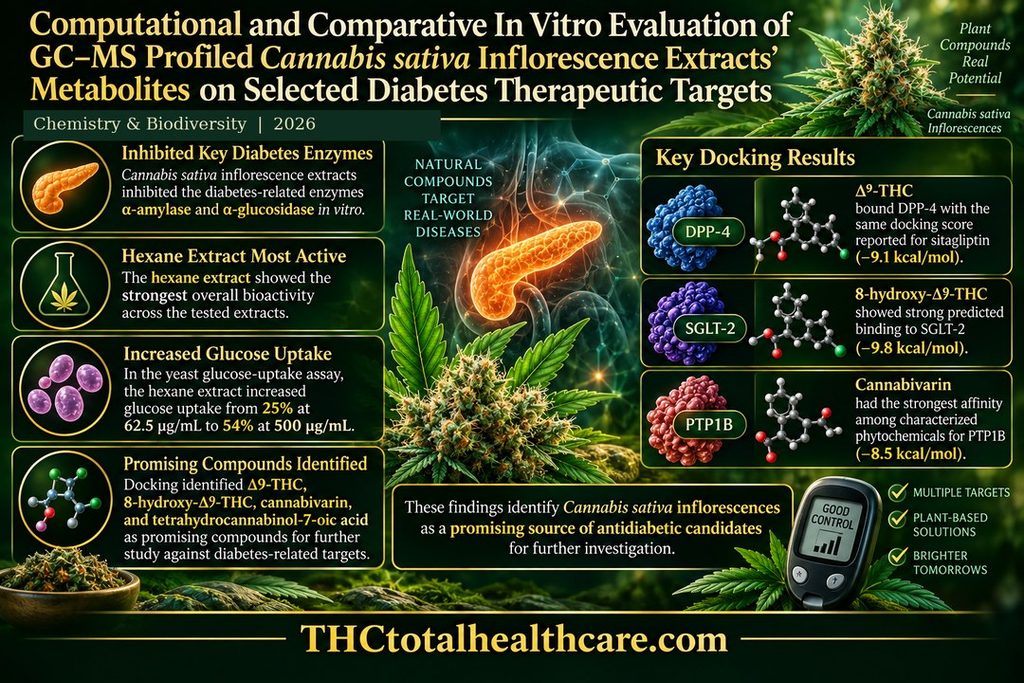
A new 2026 study found that Cannabis sativa flower extracts showed activity against several biological targets involved in diabetes. Researchers tested the extracts for effects on carbohydrate-digesting enzymes, glucose uptake and oxidative stress, then used computational modeling to examine how 36 cannabis metabolites interacted with diabetes-related proteins.
The hexane extract showed the strongest overall activity, including inhibition of α-amylase and α-glucosidase and the greatest increase in glucose uptake in the yeast model. Glucose uptake with the hexane extract rose from 25% at 62.5 µg/mL to 54% at 500 µg/mL.
The docking analysis identified several cannabinoids — including Δ9-THC, 8-hydroxy-Δ9-THC, cannabivarin and tetrahydrocannabinol-7-oic acid — as promising candidates for further study against diabetes-related targets such as DPP-4, SGLT-2 and PTP1B. The authors concluded that cannabis inflorescences may be a promising source of compounds for future antidiabetic drug research.
“Cannabis sativa, a medicinal plant rich in cannabinoids, terpenoids, and flavonoids, has been shown to have various pharmacological activities.
This study investigated the antidiabetic potential of C. sativa inflorescence extracts using in vitro and computational models.
Dried C. sativa inflorescences were extracted sequentially with hexane, dichloromethane, and methanol, before their metabolites were identified by GC-MS. The extracts were tested for α-amylase and α-glucosidase inhibition, glucose uptake activity, and antioxidant effects using DPPH and nitric oxide (NO) inhibition assays. Thirty-six metabolites were further docked against diabetes-related proteins.
Among the extracts, the hexane extract showed the strongest bioactivity with notable α-amylase inhibition (IC50: 727 µg/mL), DPPH free radical scavenging (IC50: 478.62 µg/mL), and nitric oxide inhibition activity (IC50: 356.51 µg/mL). Docking analyses revealed strong binding affinities for 8-hydroxy-delta-9-THC, cannabivarin, and 9-tetrahydrocannabinol with DPP-4, PTP1B, and other target proteins.
These findings highlight the potential of C. sativa inflorescences as a source of antidiabetic agents, warranting further in vivo and clinical validation.”
https://pubmed.ncbi.nlm.nih.gov/42763912
“This study provides preliminary evidence that C. sativa inflorescence extracts contain phytoconstituents with antioxidant, enzyme-inhibitory, and potential antidiabetic activities under the experimental conditions investigated. Among the extracts, the hexane extract exhibited the strongest enzyme inhibition and capacity to interact with free radicals.
In addition, compounds including Δ9-tetrahydrocannabinol, 8-hydroxy-Δ9-THC, cannabivarin, and tetrahydrocannabinol-7-oic acid exhibited favorable binding affinities toward diabetes-related protein targets, identifying them as promising candidates for further investigation.”
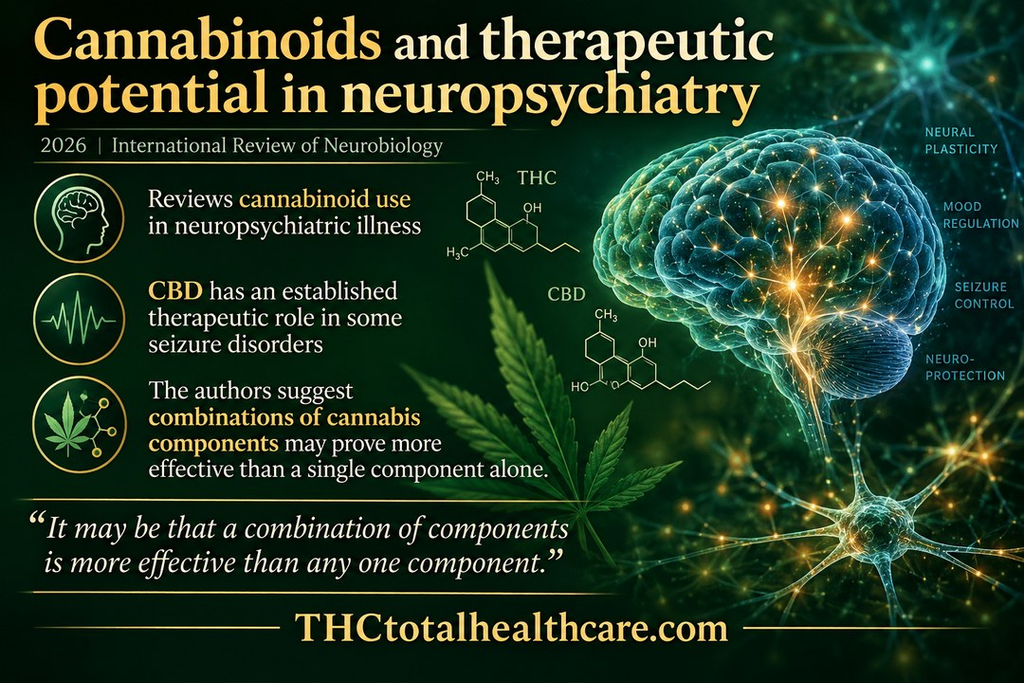
 “The concept of neurons as irreplaceable cells does not hold true today. Experiments and evidence of neurogenesis, also, in the adult brain give hope that some compounds or drugs can enhance this process, helping to reverse the outcomes of diseases or traumas that once were thought to be everlasting.
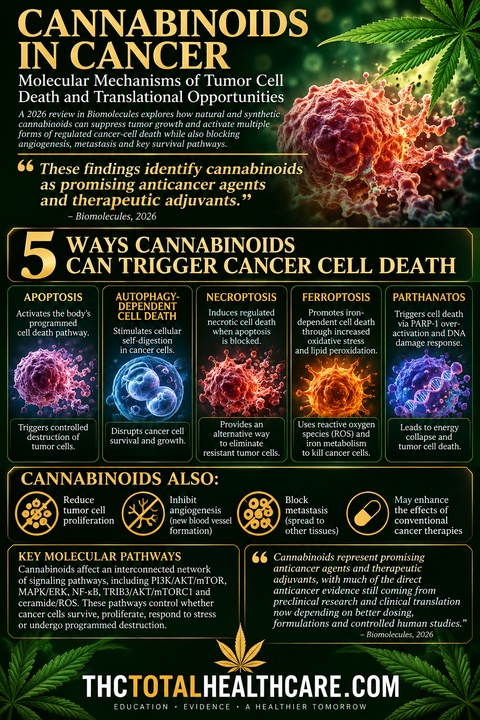
 “Pain prevalence among adults in the United States has increased 25% over the past two decades, resulting in high health-care costs and impacts to patient quality of life. In the last 30 years, our understanding of pain circuits and (intra)cellular mechanisms has grown exponentially, but this understanding has not yet resulted in improved therapies. Options for pain management are limited. Many analgesics have poor efficacy and are accompanied by severe side effects such as addiction, resulting in a devastating opioid abuse and overdose epidemic. These problems have encouraged scientists to identify novel molecular targets and develop alternative pain therapeutics.
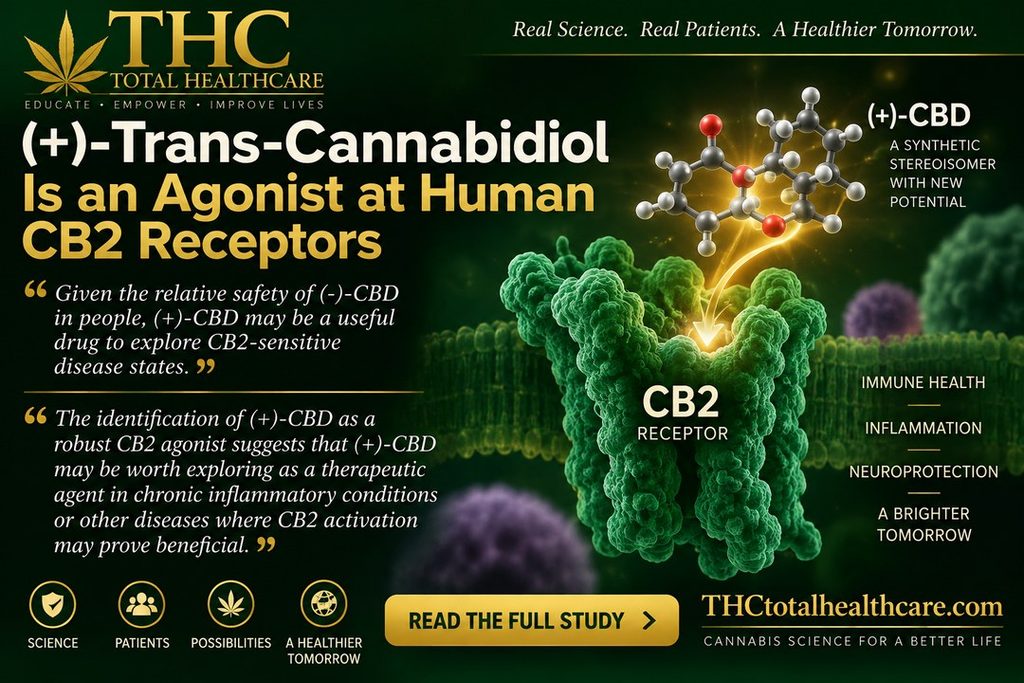
 “Aging is a complex phenomenon associated with a wide spectrum of physical and physiological changes affecting every part of all metazoans, if they escape death prior to reaching maturity. Critical to survival, the immune system evolved as the principal component of response to injury and defense against pathogen invasions. Because how significantly immune system affects and is affected by aging, several neologisms now appear to encapsulate these reciprocal relationships, such as Immunosenescence. The central part of Immunosenescence is Inflammaging -a sustained, low-grade, sterile inflammation occurring after reaching reproductive prime. Once initiated, the impact of Inflammaging and its adverse effects determine the direction and magnitudes of further Inflammaging. In this article, we review the nature of this vicious cycle, we will propose that phytocannabinoids as immune regulators may possess the potential as effective adjunctive therapies to slow and, in certain cases, reverse the pathologic senescence to permit a more healthy aging.”