
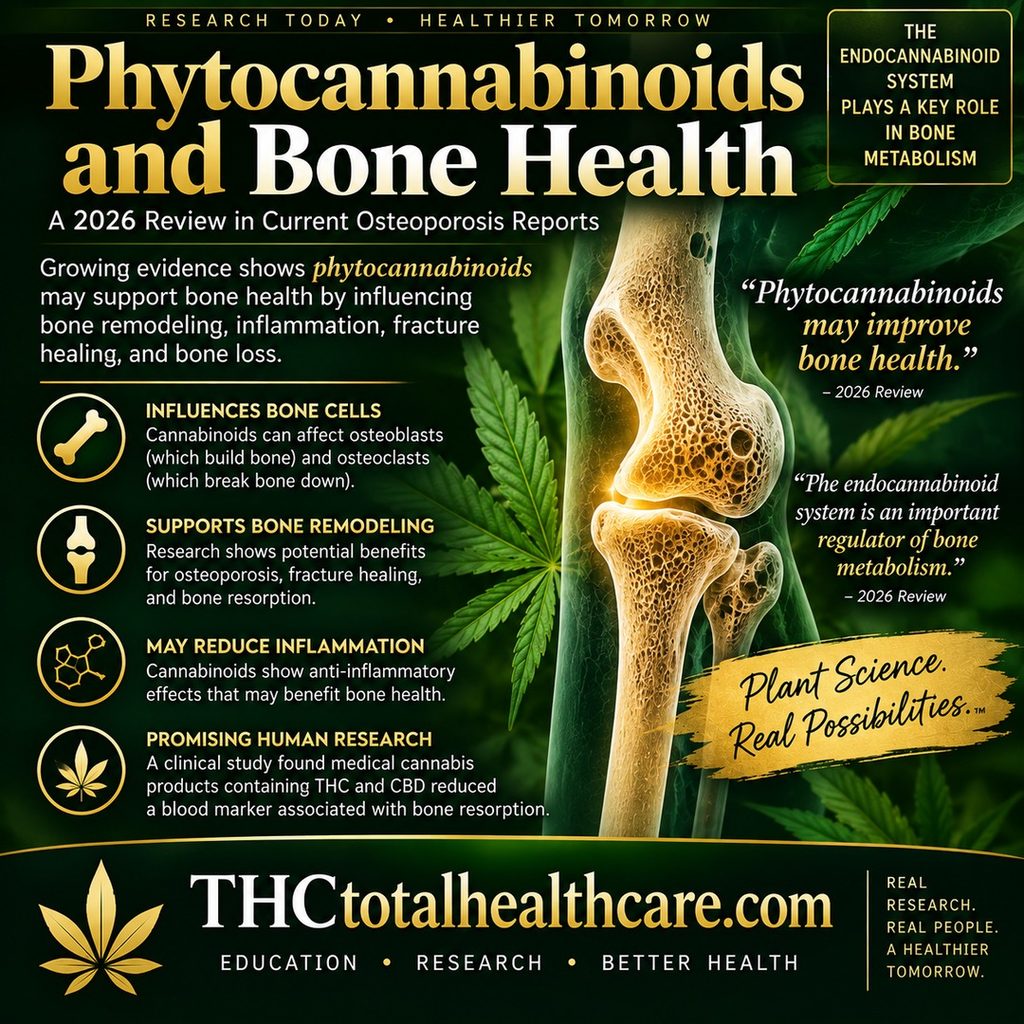
A 2026 review published in Current Osteoporosis Reports examines growing evidence that phytocannabinoids may support bone health by influencing bone remodeling, inflammation, fracture healing, and bone loss.
The review highlights the endocannabinoid system as an important regulator of bone metabolism. Research involving CBD and THC shows that cannabinoids can affect osteoblasts, which build bone, and osteoclasts, which break bone down.
The review also discusses early human research showing that medical cannabis products containing THC and CBD reduced a blood marker associated with bone resorption. Together, the findings point to cannabinoids and the endocannabinoid system as promising areas for further bone-health research.
“Purpose of the review: Phytocannabinoids have received attention for their therapeutic properties, however, it is unclear how they affect bone homeostasis. Additionally, increased use of cannabis and hemp-derived products have raised questions about their impact on musculoskeletal health. This review summarizes recent studies that investigate the impact of phytocannabinoids on bone.
Recent findings: The most well studied phytocannabinoid in relation to bone health is cannabidiol (CBD). In vitro data suggests CBD inhibits osteoclasts and promotes osteoblast activity. Rodent studies have demonstrated CBD may be useful for managing bone loss associated with osteoporosis and periodontitis, as well as reducing fracture pain and promoting healing. Recent studies suggest other phytocannabinoid isolates and extracts containing multiple phytocannabinoids have varying effects on bone. The first clinical study in this area reported that a medical cannabis product reduced markers of bone turnover in healthy adults. Cannabinoids bind to receptors in the endocannabinoid system which is involved in regulation of bone metabolism. Phytocannabinoids may improve bone health; however, additional work is required to determine factors such as the optimal dose, timing, and route of administration.”
https://pubmed.ncbi.nlm.nih.gov/42709344
“Due to their diverse pharmacological properties, phytocannabinoids may have therapeutic value for bone-related disorders.”
https://link.springer.com/article/10.1007/s11914-026-00982-1