Essential Oils from Seed-Depleted Infructescences of Industrial Hemp: Chemical Diversity and Biological Potential

Industrial hemp is increasingly being studied not only for cannabinoids, fiber and seed products, but also for valuable compounds that can be recovered from plant material often treated as agricultural waste.

In this study, researchers examined essential oils obtained from seed-depleted hemp infructescences and found substantial chemical diversity along with antioxidant and antimicrobial activity. The results suggest that this underused post-harvest material may have potential value in pharmaceutical, cosmetic and oral healthcare applications.

The findings also highlight another way hemp biomass could be more fully utilized rather than discarded.

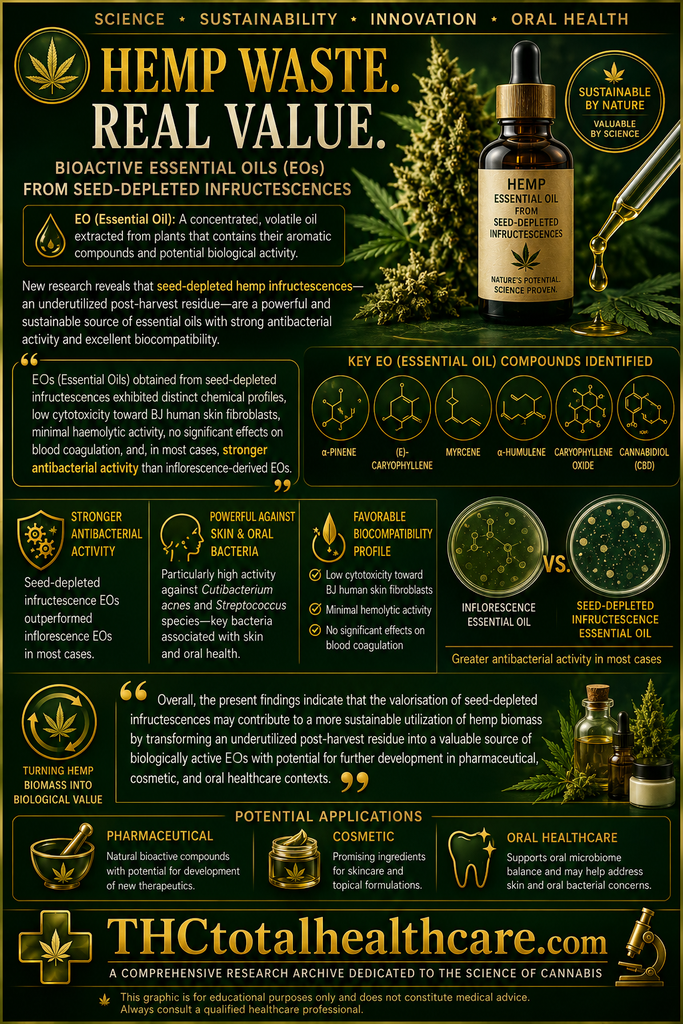
“Industrial hemp is a chemically rich plant increasingly explored within sustainable production systems aimed at the full utilization of all plant fractions. While hemp inflorescences have been extensively investigated, the biological potential of seed-depleted infructescences remains largely underexplored.

This study compared essential oils (EOs) distilled from inflorescences and seed-depleted infructescences of hemp (Cannabis sativa L. cv. Futura 75).

Their chemical composition was determined by gas chromatography-mass spectrometry (GC-MS), and their cytotoxicity, hemocompatibility, effects on blood coagulation, and antibacterial activity against a panel of 11 Gram-positive, Gram-negative, and microaerophilic bacterial strains were evaluated.

The major EO constituents included α-Pinene, (E)-Caryophyllene, Myrcene, α-Humulene, Caryophyllene oxide, and Cannabidiol.

EOs obtained from seed-depleted infructescences exhibited distinct chemical profiles, low cytotoxicity toward BJ human skin fibroblasts, minimal haemolytic activity, no significant effects on blood coagulation, and, in most cases, stronger antibacterial activity than inflorescence-derived EOs. Particularly high activity was observed against skin- and oral-associated bacteria, including Cutibacterium acnes and Streptococcus species.

These findings demonstrate that seed-depleted infructescences represent underutilized post-harvest biomass and a valuable and sustainable source of biologically active EOs, supporting their further investigation for potential pharmaceutical, cosmetic, and oral healthcare applications.”

https://pubmed.ncbi.nlm.nih.gov/42653967

https://link.springer.com/article/10.1007/s13365-026-01338-2


Therapeutic Potential of Cannabidiol in Dysbiosis-Related Oral Biofilm Diseases: Antibiofilm, Antivirulence and Host Response Evidence

Dental caries and periodontal disease are driven in part by harmful shifts in the microbial communities that form oral biofilms, making new approaches to controlling those biofilms an important area of research.

In this review, researchers examined the therapeutic potential of cannabidiol (CBD) and found evidence that it may inhibit biofilm formation, reduce microbial virulence, modulate periodontal inflammation and support tissue-protective responses.

The findings highlight CBD as a potential future adjunct for oral health, particularly in conditions linked to microbial dysbiosis such as tooth decay and periodontal disease.

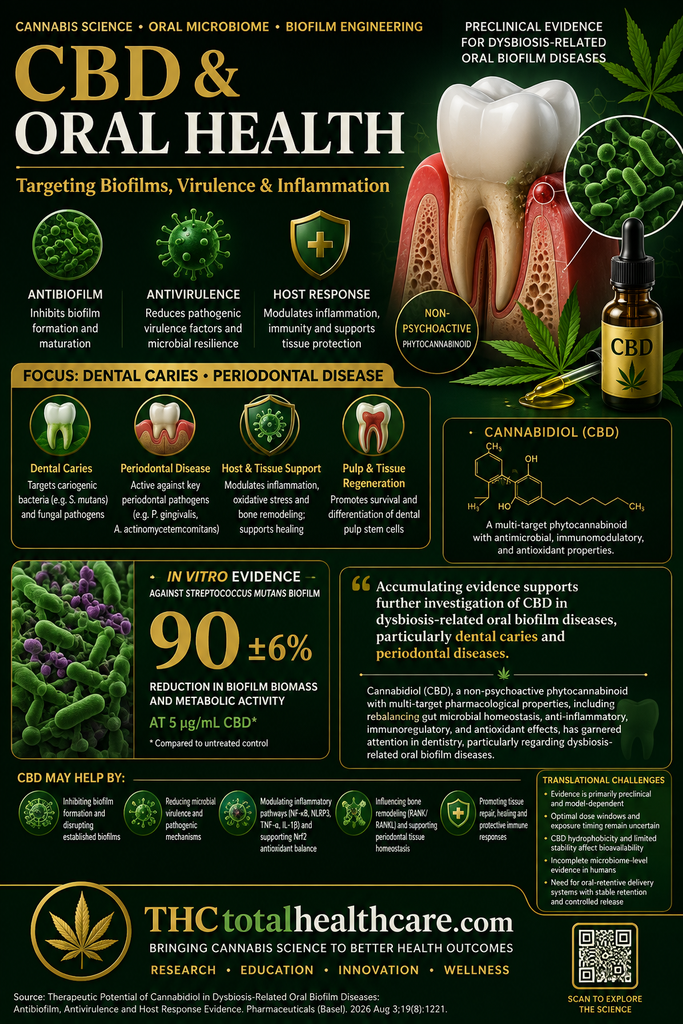
“Dysbiosis-related oral biofilm diseases, particularly dental caries and periodontal diseases, pose major global health challenges because ecological shifts within oral microbial communities enhance biofilm virulence, resilience, and host inflammatory responses.

Cannabidiol (CBD), a non-psychoactive phytocannabinoid with antimicrobial, antibiofilm, immunomodulatory, and antioxidant properties, has attracted increasing interest as an investigational, ecology-oriented adjunct for oral health applications.

This narrative review evaluates current antibiofilm, antivirulence, and host response evidence for CBD in dysbiosis-related oral biofilm diseases, with emphasis on dental caries and periodontal diseases and selected supportive evidence from other oral biofilm-associated conditions.

Current evidence suggests that CBD can inhibit biofilm formation, attenuate cariogenic and fungal virulence traits, modulate periodontal inflammation and immunity, and support tissue-protective responses. However, most evidence remains preclinical and model-dependent, particularly in caries research, and CBD’s hydrophobicity, limited stability, uncertain dose windows, and incomplete microbiome-level evidence remain major barriers to translation.

Future studies should clarify CBD’s ecological effects on oral microbial communities, define clinically relevant dosing and exposure timing, and develop oral-retentive delivery systems.”

“Cannabidiol (CBD), a non-psychoactive phytocannabinoid with multi-target pharmacological properties, including rebalancing gut microbial homeostasis, anti-inflammatory, immunoregulatory, and antioxidant effects, has garnered attention in dentistry, particularly regarding dysbiosis-related oral biofilm diseases.”

“Accumulating evidence supports further investigation of CBD in dysbiosis-related oral biofilm diseases, particularly dental caries and periodontal diseases.”

https://www.mdpi.com/1424-8247/19/8/1221

Cannabidiol-Loaded Mucoadhesive PLGA Nanosphere-Chitosan Hydrogel Patch for Oral Therapeutic Applications

Delivering cannabidiol (CBD) directly to tissues inside the mouth could provide a new approach to treating inflammatory oral diseases such as gingivitis and periodontitis.

In this study, researchers developed a mucoadhesive hydrogel patch containing CBD-loaded nanospheres designed to remain attached to oral tissue and gradually release CBD. The formulation demonstrated sustained CBD release, improved mucosal permeability, strong antibacterial activity and reductions in inflammatory markers.

The findings highlight the potential of targeted CBD delivery systems for treating inflammation and supporting healing in the mouth.

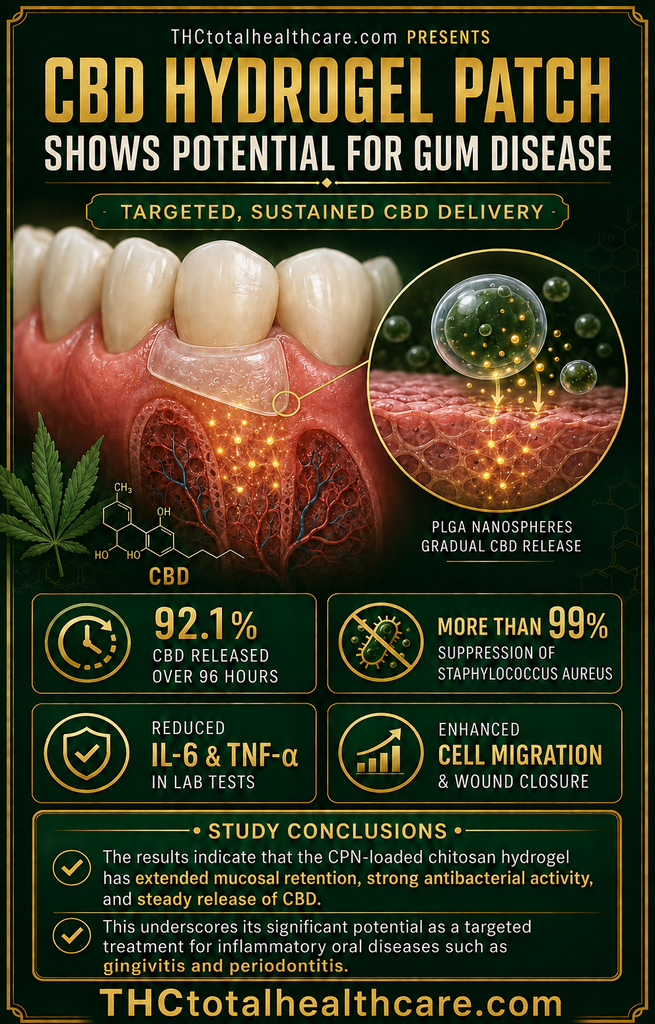
“Cannabidiol (CBD), the primary bioactive element of cannabis, has shown promise in alleviating pain and inflammation, although mechanisms in periodontal inflammation are not fully understood.

To improve its limited solubility and mucosal permeability, the developed chitosan-based mucoadhesive hydrogel incorporating CBD-loaded PLGA nanospheres (CPN hydrogel) was characterized by FT-IR, SEM, particle size, rheological, swelling, and diffusion analyses, followed by biological evaluations, including wound-healing and RT-qPCR-based anti-inflammatory assays.

The improved CPN hydrogel had a homogeneous shape, better viscoelastic behavior, and sustained drug release. Over 90% of CBD was released within 96 h, and Franz cell experiments showed improved permeability (124.1 μg/cm2 after 72 h). The gellan gum-based mucosal substrate significantly increased adhesion (1137.33 ± 142.25 s) compared to the control groups.

Antioxidant studies indicated 73.65% DPPH radical scavenging, whereas antibacterial tests showed more than 99% suppression of Staphylococcus aureus. Furthermore, in vitro studies validated its wound healing and the downregulation of the inflammatory cytokines IL-6 and TNF-α.

The results indicate that the CPN-loaded chitosan hydrogel has extended mucosal retention, strong antibacterial activity, and steady release of CBD. This underscores its significant potential as a targeted treatment for inflammatory oral diseases such as gingivitis and periodontitis.”

https://pubmed.ncbi.nlm.nih.gov/41596768

“Cannabidiol (CBD), a non-psychoactive phytocannabinoid from Cannabis sativa with anti-inflammatory, immunomodulatory, and antimicrobial properties, is a promising bioactive compound for oral health applications [9,10,11]. In addition, CBD not only reduces inflammation, but also fights P. gingivalis very well.”

https://www.mdpi.com/1422-0067/27/2/1127


Cannabinoid-Functionalized Glass Ionomer Cements: Structural Stability, Fluoride Release, and Antibiofilm Activity against Cariogenic Bacteria

Cannabinoids are being explored for uses beyond conventional medicines, including dental materials designed to resist bacterial growth.

In this study, researchers incorporated cannabinoid compounds into glass ionomer cements and evaluated their structural stability, fluoride release and ability to inhibit biofilms formed by cavity-causing bacteria.

The findings suggest that cannabinoid-functionalized dental materials could combine traditional restorative properties with added antimicrobial activity.

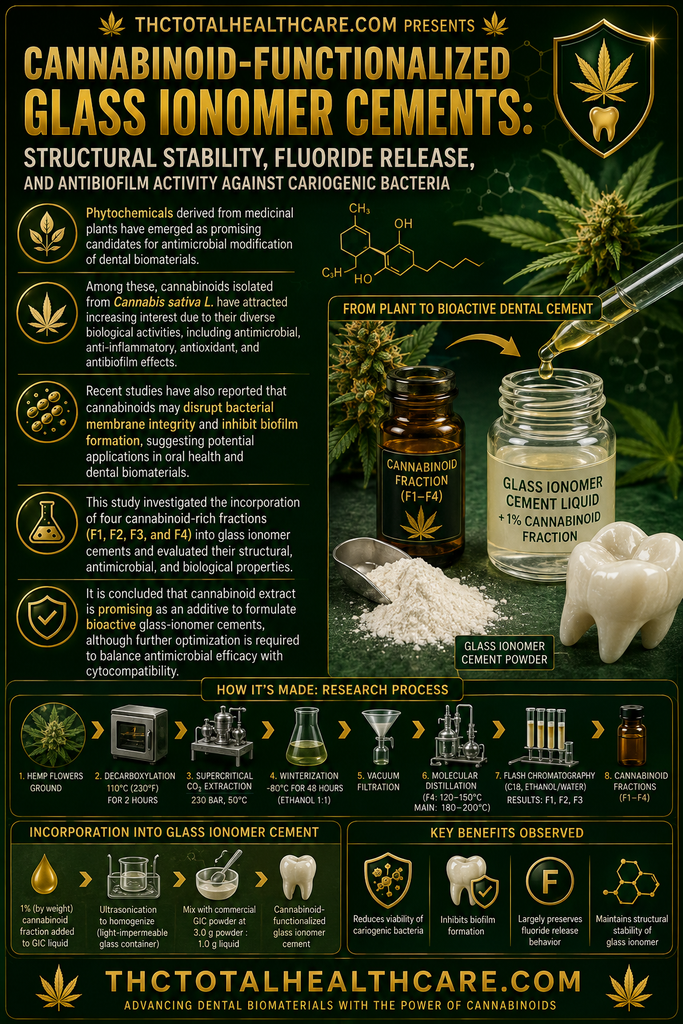
“Dental caries is strongly associated with biofilm-forming bacteria such as Streptococcus mutans and Lactobacillus acidophilus, and improving the antimicrobial performance of restorative materials remains a major challenge in preventive dentistry.

Glass ionomer cements (GICs) exhibit favorable properties including chemical adhesion and fluoride release, yet their intrinsic antibacterial activity remains limited.

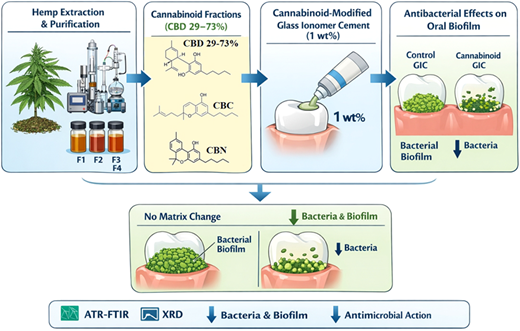
This study investigated the incorporation of four cannabinoid-rich fractions (F1, F2, F3, and F4) into glass ionomer cements and evaluated their structural, antimicrobial, and biological properties.

Cannabinoid fractions isolated from hemp flowers were incorporated into Ketac Cem Radiopaque and Ketac Molar Easymix formulations at 1 wt %. Data were analyzed using one-way ANOVA, Tukey’s post hoc test, and Kruskal-Wallis analysis (p < 0.05).

Attenuated Total Reflection-Fourier Transform Infrared Spectroscopy (ATR-FTIR) and X-ray diffraction (XRD) analyses demonstrated structural compatibility between the cannabinoid fractions and the glass ionomer matrix, indicating preservation of the original phase composition and the absence of disruption in the acid-base setting reaction. The modified cements exhibited strain-dependent antibacterial and antibiofilm activity, with KCR-F4 showing the strongest reduction in S. mutans viability (47.35%) and KME-F1 demonstrating the greatest activity against L. acidophilus (14.77%).

Significant differences were observed among GIC types and cannabinoid fractions for antimicrobial activity, fluoride release, and cytotoxicity. Scanning electron microscopy (SEM) imaging further confirmed decreased bacterial adhesion and disrupted surface colonization on cannabinoid-modified cement surfaces. Fluoride-release behavior was largely preserved following cannabinoid incorporation. However, cytotoxicity analysis revealed increased LDH release at the tested concentration, indicating a cytotoxicity trade-off associated with enhanced antimicrobial activity.

It is concluded that cannabinoid extract is promising as an additive to formulate bioactive glass-ionomer cements, although further optimization is required to balance antimicrobial efficacy with cytocompatibility.”

https://pubmed.ncbi.nlm.nih.gov/42626432

“Phytochemicals derived from medicinal plants have emerged as promising candidates for antimicrobial modification of dental biomaterials. Among these, cannabinoids isolated from Cannabis sativa L. have attracted increasing interest due to their diverse biological activities, including antimicrobial, anti-inflammatory, antioxidant, and antibiofilm effects.”

“Recent studies have also reported that cannabinoids may disrupt bacterial membrane integrity and inhibit biofilm formation, suggesting potential applications in oral health and dental biomaterials. “

https://pubs.acs.org/acsodf/article/11/32/47854/5246508/Cannabinoid-Functionalized-Glass-Ionomer-Cements


Effect of a cannabidiol-based mouthwash on dental enamel properties and biofilm control: an In situ study

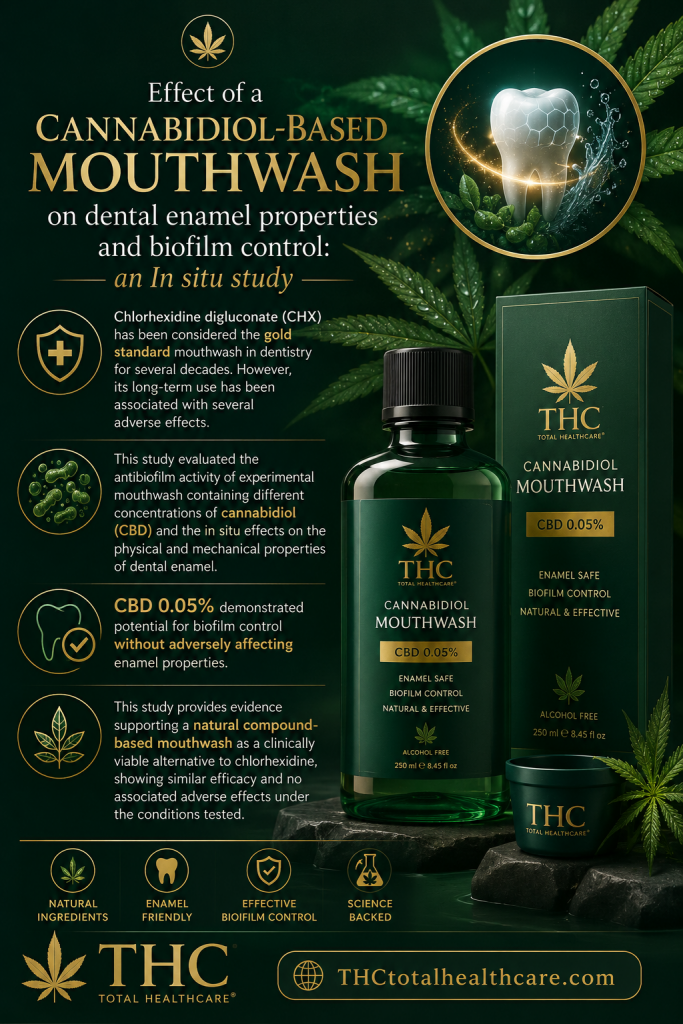
Chlorhexidine has long been considered a standard mouthwash for controlling dental biofilm, but staining, taste changes, irritation, and other drawbacks can limit long-term use. In this in-situ study involving 14 participants, researchers tested several concentrations of CBD mouthwash against chlorhexidine while also examining effects on dental enamel. CBD at 0.05% and 0.1% produced biofilm control comparable to chlorhexidine, while the 0.05% formulation did not adversely affect enamel properties and produced less color change. The findings suggest that appropriately formulated CBD mouthwash may offer a promising plant-derived approach to biofilm control while avoiding some of the disadvantages associated with conventional chlorhexidine rinses.

Objectives: This study evaluated the antibiofilm activity of experimental mouthwash containing different concentrations of cannabidiol (CBD) and the in situ effects on the physical and mechanical properties of dental enamel.

Methods: Bovine enamel fragments (6 × 6 × 2 mm) were mounted in intraoral appliances worn by 14 participants in a crossover design. Mouthwash containing CBD (0%, 0.01%, 0.05%, and 0.1%) and 0.12% chlorhexidine (CHX) were tested. Each experimental phase lasted 7 days, separated by washout periods. One side of the appliance was exposed to a cariogenic challenge (20% sucrose) prior to treatment. Surface roughness (Ra), microhardness (%KHN), and color change (ΔE00) were measured before and after treatments. Biofilm and yeast counts (log10 CFU) were quantified, and enamel surfaces were analyzed by scanning electron microscopy. Data were analyzed using two-way ANOVA with Bonferroni post hoc tests and Kruskal-Wallis with Dunn’s test (P < 0.05).

Results: Sucrose did not significantly affect Ra (P > 0.05), although CBD 0.1% showed higher roughness than CHX under sucrose exposure (P < 0.05). No significant differences in %KHN were observed among treatments; however, sucrose reduced microhardness in the placebo and CBD 0.01% groups (P < 0.05). CHX exhibited the highest ΔE00 values (P < 0.05). Biofilm formation was similar among CHX, CBD 0.05%, and CBD 0.1% (P > 0.05), while CHX showed lower yeast counts than CBD 0.01% and CBD 0.1% (P < 0.05).

Conclusion: CBD 0.05% demonstrated potential for biofilm control without adversely affecting enamel properties.

Clinical relevance: This study provides evidence supporting a natural compound-based mouthwash as a clinically viable alternative to chlorhexidine, showing similar efficacy and no associated adverse effects under the conditions tested.”

https://pubmed.ncbi.nlm.nih.gov/42380527

“Chlorhexidine digluconate (CHX) has been considered the gold standard mouthwash in dentistry for several decades. It is a cationic bisbiguanide with bacteriostatic activity at low concentrations and bactericidal effects at higher concentrations. However, its long-term use has been associated with several adverse effects, including taste alteration, tooth and tongue staining, oral mucosal irritation, parotid gland swelling, xerostomia, and the potential development of antimicrobial resistance.”

“Based on the findings of this study and considering its limitations, it can be concluded that cannabidiol-based mouthwashes were able to modulate dental biofilm formation in a concentration-dependent manner, with higher concentrations (0.05% and 0.1%) demonstrating performance similar to chlorhexidine in reducing biofilm accumulation, influencing its structural organization, and maintaining relative microhardness. This effect did not result in alterations to enamel surface topography. However, cannabidiol-based mouthwashes maintained color closer to acceptability thresholds.”

https://link.springer.com/article/10.1007/s00784-026-06985-7

Bioactivity and Regenerative Potential of Cannabidiol in Human Dental Pulp Stem Cells: A Scoping Review of In Vitro Studies

Introduction: Cannabidiol (CBD), a nonpsychoactive compound derived from Cannabis sativa, has shown potential to influence cellular processes that are important for dental tissue repair. The aim of this scoping review was to map in vitro studies evaluating the influence of CBD on the osteogenic/odontogenic differentiation of human dental pulp stem cells (hDPSCs) in order to contribute to a better understanding of its therapeutic potential.

Methods: The review followed the Arksey and O’Malley framework, supported by the JBI Manual and PRISMA-ScR guidelines. The protocol was registered on OSF (osf.io/zfhca/). Comprehensive searches were conducted from January to June 2025 in PubMed, EMBASE, BVS, Scopus, Web of Science, ScienceDirect, and SciELO. Only studies published in English were included.

Results: Thirty articles were identified, and three in vitro studies met the eligibility criteria. At low concentrations (0.1-5 μM), CBD improved hDPSC viability, proliferation, migration, and differentiation. CBD also activated the mitogen-activated protein kinase (MAPK) and wingless-related integration site/beta-catenin signaling (WNT/β-catenin) pathways and increased the expression of odontogenic markers such as Sialophosphoprotein (DSPP), Runt-related transcription Factor 2 (RUNX2), and osteocalcin.

Conclusion: CBD shows promise as a bioactive molecule in regenerative endodontics, supporting mineralization, regulating inflammatory mediators, and promoting critical cellular activities in hDPSCs. Nevertheless, the available evidence is limited and further preclinical and clinical studies are essential to develop therapeutic protocols and assess long-term safety.

These preliminary findings indicate CBD as a novel candidate for regenerative strategies in endodontics.”

https://pubmed.ncbi.nlm.nih.gov/41767216

In Vitro Antimicrobial Effect of Tetrahydrocannabinol on Streptococcus mutans and Its Anticariogenic Potential

Introduction and aims: With the increasing use of marijuana, it is vital to understand the effect of tetrahydrocannabinol (THC) on oral microbiota, especially the primary carious pathogen Streptococcus mutans.

Methods: The minimum inhibitory concentration (MIC) of THC against S mutans was determined by antimicrobial susceptibility testing. Bacterial acid production was evaluated. The effect of THC on S mutans biofilm formation and preformed biofilms was determined by crystal violet assay. The metabolic activity and viability of the biofilm were assessed using the methylthiazolyldiphenyl tetrazolium bromide assay and live/dead assay, respectively. Extracellular polysaccharide (EPS) was examined by Cascade Blue Dextran staining. S mutans membrane potential was detected by the Baclight Bacterial Membrane Potential Kit.

Results: The MIC of THC against S mutans was 2 µg/mL (P < .0001). A total of ≥2 µg/mL THC reduced bacterial acidogenicity and inhibited over 90% of biofilm formation (P < .0001). Additionally, ≥1 µg/mL THC reduced biofilm viability and EPS production (P < .0001), as assessed by fluorescence measurements and microscopy. While 1 to 64 µg/mL THC did not degrade preformed biofilm, metabolic activity was reduced by 16 to 64 µg/mL THC (P < .01), and 8 to 32 µg/mL THC reduced biofilm viability in a time- and dose-dependent manner (P < .001). Moreover, 2 to 8 µg/mL THC promoted membrane hyperpolarization after a 5-minute treatment (P < .01).

Conclusion: THC inhibits S mutans growth and biofilm formation while also reducing bacterial viability, EPS production, and acid production. Although it does not degrade preformed biofilm biomass, THC diminishes its metabolic activity and viability. These effects may be linked to THC-induced membrane hyperpolarization. This in vitro study suggests that THC may reduce the cariogenic capacity of S mutans.

Clinical relevance: This study shows that THC inhibits S mutans growth, biofilm formation, properties of preformed biofilms, and acid production. It provides preliminary scientific evidence on the impact of THC on oral health, specifically cannabinoid consumption on cariogenesis, and a potential new avenue for developing a new anticariogenic agent.”

https://pubmed.ncbi.nlm.nih.gov/41576726

“Among the cannabinoids, THC is the most abundant and exhibits a range of therapeutic effects, including analgesic, antiemetic, anti-inflammatory, anticancer, and antiseizure properties, as well as offering neuroprotective benefits in cases of neurodegeneration.”

Taken together, we herein provide evidence of the efficacy of THC in antibacterial and antibiofilm activity against S mutans by reducing planktonic growth of S mutans, inhibiting biofilm formation, and interfering with preexisting biofilm activity and function.

In addition, it may be a potential new avenue for developing new anticariogenic agents by suppressing the growth of S mutans and decelerating the acidification process that leads to enamel demineralization.”

https://www.sciencedirect.com/science/article/pii/S0020653925086678?via%3Dihub

Anticariogenic (meaning “anti-cavity”) describes substances or practices that prevent or arrest the development of dental caries (tooth decay).”

Evaluation of the antimicrobial effect of cannabidiol (CBD) in a multispecies subgingival biofilm model

Background: This study evaluated the antimicrobial effect of cannabidiol (CBD) on a multi-species subgingival biofilm model.

Materials and methods: Biofilms were formed using 33 bacterial species on a Calgary device. Two protocols were tested: (A) biofilm in contact with CBD (125, 250 and 500 µg/mL) and chlorhexidine 0.12% (CHX) for the entire period; (B) treatments with CBD (500 and 1000 µg/mL) and CHX started on day 3, twice a day, for 1 minute. The total biofilm counts, the proportion of complexes, and the counts of each species were evaluated by DNA-DNA hybridization (Checkerboard).

Results: In Experiment A, CBD at concentrations of 250 and 500 µg/mL, as well as CHX, significantly reduced the total biofilm count. At 500 µg/mL, CBD also decreased the proportion of the red complex and reduced the counts of 10 bacterial species, whereas CHX affected 20 species. In Protocol B, both CBD at 1000 µg/mL and CHX reduced the total biofilm count and the proportion of the red complex, while increasing the proportion of the green complex. Both protocols led to a reduction in Porphyromonas gingivalis and Tannerella forsythia.

Conclusion: CBD reduced the total bacterial count and the red complex, inhibiting known periodontal pathogens. Within the limitations, the results provide exploratory evidence that CBD may reduce the total bacterial count in the proposed polymicrobial biofilm model, including the red complex bacteria, and may thus be postulated as an inhibitor of known periodontal pathogens. However, future in vivo studies with robust sample sizes and standardized CFU-based quantification are required to confirm these findings.”

https://pubmed.ncbi.nlm.nih.gov/41509036

“These exploratory observations demonstrated a notable antimicrobial activity of CBD by reducing red complex bacteria and key periodontopathogens, including Porphyromonas gingivalis and Tannerella forsythia, in a multispecies subgingival biofilm model, comparable to CHX.”

https://www.tandfonline.com/doi/full/10.1080/20002297.2025.2603706

Potential Antimicrobial Use of Cannabidiol in Dentistry: A Scoping Review

pubmed logo

Background/Objectives: The use of cannabidiol (CBD) as an antimicrobial and antifungal agent has gained interest in medicine, with studies suggesting potential against various microorganisms. However, its effectiveness against oral pathogens remains underexplored in dental research, highlighting the need for further studies. This scoping review summarizes current evidence on the antimicrobial properties of CBD in dental and oral health. 

Methods: A systematic search was conducted across seven databases (PubMed, the Cochrane Library, Scopus, Embase, Web of Science, SciELO, and LILACS) up to January 2025. The inclusion criteria encompassed studies that explored the effects of CBD on oral microbiology (in vitro and in vivo in animal models), regardless of language or year of publication. The gray literature was evaluated in the Google Scholar database. 

Results: A total of 1284 articles were identified, of which 10 met the inclusion criteria for this scoping review. These studies, published between 2019 and 2025, primarily focused on bacterial and fungal cultures. The most commonly used methods were the minimum inhibitory concentration test and counting colony-forming units. The contact methods between CBD and bacterial/fungal cell cultures were either dilution or direct contact. 

Conclusions: CBD shows promising antimicrobial properties against a range of oral bacteria and fungi, suggesting its potential application in managing oral health conditions.”

https://pubmed.ncbi.nlm.nih.gov/41294500

“The current knowledge regarding the microbiological properties of CBD indicates its antimicrobial potential against oral microorganisms such as P. gingivalisS. mutans, and C. albicans. Several studies have evaluated CBD antimicrobial effects through assays such as the MIC test and bacterial growth assays, with varying concentrations and formulations. These studies suggest that CBD can inhibit microbial growth, though its effectiveness varies according to CBD concentration, microbial strain, and the delivery system.”

https://www.mdpi.com/2304-6767/13/11/519

Therapeutic Potential of Cannabidiol in Dentistry: A Systematic Review From Cellular Mechanisms to Clinical Trials

pubmed logo

“Background: CBD holds substantial promise in medical applications. This review aims to comprehensively analyse the current status of cannabidiol (CBD) in dentistry.

Methods: A systematic search of databases including PubMed-MEDLINE, Scopus, Embase, Cochrane Library, World Intellectual Property Organization (WIPO), European Patent Office (EPO), and the United States Patent and Trademark Office (USPTO) was conducted. Peer-reviewed journal manuscripts focusing on cell studies, clinical trials, and registered patents related to CBD and its derivatives in dentistry were summarised. Inclusion criteria were studies on CBD in dentistry, including original research and patents, published in English between 2013 and mid-2023 (articles) or early 2024 (patents), with full-text availability. Excluded were non-dentistry studies, unpublished or non-peer-reviewed reports, and duplicates using Microsoft Excel. The risk of bias was evaluated using the Cochrane RoB 2 tool. Two observers independently screened the articles for inclusion in the present study to mitigate bias. Cohen’s kappa was used to measure inter-rater agreement.

Results: The total number of included studies was 57. Cell-based studies demonstrated CBD’s effectiveness in modulating cellular responses and anti-inflammatory properties, especially in oral-origin cells, and its impact on osteogenic differentiation. Research, including clinical trials and patents, has shown CBD’s benefits in treating pain and inflammation in the maxillofacial area, notably in conditions such as radiation-induced mucositis. CBD research in dental pain and inflammation is advanced, but studies on CBD’s role in regenerative dentistry remain limited.

Conclusion: More studies on the mineralisation of oro-facial structures are necessary to fully understand CBD’s role in regenerative dentistry. This study was supported by the Faculty of Dentistry, Chulalongkorn University. This study was registered in the PROSPERO (ID: CRD4201055832) and Open Science Framework (OSF) database (osf.io/z3bd8). The PRISMA guideline was followed to include the relevant full-text papers.”

https://pubmed.ncbi.nlm.nih.gov/41194764/

https://onlinelibrary.wiley.com/doi/10.1111/jop.70081