
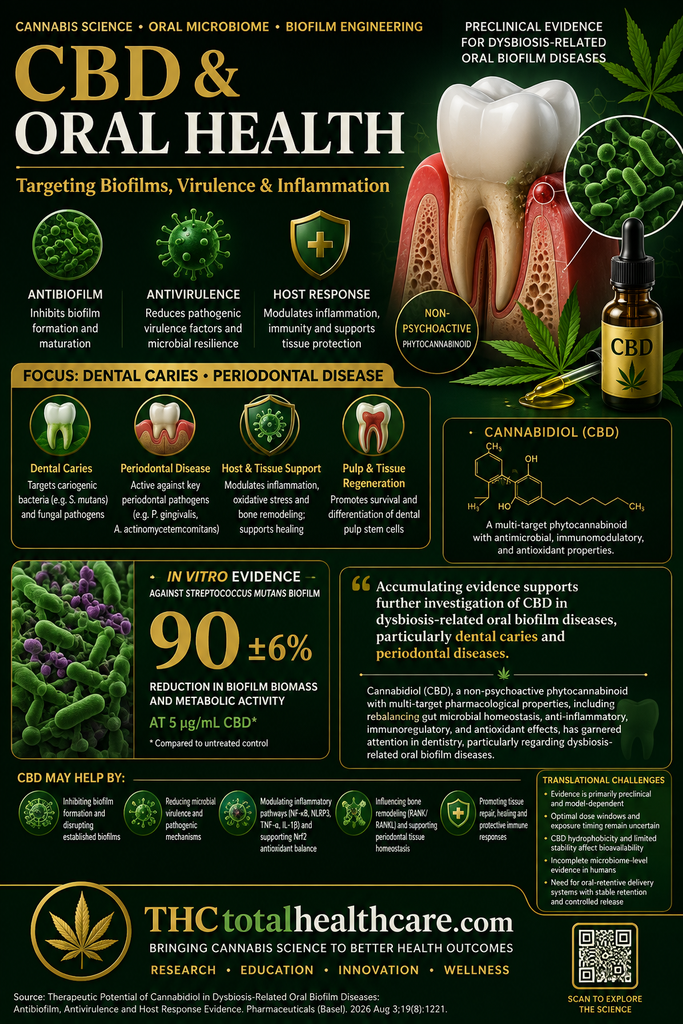
Dental caries and periodontal disease are driven in part by harmful shifts in the microbial communities that form oral biofilms, making new approaches to controlling those biofilms an important area of research.
In this review, researchers examined the therapeutic potential of cannabidiol (CBD) and found evidence that it may inhibit biofilm formation, reduce microbial virulence, modulate periodontal inflammation and support tissue-protective responses.
The findings highlight CBD as a potential future adjunct for oral health, particularly in conditions linked to microbial dysbiosis such as tooth decay and periodontal disease.
“Dysbiosis-related oral biofilm diseases, particularly dental caries and periodontal diseases, pose major global health challenges because ecological shifts within oral microbial communities enhance biofilm virulence, resilience, and host inflammatory responses.
Cannabidiol (CBD), a non-psychoactive phytocannabinoid with antimicrobial, antibiofilm, immunomodulatory, and antioxidant properties, has attracted increasing interest as an investigational, ecology-oriented adjunct for oral health applications.
This narrative review evaluates current antibiofilm, antivirulence, and host response evidence for CBD in dysbiosis-related oral biofilm diseases, with emphasis on dental caries and periodontal diseases and selected supportive evidence from other oral biofilm-associated conditions.
Current evidence suggests that CBD can inhibit biofilm formation, attenuate cariogenic and fungal virulence traits, modulate periodontal inflammation and immunity, and support tissue-protective responses. However, most evidence remains preclinical and model-dependent, particularly in caries research, and CBD’s hydrophobicity, limited stability, uncertain dose windows, and incomplete microbiome-level evidence remain major barriers to translation.
Future studies should clarify CBD’s ecological effects on oral microbial communities, define clinically relevant dosing and exposure timing, and develop oral-retentive delivery systems.”
“Cannabidiol (CBD), a non-psychoactive phytocannabinoid with multi-target pharmacological properties, including rebalancing gut microbial homeostasis, anti-inflammatory, immunoregulatory, and antioxidant effects, has garnered attention in dentistry, particularly regarding dysbiosis-related oral biofilm diseases.”
“Accumulating evidence supports further investigation of CBD in dysbiosis-related oral biofilm diseases, particularly dental caries and periodontal diseases.”