
Hypermobility-associated chronic pain can be persistent, widespread, and difficult to control with conventional treatment. In this updated UK Medical Cannabis Registry analysis, patients receiving medicinal cannabis reported significant improvements in pain, anxiety, sleep, and overall health-related quality of life. The benefits were observed across multiple follow-up points, adding real-world clinical evidence that cannabis-based medicines may help address both the pain itself and several of the symptoms that commonly accompany hypermobility disorders.
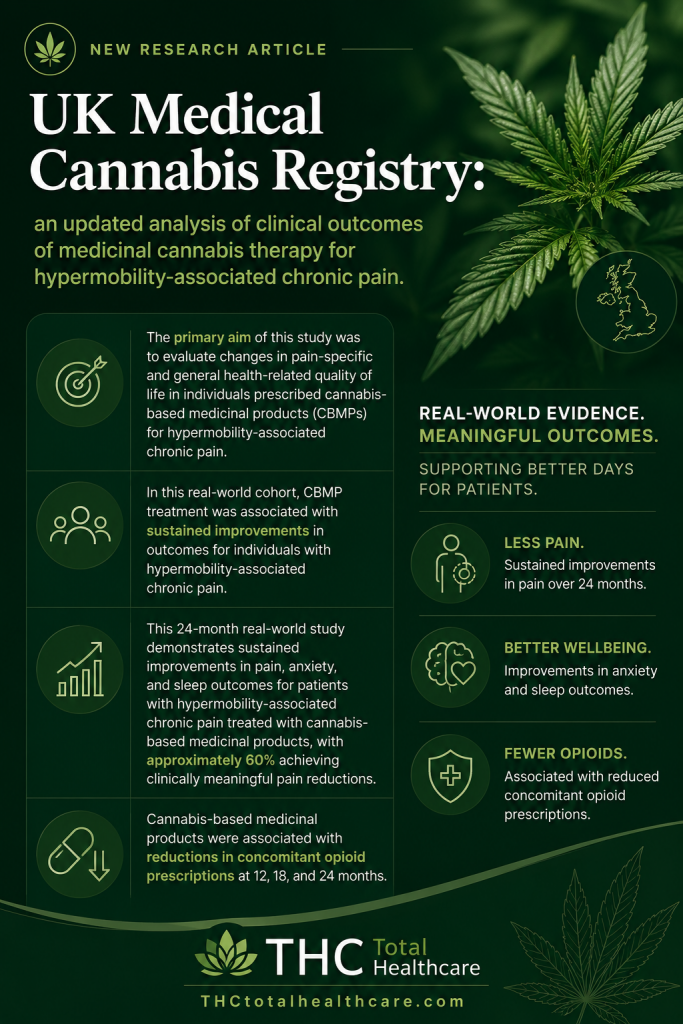
“Introduction/objective: The primary aim of this study was to evaluate changes in pain-specific and general health-related quality of life in individuals prescribed cannabis-based medicinal products (CBMPs) for hypermobility-associated chronic pain.
Methods: The case series utilised data from the UK Medical Cannabis Registry. Primary outcomes were changes in Brief Pain Inventory (BPI), Pain Visual Analogue Scale (VAS), Short-Form McGill Pain Questionnaire-2 (SF-MPQ-2), EQ-5D-5L index value, Generalised Anxiety Disorder-7 (GAD-7), and Single-item Sleep Quality Scale (SQS) over 24 months. Repeated measures analysis of variance was used to assess changes over time, with post hoc pairwise comparisons performed for significant findings.
Results: A total of 240 patients were analysed. Changes were observed across all patient-reported outcome measures (PROMs) on repeated measures analysis of variance (p < 0.001). Post hoc pairwise comparisons for the BPI subscales, SF-MPQ-2 and Pain VAS demonstrated improvement from baseline to all subsequent timepoints (p < 0.001). By 24 months, 56.67% (n = 136) and 61.25% (n = 147) of participants reported clinically significant improvements in BPI severity and interference respectively. Clinically significant improvements were also reported for SF-MPQ-2 (47.08%, n = 113) and Pain VAS scores (60.00%, n = 144).
Conclusion: In this real-world cohort, CBMP treatment was associated with sustained improvements in outcomes for individuals with hypermobility-associated chronic pain. These findings support the need for further controlled studies to determine causality.
Key Points • This 24-month real-world study demonstrates sustained improvements in pain, anxiety, and sleep outcomes for patients with hypermobility-associated chronic pain treated with cannabis-based medicinal products, with approximately 60% achieving clinically meaningful pain reductions.
• Cannabis-based medicinal products were associated with reductions in concomitant opioid prescriptions at 12, 18, and 24 months.
• This represents the largest and longest-duration observational study of medical cannabis therapy specifically in hypermobility spectrum disorders and Ehlers-Danlos syndrome, addressing a critical evidence gap in chronic pain management.
• Adverse events were predominantly mild-to-moderate in severity, with poor baseline sleep quality and current cannabis use identified as positive predictors of pain improvement, informing patient selection and treatment optimisation.”
https://pubmed.ncbi.nlm.nih.gov/42217098
“This study provides a 24-month real-world evaluation of CBMPs in patients with hypermobility-associated chronic pain. It demonstrates long-term sustained improvement in pain, anxiety and sleep-related outcomes, underpinning health-related quality of life. Despite its observational design, the study provides important insight into potentially addressing an area of significantly unmet therapeutic need.”
https://link.springer.com/article/10.1007/s10067-026-08166-z
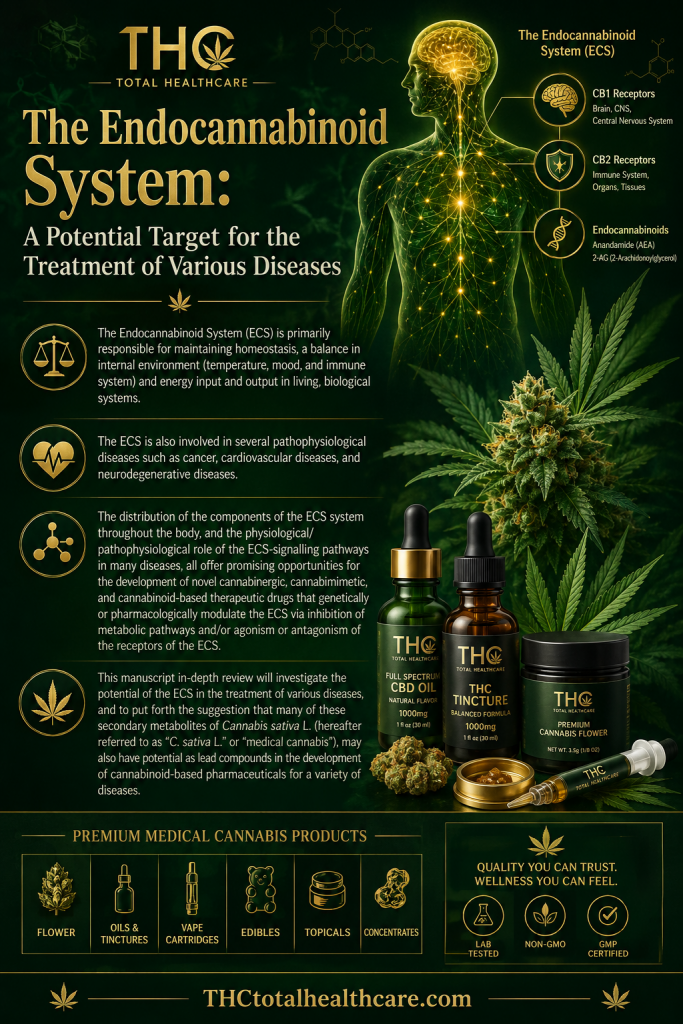
 “The Endocannabinoid System (ECS) is primarily responsible for maintaining homeostasis, a balance in internal environment (temperature, mood, and immune system) and energy input and output in living, biological systems.
 “Ehlers-Danlos Syndromes (EDS) and related Hypermobility Spectrum Disorders (HSD) are debilitating connective tissue disorders that feature a prominent pain component for which there are limited therapeutic options for pain management.
  “We present the case of an 18-year-old woman who suffered from complications of Ehlers-Danlos syndrome (EDS). Her pain was poorly controlled despite being on a myriad of analgesic medications at the time.