
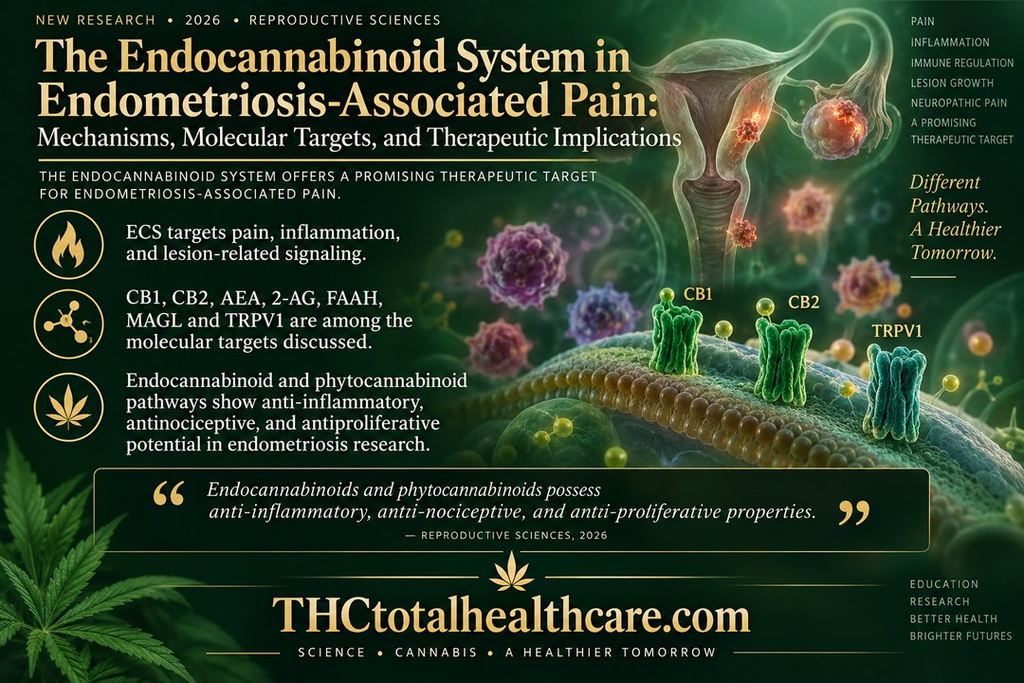
The Endocannabinoid System in Endometriosis-Associated Pain: Mechanisms, Molecular Targets, and Therapeutic Implications

A new 2026 review published in Reproductive Sciences examines the endocannabinoid system (ECS) as a therapeutic target for endometriosis-associated pain, a condition that can cause severe pelvic pain, painful menstruation, painful intercourse, and other chronic symptoms. The authors highlight the ECS because of its established roles in regulating pain, inflammation, and immune activity.

The review found that cannabinoids may influence three major mechanisms involved in endometriosis-associated pain: inflammation, pain signaling and sensitization, and the growth of endometriotic lesions. Cannabinoids interact with both cannabinoid and non-cannabinoid receptors found in endometriotic tissue, while also reducing inflammatory signaling from immune cells such as mast cells and macrophages.

The researchers conclude that the endocannabinoid system is a promising therapeutic target for endometriosis-associated pain, with cannabinoid therapies showing potential to regulate nociception, inflammation, and lesion proliferation. They call for clinical trials to further evaluate cannabinoid-based treatments for people living with endometriosis.

“Endometriosis is a chronic gynecological disorder affecting approximately 10% of reproductive-age women, characterized by the ectopic growth of endometrial tissue and severe pain, including dysmenorrhea, chronic pelvic pain, dyspareunia, dysuria, and dyschezia. Current treatments are limited in efficacy and associated with significant side effects, underscoring the urgent need for novel therapeutic strategies.

The endocannabinoid system (ECS) has emerged as a promising therapeutic target, given its well-established roles in pain modulation, inflammation, and immune regulation. Epidemiological evidence demonstrates that women with endometriosis increasingly use cannabis for symptom self-management, yet the underlying mechanisms remain poorly characterized.

This review integrates preclinical and human evidence to comprehensively evaluate the mechanistic basis of cannabinoid efficacy in endometriosis-associated pain. Evidence from in vitro studies and animal models indicates that cannabinoids target three main mechanisms of endometriosis-associated pain, including inflammation, nociceptive signaling, and lesion proliferation.

Cannabinoids suppress pain signaling and sensitization by interacting with cannabinoid and non-cannabinoid receptors expressed in endometriotic lesions. Cannabinoids attenuate endometriosis-induced inflammation by inhibiting proinflammatory cytokine signaling and reducing the release of inflammatory mediators by mast cells and peritoneal macrophages. Cannabinoids also exert antiproliferative effects in endometriosis models, thereby suppressing the growth of endometriotic lesions.

In conclusion, the ECS is a promising therapeutic target for endometriosis-associated pain, as it regulates nociception, inflammation, and proliferation. These promising findings highlight the potential therapeutic benefits of cannabinoids for endometriosis-associated pain, warranting the need for clinical trials to evaluate the safety and effectiveness of cannabinoid therapies in endometriosis.”

https://pubmed.ncbi.nlm.nih.gov/42745018

https://link.springer.com/article/10.1007/s43032-026-02201-9
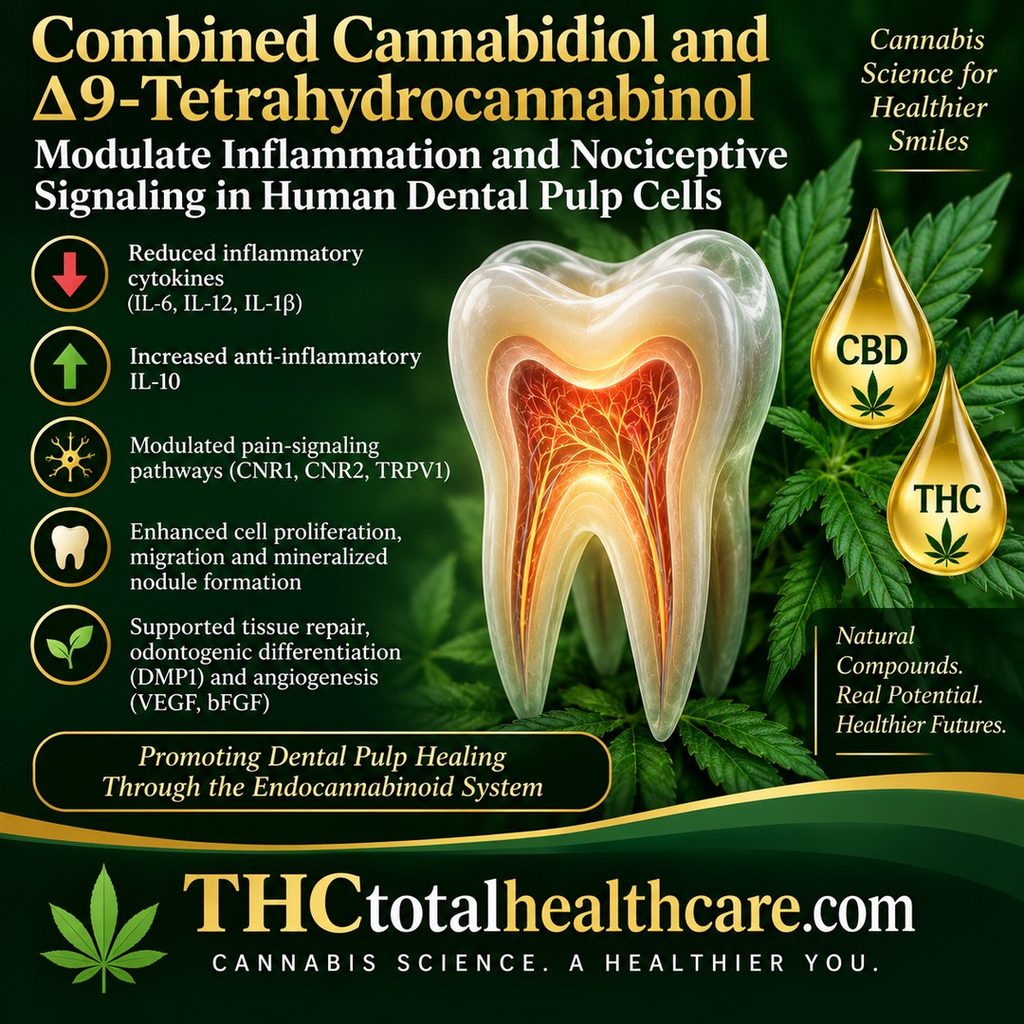
Combined Cannabidiol and Δ9-Tetrahydrocannabinol Modulate Inflammation and Nociceptive Signaling in Human Dental Pulp Cells

A new study using human dental pulp cells found that combining cannabidiol (CBD) and Δ9-tetrahydrocannabinol (THC) produced stronger anti-inflammatory effects than either cannabinoid alone. The combination reduced the pro-inflammatory cytokines IL-6, IL-12, and IL-1β while increasing the anti-inflammatory cytokine IL-10.

CBD and THC together also influenced important pathways involved in pain signaling and healing. Researchers reported increased expression of the cannabinoid receptors CNR1 and CNR2, modulation of TRPV1, and enhanced cell proliferation and migration. The combination also promoted mineralized nodule formation and increased markers associated with odontogenic differentiation and new blood-vessel formation.

The researchers concluded that combined CBD and THC show promise for promoting dental pulp healing by simultaneously influencing inflammation, nociceptive signaling, tissue repair, angiogenesis, and cell migration. The findings provide new evidence that cannabinoids may have potential applications in future vital pulp therapies designed to preserve and regenerate living dental tissue.

“Introduction: Dental pulp inflammation, caused by caries, trauma, or restorative operations, produces pain and slows regeneration. Cannabidiol (CBD) and Δ9-tetrahydrocannabinol (THC), cannabinoids of Cannabis sativa, have effects on inflammation and pain relief. However, the impact of these factors on dental pulp healing is not understood. This study investigated the combined effects of CBD and THC in controlling inflammation and nociception during dental pulp repair.

Methods: Human dental pulp cells were stimulated with lipopolysaccharide (LPS) and treated with CBD (2.5 μg/mL), THC (0.6 μg/mL), and their combination. Pro-inflammatory cytokines (IL-6, IL-12 and IL-1β) and anti-inflammatory cytokine IL-10 were analysed using qPCR and ELISA, while anti-nociceptive markers (CNR1, CNR2, and TRPV1) were evaluated by qPCR and Western blot. Cell viability, proliferation, and migration assays were performed to evaluate treatment effects on cellular behaviours associated with pulpal repair and regenerative potential.

Results: Compared with either treatment alone, the CBD/THC combination more effectively attenuated pro-inflammatory cytokines IL-6, IL-12, and IL-1β, enhanced CNR1 and CNR2 expression, modulated TRPV1, and increased IL-10 expression. Viability assays determined optimal non-cytotoxic concentrations for treatment. The combination enhanced cell proliferation and migration, promoted mineralized nodule formation, and significantly upregulated markers associated with tissue repair, odontogenic differentiation (DMP1), and angiogenesis (VEGF and bFGF).

Conclusion: Combined CBD and THC show promise for promoting dental pulp healing by modulating inflammation and nociceptive signaling, while supporting odontogenic differentiation, angiogenesis, and cell migration in human dental pulp cells. These findings provide in vitro evidence supporting combined cannabinoid treatment as a therapeutic strategy for vital pulp therapies.”

https://pubmed.ncbi.nlm.nih.gov/42722230

https://www.jendodon.com/article/S0099-2399(26)00500-5/abstract