A new 2026 study shows that how cannabis is extracted can dramatically change which beneficial compounds are recovered. Researchers tested water, ethanol and acetone mixtures on Cannabis sativa leaves and inflorescences and found that solvent composition significantly affected total phenolics, cannabinoids and antioxidant activity.
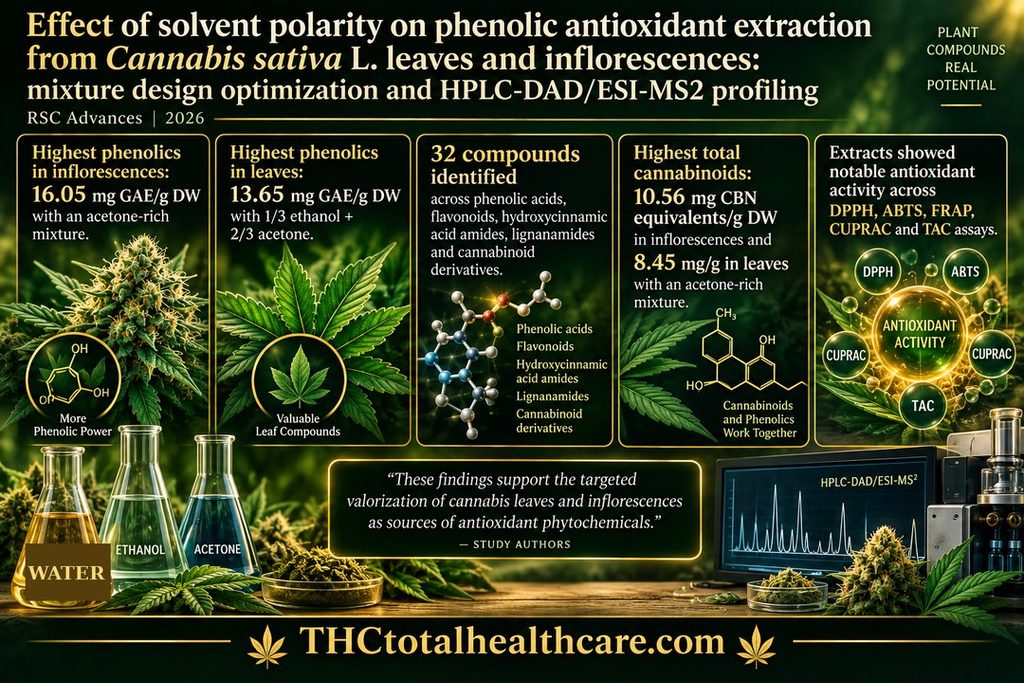
Inflorescences produced their highest total phenolic content — 16.05 mg GAE/g dry weight — with an acetone-rich mixture, while leaves reached 13.65 mg GAE/g with one-third ethanol and two-thirds acetone. Chemical profiling identified 32 compounds, including phenolic acids, flavonoids, hydroxycinnamic acid amides, lignanamides and cannabinoid derivatives.
The extracts also showed notable antioxidant activity across DPPH, ABTS, FRAP, CUPRAC and TAC assays. The authors concluded that cannabis leaves and flowers may be valuable targeted sources of antioxidant phytochemicals for pharmaceutical, nutraceutical and cosmetic applications.
“Cannabis (Cannabis sativa L.) is a source of bioactive compounds with promising applications in the nutraceutical, pharmaceutical, and cosmetic fields.
Applying a mixture design approach with three solvents (water, acetone and ethanol), this study investigated how solvent composition modulates the recovery of phenolic compounds from cannabis inflorescences and leaves. Extracts were assessed for total phenolic content (TPC) and antioxidant activities using DPPH, ABTS, FRAP, CUPRAC, and TAC assays, and their chemical profiles were characterized by HPLC-DAD/ESI-MS2.
Solvent composition significantly affected extraction efficiency across plant organs. For inflorescences, the highest TPC value (16.05 mg GAE per g dry weight) was obtained with an acetone-enriched mixture (1/6 water-1/6 ethanol-2/3 acetone), whereas leaves reached their maximum (13.65 mg GAE per g DW) with 1/3 ethanol-2/3 acetone.
Multi-response optimization identified 1/3 water-1/3 ethanol-1/3 acetone for inflorescences and 50% water-30% ethanol-20% acetone for leaves as the optimal solvent mixtures.
HPLC-DAD/ESI-MS2 analysis identified 32 compounds belonging to several classes, including phenolic acids, flavonoids, hydroxycinnamic acid amides, lignanamides, and cannabinoid derivatives. These classes showed diverse content depending on the solvent and plant matrix. The acetone rich mixture produced the highest total cannabinoids (10.56 and 8.45 mg CBN equivalents per g dry weight) for inflorescences and leaves, respectively.
These results reveal clear organ and solvent-dependent selectivity in Moroccan Cannabis. These differences were reflected in the antioxidant activities, with extracts showing notable reducing and radical-scavenging capacities across DPPH, ABTS, FRAP, CUPRAC, and TAC assays.
These findings support the targeted valorization of cannabis leaves and inflorescences as sources of antioxidant phytochemicals for pharmaceutical and cosmetic applications.”
https://pubmed.ncbi.nlm.nih.gov/42751042
“The chemical diversity of Cannabis sativa metabolites has stimulated extensive research into their extraction and characterization. In this study, water, ethanol, and acetone were combined to enhance the extraction of phenolic compounds and antioxidants from Cannabis sativa L. leaves and inflorescences.
Multi-response optimization showed that each plant matrix required a specific optimal solvent mixture, confirming matrix-dependent extraction behavior: 1/3 water–1/3 acetone–1/3 ethanol for inflorescences and 50% water–30% ethanol–20% acetone for leaves. HPLC-DAD/ESI-MS2 enabled the tentative identification of several compound classes, including cannabinoids, hydroxycinnamic acid amides, flavonoids, and lignanamides. Inflorescences were characterized by higher total cannabinoid contents, whereas leaves contained higher levels of hydroxycinnamic acid amides. These differences highlight both the importance of solvent selection and the distinct chemical composition of Cannabis sativa L. organs.
Overall, these results support the potential valorization of the optimized Cannabis sativa leaf and inflorescence extracts as sources of antioxidant and bioactive compounds for prospective applications in natural cosmetic formulations, such as antioxidant creams, serums or other topical skincare products, as well as in nutraceutical formulations, including functional supplements enriched with plant-derived antioxidants. However, additional studies on formulation stability, bioavailability, efficacy, and safety are required before practical application.”
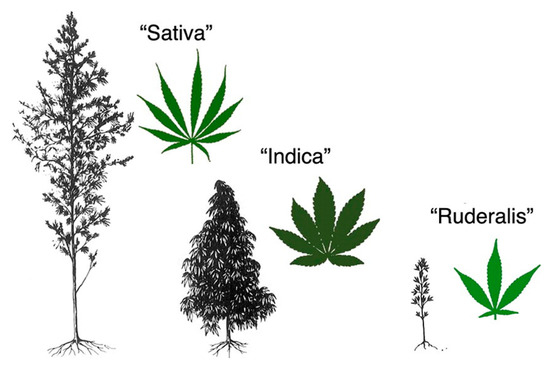
 “Cannabis sativa is an aromatic annual flowering plant with several botanical varieties, used for different purposes, like the production of fibers, the production of oil from the seeds, and especially for recreational or medical purposes.