
Cannabidiol Ameliorates Blood-Brain Barrier Dysfunction and Inhibits Memory Astrocytes Activation in Mice With Sickness-Like Behaviors

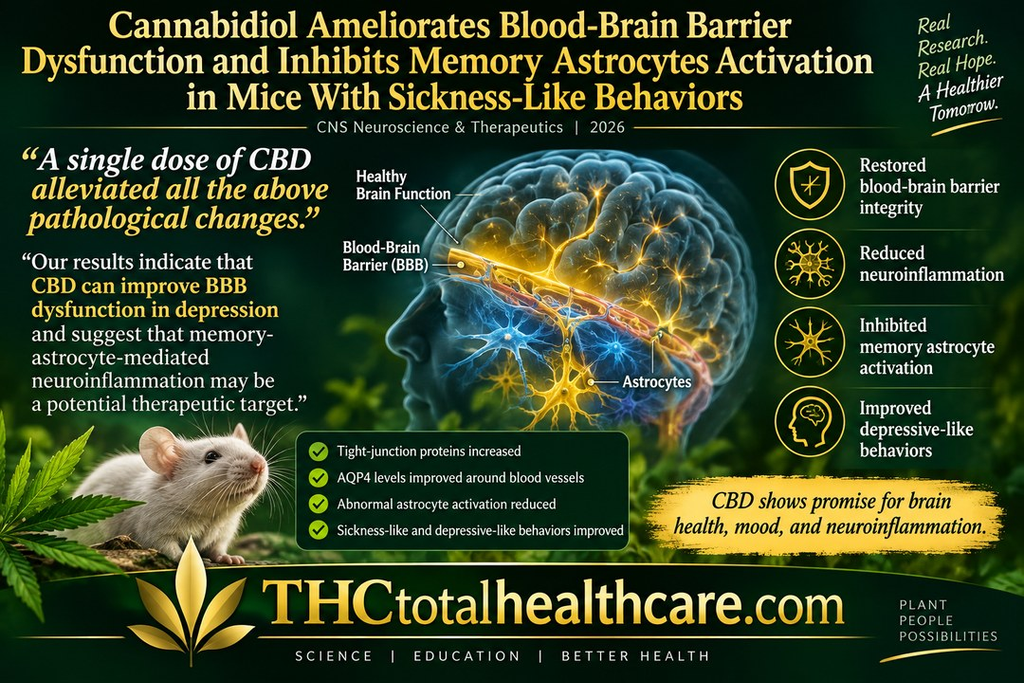
A new 2026 study published in CNS Neuroscience & Therapeutics found that cannabidiol (CBD) improved blood-brain barrier dysfunction, reduced neuroinflammation, and alleviated depressive-like behaviors in mice. The researchers found that sickness-like mice showed weakened blood-brain barrier integrity, reduced protective tight-junction proteins, abnormal astrocyte activation, and increased inflammation in the brain.

A single dose of CBD improved these changes, restoring important blood-brain barrier markers while reducing abnormal astrocyte activity and neuroinflammation. The researchers also identified a particularly interesting target called “memory astrocytes”—astrocytes that can respond more rapidly and strongly when exposed to a second inflammatory challenge.

The study found that CBD inhibited this memory-astrocyte-associated secondary inflammatory response, helping protect the blood-brain barrier and improve behavior. The researchers concluded that CBD may improve blood-brain barrier dysfunction associated with depression and identified memory-astrocyte-mediated neuroinflammation as a potential therapeutic target.

“Background: Blood-brain barrier (BBB) dysfunction has been increasingly implicated in the pathophysiology of depression; however, effective therapeutic strategies targeting this pathology remain limited. This study aimed to investigate the effect of cannabidiol (CBD) on improving depressive-like behaviors and BBB impairment, as well as its underlying mechanism.

Methods: Depressive-like behaviors in mice were assessed via exploratory and despair-like tests. BBB integrity was evaluated by examining tight junction protein expression in endothelial cells and AQP4 reduction from the perivascular membrane. Astrocyte activation and neuroinflammation were also measured. The therapeutic effects of a single CBD dose were examined.

Results: Mice with depressive-like phenotypes showed reduced exploratory behavior and increased despair-like behavior. In the BBB, the expression of tight junction proteins in endothelial cells was downregulated; in astrocytes, decreased AQP4 expression was observed, abnormal activation was enhanced, and neuroinflammation was elevated. A single dose of CBD alleviated all the above pathological changes. Further studies demonstrated that CBD exerted its effects by inhibiting memory astrocyte-associated secondary neuroinflammation, thereby alleviating depressive-like behaviors in mice with depressive-like phenotypes.

Conclusion: Experimental results show that CBD treatment can improve BBB dysfunction in depression and further indicates that targeted inhibition of memory astrocytes-mediated neuroinflammation may promote the treatment of depression.”

https://pubmed.ncbi.nlm.nih.gov/42747207

“Cannabidiol (CBD), a natural extract from cannabis, possesses multiple biological functions including cardioprotection, anti-inflammation, anti-cancer, anti-oxidation, and neuroprotection. Additionally, it plays indispensable roles in relieving depression and regulating BBB function]. CBD ameliorates depression by upregulating brain-derived neurotrophic factor, inhibiting neuroinflammation, alleviating oxidative stress, and modulating neurotransmitter transmission.”
https://onlinelibrary.wiley.com/doi/10.1002/cns.71168

Δ 9 -Tetrahydrocannabinol promotes functional remyelination in the mouse brain

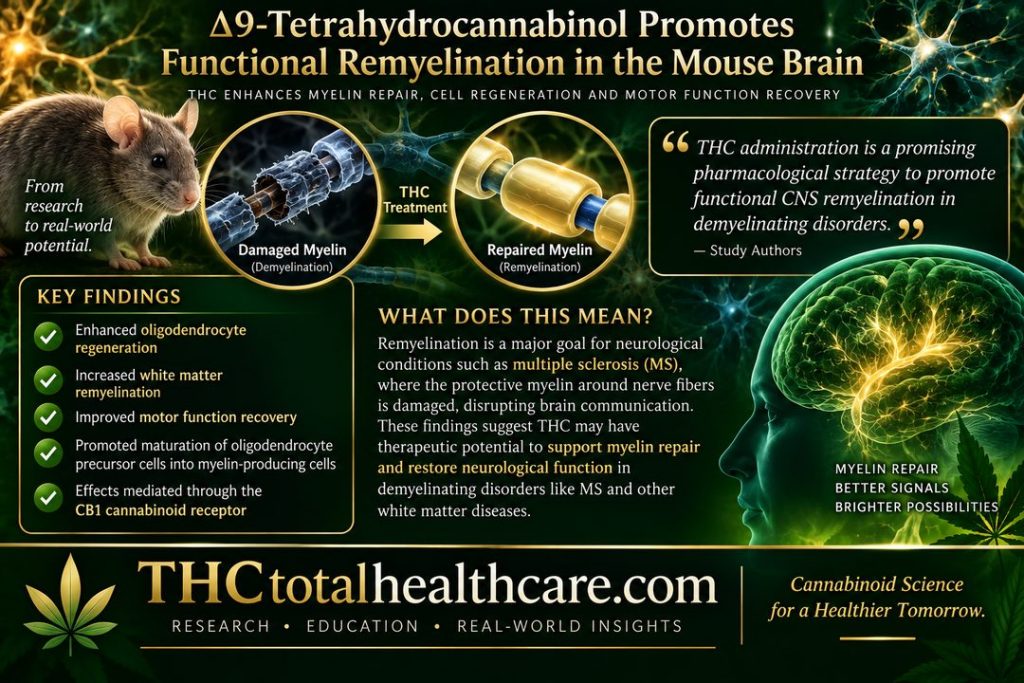
Myelin is the protective coating that surrounds nerve fibers and helps electrical signals move efficiently through the brain and spinal cord. Damage to myelin is a major feature of neurological disorders involving demyelination, making the repair of this protective layer an important therapeutic target.

In this mouse study, Δ9-THC promoted the regeneration of oligodendrocytes, the cells responsible for producing myelin, and enhanced remyelination in damaged white matter. THC treatment was also associated with improved recovery of motor function.

The researchers found that these effects involved activation of the CB1 cannabinoid receptor and the maturation of oligodendrocyte precursor cells into myelin-producing cells. The findings suggest that THC may have potential as a compound capable of supporting functional repair after myelin damage.

“Background and purpose: Research on demyelinating disorders aims to find novel molecules that are able to induce oligodendrocyte precursor cell differentiation to promote central nervous system remyelination and functional recovery. Δ9 -Tetrahydrocannabinol (THC), the most prominent active constituent of the hemp plant Cannabis sativa, confers neuroprotection in animal models of demyelination. However, the possible effect of THC on myelin repair has never been studied.

Experimental approach: By using oligodendroglia-specific reporter mouse lines in combination with two models of toxin-induced demyelination, we analysed the effect of THC on the processes of oligodendrocyte regeneration and functional remyelination.

Key results: We show that THC administration enhanced oligodendrocyte regeneration, white matter remyelination and motor function recovery. THC also promoted axonal remyelination in organotypic cerebellar cultures. THC remyelinating action relied on the induction of oligodendrocyte precursor differentiation upon cell cycle exit and via CB1 cannabinoid receptor activation.

Conclusions and implications: Overall, our study identifies THC administration as a promising pharmacological strategy aimed to promote functional CNS remyelination in demyelinating disorders.”

https://pubmed.ncbi.nlm.nih.gov/34216154/

“THC administration following cuprizone-induced demyelination enhanced oligodendrocyte regeneration, white matter remyelination and motor function recovery.”

“THC administration is a promising pharmacological strategy to promote functional CNS remyelination in demyelinating disorders.”

“Our study provides a novel therapeutic advantage of THC-based interventions in multiple sclerosis by promoting remyelination and functional recovery. New clinical trials with improved designs on cannabinoids in people with multiple sclerosis are needed now, considering these compounds as potential remyelinating/disease-modifying drugs to try to overcome previous failures. Our work also suggests that at least part of the neuroprotective action of phytocannabinoids in multiple sclerosis animal models and potentially in patients as well may be due to an enhanced CNS remyelination. Finally, this study also identifies THC as a potent inductor of oligodendrocyte progenitor cell differentiation under demyelination in mice, opening the possibility for this molecule to become a candidate drug to promote oligodendrocyte regeneration and remyelination in the treatment of demyelinating disorders.”

https://bpspubs.onlinelibrary.wiley.com/doi/10.1111/bph.15608

Need this THC study explained? thcXplained.com