
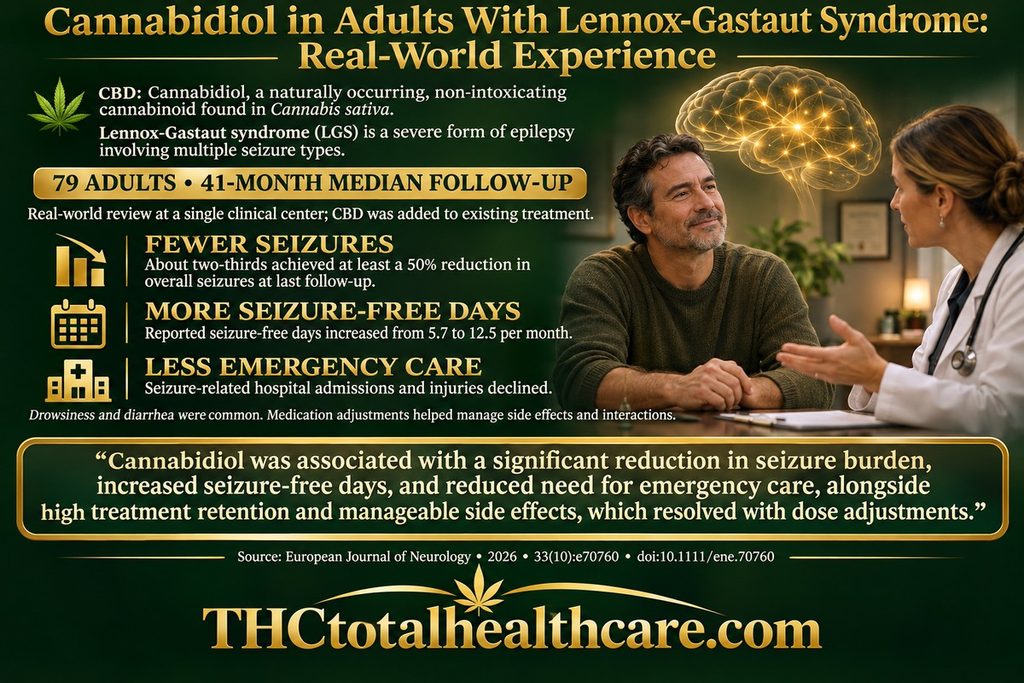
Cannabidiol (CBD) added to existing treatment was associated with sustained seizure reductions in adults with Lennox–Gastaut syndrome (LGS), a severe form of epilepsy involving multiple seizure types. In this 79-person clinical review, approximately two-thirds achieved at least a 50% reduction in overall seizures at their last follow-up.
Researchers reviewed clinical records and caregiver seizure diaries over a median follow-up of 41 months. Seizure-free days increased from 5.7 to 12.5 per month, while seizure-related hospital admissions and injuries declined. Caregivers also reported cognitive or behavioral improvements in 48 patients.
CBD is a naturally occurring, non-intoxicating cannabinoid found in Cannabis sativa. These findings support its use as an add-on treatment for adults with LGS. Drowsiness and diarrhea were common, and medication adjustments were often needed to manage side effects and interactions; 14 patients were able to discontinue one or more other antiseizure medications.
“Background: We report a single centre experience of cannabidiol use as adjunctive treatment in adults with Lennox-Gastaut Syndrome (LGS).
Methods: Retrospective review of adults with LGS treated with cannabidiol with clinical data collected from electronic records and caregiver standardised seizure diaries with seizure-related outcomes assessed at baseline, 6 months, and last follow-up.
Results: Seventy-nine adults (median age 29 years; 40 male) were included. Median follow-up was 41 months. Four patients died unrelated to cannabidiol treatment. Sixty-seven (86%) remained on treatment at last follow-up. Across all seizure types, 59.5% achieved ≥ 50% reduction at 6 months and 67.1% at last follow-up. Among those with ‘Drop Seizures’ (n = 78), 50% achieved > 50% reduction at 6 months and 61.5% at last follow-up. ‘Drop Seizure’ responder rates were numerically higher with clobazam > 5 mg/day, but with no statistically significant dose-response relationship seen. Seizure-free days increased (baseline 5.7/month; last follow-up 12.5/month). Seizure-related hospital admissions and injuries declined. Cognitive or behavioural improvements were reported in 48 patients (60.8%); there was no statistically significant association with achieving ≥ 50% seizure reduction. Drowsiness (n = 33) was the most frequent adverse event often related to drug-drug interactions. Diarrhoea (n = 24) was more common than previously reported. Side-effects necessitated ASM adjustments in 51 patients. Fourteen were able to withdraw one or more ASMs.
Conclusions: CBD was associated with sustained effectiveness and good tolerability in adults with LGS, with high retention and improvement in seizure and other clinically meaningful outcomes. Adverse effects, mainly interaction-related, were usually managed with concomitant medication adjustments.”
https://pubmed.ncbi.nlm.nih.gov/42798297
“Cannabidiol was associated with a significant reduction in seizure burden, increased seizure-free days, and reduced need for emergency care, alongside high treatment retention and manageable side effects, which resolved with dose adjustments. Improvements in caregiver-reported cognitive and behavioural function were also noted. These findings underscore the utility of cannabidiol as an effective and well-tolerated adjunctive therapy in adult patients with LGS and highlight its potential role in rationalising complex ASM regimens.”