
Cannabidiol-loaded hydrogel contact lenses for on-demand pH regulation and enhanced corneal alkali burn repair

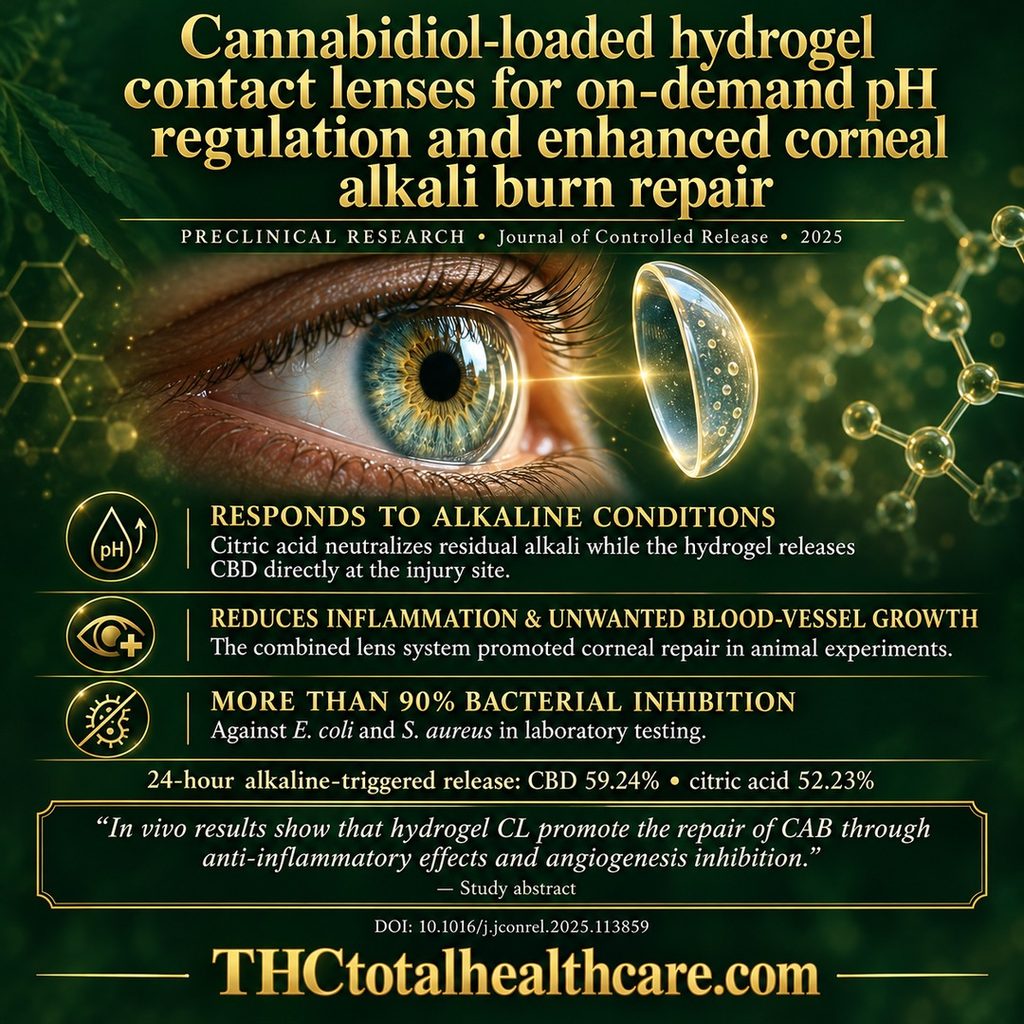
Cannabidiol-loaded hydrogel contact lenses improved repair of corneal alkali burns in preclinical experiments. Researchers developed a lens that releases CBD and citric acid in response to alkaline conditions, helping neutralize residual chemicals while delivering treatment directly to the injured eye.

The combined lens system reduced inflammatory signals, removed damaging hydroxyl radicals, and inhibited the growth of E. coli and Staphylococcus aureus by more than 90% in laboratory testing. Under alkaline conditions, approximately 59% of its CBD and 52% of its citric acid were released within 24 hours.

In animal experiments, the lenses promoted corneal repair by reducing inflammation and inhibiting unwanted blood-vessel growth. Published in the Journal of Controlled Release, these findings support further development of CBD-containing contact lenses as a targeted treatment approach for chemical injuries to the cornea—the clear front surface of the eye.

“Corneal alkali burn (CAB) poses a significant therapeutic challenge due to alkali infiltration, bacterial infection, inflammation, and angiogenesis, which collectively hinder recovery. The pH microenvironment after CAB is critical for the healing process, but there are few functional biomaterials for this purpose at present.

Herein, we develop a multifunctional hydrogel contact lens (CL) with on-demand release of citric acid (CA) and cannabinoid (CBD), triggered by alkaline conditions, to regulate the microenvironment pH and enhance CAB repair. The CA-functionalized polyvinyl alcohol (PC) and quaternary ammonium chitosan (QCS) are used as hydrogel frameworks, with CBD incorporated as a functional component. The (CBD/QCS/PC, CBD/QPC) hydrogel CL is fabricated using a repeated freeze-thaw process to achieve an interpenetrating network structure.

The findings suggest that the 1CBD/QPC hydrogel CL exhibit superior mechanical properties and biocompatibility (hemolysis rate < 0.6 %, cell viability>90 %). These properties enhance wearing comfort and reducing secondary inflammation. Notably, this hydrogel can release CA (52.23 ± 2.78 %) and CBD (59.24 ± 5.15 %) within 24 h under alkaline conditions to neutralize pH, significantly down-regulate the expression level of inflammatory factors and remove hydroxyl radicals. This mechanism fundamentally addressing the secondary damage of residual lye following CAB. Moreover, the hydrogel CL exhibit potent inhibitory effects on the colonization and growth of both E. coli and S. aureus by destroying bacterial membranes, with an inhibition rate > 90 %.

In vivo results show that hydrogel CL promote the repair of CAB through anti-inflammatory effects and angiogenesis inhibition.

In conclusion, these results demonstrate the potential of this hydrogel CL for treating corneal alkaline burns, providing new insights into treatment of CAB.”

https://pubmed.ncbi.nlm.nih.gov/40383160

“After CAB, the persistent alkaline residue remains a major obstacle to corneal repair. In this study, a novel CBD/QPC hydrogel CL with IPN structure was prepared by blending QCS, PC polymers, and CBD using a repeated freeze-thaw strategy. The findings suggested that the physicochemical properties of the hydrogel CL can be customized by adjusting the concentrations of QCS and CBD.”

https://www.sciencedirect.com/science/article/abs/pii/S0168365925004791?via%3Dihub
Bioactive Compounds and In Vitro Antibacterial Activity of Hemp Leaves and Inflorescences as Potential Functional Feed Ingredients for Canine Nutrition

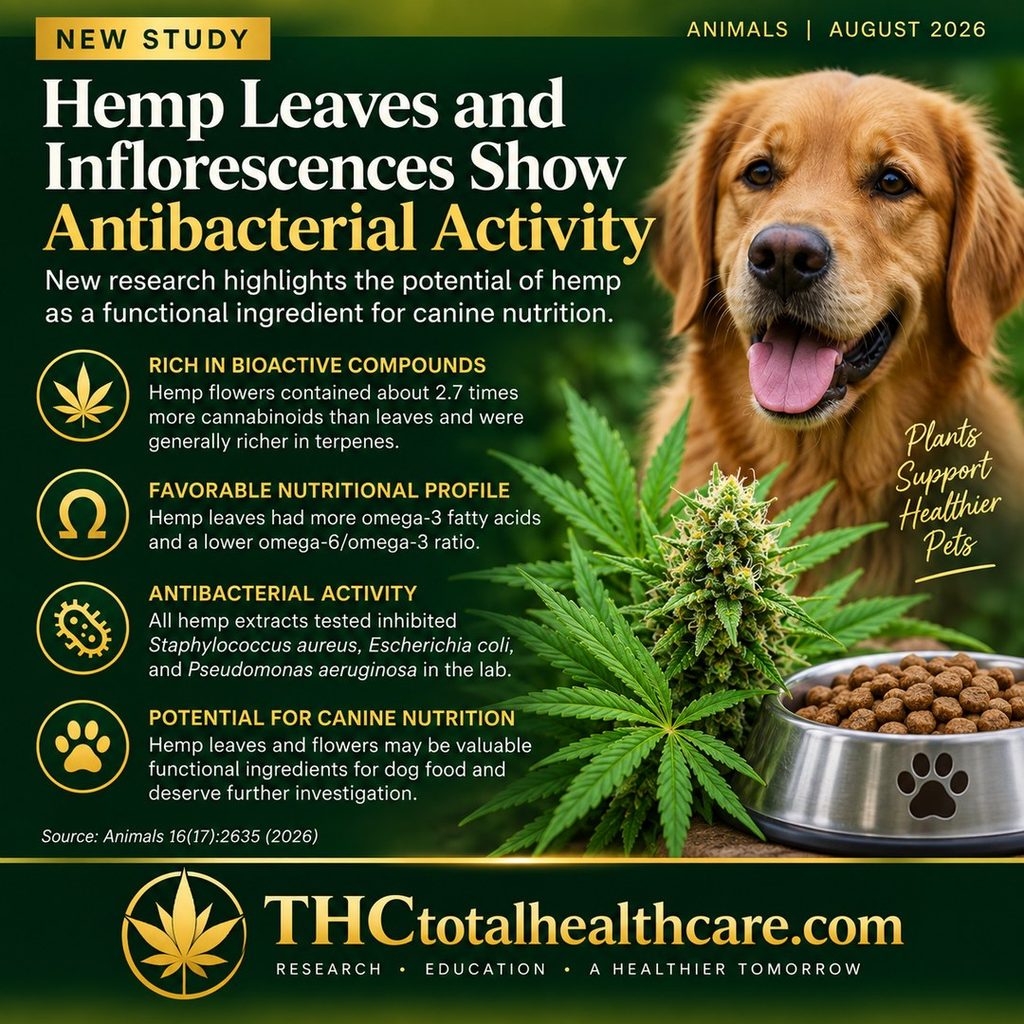
Hemp may have value far beyond its traditional uses. A 2026 study examining hemp leaves and inflorescences found that both plant parts contain bioactive compounds with potential nutritional value, while extracts from the plants also demonstrated antibacterial activity against several important bacterial species.

Researchers found that hemp flowers were especially rich in cannabinoids and terpenes, while the leaves offered a favorable fatty-acid profile. In laboratory testing, hemp extracts showed activity against Staphylococcus aureus, Escherichia coli, and Pseudomonas aeruginosa, highlighting another potential use for compounds naturally produced by the cannabis plant.

The researchers suggest that hemp leaves and flowers deserve further investigation as functional ingredients in canine nutrition. The findings add to growing evidence that parts of the cannabis plant often treated as agricultural byproducts may contain valuable nutritional and biologically active compounds.

“Hemp (Cannabis sativa L.) inflorescences have been extensively characterized for their bioactive compounds, whereas less information is available on hemp leaves despite their potential as a source of nutrients and phytochemicals.

This study compared leaves and inflorescences of four organically grown hemp cultivars (Finola, Futura 75, Dioica, and Kompolti) in terms of cannabinoid, terpene, and fatty acid profiles, lipid quality indices, and in vitro antibacterial activity.

Antibacterial activity against Staphylococcus aureus, Escherichia coli, and Pseudomonas aeruginosa was evaluated using MIC, MBC, and time-kill assays. Total cannabinoid content was approximately 2.7-fold higher in inflorescences than in leaves, which were also generally richer in terpenes. Leaves showed a more favorable fatty acid profile, with higher n-3 polyunsaturated fatty acid proportions and a lower n-6/n-3 ratio.

All extracts exhibited antibacterial activity. Among the tested bacteria, S. aureus was the most susceptible to the hemp extracts, with both growth inhibition and bactericidal activity observed at the lowest tested concentration (MIC/MBC = 0.005%), compared with 0.625% for E. coli and 1.25-2.5% for P. aeruginosa, depending on the extract. Finola and Kompolti inflorescence extracts showed the fastest bactericidal activity against S. aureus. 

These findings demonstrate distinct and complementary characteristics of hemp leaves and inflorescences and provide a basis for further investigation of their potential relevance to canine nutrition.”

https://pubmed.ncbi.nlm.nih.gov/42738424

“The pet food industry is increasingly looking for natural ingredients that can improve both the nutritional value and microbiological safety of dog diets while making better use of agricultural resources. Industrial hemp cultivation generates large amounts of leaves that are often underutilized, although they contain valuable natural compounds. This study compared hemp leaves and inflorescences from four industrial hemp cultivars to determine whether these plant materials could be useful in canine nutrition.

The results showed that leaves provide a favorable fatty acid profile, whereas inflorescences are richer in naturally occurring plant compounds such as cannabinoids and terpenes. Extracts from both plant parts also inhibited the growth of bacteria under laboratory conditions. These findings suggest that different hemp plant parts may have complementary roles as functional ingredients in dog foods while supporting more sustainable use of hemp biomass. Further studies in complete diets and feeding trials are needed before practical application.”

https://www.mdpi.com/2076-2615/16/17/2635