
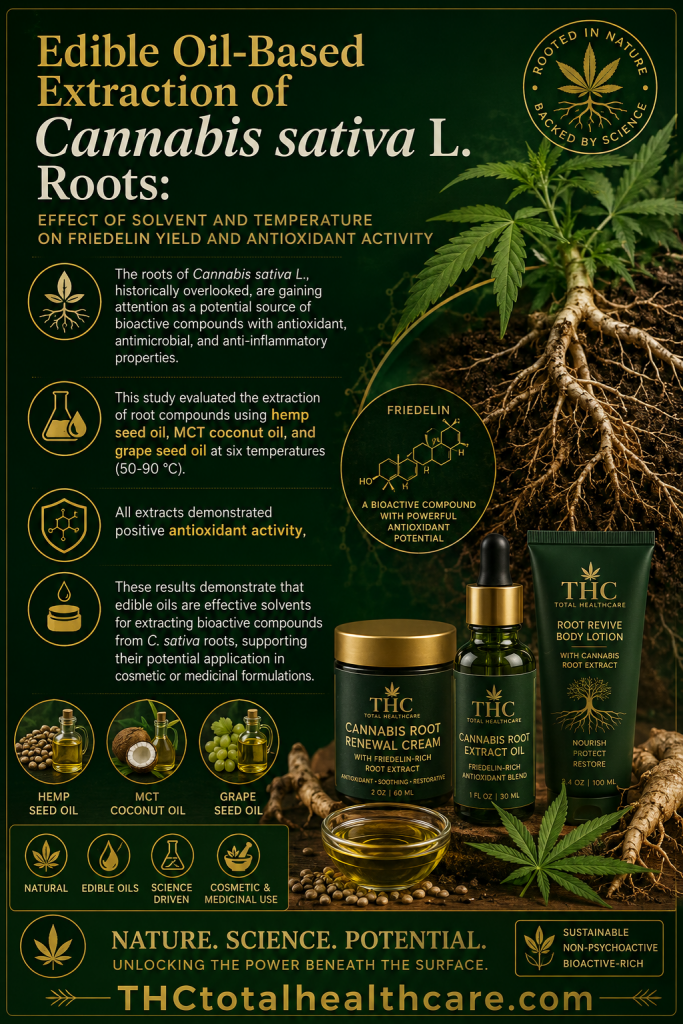
Cannabis research has traditionally focused on the plant’s flowers, leaves, and cannabinoids, while the roots have received far less attention. This study shows that Cannabis sativa roots may also be a useful source of bioactive compounds—and that extracting them does not necessarily require alcohol or other conventional solvents. Researchers successfully used common edible oils to recover friedelin, a naturally occurring triterpenoid, with grape seed oil producing the highest yield and outperforming previously reported ethanol-based extraction results. The extracts also demonstrated antioxidant activity, suggesting a practical and accessible approach for developing future cannabis-root-based cosmetic or medicinal formulations.
“The roots of Cannabis sativa L., historically overlooked, are gaining attention as a potential source of bioactive compounds with antioxidant, antimicrobial, and anti-inflammatory properties.
While previous studies have focused on extractions using ethanol, water, or supercritical CO2, the feasibility of edible oil-based extraction remains largely unexplored.
This study evaluated the extraction of root compounds using hemp seed oil, MCT coconut oil, and grape seed oil at six temperatures (50-90 °C).
Extracts were analyzed by GC-MS for compound identification and quantification, and antioxidant activity was assessed using the DPPH assay, ABTS test and β-carotene bleaching method, with results statistically evaluated by ANOVA. Friedelin was successfully extracted with all oils, with grape seed oil yielding the highest concentration (0.810 mg/g dry roots), achieving recoveries higher than those previously reported for ethanol-based extractions.
All extracts demonstrated positive antioxidant activity, with grape seed oil, both alone and combined with extracts, showing higher values across the three methods. ANOVA revealed a significant effect of solvent type on both Friedelin concentration and antioxidant capacity.
These results demonstrate that edible oils are effective solvents for extracting bioactive compounds from C. sativa roots, supporting their potential application in cosmetic or medicinal formulations.”
https://pubmed.ncbi.nlm.nih.gov/42123839
“In conclusion, this research validates the feasibility of extracting bioactive compounds from cannabis roots using accessible edible oils, achieving Friedelin recoveries higher than those previously reported for alcoholic extractions. These findings provide an important foundation for the development of Cannabis sativa L. root-based products for cosmetic or medicinal applications.”
https://www.mdpi.com/1420-3049/31/9/1473