
As cannabis legalization expands, questions remain about how society should respond when minors possess, use or attempt to purchase marijuana.
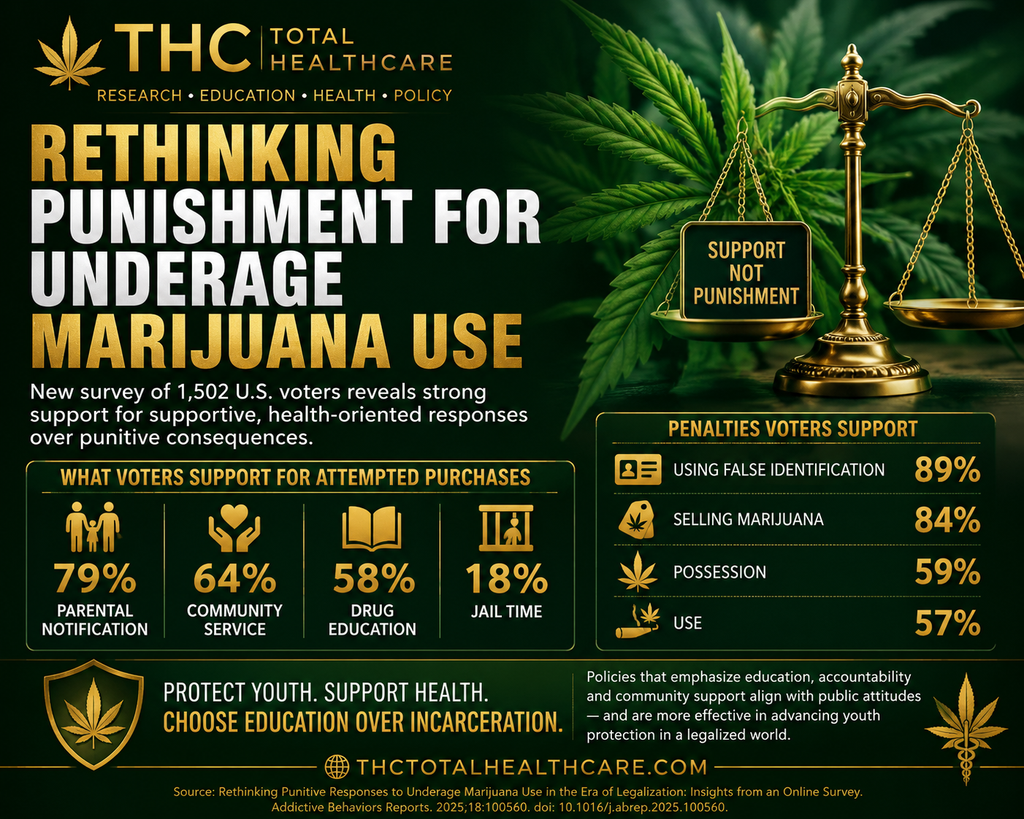
This study surveyed more than 1,500 U.S. registered voters about penalties and interventions for underage cannabis-related behavior. Respondents generally showed stronger support for parental notification, community service and drug education than for jail time, while support varied depending on the specific offense.
The findings provide a snapshot of public attitudes toward balancing accountability, prevention and punishment in the legalization era.
“Background: As adult nonmedical marijuana use becomes legal in many U.S. states, policymakers have adopted a range of responses to underage marijuana-related behaviors, often emphasizing punitive consequences. The extent to which these approaches align with public preferences remains unclear.
Methods: Data were drawn from an online survey of 1502 U.S. registered voters recruited from a national opt-in online panel. Analyses assessed support for a range of consequences for underage marijuana-related behaviors (i.e., possession, use, sale, and use of false identification), with selected bivariate comparisons across demographic groups.
Results: Respondents supported penalties for using false identification (89%) and selling marijuana (84%); fewer supported penalties for possession (59%) or use (57%). For attempted purchases, parental notification (79%), community service (64%), and drug education (58%) were more commonly endorsed than jail time (18%). Several differences by age, sex, race/ethnicity, and parent status were observed.
Conclusions: Respondents generally expressed greater support for parental notification, community service, and education as a response to underage violations of marijuana laws than for punitive responses. Policies that emphasize supportive, health-oriented responses, alongside stronger adult and industry accountability, may be more consistent with public attitudes and more effective than punitive responses in advancing youth protection goals in legalized contexts.”
https://pubmed.ncbi.nlm.nih.gov/42640046
https://www.tandfonline.com/doi/full/10.1080/10826084.2026.2722321