
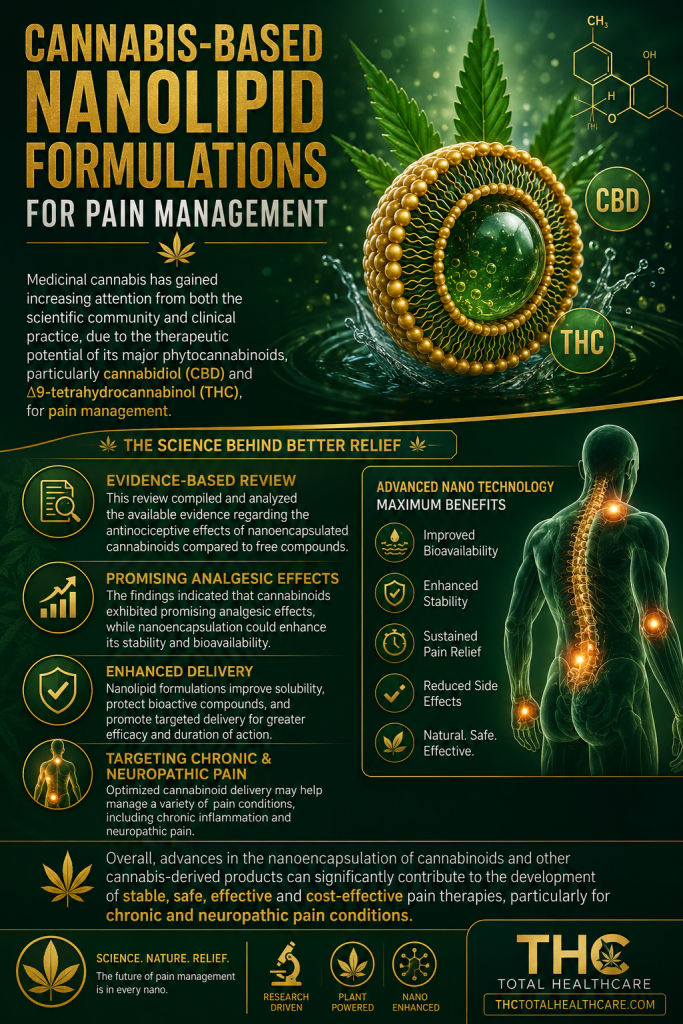
“Medicinal cannabis has gained increasing attention from both the scientific community and clinical practice, due to the therapeutic potential of its major phytocannabinoids, particularly cannabidiol (CBD) and Δ9-tetrahydrocannabinol (THC), for pain management.
This review compiled and analyzed the available evidence regarding the antinociceptive effects of nanoencapsulated cannabinoids compared to free compounds. The published works have explored some pharmaceutical formulations and administration routes on different acute, chronic and neuropathic pain experimental models.
The findings indicated that cannabinoids exhibited promising analgesic effects, while nanoencapsulation could enhance its stability and bioavailability.
Despite these advances, the number of reports investigating nanostructured cannabinoid-based systems remains limited, with a predominance of preclinical research. A recurrent lack of structural information and quality control data for such works was also noted. Furthermore, there were not identified any research regarding the nanoencapsulation of full-spectrum cannabis oils or whole cannabis extracts, highlighting a significant gap in the current literature.
Overall, nanoencapsulation emerges as a versatile strategy to overcome the intrinsic limitations of cannabinoids and expand its clinical applicability for pain treatment. Nevertheless, further efforts are required to determine standardized methodologies, facilitating the translation of preclinical findings into clinical practice, in order to provide stable, safe, effective and more accessible cannabinoid-based therapies.”
https://pubmed.ncbi.nlm.nih.gov/42514922
“Overall, advances in the nanoencapsulation of cannabinoids and other cannabis-derived products can significantly contribute to the development of stable, safe, effective and cost-effective pain therapies, particularly for chronic and neuropathic pain conditions.”
https://www.mdpi.com/1999-4923/18/7/844