
Cannabis-based products are increasingly being studied for their potential to reduce the amount of sedative and anesthetic medication needed during surgery. In this veterinary study, female dogs undergoing mastectomy and ovariohysterectomy received full-spectrum cannabis oil as part of their perioperative care. The researchers found evidence of sedative and anesthetic-sparing effects, suggesting that cannabis oil may influence how much conventional anesthesia is required while also contributing to perioperative pain management. The findings are preliminary and specific to a veterinary surgical setting, but they add to emerging research on cannabinoids as adjuncts to anesthesia and postoperative care.
“The anesthetic management of female dogs with mammary neoplasia, usually classified as ASA II and undergoing invasive procedures such as mastectomy and ovariohysterectomy, requires effective sedation and anesthetic stability due to the increased anesthetic risk associated with advanced age and underlying disease.
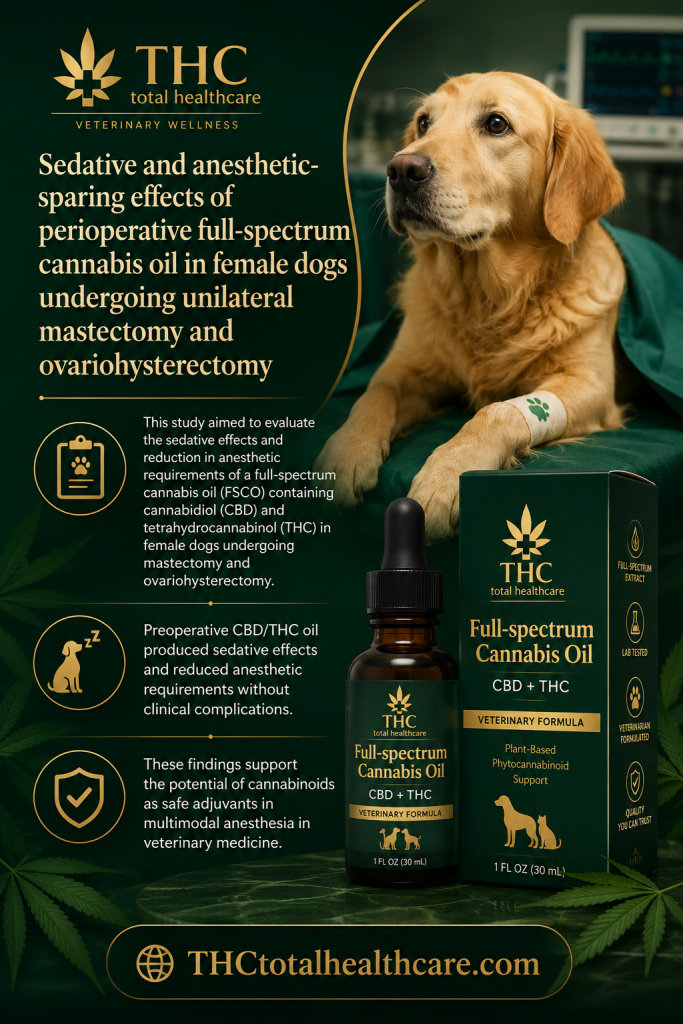
In this context, this study aimed to evaluate the sedative effects and reduction in anesthetic requirements of a full-spectrum cannabis oil (FSCO) containing cannabidiol (CBD) and tetrahydrocannabinol (THC) in female dogs undergoing mastectomy and ovariohysterectomy.
Twenty dogs were randomly assigned to two groups: group A (n = 10), treated with FSCO (0.02 mL/kg PO; 0.2 mg/kg CBD and 0.12 mg/kg THC) twice daily for seven days, plus 0.2 mL/kg (2 mg/kg CBD; 1.2 mg/kg THC) one hour before premedication; and group B (n = 10), treated with placebo. Groups A and B had similar ages (9.6; 10.2 years) and weights (7.4; 6.8 kg). Anesthesia was induced with propofol and maintained with sevoflurane. Outcomes included sedation scores, anesthetic requirements, rescue analgesia, responses to instrumentation, and adverse effects. The treated group required less propofol (2.33 vs. 5.98 mg/kg; p = 0.001) and lower sevoflurane concentrations from T0 to T4 (p < 0.05). Sedation scores were higher at 40 and 60 min (median of 4 vs. 0, and 6.5 vs. 0.5; p = 0.015 and p = 0.002, respectively). Fewer treated dogs required rescue analgesia (3/10 vs. 6/10; p = 0.178). No differences were observed in catheterization, intubation, or adverse effects.
Preoperative CBD/THC oil produced sedative effects and reduced anesthetic requirements without clinical complications.
These findings support the potential of cannabinoids as safe adjuvants in multimodal anesthesia in veterinary medicine.”
https://pubmed.ncbi.nlm.nih.gov/42348039
“The findings of this study indicate that preoperative administration of full-spectrum Cannabis sativa oil containing CBD and THC exerts significant sedative and anesthetic-sparing effects in female dogs with mammary neoplasia undergoing mastectomy and ovariohysterectomy.
The use of this phytocannabinoid extract significantly reduced the required doses of both propofol for induction and sevoflurane for maintenance, supporting its potential as an adjuvant in multimodal anesthetic protocols. Furthermore, the therapy was not associated with clinical adverse effects or compromised anesthetic safety, suggesting a favorable safety profile for perioperative use in oncological patients.”
https://link.springer.com/article/10.1007/s11259-026-11367-1