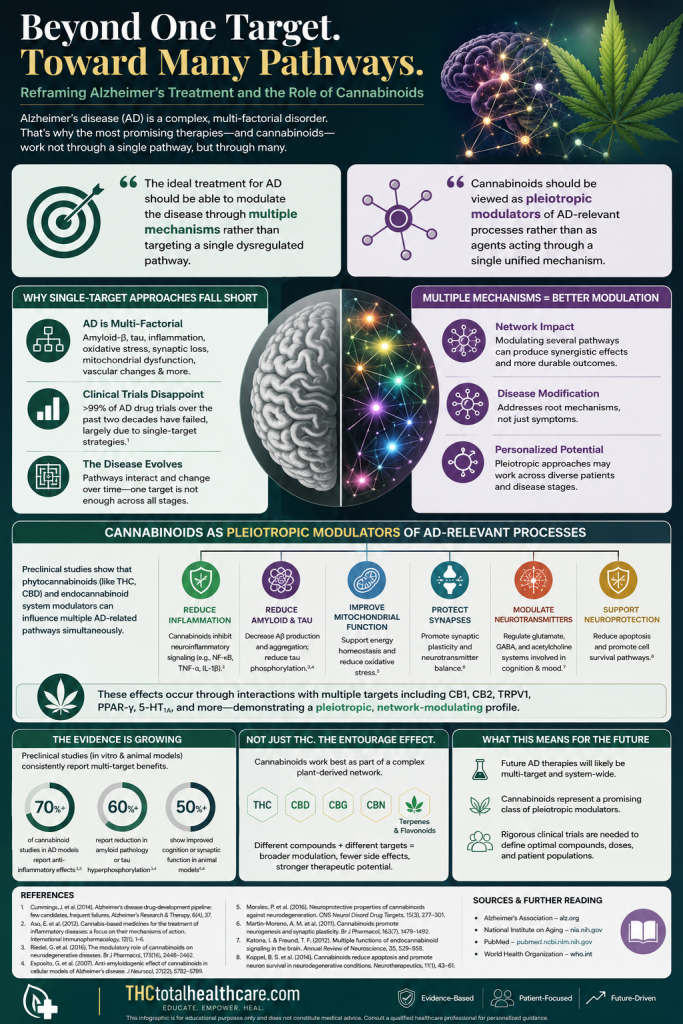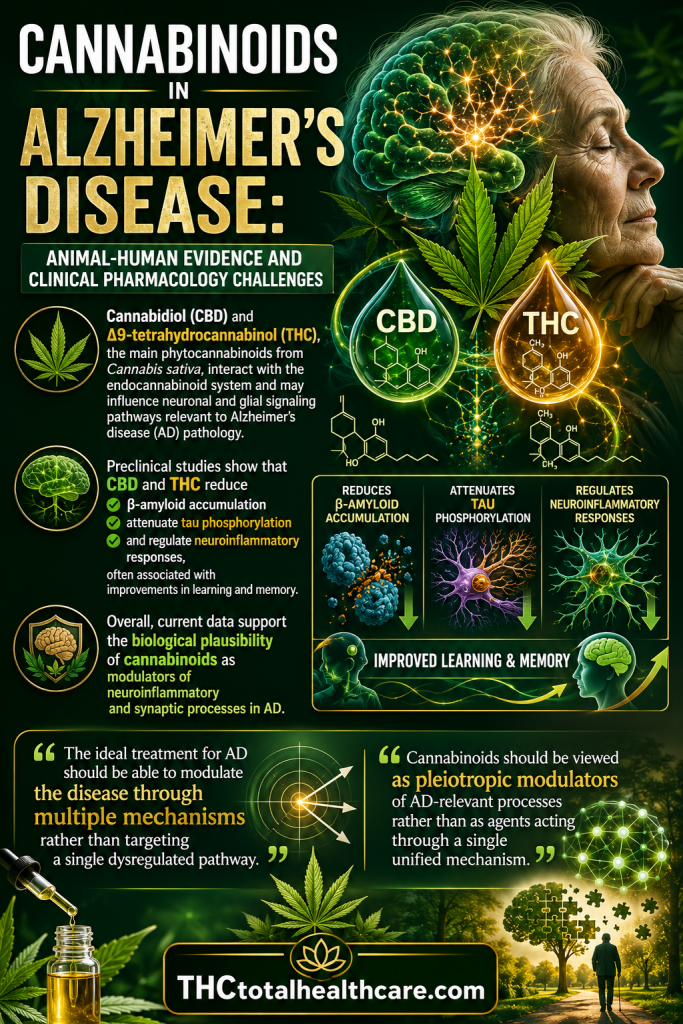
“Cannabinoids have emerged as potential modulators of pathological processes in Alzheimer’s disease (AD), including neuroinflammation, synaptic dysfunction, and protein aggregation. Cannabidiol (CBD) and Δ9-tetrahydrocannabinol (THC), the main phytocannabinoids from Cannabis sativa, interact with the endocannabinoid system and may influence neuronal and glial signaling pathways relevant to AD pathology.
This mini review summarizes evidence from transgenic animal models and clinical studies evaluating CBD, THC, and their combination in AD.
Preclinical studies show that CBD and THC reduce β-amyloid accumulation, attenuate tau phosphorylation, and regulate neuroinflammatory responses, often associated with improvements in learning and memory. Cognitive outcomes appear to depend on cannabinoid composition, with CBD or THC administered individually showing more consistent effects, while combined CBD + THC effects appear dose- and ratio-dependent.
Clinical evidence in AD patients remains limited and primarily reports improvements in neuropsychiatric symptoms, such as reductions in agitation, nighttime activity, and behavioral disturbances, whereas cognitive improvements are modest. Cannabinoid-based treatments are generally well tolerated, with mild sedation, somnolence, or disorientation as the most reported adverse effects.
Overall, current data support the biological plausibility of cannabinoids as modulators of neuroinflammatory and synaptic processes in AD. However, heterogeneity in formulations, dosing, and study design limits firm conclusions. Future research should focus on dose optimization, biomarker-guided clinical trials, and long-term safety assessments to better define their therapeutic potential in AD.”
https://pubmed.ncbi.nlm.nih.gov/42211879
“The ideal treatment for AD should be able to modulate the disease through multiple mechanisms rather than targeting a single dysregulated pathway.”
“cannabinoids should be viewed as pleiotropic modulators of AD-relevant processes rather than as agents acting through a single unified mechanism.”
“cannabinoid-derived compounds with combined receptor-mediated and intrinsic antioxidant properties may represent promising therapeutic candidates.”