
Sickle cell disease causes recurring pain, inflammation, vascular injury, and organ damage, creating a need for therapies that can address several disease mechanisms at once. Emerging preclinical research suggests that cannabidiol may have value through its analgesic, anti-inflammatory, antioxidant, and vascular effects. The evidence reviewed indicates that CBD can influence pathways involved in sickle cell pain and inflammatory injury while potentially helping protect tissues from downstream damage. Together, these findings support CBD as a promising therapeutic candidate for addressing both pain and underlying biological complications associated with sickle cell disease.
“Sickle cell disease (SCD) imposes a substantial global health burden, with acute and chronic pain representing a major component of morbidity. Standard pain management, largely opioid-based, carries significant risks and often provides inadequate long-term relief, highlighting an unmet need for alternative analgesics as well as disease modifiers.
Medicinal cannabinoids have analgesic and antiinflammatory properties; most clinical studies so far have used Δ9-tetrahydrocannabinol (THC)-containing products with conflicting outcomes. In contrast, purified cannabidiol (CBD) has a broader spectrum of action beyond the endocannabinoid system, lacks psychoactive effects and associated long-term risks, allows safe dose optimization and can be prescribed legally in many settings.
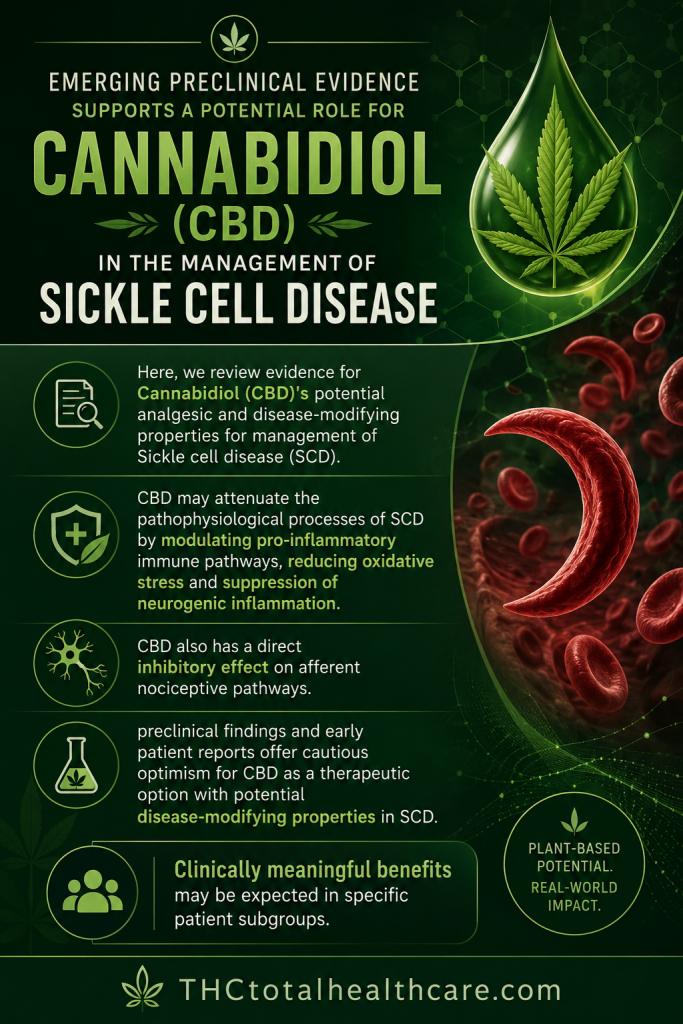
Here, we review evidence for CBD’s potential analgesic and disease-modifying properties for management of SCD.
Pain in SCD arises from local tissue inflammation and neuroinflammation, compounded by abnormal pain modulation and pro-nociceptive CNS alterations. CBD may attenuate the pathophysiological processes of SCD by modulating pro-inflammatory immune pathways, reducing oxidative stress and suppression of neurogenic inflammation. CBD also has a direct inhibitory effect on afferent nociceptive pathways. Furthermore, CBD has an important pain-modulating role by suppressing excitatory mechanisms in the dorsal root ganglia and CNS. Additionally, CBD may modulate pain-processing brain networks and attenuate opioidinduced reward-seeking behavior.
Although human data are very limited, emerging preclinical findings and early patient reports offer cautious optimism for CBD as a therapeutic option with potential disease-modifying properties in SCD. Clinically meaningful benefits may be expected in specific patient subgroups, identifiable through well-designed clinical and mechanistic studies focused on pain processing and neuroinflammation.”