
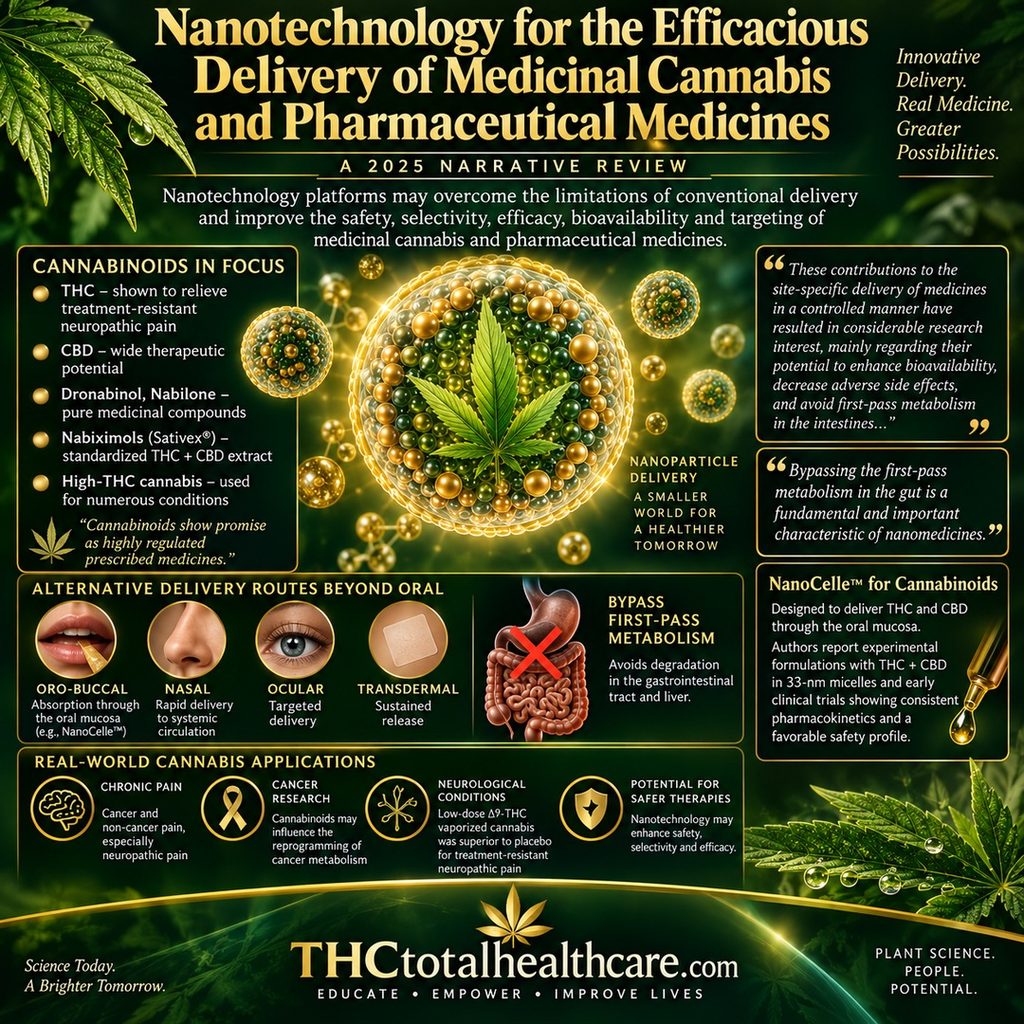
Nanotechnology is creating new possibilities for the delivery of medicinal cannabis and pharmaceutical medicines. This 2025 narrative review examines how nanoscale delivery systems may help overcome common problems such as poor solubility, inconsistent absorption, low bioavailability, gastrointestinal degradation, and first-pass metabolism.
These challenges are especially relevant to cannabinoids such as THC and CBD because they are highly lipophilic compounds. The review discusses how nanoparticle systems may improve cannabinoid stability, targeting, controlled release, selectivity, and overall delivery while exploring alternative routes including oro-buccal, nasal, ocular, and transdermal administration.
The paper directly discusses THC, CBD, dronabinol, nabilone, nabiximols, high-THC cannabis, and NanoCelle™ formulations designed to deliver THC and CBD through the oral mucosa. The authors emphasize that nanotechnology may allow cannabinoid medicines to be delivered more precisely, with improved absorption and reduced loss through first-pass metabolism.
“The application of nanoparticles as nanomedicines, particularly for the targeted and efficacious delivery of drugs is an expanding platform in the field of cannabinoid and pharmaceutical drug delivery. By refocusing the route of drug administration beyond the oral gut pathway, this technology provides significant advancements that are especially relevant for cancer treatments. Orally administered drugs face significant challenges as they traverse the gastrointestinal tract (GIT) and are subject to first-pass GIT metabolism. Physiological conditions encountered in the GIT such as food effects, hormones, gastric pH, emptying time, and intestinal transit time vary widely across individuals. Fluid composition and enzymatic activity in the small intestine and large bowel also influence drug dissolution and absorption. These factors in conjunction with the intestinal cohort of bacteria can metabolize drugs before absorption, contributing to poor and variable drug bioavailability, which can be exacerbated by gut dysbiosis. Drug delivery that bypasses the oral-GIT route and hence first-pass metabolism offers a plausible solution for enhanced safety and drug efficacy.”