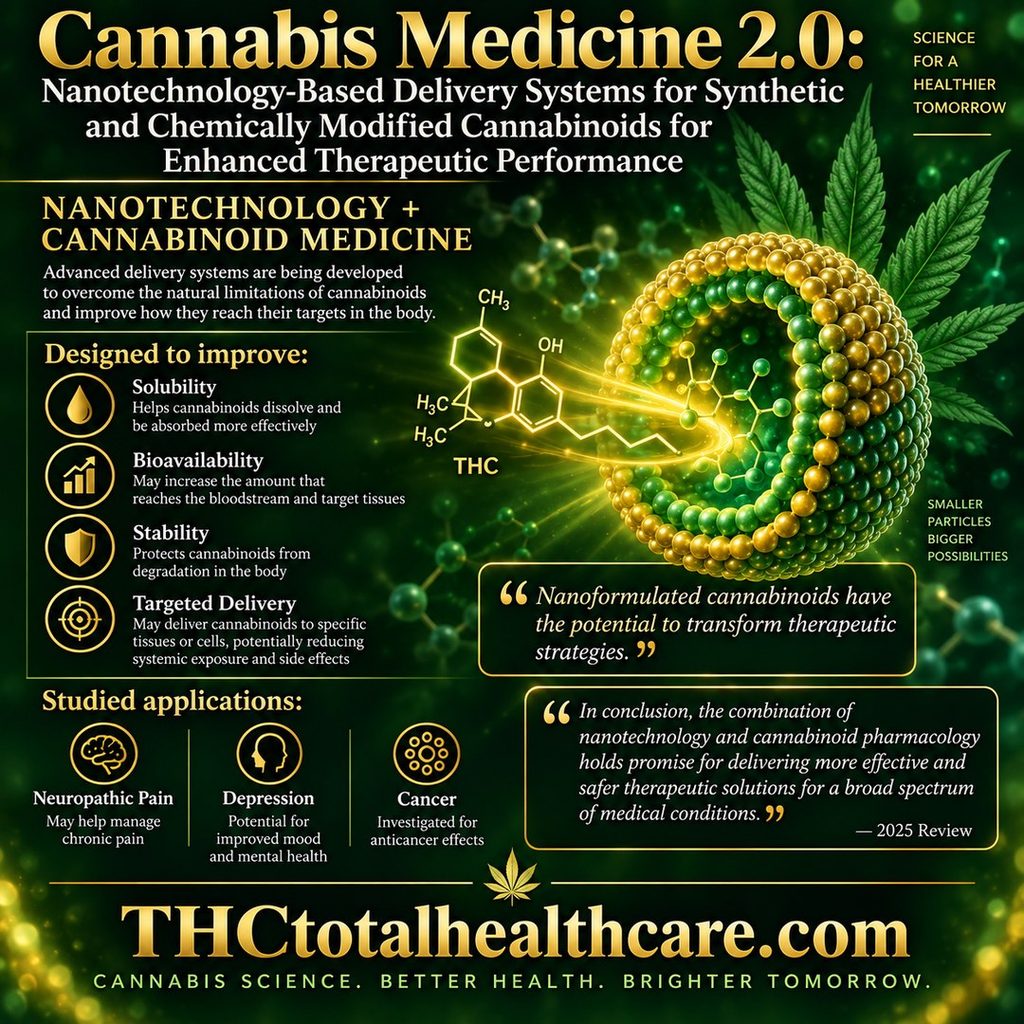
Cannabinoid medicine is increasingly moving beyond conventional oils, capsules and extracts toward advanced drug-delivery technologies designed to improve how these compounds reach their targets in the body. This 2025 review examines how nanotechnology-based delivery systems may improve the solubility, stability, bioavailability and targeted delivery of synthetic and chemically modified cannabinoids.
Researchers reviewed nanoparticles, lipid-based carriers, micelles, nanoemulsions and other nanoengineered systems being developed for cannabinoid-related therapies. These technologies have been investigated in preclinical research involving conditions including neuropathic pain, depression and cancer, with some formulations producing longer-lasting or more targeted effects while reducing systemic exposure.
The authors conclude that combining cannabinoid pharmacology with nanotechnology could help create a new generation of more precise cannabinoid medicines, although most of these approaches remain in the preclinical stage and will require additional testing and regulatory development before widespread clinical use.
“The therapeutic potential of cannabinoids and other ligands of cannabinoid receptors attracts considerable attention due to their diverse pharmacological effects and utility in various medical applications. However, challenges such as low solubility, limited bioavailability, and potential side effects hinder their broad clinical use. Nanoformulation techniques offer a promising approach to address these issues and optimize the therapeutic effectiveness of cannabinoids and other cannabinoid receptor ligands.
This comprehensive review explores the advancements in nanoformulation strategies to enhance the therapeutic efficacy and safety of synthetic cannabinoids and related compounds, such as CB13, rimonabant, and HU-211, which have been studied in a range of preclinical models addressing conditions such as neuropathic pain, depression, and cancer.
The review discusses various nanocarriers employed in this field, including lipid-based, polymeric, and hybrid nanoparticles, micelles, emulsions, and other nanoengineered carriers. In addition to formulation approaches, this review provides an in-depth analysis of chemical structures and their effect on compound activity, especially in the context of the affinity for the cannabinoid type 1 receptor in the brain, which is chiefly responsible for the psychoactive effects.
The provided summary of research concerning either chemical modifications of existing cannabinoids or the creation of new compounds that interact with cannabinoid receptors, followed by the development of nanoformulations for these agents, allows for the identification of new research directions and future perspectives for Cannabis-based medicine.
In conclusion, the combination of nanotechnology and cannabinoid pharmacology holds promise for delivering more effective and safer therapeutic solutions for a broad spectrum of medical conditions, making this an exciting area of research with profound implications for the healthcare and pharmaceutical industries.”
“Nanotechnology-enabled delivery of synthetic and chemically modified cannabinoids offers a promising approach to overcome the intrinsic limitations of these compounds, positioning them as candidates for future precision therapeutics. Preclinical evidence supports their enhanced stability, bioavailability, and site-specific activity; however, translating these findings into clinical applications will require coordinated advances in innovation, manufacturing, and regulatory science. Nanoformulated cannabinoids have the potential to transform therapeutic strategies, but their clinical impact will depend on harmonized regulations, standardized testing, and robust translational research. With sustained international collaboration, these next-generation formulations may become a key component of personalized medicine in the coming decade.”