Benefits of cannabis in treating lower urinary tract symptoms: A scoping review

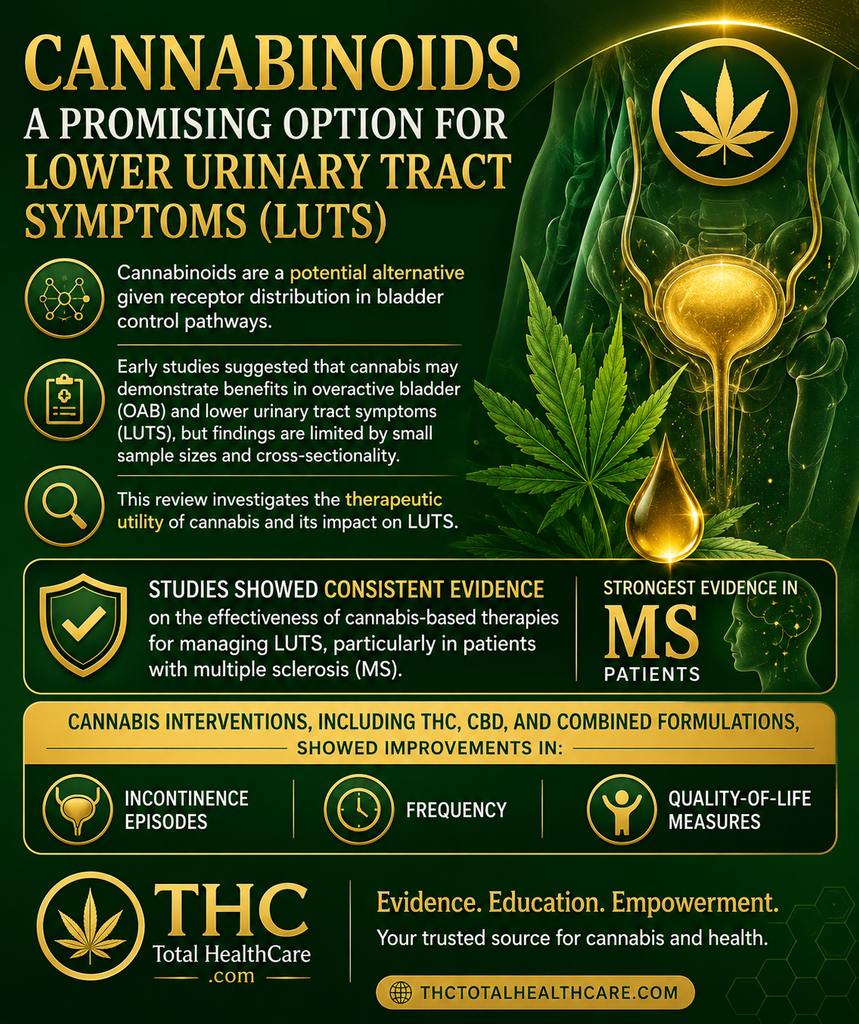
Cannabis-based therapies may offer another approach to managing lower urinary tract symptoms such as urinary urgency, frequency, and incontinence. A 2026 scoping review found encouraging evidence that THC, CBD, and combined cannabinoid formulations can improve several urinary symptoms and quality-of-life measures, with the most consistent evidence found among patients with multiple sclerosis.

“Introduction: Anticholinergics and β3-agonists remain the mainstay for bladder dysfunction but are limited by side effects and poor adherence. Cannabinoids are a potential alternative given receptor distribution in bladder control pathways. Early studies suggested that cannabis may demonstrate benefits in overactive bladder (OAB) and lower urinary tract symptoms (LUTS), but findings are limited by small sample sizes and cross-sectionality. This review investigates the therapeutic utility of cannabis and its impact on LUTS.

Methods: This scoping review was conducted following Cochrane and PRISMA guidelines. Eligible studies included adults with OAB symptoms due to neurogenic disease, benign prostatic hyperplasia (BPH), or cystitis, treated with cannabis vs. placebo, no treatment, or active therapies. Outcomes included urinary function and quality of life. Databases searched included MEDLINE, EMBASE, and CENTRAL. Non-English studies were excluded.

Results: From 998 abstracts, 31 full-text articles were reviewed and 12 were included. Studies showed consistent evidence on the effectiveness of cannabis-based therapies for managing LUTS, particularly in patients with multiple sclerosis (MS). Cannabis interventions, including THC, CBD, and combined formulations, showed some improvements in incontinence episodes, frequency, and quality-of-life measures. Mild adverse effects, including dizziness and dry mouth, were common (2-18%) and sometimes led to treatment discontinuation. Nine of 12 studies were done on MS populations, and only three studies were randomized controlled trials.

Conclusions: Evidence for the benefits of cannabis in treating LUTS is limited and largely observational. While preliminary findings are encouraging, randomized trials focusing on patient-centered outcomes are needed to clarify its role in clinical practice.”
https://pubmed.ncbi.nlm.nih.gov/42678682

https://cuaj.ca/index.php/journal/article/view/9478

Effects of delta-9 tetrahydrocannabinol and cannabidiol on cognitive outcomes following acute use of cannabis for chronic pain

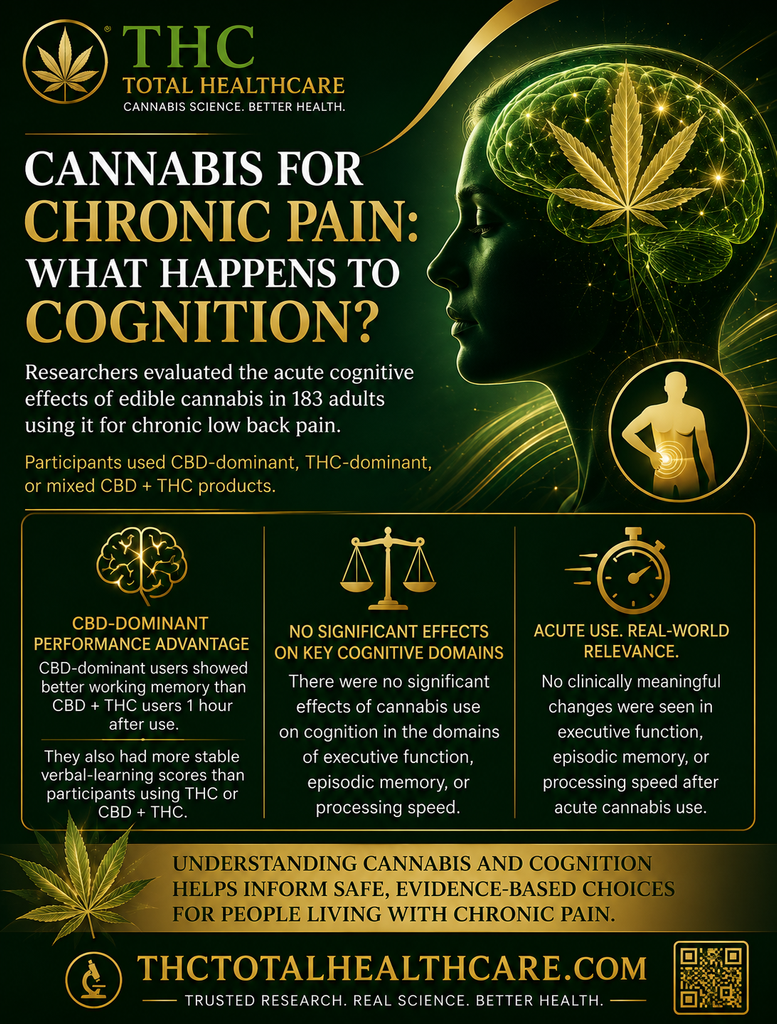
In a study of 183 adults using edible cannabis for chronic low back pain, researchers found no significant acute changes in executive function, episodic memory, or processing speed after cannabis use. Participants using CBD-dominant products performed better on working memory than those using CBD + THC one hour after use, while the CBD group also showed more stable verbal-learning scores than participants using THC or mixed CBD/THC products. The findings add useful evidence to the discussion of how different cannabinoid profiles may affect cognition when cannabis is used for chronic pain.

“Rationale: An estimated two-thirds of medical cannabis users in the United States are motivated by chronic pain, but clinical guidance remains guarded as to whether the potential benefit of cannabinoids for pain outweighs potential risks, such as effects on cognition.

Objectives: In a study where participants experienced benefits of cannabinoids for pain and tension, we evaluated cannabis effects on executive function, processing speed, memory, and verbal learning following acute use for chronic, non-specific low back pain.

Methods: Participants were in one of three self-selected edible cannabis groups: a) CBD-dominant, b) THC-dominant, or c) a mixed ratio of CBD to THC and completed a battery of cognitive tasks at pre-use, 1 h post-use use, and 2 h post-use.

Results: Among 183 participants (56.8% female; Mage = 45.6), those in the group using CBD outperformed participants using CBD + THC 1 h post use in working memory and produced more stable scores in verbal learning after use than participants using THC or CBD + THC. Additionally, while older age was associated with better working memory in the CBD group before use, that relationship was progressively attenuated over the subsequent timepoints. There were no significant effects of cannabis use on cognition in the domains of executive function, episodic memory, or processing speed.

Conclusions: Given the ubiquity of cannabis use for chronic pain and the ongoing call for more data, this study is relevant for informing clinical guidance on whether, and how, cannabis could be used in this context. In particular, understanding the acute impact on cognition from cannabis is critical, as cognitive functioning directly affects patients’ daily lives and quality of life.”

https://pubmed.ncbi.nlm.nih.gov/42678518

“In summary, these findings support CBD’s potential to preserve cognitive performance in the context of chronic pain, contrasting with the more variable effects of THC across cognitive domains. The observed influence of age, particularly among those using CBD, suggests that both cannabinoid composition and individual factors shape cognitive outcomes following acute cannabinoid use.”

https://link.springer.com/article/10.1007/s00213-026-07157-x

Cannabidiolic acid causes a defect in tail retraction of migrating MDA-MB-231 cells: possible involvements of Rho-associated protein kinases inhibition and accumulation of vinculin at the rear of migrating cells

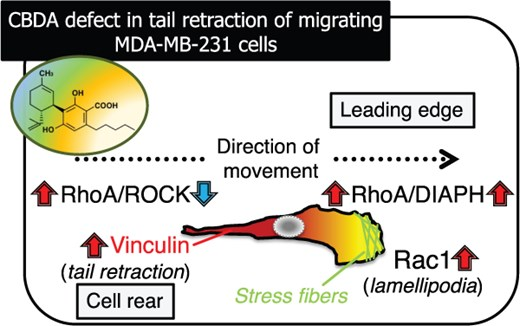
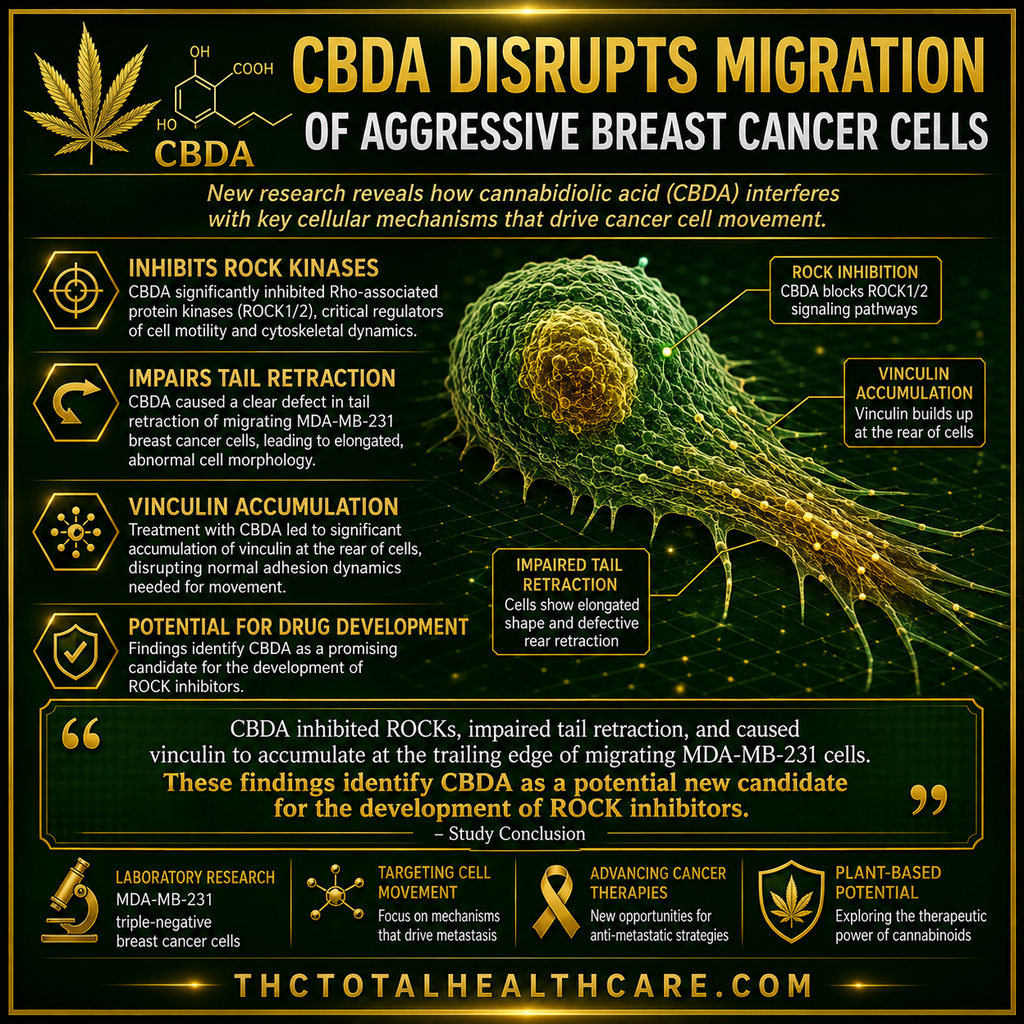
A new study adds mechanistic detail to earlier evidence that cannabidiolic acid (CBDA) can interfere with the migration of highly aggressive MDA-MB-231 breast cancer cells. Researchers found that CBDA inhibited Rho-associated kinases (ROCKs), impaired tail retraction, altered cell shape and caused vinculin to accumulate at the trailing edge—revealing another way this cannabis-derived compound may disrupt cellular behavior involved in cancer spread.

“We previously reported that cannabidiolic acid (CBDA), a major cannabinoid constituent of the fiber-type cannabis plant, abrogates the migration of highly aggressive human breast cancer MDA-MB-231 cells and activates the small GTPase RhoA by inhibiting protein kinase A. However, the mechanism(s) mediating RhoA signaling, which decreases cell migration, have not yet been comprehensively elucidated.

RhoA is an upstream mediator of Rho-associated kinases (ROCKs), diaphanous-related formins (DIAPHs), the RhoA-ROCK pathway (tail retraction) and the RhoA-DIAPH pathway (lamellipodia formation).

Herein, we identified CBDA as an inhibitor of ROCKs (at approximately 25 μM), which markedly elongated the cell body of MDA-MB-231 cells, similar to Y-27632, an established ROCK inhibitor.

CBDA stimulated lamellipodia formation at the leading edge, whereas NSC23766 (an established Rac1 inhibitor) completely blocked this elongated morphology. Biochemical analyses, including time-lapse imaging and confocal laser scanning microscopy, revealed that, compared to Y-27632, CBDA can induce impaired tail retraction coupled with unidirectional elongation of the cell body, upregulate the mRNA expression of DIAPHs and accumulate vinculin, an adhesion protein, at the trailing edge without affecting its expression.

These results indicate the potential of CBDA as a new candidate for the synthesis of ROCK inhibitors, which can evoke the directed elongation of MDA-MB-231 cells.”

https://pubmed.ncbi.nlm.nih.gov/42186359

https://academic.oup.com/jb/article-abstract/180/2/143/8693860?redirectedFrom=fulltext