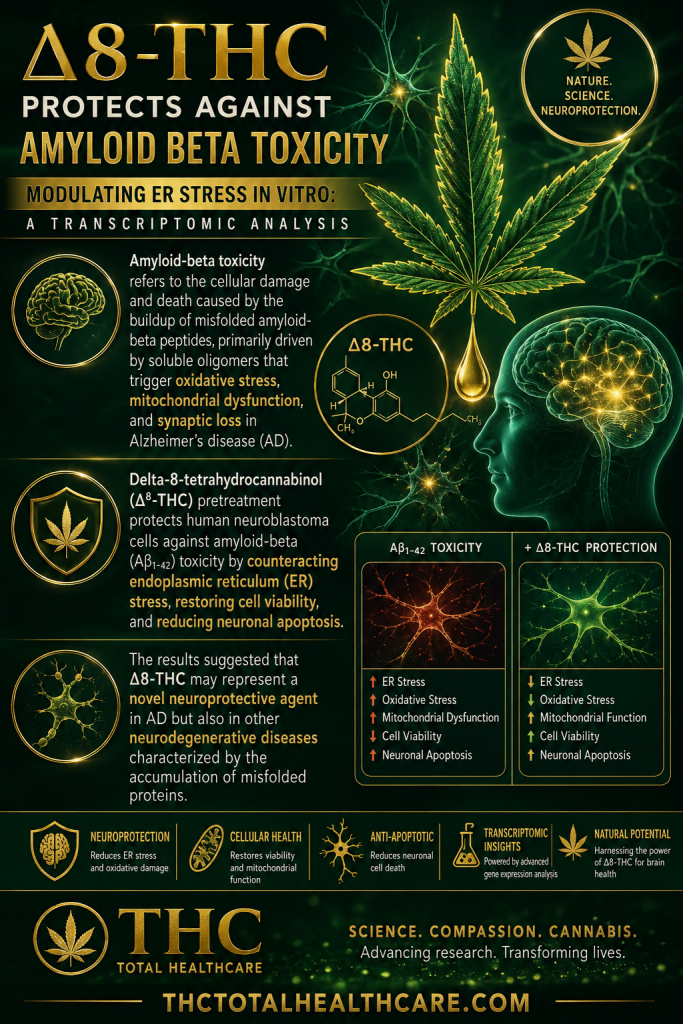
Δ8-THC Protects against Amyloid Beta Toxicity Modulating ER Stress In Vitro: A Transcriptomic Analysis

Amyloid-beta toxicity is a major driver of neuronal stress and degeneration in Alzheimer’s disease. In this laboratory study, Δ8-THC protected cells against amyloid-beta-induced damage and altered gene-expression pathways involved in endoplasmic reticulum stress. The results demonstrated that Δ8-THC might represent a new neuroprotective agent in Alzheimer’s disease.

“Alzheimer’s disease (AD) represents the most common form of dementia, characterized by amyloid β (Aβ) plaques and neurofibrillary tangles (NFTs). It is characterized by neuroinflammation, the accumulation of misfolded protein, ER stress and neuronal apoptosis. It is of main importance to find new therapeutic strategies because AD prevalence is increasing worldwide.

Cannabinoids are arising as promising neuroprotective phytocompounds.

In this study, we evaluated the neuroprotective potential of Δ8-THC pretreatment in an in vitro model of AD through transcriptomic analysis.

We found that Δ8-THC pretreatment restored the loss of cell viability in retinoic acid-differentiated neuroblastoma SH-SY5Y cells treated with Aβ1-42. Moreover, the transcriptomic analysis provided evidence that the enriched biological processes of gene ontology were related to ER functions and proteostasis. In particular, Aβ1-42 upregulated genes involved in ER stress and unfolded protein response, leading to apoptosis as demonstrated by the increase in Bax and the decrease in Bcl-2 both at gene and protein expression levels. Moreover, genes involved in protein folding and degradation were also deregulated. On the contrary, Δ8-THC pretreatment reduced ER stress and, as a consequence, neuronal apoptosis.

Then, the results demonstrated that Δ8-THC might represent a new neuroprotective agent in AD.”

https://pubmed.ncbi.nlm.nih.gov/37047608

“The results suggested that Δ8-THC may represent a novel neuroprotective agent in AD but also in other neurodegenerative diseases characterized by the accumulation of misfolded proteins.”
https://www.mdpi.com/1422-0067/24/7/6598

Prevention of Alzheimer’s Disease Pathology by Cannabinoids: Neuroprotection Mediated by Blockade of Microglial Activation

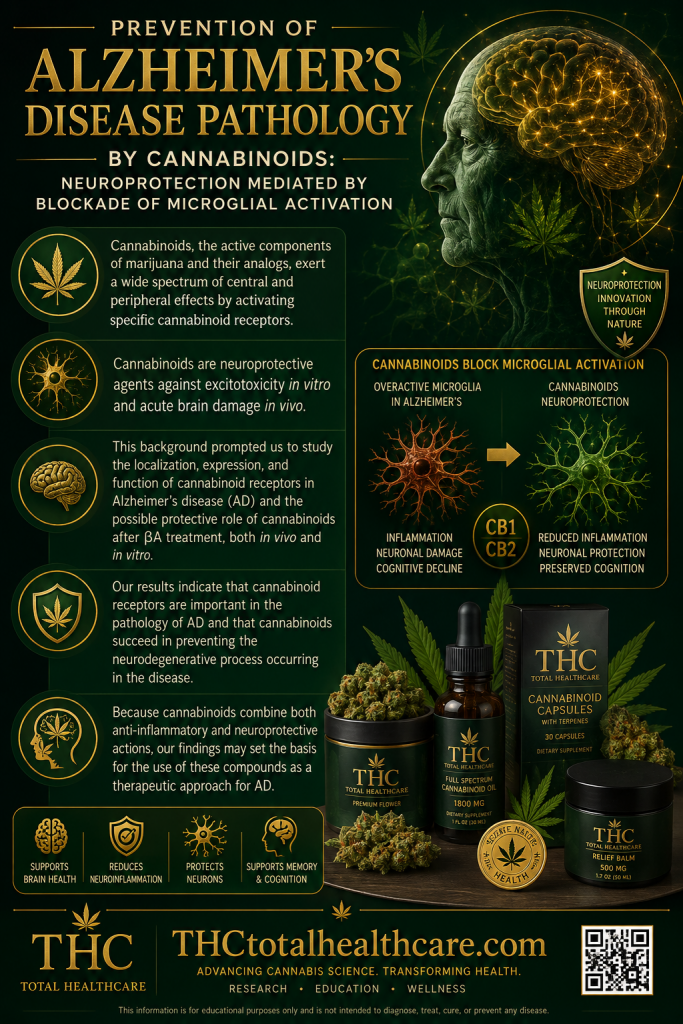
Alzheimer’s disease involves not only amyloid accumulation but also chronic activation of microglia and damaging neuroinflammation. In this preclinical study, cannabinoids reduced microglial activation, protected neurons from amyloid-related injury, and helped prevent Alzheimer’s-like pathology. The researchers concluded that cannabinoid-mediated suppression of microglial activation may represent a promising neuroprotective strategy for slowing or preventing disease progression.

“Alzheimer’s disease (AD) is characterized by enhanced β-amyloid peptide (βA) deposition along with glial activation in senile plaques, selective neuronal loss, and cognitive deficits.

Cannabinoids are neuroprotective agents against excitotoxicity in vitro and acute brain damage in vivo.

This background prompted us to study the localization, expression, and function of cannabinoid receptors in AD and the possible protective role of cannabinoids after βA treatment, both in vivo and in vitro.

Here, we show that senile plaques in AD patients express cannabinoid receptors CB1 and CB2, together with markers of microglial activation, and that CB1-positive neurons, present in high numbers in control cases, are greatly reduced in areas of microglial activation. In pharmacological experiments, we found that G-protein coupling and CB1 receptor protein expression are markedly decreased in AD brains. Additionally, in AD brains, protein nitration is increased, and, more specifically, CB1 and CB2 proteins show enhanced nitration. Intracerebroventricular administration of the synthetic cannabinoid WIN55,212-2 to rats prevent βA-induced microglial activation, cognitive impairment, and loss of neuronal markers.

Cannabinoids (HU-210, WIN55,212-2, and JWH-133) block βA-induced activation of cultured microglial cells, as judged by mitochondrial activity, cell morphology, and tumor necrosis factor-α release; these effects are independent of the antioxidant action of cannabinoid compounds and are also exerted by a CB2-selective agonist. Moreover, cannabinoids abrogate microglia-mediated neurotoxicity after βA addition to rat cortical cocultures.

Our results indicate that cannabinoid receptors are important in the pathology of AD and that cannabinoids succeed in preventing the neurodegenerative process occurring in the disease.”

“Cannabinoid receptors in AD brain.”

“Cannabinoids, the active components of marijuana and their analogs, exert a wide spectrum of central and peripheral effects by activating specific cannabinoid receptors, two of which have been well characterized to date: CB1 and CB2.”

“Cannabinoids exert neuroprotection under different experimental conditions. Thus, cannabinoid receptor activation protects hippocampal or granule cerebellar neurons from excitotoxicity”

“This background prompted us to study the characteristics and localization of cannabinoid receptors in AD brain, with particular emphasis on any relationship with microglial activation.”

“Cannabinoid treatment prevents βA-induced microglial activation and neurotoxicity in vitro.”

“Cannabinoid treatment prevents βA-induced toxic effects in vivo.”

“Because cannabinoids combine both anti-inflammatory and neuroprotective actions, our findings may set the basis for the use of these compounds as a therapeutic approach for AD.”

https://pmc.ncbi.nlm.nih.gov/articles/PMC6726060

https://www.jneurosci.org/content/25/8/1904.long

Delta-9-tetrahydrocannabinol delineates D-galactose and aluminium chloride-induced cognitive dysfunction and neurodegeneration in the hippocampus of the Wistar rat model

Cognitive decline and hippocampal neurodegeneration are closely linked to oxidative stress, inflammation, and neuronal damage. In this rat model, Δ9-THC improved learning and memory, reduced hippocampal neurodegeneration, and attenuated oxidative and inflammatory changes induced by D-galactose and aluminium chloride. The researchers concluded that THC showed neuroprotective potential and may warrant further investigation for disorders involving cognitive dysfunction and neurodegeneration.

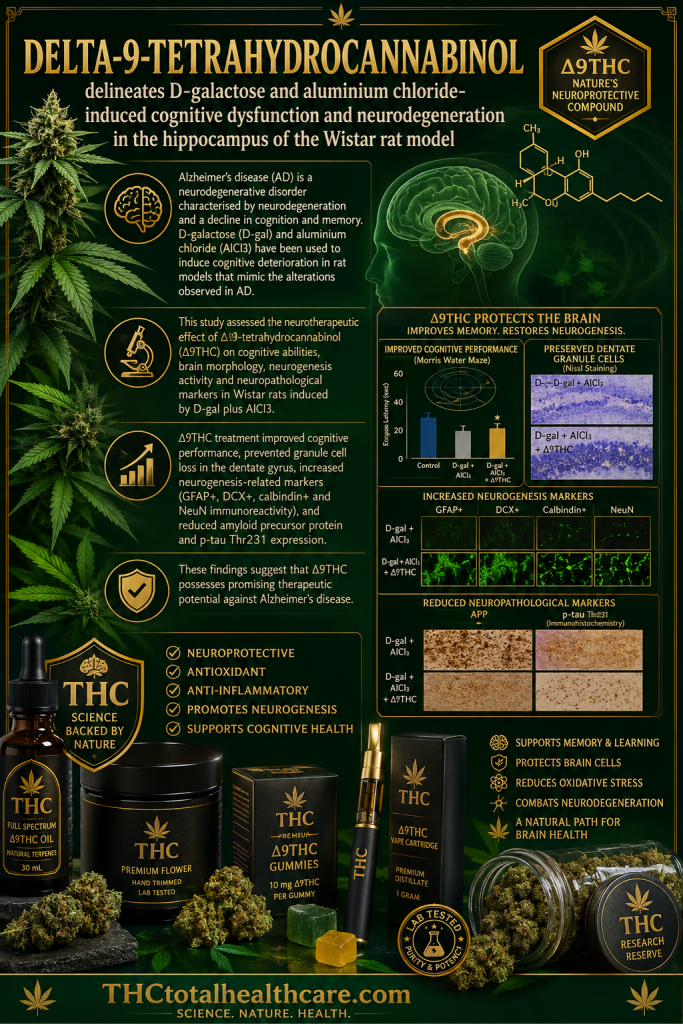
“Alzheimer’s disease (AD) is a neurodegenerative disorder characterised by neurodegeneration and a decline in cognition and memory. D-galactose (D-gal) and aluminium chloride (AlCl3) have been used to induce cognitive deterioration in rat models that mimic the alterations observed in AD.

This study assessed the neurotherapeutic effect of Δ9-tetrahydrocannabinol (Δ9THC) on cognitive abilities, brain morphology, neurogenesis activity and neuropathological markers in Wistar rats induced by D-gal plus AlCl3.

Male albino Wistar rats received D-gal (60 mg/kg, intraperitoneally) and AlCl3 (200 mg/kg, orally) daily for 10 weeks. The rats were then treated with increasing concentrations of Δ9THC (0.75, 1.5 and 3.0 mg/kg) for 28 days. Cognitive performance was evaluated using the novel object recognition and modified elevated plus maze tests. Dentate gyrus viable granule cells, neurogenesis markers, amyloid precursor protein and phosphorylated tau (p‑tau Thr231) were assessed histologically and molecularly.

Δ9THC treatment improved cognitive performance, prevented granule cell loss in the dentate gyrus, increased neurogenesis-related markers (GFAP+, DCX+, calbindin+ and NeuN immunoreactivity), and reduced amyloid precursor protein and p‑tau Thr231 expression.

These findings suggest that Δ9THC possesses promising therapeutic potential against Alzheimer’s disease.”

https://pubmed.ncbi.nlm.nih.gov/42454694


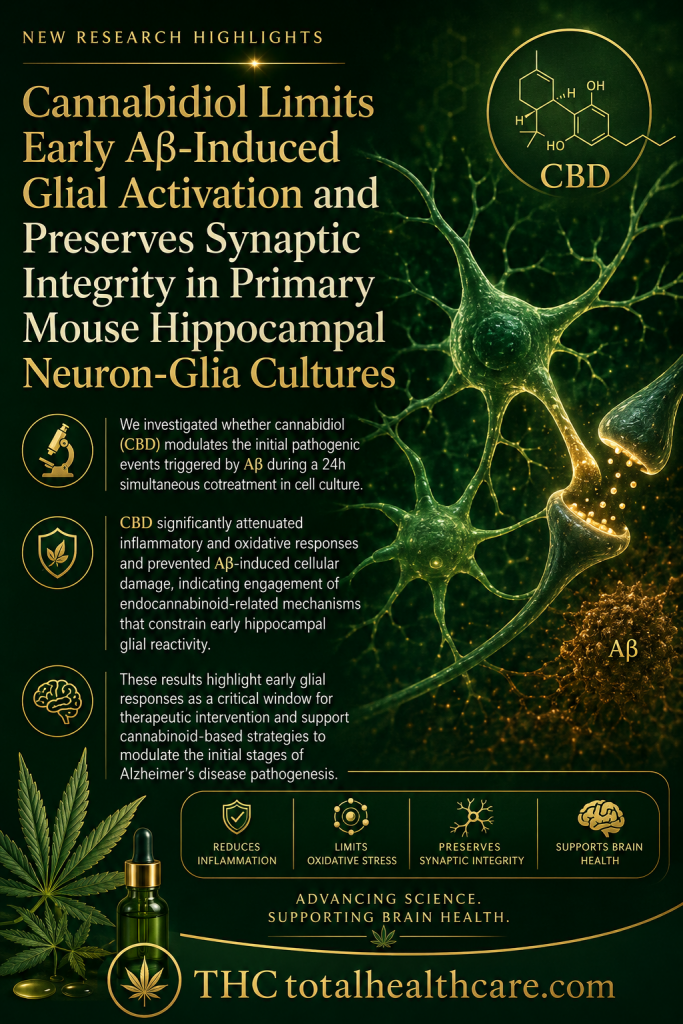
Cannabidiol Limits Early Aβ-Induced Glial Activation and Preserves Synaptic Integrity in Primary Mouse Hippocampal Neuron-Glia Cultures

Early Alzheimer’s disease involves not only the accumulation of amyloid-beta, but also inflammatory changes in glial cells and damage to the synapses neurons use to communicate. In this preclinical study, researchers found that CBD reduced early amyloid-beta–induced glial activation and helped preserve synaptic integrity in primary mouse hippocampal neuron-glia cultures. The findings suggest that CBD may act on multiple early processes involved in neurodegeneration, including neuroinflammation and synaptic injury. This adds to growing evidence that cannabinoids are being investigated not only for symptom management in Alzheimer’s disease, but also for their potential effects on underlying disease mechanisms.

“Alzheimer’s disease (AD) initiates with subtle neuroimmune alterations that precede overt synaptic loss and neuronal death, yet the early sequence linking Aβ exposure to glial activation remains incompletely understood.

To capture early neuroimmune dynamics with greater physiological relevance, we employed primary mixed neuron-glia cultures derived from the hippocampi of postnatal day 1 (P1) mice. Unlike conventional coculture systems, these hippocampal mixed cultures preserve intrinsic neuron-astrocyte-microglia communication and recapitulate key features of the in vivo hippocampal microenvironment.

Using this model, we investigated whether cannabidiol (CBD) modulates the initial pathogenic events triggered by Aβ25-35 during a 24h simultaneous cotreatment in cell culture.

Aβ exposure induced robust hippocampal glial activation, oxidative stress, and elevated levels of proinflammatory mediators, particularly IL-1β, IL-6, and TNF-α. Notably, hippocampal synaptic and neurogenic markers (5HT1A, Gria1, GRIN1, DCX, PSD-95) remained largely unaltered at this early stage, revealing a temporal dissociation in which glial-driven inflammation precedes synaptic dysfunction.

CBD significantly attenuated inflammatory and oxidative responses and prevented Aβ-induced cellular damage, indicating engagement of endocannabinoid-related mechanisms that constrain early hippocampal glial reactivity. Although CBD did not fully normalize all glial alterations, it preserved hippocampal synaptic integrity and halted progression toward neuronal dysfunction.

Together, these findings identify early hippocampal glial inflammation as a primary target of CBD and provide mechanistic insight into the temporal sequence linking Aβ exposure to neuroimmune activation.

These results highlight early glial responses as a critical window for therapeutic intervention and support cannabinoid-based strategies to modulate the initial stages of Alzheimer’s disease pathogenesis.”

https://pubmed.ncbi.nlm.nih.gov/42331352

https://onlinelibrary.wiley.com/doi/10.1111/ejn.70588

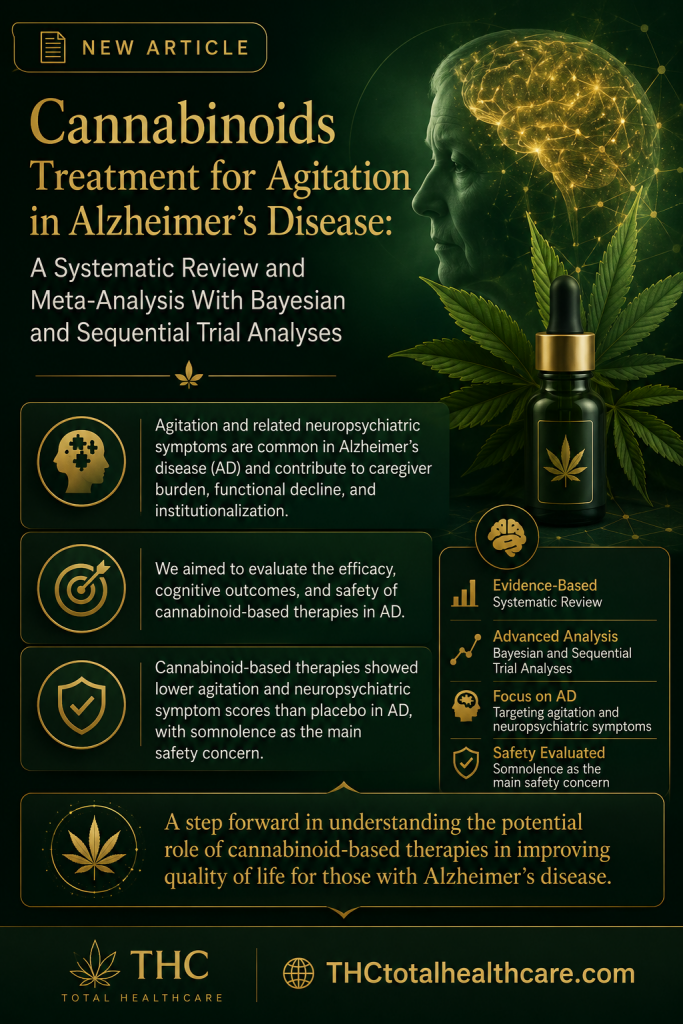
Cannabinoids Treatment for Agitation in Alzheimer’s Disease: A Systematic Review and Meta-Analysis With Bayesian and Sequential Trial Analyses

Agitation is one of the most difficult behavioral symptoms of Alzheimer’s disease and can significantly affect both patients and caregivers. This systematic review and meta-analysis evaluated cannabinoid-based treatments for agitation in Alzheimer’s disease using conventional, Bayesian, and sequential trial analyses. Across the available clinical trials, cannabinoids showed evidence of reducing agitation, although the strength and certainty of the findings varied because of differences in study size, formulations, and treatment protocols. The analysis supports continued investigation of cannabinoids as a potential option for managing behavioral symptoms in Alzheimer’s disease, particularly where existing treatments are limited or poorly tolerated.

“Objective: Agitation and related neuropsychiatric symptoms are common in Alzheimer’s disease (AD) and contribute to caregiver burden, functional decline, and institutionalization. Cannabinoid-based therapies have been investigated as potential symptomatic interventions, but evidence remains limited by small trials, heterogeneous formulations, and variable outcome reporting. We aimed to evaluate the efficacy, cognitive outcomes, and safety of cannabinoid-based therapies in AD.

Methods: This systematic review and meta-analysis were prospectively registered in PROSPERO and conducted following PRISMA 2020 guidelines. PubMed, Embase, and the Cochrane Central Register of Controlled Trials were searched through April 2025 for randomized placebo-controlled trials evaluating cannabinoid-based therapies for agitation or neuropsychiatric symptoms in AD. One nonrandomized open-label study was retained as supplementary evidence for sensitivity analyses. Primary efficacy analyses were restricted to randomized between-group contrasts. Outcomes included Neuropsychiatric Inventory (NPI) total score, Cohen-Mansfield Agitation Inventory-Short Form (CMAI-SF), NPI agitation/aggression, Mini-Mental State Examination (MMSE), and safety outcomes. Random-effects meta-analyses were complemented by Bayesian models and Trial Sequential Analysis.

Results: Seven studies met the inclusion criteria, including six randomized trials and one open-label prospective cohort, with 221 participants enrolled. Cannabinoid-based therapies showed lower neuropsychiatric symptom and agitation scores than placebo in randomized between-group analyses: NPI total score (standardized mean difference [SMD], -0.31; 95% confidence intervals [CI], -0.47 to -0.15; k = 4), CMAI-SF (SMD, -0.40; 95% CI, -0.69 to -0.10; k = 3), and NPI agitation/aggression (SMD, -0.47; 95% CI, -0.69 to -0.25; k = 3). Bayesian posterior probabilities for lower symptom scores exceeded 95%. MMSE findings did not support a consistent cognitive benefit. Somnolence was the principal safety signal (risk ratios, 2.25; 95% CI, 1.43-3.54), with Trial Sequential Analysis suggesting sufficient accrued information for this outcome. Falls and fatigue were imprecisely estimated.

Conclusions: Cannabinoid-based therapies showed lower agitation and neuropsychiatric symptom scores than placebo in AD, with somnolence as the main safety concern. Interpretation remains limited by few trials, heterogeneous formulations and outcome instruments, short follow-up, and concentrated statistical weight. Larger randomized trials with formulation-specific protocols, longer follow-up, active comparators, and systematic safety monitoring are needed.”

https://pubmed.ncbi.nlm.nih.gov/42315374

https://www.ajgponline.org/article/S1064-7481(26)00400-8/abstract

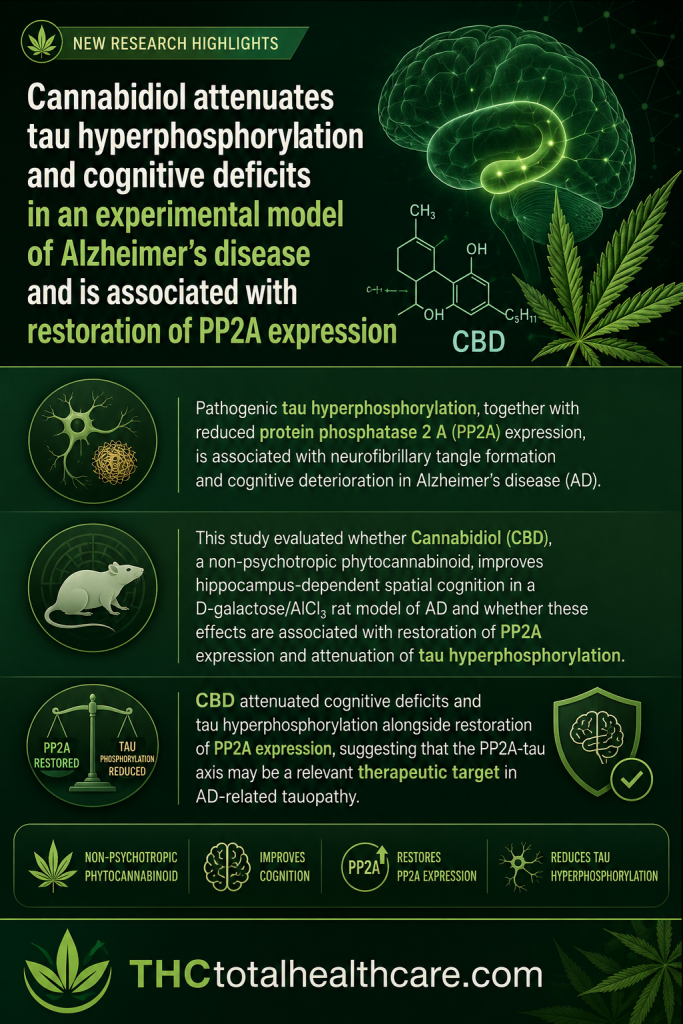
Cannabidiol attenuates tau hyperphosphorylation and cognitive deficits in an experimental model of Alzheimer’s disease and is associated with restoration of PP2A expression

Abnormal tau phosphorylation is one of the major pathological features of Alzheimer’s disease and is closely linked to cognitive decline. In this experimental study, cannabidiol reduced tau hyperphosphorylation and improved cognitive deficits in an Alzheimer’s disease model. The effects were associated with restoration of PP2A expression, an important enzyme involved in regulating tau phosphorylation. The findings suggest that CBD may act on a core disease mechanism while also improving cognitive function, adding to evidence for its potential neuroprotective role in Alzheimer’s disease.

“Pathogenic tau hyperphosphorylation, together with reduced protein phosphatase 2 A (PP2A) expression, is associated with neurofibrillary tangle formation and cognitive deterioration in Alzheimer’s disease (AD).

Cannabidiol (CBD), a non-psychotropic phytocannabinoid, remains insufficiently studied for its potential to modulate the PP2A-tau axis in experimental AD.

This study evaluated whether CBD improves hippocampus-dependent spatial cognition in a D-galactose/AlCl₃ rat model of AD and whether these effects are associated with restoration of PP2A expression and attenuation of tau hyperphosphorylation.

AD-like pathology was induced in male Wistar rats by D-galactose (60 mg/kg i.p.) and AlCl₃ (200 mg/kg oral gavage) for 10 weeks, followed by CBD (20, 40 or 80 mg/kg) or donepezil (1 mg/kg) for three weeks. The Morris water maze, Jess Simple Western, and ELISA were used to assess cognition, PP2A expression, and p-tau levels, respectively.

CBD significantly improved spatial learning and memory. PP2A expression increased across all tested doses, with the highest mean level observed at 80 mg/kg. Hippocampal p-tau levels were significantly increased in the model group and significantly reduced by all CBD doses and donepezil (all p < 0.0001 vs. model). The inverse relationship between PP2A expression and p-tau levels suggests possible involvement of the PP2A-tau axis.

CBD attenuated cognitive deficits and tau hyperphosphorylation alongside restoration of PP2A expression, suggesting that the PP2A-tau axis may be a relevant therapeutic target in AD-related tauopathy.”

https://pubmed.ncbi.nlm.nih.gov/42240860

https://link.springer.com/article/10.1007/s11011-026-01894-w

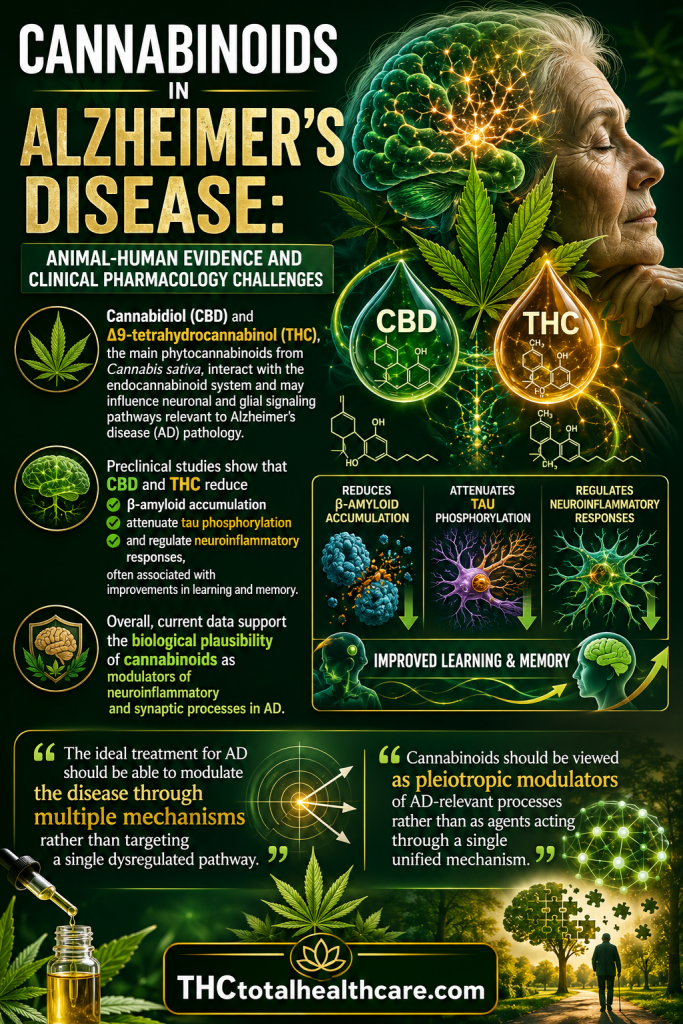
Cannabinoids in Alzheimer’s disease: animal-human evidence and clinical pharmacology challenges

Cannabinoids are being studied in Alzheimer’s disease for effects that extend beyond symptom control to inflammation, oxidative stress, amyloid and tau pathology, and neuroprotection. This review brings together animal and human evidence showing that cannabinoid-based treatments can influence several biological processes involved in Alzheimer’s disease while also showing clinical potential for symptoms such as agitation, sleep disturbance, and behavioral changes. The authors highlight THC, CBD, and other cannabinoid strategies as promising therapeutic approaches, with the growing body of evidence supporting continued development of cannabinoid-based treatments for both neurological and behavioral aspects of Alzheimer’s disease.

“Cannabinoids have emerged as potential modulators of pathological processes in Alzheimer’s disease (AD), including neuroinflammation, synaptic dysfunction, and protein aggregation. Cannabidiol (CBD) and Δ9-tetrahydrocannabinol (THC), the main phytocannabinoids from Cannabis sativa, interact with the endocannabinoid system and may influence neuronal and glial signaling pathways relevant to AD pathology.

This mini review summarizes evidence from transgenic animal models and clinical studies evaluating CBD, THC, and their combination in AD.

Preclinical studies show that CBD and THC reduce β-amyloid accumulation, attenuate tau phosphorylation, and regulate neuroinflammatory responses, often associated with improvements in learning and memory. Cognitive outcomes appear to depend on cannabinoid composition, with CBD or THC administered individually showing more consistent effects, while combined CBD + THC effects appear dose- and ratio-dependent.

Clinical evidence in AD patients remains limited and primarily reports improvements in neuropsychiatric symptoms, such as reductions in agitation, nighttime activity, and behavioral disturbances, whereas cognitive improvements are modest. Cannabinoid-based treatments are generally well tolerated, with mild sedation, somnolence, or disorientation as the most reported adverse effects.

Overall, current data support the biological plausibility of cannabinoids as modulators of neuroinflammatory and synaptic processes in AD. However, heterogeneity in formulations, dosing, and study design limits firm conclusions. Future research should focus on dose optimization, biomarker-guided clinical trials, and long-term safety assessments to better define their therapeutic potential in AD.”

https://pubmed.ncbi.nlm.nih.gov/42211879

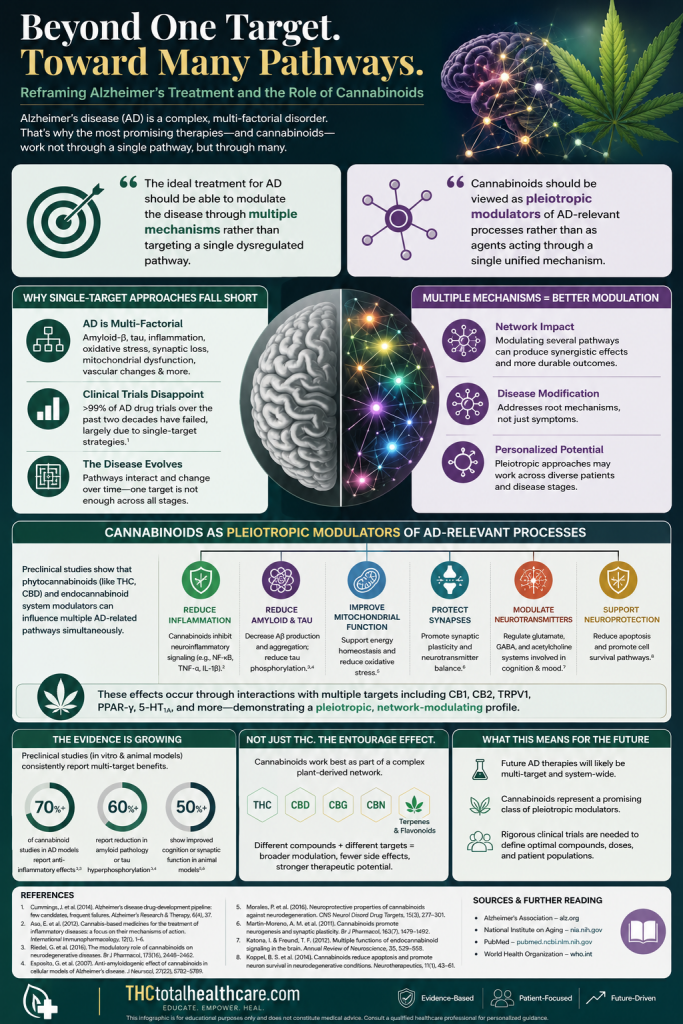
“The ideal treatment for AD should be able to modulate the disease through multiple mechanisms rather than targeting a single dysregulated pathway.”

 “cannabinoids should be viewed as pleiotropic modulators of AD-relevant processes rather than as agents acting through a single unified mechanism.”

“cannabinoid-derived compounds with combined receptor-mediated and intrinsic antioxidant properties may represent promising therapeutic candidates.”

https://www.frontiersin.org/journals/behavioral-neuroscience/articles/10.3389/fnbeh.2026.1833021/full

Cannabidiol and other non-psychotropic cannabinoids from Cannabis sativa as therapeutics for microglial-mediated neuroinflammation and neurodegeneration

Microglia are central regulators of inflammation in the brain, and their chronic overactivation is increasingly linked to neurodegenerative diseases. This review examines cannabidiol and other non-psychotropic cannabinoids from Cannabis sativa and highlights their ability to reduce microglial activation, suppress inflammatory signaling, and protect neural tissue from damage. The evidence suggests that these cannabinoids may act on several pathways involved in neuroinflammation and neurodegeneration, supporting their potential as therapeutic agents for conditions in which persistent brain inflammation drives disease progression.

“Non-psychotropic phytocannabinoids produced by Cannabis sativa, including cannabidiol, cannabigerol, cannabichromene and their varin and acidic analogs, are emerging as promising modulators of neuroinflammation, particularly through actions on microglia, the brain’s resident immune cells.

These compounds engage numerous receptors, ion channels, and intracellular signaling systems in microglia associated with neuroinflammation, and therefore are promising therapeutic candidates to treat chronic microglial inflammation-mediated neurodegenerative disorders.

Despite substantial public and scientific interest, comprehensive evaluation of their mechanistic diversity, disease-relevant potential, and translational gaps across neurodegenerative disorders remains limited. Commonly, gaps also exist between cannabis breeders’ and cultivators’ knowledge of phytocannabinoid diversity and translational scientists’ understanding of therapeutic potential.

In this review, we first provide an in-depth overview of the main non-psychotropic phytocannabinoids, their biosynthesis, and the genetics that control their production in cannabis. We then summarize the known mechanisms of action for each cannabinoid in microglial-expressed molecular targets and signaling pathways relevant to neuroinflammation.

Lastly, we review the effects of non-psychotropic phytocannabinoids in pre-clinical models and clinical trials of four neuroinflammation-associated neurodegenerative diseases: Alzheimer’s disease, Parkinson’s disease, multiple sclerosis, and Huntington’s disease.

Current evidence supports meaningful biological activity and complex cannabinoid-specific polypharmacology, yet substantial gaps persist, especially for cannabinoids other than cannabidiol; addressing these gaps in disease-relevant models will be essential for translating these compounds into future therapeutic strategies. Further, we anticipate the summarized information will foster collaboration between cannabis breeders/cultivators and applications scientists for therapeutic evaluation and development of emerging non-psychotropic phytocannabinoids.”

https://pubmed.ncbi.nlm.nih.gov/42121212

https://link.springer.com/article/10.1186/s42238-026-00445-5

The role of cannabinoid ligands in neurodegenerative diseases: emerging anti-inflammatory, immunomodulation and disease-modifying perspectives

“Neurodegenerative diseases (NDs) constitute a growing global health burden driven by population aging and remain without disease-modifying therapies. Although chronic neuroinflammation and aberrant protein aggregation are widely recognized as shared pathological hallmarks of major NDs – including Alzheimer’s, Parkinson’s, Huntington’s diseases and multiple sclerosis – the causal relationships linking immunoinflammatory signaling to neurodegenerative progression remain contentious. Therapeutic strategies targeting neuroinflammation have thus far yielded limited clinical success, underscoring the need for mechanistically grounded and context-specific interventions.

The endocannabinoid system (ECS) is a key regulator of synaptic function, glial activity, and immune homeostasis in the central nervous system (CNS), and its dysregulation has been consistently reported in neurodegenerative settings. However, ECS alterations across NDs are heterogeneous and often disease- and stage-dependent, with conflicting findings regarding cannabinoid receptor expression, endocannabinoid tone, and functional outcomes.

Moreover, while preclinical studies demonstrate robust anti-inflammatory and neuroprotective effects of cannabinoid ligands, clinical translation has been constrained by issues of receptor specificity, psychoactive side effects, limited brain penetration, and an incomplete understanding of long-term ECS modulation.

In this Review, we critically evaluate current evidence linking ECS signaling to neuroinflammatory mechanisms in neurodegeneration, highlighting both convergent pathways and unresolved controversies. We discuss the translational implications of ECS-targeted strategies, including the development of selective receptor modulators, allosteric and/or bitopic/dualsteric ligands, and enzyme inhibitors, as well as emerging approaches to mitigate adverse effects and improve therapeutic precision.

By integrating mechanistic insights with clinical challenges, this Review delineates key obstacles and opportunities for advancing ECS-based interventions toward disease-modifying therapies for neurodegenerative disorders.”

https://pubmed.ncbi.nlm.nih.gov/41937092

“These findings are particularly relevant for the development of next-generation cannabinoid therapeutics designed to selectively engage beneficial signaling pathways while minimizing adverse effects.”

https://www.sciencedirect.com/science/article/pii/S1043661826001003?via%3Dihub


Cannabidiol and pBDNF Cotreatment Attenuates Pathological Symptoms and Improves Cognition in 3 month-Old 5XFAD Mice

“The marginal efficiency observed with the existing therapies in Alzheimer’s Disease (AD) can be attributed to the timing of the treatment. The beneficiaries of symptomatic or disease-modifying therapy for AD are mild-cognitive-impairment (MCI) or late-stage dementia patients. At this stage, the pathological features are already advanced and irreversible, as the shift in biomarker levels starts in a continuum 15-20 years prior. Early intervention, therefore, is a plausible solution to this issue. Consequently, we selected 3 month-old 5XFAD AD mice as an early intervention model.

We administered cannabidiol (CBD) and plasmid brain-derived neurotrophic factor (BDNF) encapsulated in liposome nanoparticles, functionalized with penetratin and mannose for brain-targeting, as a therapy.

Neuroinflammation is emerging as a key driver of AD progression by its interaction with amyloid plaques and phosphorylated tau. Therefore, CBD, which is anti-inflammatory and neuroprotective, was used.

BDNF, a synaptic modulation and cognitive maintenance agent, is declined and, thus, aggravates pathology and cognition in AD. BDNF expressed from the liposome nanoparticles supplements the reduced BDNF and aids in ameliorating AD pathology.

We found four weekly doses of our formulation reduced the amyloid burden by 3.04-fold (p-value < 0.0001), declined pro-inflammatory cytokines TNF-α by 2.51-fold (p-value < 0.0001), IL-1β by 2.34-fold (p-value < 0.0001) and microglial activation by 2.15-fold (p-value < 0.0001) than saline controls. In addition, it increased the synaptic markers level and promoted adult hippocampal neurogenesis, eventually improving cognitive functions.

These findings suggest the use of CBD and pBDNF has a potential therapeutic combination for AD management if intervened early.”

https://pubmed.ncbi.nlm.nih.gov/41924980

https://pubs.acs.org/doi/10.1021/acschemneuro.5c01009