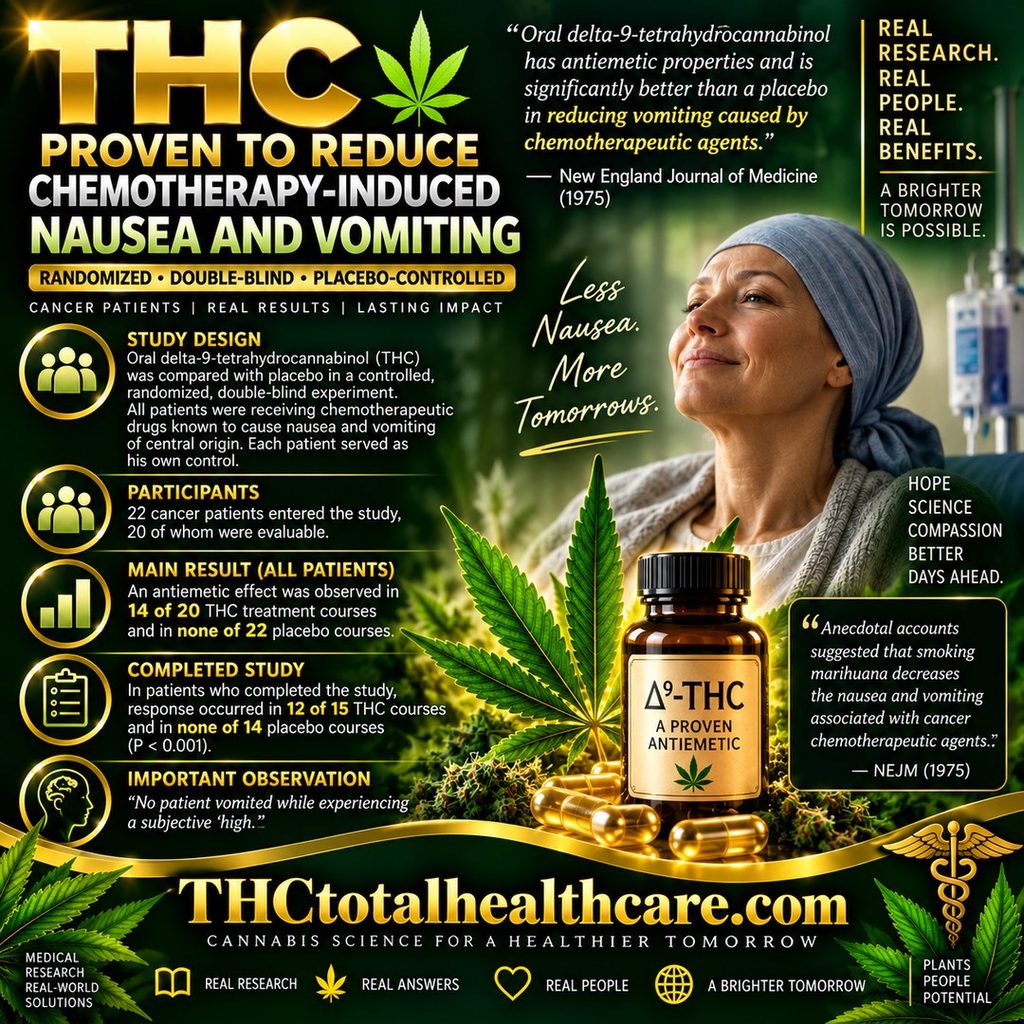
Oral delta-9-tetrahydrocannabinol (THC) was tested in a randomized, double-blind, placebo-controlled study involving cancer patients receiving chemotherapy known to cause nausea and vomiting. Among 20 evaluable patients, an antiemetic effect was seen in 14 of 20 THC treatment courses and in none of 22 placebo courses. In patients who completed the study, THC produced a response in 12 of 15 courses compared with 0 of 14 placebo courses. The researchers concluded that oral THC had significant antiemetic effects and was better than placebo at reducing chemotherapy-induced vomiting.
“Anecdotal accounts suggested that smoking marihuana decreases the nausea and vomiting associated with cancer chemotherapeutic agents.
Oral delta-9-tetrahydrocannabinol was compared with placebo in a controlled, randomized, “double-blind” experiment.
All patients were receiving chemotherapeutic drugs known to cause nausea and vomiting of central origin. Each patient was to serve as his own control to determine whether tetrahydrocannabinol had an antiemetic effect. Twenty-two patients entered the study, 20 of whom were evaluable.
For all patients an antiemetic effect was observed in 14 of 20 tetrahydrocannabinol courses and in none of 22 placebo courses. For patients completing the study, response occurred in 12 of 15 courses of tetrahydrocannabinol and in none of 14 courses of placebo (P less than 0.001).
No patient vomited while experiencing a subjective “high”.
Oral tetrahydrocannabinol has antiemetic properties and is significantly better than a placebo in reducting vomiting caused by chemotherapeutic agents.”
Cannabidiol (CBD) is a naturally occurring cannabinoid found in the Cannabis sativa plant.
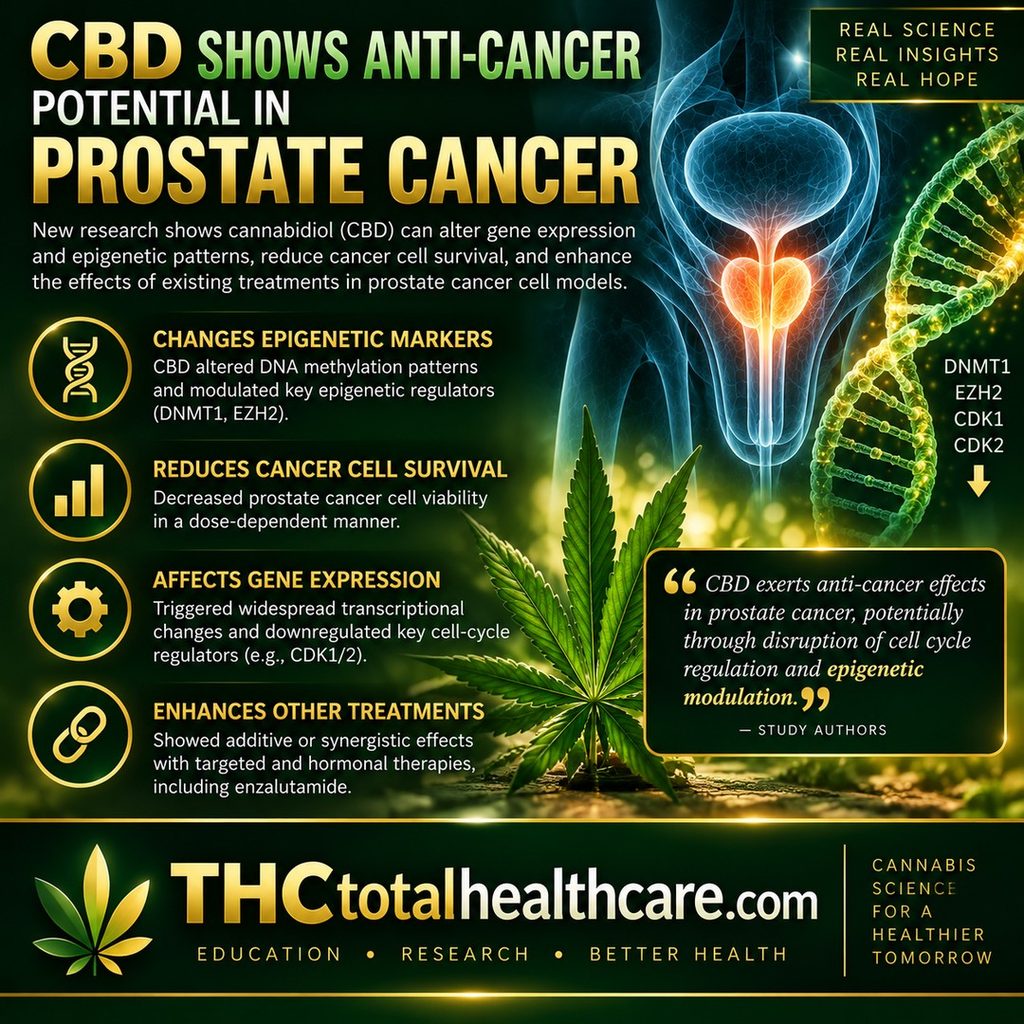
New research suggests CBD may interfere with prostate cancer through several biological pathways, including changes in gene expression and the epigenome. In laboratory prostate cancer cell models, CBD reduced cell viability in a dose-dependent manner, altered DNA methylation patterns, affected the expression of epigenetic regulators including DNMT1 and EZH2, and downregulated important cell-cycle regulators such as CDK1 and CDK2.
Researchers also reported additive or synergistic effects when CBD was combined with targeted and hormonal cancer therapies, including enzalutamide. The findings suggest CBD’s anticancer activity in prostate cancer may involve disruption of cell-cycle regulation and epigenetic modulation, supporting further investigation of CBD both alone and in combination with established treatments.
“Background: Cannabidiol (CBD) shows promising anti-cancer effects, including reducing proliferation and migration and inducing cell death. However, its impact on cancer gene regulation and epigenetic mechanisms remains poorly understood, particularly in prostate cancer, a disease characterised by widespread epigenetic alterations.
Purpose: This study investigated whether CBD exerts anti-cancer effects in prostate cancer by modulating cell viability, gene expression, and the epigenome and whether it enhances the efficacy of targeted and hormonal agents.
Study design/methods: Prostate cancer cell lines (DU145, PC3, LNCaP) were treated with varying concentrations of CBD, Talazoparib, GSK126 and enzalutamide. Cell viability was assessed by MTT. Transcriptomic changes were analysed by RNAseq and qRT-PCR, and epigenetic effects were evaluated by the Infinium MethylationEpic V2.0 BeadChip array. Analysis of total 5mC and expression/activity of EZH2 were assessed by ELIZA and Western blot respectively.
Results: Epigenetically, CBD altered methylation patterns in LNCaP cells, while modulating DNMT1 and EZH2 expression across models. However, EZH2 catalytic activity was unchanged. CBD induced widespread transcriptional changes, particularly in LNCaP cells, with enrichment of cell cycle pathways and downregulation of key regulators (e.g., CDK1/2). CBD reduced cell viability in a dose-dependent manner, showing additive or synergistic effects with both targeted and hormonal therapies.
Conclusion: CBD exerts anti-cancer effects in prostate cancer, potentially through disruption of cell cycle regulation and epigenetic modulation. These findings support its potential as a therapeutic agent, particularly in combination with targeted treatments.”
“Cannabidiol (CBD) is one of the best known and abundant phytocannabinoids. Numerous studies have demonstrated CBD’s anti-cancer effects, detailing its ability to inhibit cancer cell growth, proliferation, invasion, and migration in vitro, and reduce tumour volume in vivo.”
“To our knowledge, this study provides the first systematic characterisation of CBD’s effects on the prostate cancer epigenome, addressing a significant gap given the disease’s strong epigenetic basis.“
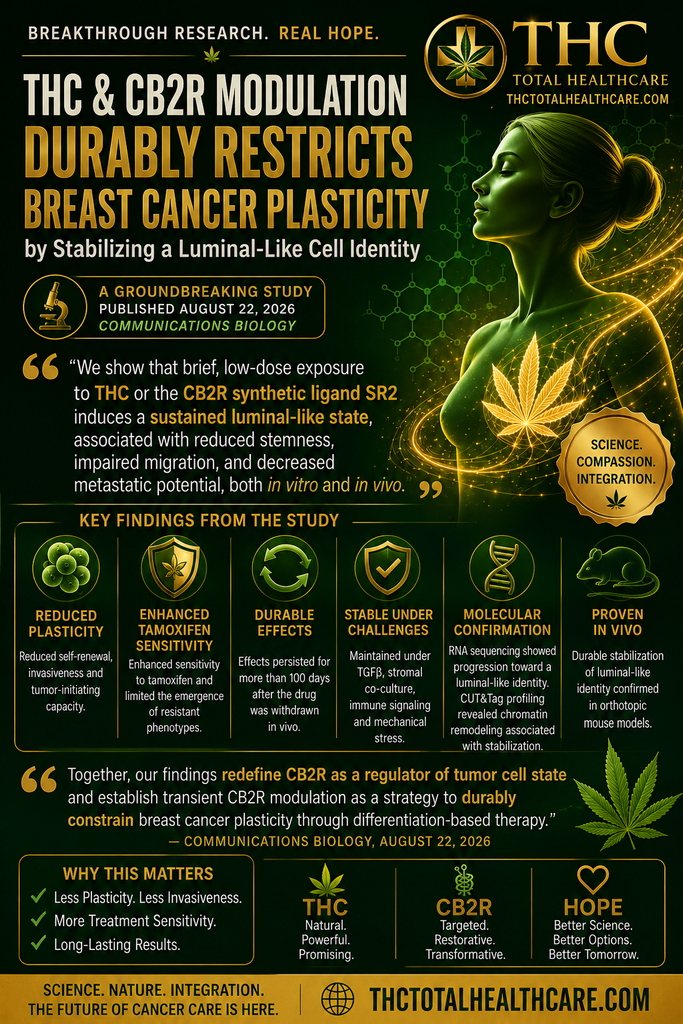
New breast cancer research suggests that brief modulation of cannabinoid receptor 2 (CB2R), including with THC, may have lasting effects on tumor cell behavior. Researchers found reduced self-renewal, invasiveness, and tumor-initiating capacity, along with greater tamoxifen sensitivity and a durable shift toward a more stable luminal-like cell identity.
“Cancer cell plasticity enables therapy resistance and metastasis by allowing transitions between stem-like and differentiated states. Differentiation-based strategies aim to stabilize tumor cell identity, yet pharmacological approaches that induce durable lineage restriction remain limited.
Here, we show that transient modulation of cannabinoid receptor 2 (CB2R) durably restricts breast cancer cell plasticity by stabilizing a luminal-like cell state. Using patient-derived and murine tumor organoids, we demonstrate that brief, low-dose CB2R modulation reduces self-renewal, invasiveness and tumor-initiating capacity, while enhancing tamoxifen sensitivity and limiting the emergence of resistant phenotypes.
These effects persist under pro-dedifferentiation conditions, including TGFβ exposure, stromal co-culture, immune signaling and mechanical stress, and are maintained in vivo following orthotopic transplantation. RNA sequencing reveals a progressive transition from an early plastic state toward a stabilized luminal-like identity, supported by CUT&Tag profiling that uncovers chromatin remodeling associated with this stabilization.
Together, our findings redefine CB2R as a regulator of tumor cell state and establish transient CB2R modulation as a strategy to durably constrain breast cancer plasticity through differentiation-based therapy.”
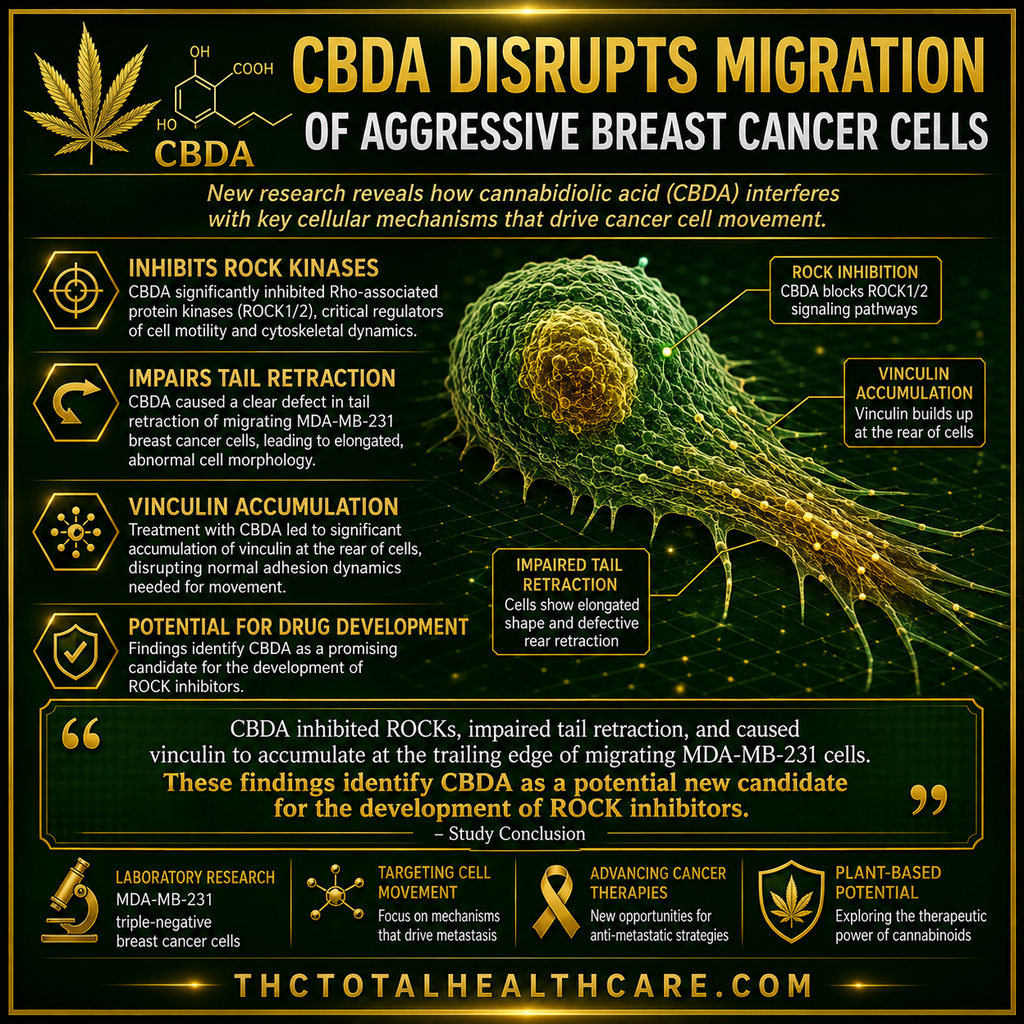
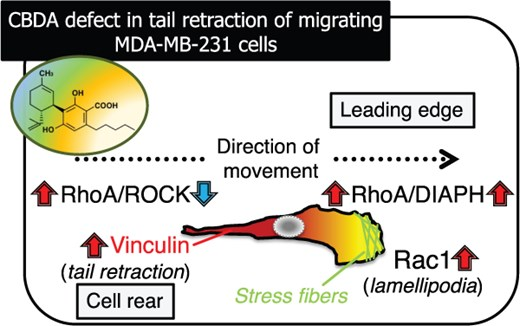
A new study adds mechanistic detail to earlier evidence that cannabidiolic acid (CBDA) can interfere with the migration of highly aggressive MDA-MB-231 breast cancer cells. Researchers found that CBDA inhibited Rho-associated kinases (ROCKs), impaired tail retraction, altered cell shape and caused vinculin to accumulate at the trailing edge—revealing another way this cannabis-derived compound may disrupt cellular behavior involved in cancer spread.
“We previously reported that cannabidiolic acid (CBDA), a major cannabinoid constituent of the fiber-type cannabis plant, abrogates the migration of highly aggressive human breast cancer MDA-MB-231 cells and activates the small GTPase RhoA by inhibiting protein kinase A. However, the mechanism(s) mediating RhoA signaling, which decreases cell migration, have not yet been comprehensively elucidated.
RhoA is an upstream mediator of Rho-associated kinases (ROCKs), diaphanous-related formins (DIAPHs), the RhoA-ROCK pathway (tail retraction) and the RhoA-DIAPH pathway (lamellipodia formation).
Herein, we identified CBDA as an inhibitor of ROCKs (at approximately 25 μM), which markedly elongated the cell body of MDA-MB-231 cells, similar to Y-27632, an established ROCK inhibitor.
CBDA stimulated lamellipodia formation at the leading edge, whereas NSC23766 (an established Rac1 inhibitor) completely blocked this elongated morphology. Biochemical analyses, including time-lapse imaging and confocal laser scanning microscopy, revealed that, compared to Y-27632, CBDA can induce impaired tail retraction coupled with unidirectional elongation of the cell body, upregulate the mRNA expression of DIAPHs and accumulate vinculin, an adhesion protein, at the trailing edge without affecting its expression.
These results indicate the potential of CBDA as a new candidate for the synthesis of ROCK inhibitors, which can evoke the directed elongation of MDA-MB-231 cells.”
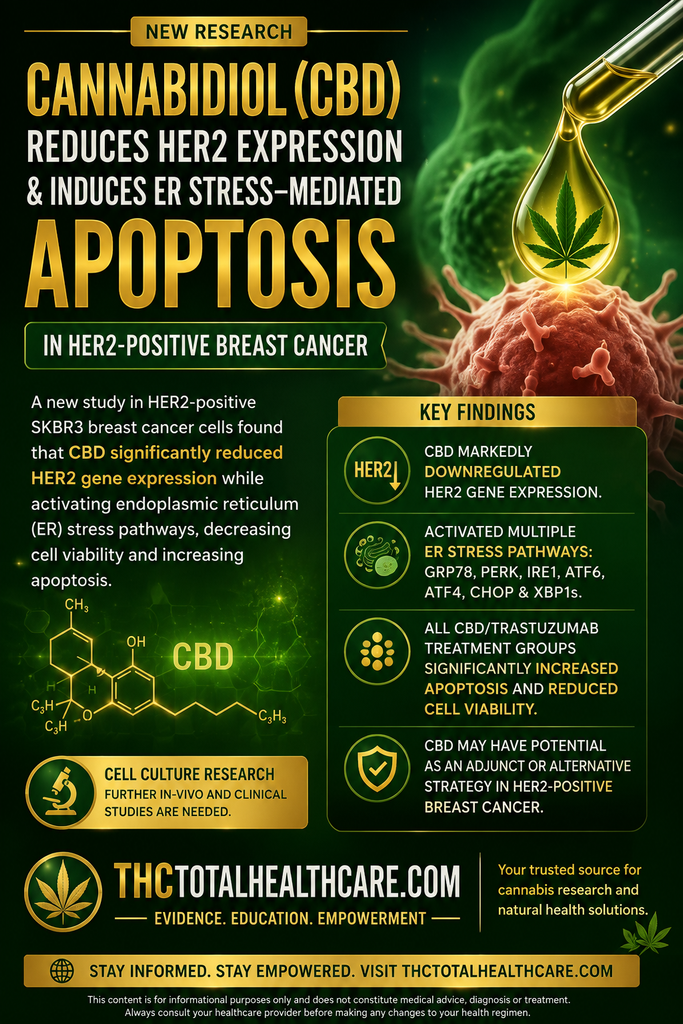
Researchers examining cannabidiol (CBD) in HER2-positive breast cancer cells found that CBD significantly reduced HER2 gene expression while activating endoplasmic reticulum (ER) stress pathways, decreasing cell viability, and increasing apoptosis. The findings identify another potential molecular mechanism behind CBD’s previously observed anticancer activity in breast cancer and suggest that CBD warrants further investigation both alone and in combination with HER2-targeted therapy.
“Cannabidiol (CBD) has attracted attention as a potential anticancer agent due to its observed efficacy, particularly in breast cancer. However, the exact molecular pathway through which it exerts its anticancer effects remains unknown. The present study aimed to investigate the effects of CBD on the HER2 receptor, endoplasmic reticulum (ER) stress signaling pathway, and apoptosis in HER2-positive breast cancer cells, as well as to examine the effect of trastuzumab (TZB), used in treatment, on the ER stress signaling pathway.
Methods
For this purpose, SKBR3 cells were treated with CBD at three different concentrations (9.38, 18.75, and 37.5 µM), TZB at 62.5 µg/mL, and two combinations of TZB and CBD (18.75 µM CBD + 62.5 µg/mL TZB and 37.5 µM CBD + 62.5 µg/mL TZB). Cell proliferation was assessed using real-time cell analysis, while expression levels of ER stress-associated genes were measured by qPCR. Apoptosis was analyzed by Annexin V/PI flow cytometry.
Results
Findings revealed that CBD, TZB, or their combination were associated with reduced cell proliferation, significant activation of ER stress pathways, and increased apoptosis, while CBD was associated with marked downregulation of HER2 gene expression. Treatment with 9.38 µM CBD, 18.75 µM CBD, 37.5 µM CBD, 62.5 µg/mL TZB, 18.75 µM CBD + 62.5 µg/mL TZB, and 37.5 µM CBD + 62.5 µg/mL TZB significantly increased GRP78, PERK, IRE1, ATF6, eIF2A, ATF4, CHOP, and XBP1s gene expression levels, and significantly decreased HER2 gene expression at all doses except 62.5 µg/mL TZB. All doses significantly increased the total number of apoptotic cells and were associated with significantly reduced cell viability.
Conclusions
The present findings demonstrated that both TZB and CBD are associated with activation of the ER stress response and induction of apoptosis in HER2-positive breast cancer cells, and that CBD is associated with downregulation of HER2 receptor gene expression. Collectively, our results indicate that CBD may have potential as an adjunct or alternative strategy in HER2-positive breast cancer, although further in vivo studies are required to evaluate the efficacy and safety of its combination with low-dose TZB.”
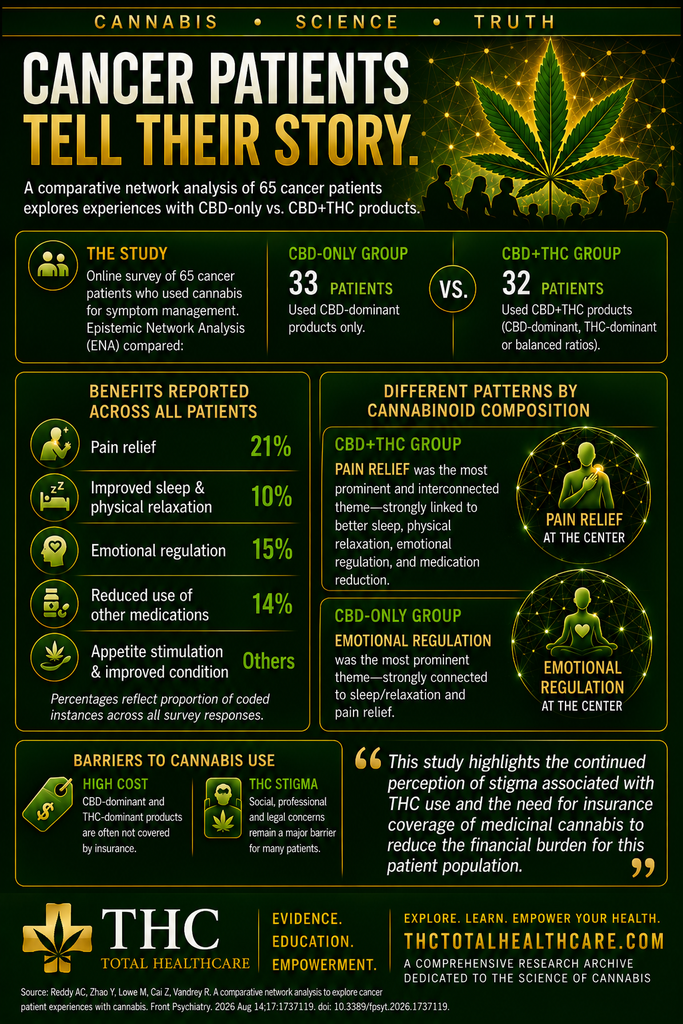
This study examined how people with cancer described the benefits and barriers they encountered when using CBD-only products compared with products containing both CBD and THC.
The findings point to a meaningful difference in patient experience: pain relief was especially prominent among those using CBD+THC products, while participants across the study also reported benefits including improved sleep, physical relaxation, emotional regulation, and reduced use of other medications.
“Introduction: Approximately 20% of cancer patients report cannabis use, yet only 30% of oncologists feel sufficiently informed to make recommendations on its use. This study aimed to visualize the network of themes that arise within cancer patients’ reported experiences with cannabis.
Materials and methods: Data was collected via an online survey of 65 patients who self-reported the use of cannabis in their treatment for cancer, details about the cannabis product(s) being used, their perceived benefits and problems associated with cannabis use, their reasons for starting cannabis use, and any reasons for stopping cannabis use. Epistemic Network Analysis (ENA) was used to compare two groups of cancer patients: 1) those who only used CBD-dominant products (CBD-only group) versus 2) those who used cannabidiol (CBD)- and delta-9-tetrahydrocannabinol (THC)-containing products (either CBD-dominant and THC-dominant cannabis products or cannabis products containing a balanced ratio of both CBD and THC; CBD+THC group).
Results: Cannabis use conferred therapeutic benefits for several health issues commonly encountered by cancer patients. Common benefits reported across the cohort of patients included pain relief, improved sleep, physical relaxation, emotional regulation, and reduction of concomitant medication. The most frequently reported barriers to cannabis use were the stigma associated with THC use and the high cost of CBD-dominant and THC-dominant products. Pain relief emerged as the most prominent, interconnected theme reported by the CBD+THC group, whereas emotional regulation was the most prominent theme for the CBD-only group.
Conclusion: Symptom relief differed based on the cannabinoid composition of the cannabis products. The following trends emerged, which must be confirmed with larger samples: pain relief was more prominent in responses from users of CBD+THC, whereas emotional regulation was more prominent in only the users of CBD-only products. These findings are a step toward assisting cancer patients and providers with clinical decision-making on cannabis use. This study highlights the continued perception of stigma associated with THC use and the need for insurance coverage of medicinal cannabis to reduce the financial burden for this patient population. Finally, this study exemplifies the value of ENA in studying the therapeutic utility of cannabis with qualitative data.”
“Pain relief is more frequently reported among users of CBD+THC products.”
“Emotional regulation is more frequently reported among users of only CBD.”
“Overall, pain relief was the most frequently discussed benefit and was associated with other benefits: emotional regulation, sleep or physical relaxation, and medication reduction. Primary patient concerns were stigma and cost.”
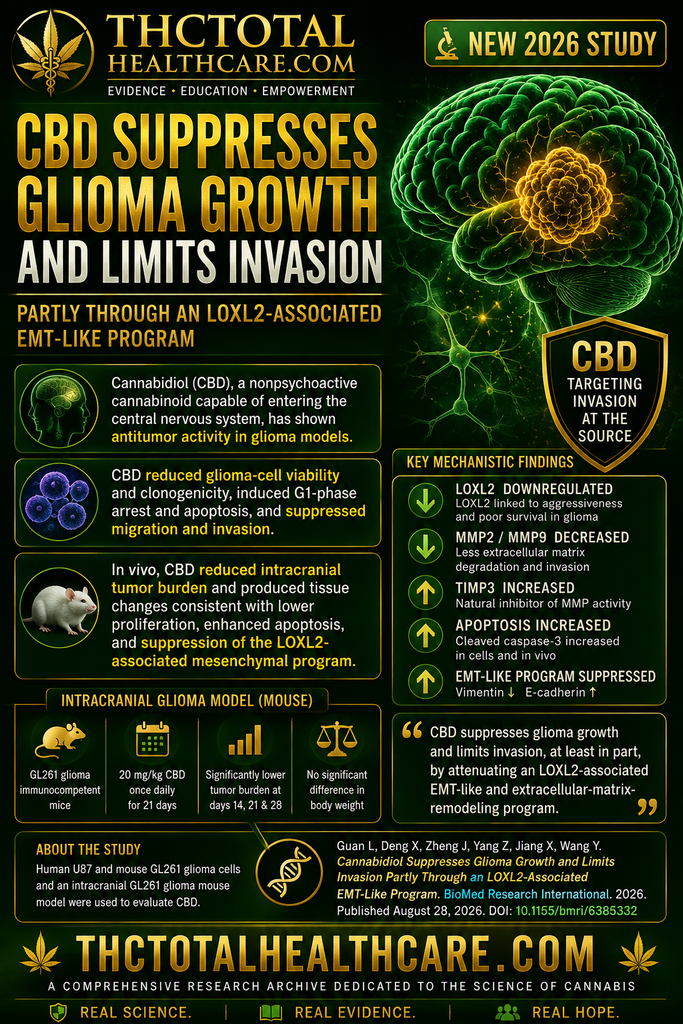
A new study found that cannabidiol (CBD) suppressed glioma growth and reduced tumor-cell migration and invasion in laboratory and animal models. The researchers linked part of this effect to reduced LOXL2 activity, suggesting CBD may interfere with molecular programs that help glioma cells spread into surrounding brain tissue.
The study adds new mechanistic evidence to the growing body of research examining CBD as a potential therapeutic compound in glioma and glioblastoma.
“Background: Gliomas, particularly glioblastoma, remain difficult to control because diffuse infiltration into surrounding brain tissue limits complete resection and contributes to recurrence. Cannabidiol (CBD), a nonpsychoactive cannabinoid capable of entering the central nervous system, has shown antitumor activity in glioma models, but the mechanisms underlying its anti-invasive effects remain unclear. Lysyl oxidase-like 2 (LOXL2) regulates extracellular-matrix remodeling and mesenchymal phenotypes in several cancers. We therefore tested the hypothesis that CBD limits glioma growth and invasion partly by suppressing an LOXL2-associated extracellular-matrix and EMT-like program.
Methods: Human U87 and murine GL261 glioma cells were used to examine CBD effects on tetrazolium-based cell viability, clonogenic growth, cell-cycle progression, apoptosis, migration, and invasion. The two cell lines provided complementary human and murine models, and the immunocompetent intracranial GL261 model enabled syngeneic in vivo validation. RNA sequencing and public glioma datasets were used to identify and contextualize CBD-responsive molecules. Mechanistic involvement was tested by determining whether LOXL2 knockdown phenocopied and LOXL2 overexpression attenuated the anti-invasive effects of CBD.
Results: CBD reduced glioma-cell viability and clonogenicity, induced G1-phase arrest and apoptosis, and suppressed migration and invasion. C CCK-8-derived IC50 values (mean ± SD, n = 3) at 24, 48, and 72 h were 36.5 ± 0.3, 26.7 ± 0.3, and 21.4 ± 0.3 μM in U87 cells and 33.3 ± 0.2, 29.3 ± 0.2, and 25.5 ± 0.4 μM in GL261 cells, respectively. CBD treatment was accompanied by reduced MMP2 and MMP9 expression and increased TIMP3 expression. Transcriptomic profiling identified LOXL2 as a prominent CBD-downregulated molecule, and public datasets associated higher LOXL2 expression with aggressive molecular features and shorter overall survival. LOXL2 silencing reproduced the antimigratory and anti-invasive phenotype, whereas LOXL2 overexpression enhanced cell motility and partially attenuated the effects of CBD. The partial rescue involved vimentin, MMP9/TIMP3, EMT-related transcription factors, and F-actin-rich protrusions. In vivo, CBD reduced intracranial tumor burden and produced tissue changes consistent with lower proliferation, enhanced apoptosis, and suppression of the LOXL2-associated mesenchymal program.
Conclusions: CBD suppresses glioma growth and limits invasion, at least in part, by attenuating an LOXL2-associated EMT-like and extracellular-matrix-remodeling program. Because LOXL2 overexpression produced only a partial rescue and direct target engagement was not tested, LOXL2 should be interpreted as a functional mediator rather than the sole or direct molecular target of CBD. These findings support further validation in patient-derived and pharmacokinetically informed glioma models.”
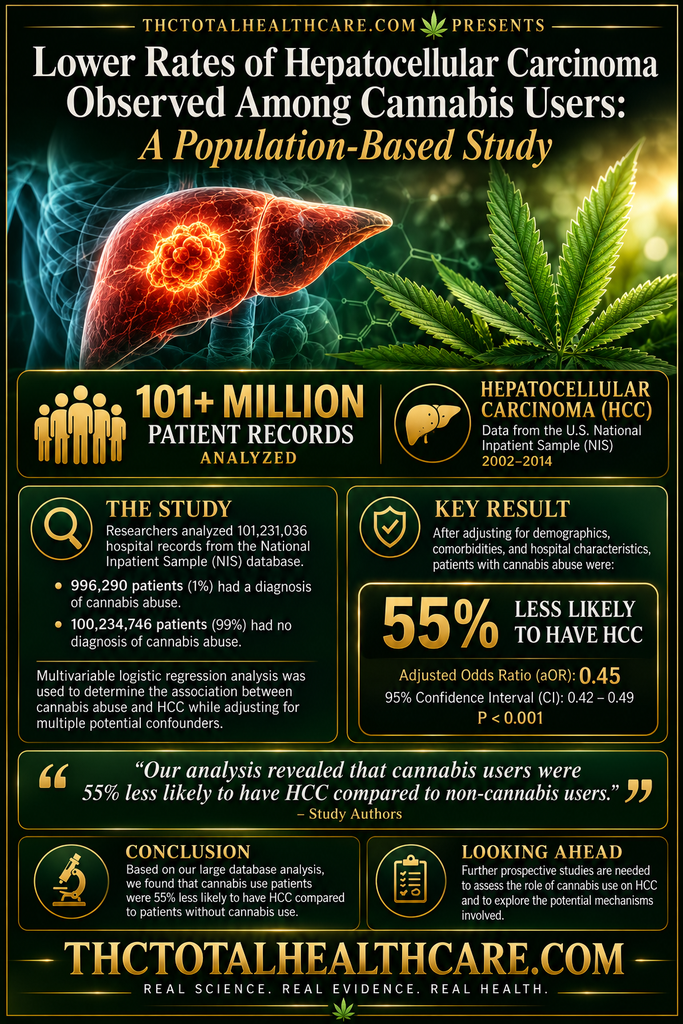
Hepatocellular carcinoma (HCC) is the most common form of primary liver cancer and remains a major cause of cancer death worldwide.
In a population-based study involving more than 101 million U.S. hospital patients, researchers found a striking association between cannabis use and HCC: after adjusting for multiple potential confounding factors, patients with documented cannabis use were 55% less likely to have hepatocellular carcinoma than patients without documented cannabis use.
The study adds large-scale human observational evidence to earlier preclinical research examining cannabinoids and liver cancer.
“Background: Hepatocellular carcinoma (HCC) is one of the most common malignancies worldwide and the fourth leading cause of cancer deaths in the world. The association between HCC and cannabis has been identified in mice; however, to our knowledge has not been identified in humans. Therefore, we aim to investigate the relation between HCC and cannabis use in humans.
Methods: Using data from the National Inpatient Sample (NIS) database between 2002 and 2014, we identified the patients with HCC and cannabis use diagnosis using the International Classification of Disease 9th version codes (ICD-9). Then, we identified patients without cannabis use as the control group. We adjusted for multiple potential confounders and performed multivariable logistic regression analysis to determine the association between cannabis abuse and HCC.
Results: A total of 101,231,036 patients were included in the study. Out of the total, 996,290 patients (1%) had the diagnosis of cannabis abuse versus 100,234,746 patients (99%) in the control group without cannabis abuse. We noticed that patients with cannabis abuse were younger (34 vs 48 years), had more males (61.7% vs 41.4%) and more African Americans (29.9% vs 14.2%) compared with the control group (P<0.001 for all). Besides, patients with cannabis use had more hepatitis B, hepatitis C, liver cirrhosis, and smoking, but had less obesity and gallstones, (P<0.001 for all). Using multivariable logistic regression, and after adjusting for potential confounders, patients with cannabis abuse were 55% less likely to have HCC (adjusted Odds Ratio {aOR}, 0.45, 95% Confidence Interval {CI}, 0.42-0.49, P<0.001) compared with patients without cannabis abuse.
Conclusion: Based on our large database analysis, we found that cannabis use patients were 55% less likely to have HCC compared to patients without cannabis use. Further prospective studies are needed to assess the role of cannabis use on HCC.”
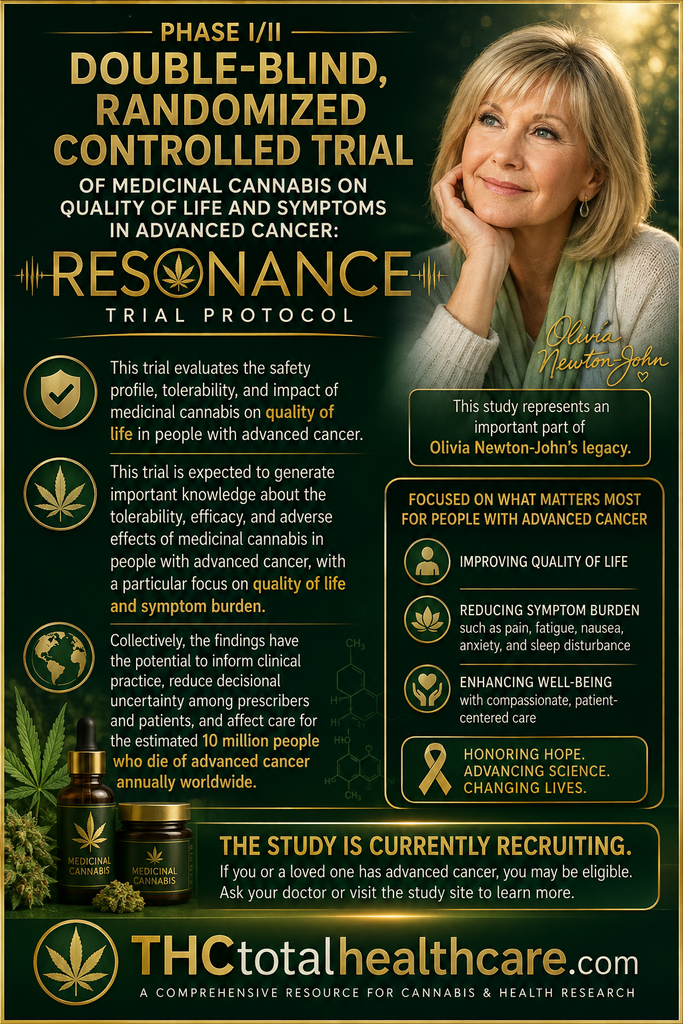
This study represents an important part of Olivia Newton-John’s legacy.
After experiencing medicinal cannabis personally during her long cancer journey, Olivia became an outspoken advocate not only for patient access, but for the scientific research needed to determine what cannabis could—and could not—do for people living with cancer.
The Olivia Newton-John Cancer Research Institute later stated that Olivia’s own experience with medicinal cannabis and her interest in pursuing the science behind its use in cancer helped lead the Institute to undertake its first medicinal-cannabis clinical trial.
That work developed into the RESONANCE trial, a Phase I/II double-blind, randomized controlled study examining medicinal cannabis in people with advanced cancer. The study is investigating its effects on quality of life and symptoms including pain, nausea, appetite loss, anxiety and sleep problems, as well as safety and how cannabinoids are metabolized by the body. The study protocol was published in Clinical Therapeutics in 2026.
Olivia repeatedly made clear that her personal experience was not enough. She wanted the science. She wanted researchers to investigate the benefits she believed she had experienced and determine whether other cancer patients could benefit as well.
The study is currently recruiting
As of August 2026, the RESONANCE trial is listed as open and recruiting in Victoria, Australia.
Potential participants may be eligible if they:
are 18 years of age or older;
have advanced cancer; and
have an estimated life expectancy of at least two months.
Additional inclusion and exclusion requirements apply, and final eligibility must be determined by the study team.
Two-thirds of participants receive medicinal cannabis and one-third receive placebo. Both are administered as an oral oil, beginning once daily and increasing, when appropriate, to a maximum of three times per day. Dosing is increased until symptoms are adequately controlled and is then maintained for up to one month. Participants provide blood samples and complete questionnaires, and researchers may also invite a participant’s caregiver to take part in aspects of the study.
After completion of the trial period, participants may be able to obtain medicinal cannabis through compassionate access.
Clinical trial registration: ACTRN12619001534178.
Interested in participating?
People interested in the trial should discuss participation with their doctor and contact the research center to determine whether they meet the complete eligibility requirements. Peter MacCallum Cancer Centre currently lists the study as open and recruiting and directs prospective participants to the full Australian clinical-trial registry criteria.
Dr. Jodie Palmer Olivia Newton-John Cancer Research Institute Level 5, ONJWRC 145 Studley Road Heidelberg, Victoria 3084, Australia Phone: +61 3 9496 3573 Email:trials@onjcri.org.au
Olivia spent the final years of her life asking that medicinal cannabis be taken seriously enough to study scientifically. She believed her own experience raised questions worth answering.
This study is part of the scientific legacy she helped set in motion.
“Purpose: Medicinal cannabis is increasingly used in cancer care despite limited high-quality evidence to inform practice. It is increasingly legalized around the world; however, this has outpaced high-quality research on cancer symptom outcomes, leading to patient and prescriber uncertainty. This trial evaluates the safety profile, tolerability, and impact of medicinal cannabis on quality of life in advanced cancer.
Methods: This is a Phase I/II multicenter clinical trial. The Phase I component is open-label and aims to determine the safety profile and tolerability of medicinal cannabis use by evaluating clinical outcomes and pharmacokinetic profile. The Phase II component is a double-blind, randomized clinical trial that aims to determine the impact of medicinal cannabis on quality of life and symptom control (pain, anorexia, anxiety, sleep, nausea, treatment satisfaction, toxicity, and caregiver burden) using validated instruments in people with advanced cancer.
Findings & implications: This trial is expected to generate important knowledge about the tolerability, efficacy, and adverse effects of medicinal cannabis in people with advanced cancer, with a particular focus on quality of life and symptom burden. Protocol adaptations aimed at enhancing inclusivity may be worth noting in future studies. Collectively, the findings have the potential to inform clinical practice, reduce decisional uncertainty among prescribers and patients, and affect care for the estimated 10 million people who die of advanced cancer annually worldwide. Australian New Zealand Clinical Trials Registry identifier: ACTRN12619001534178.”
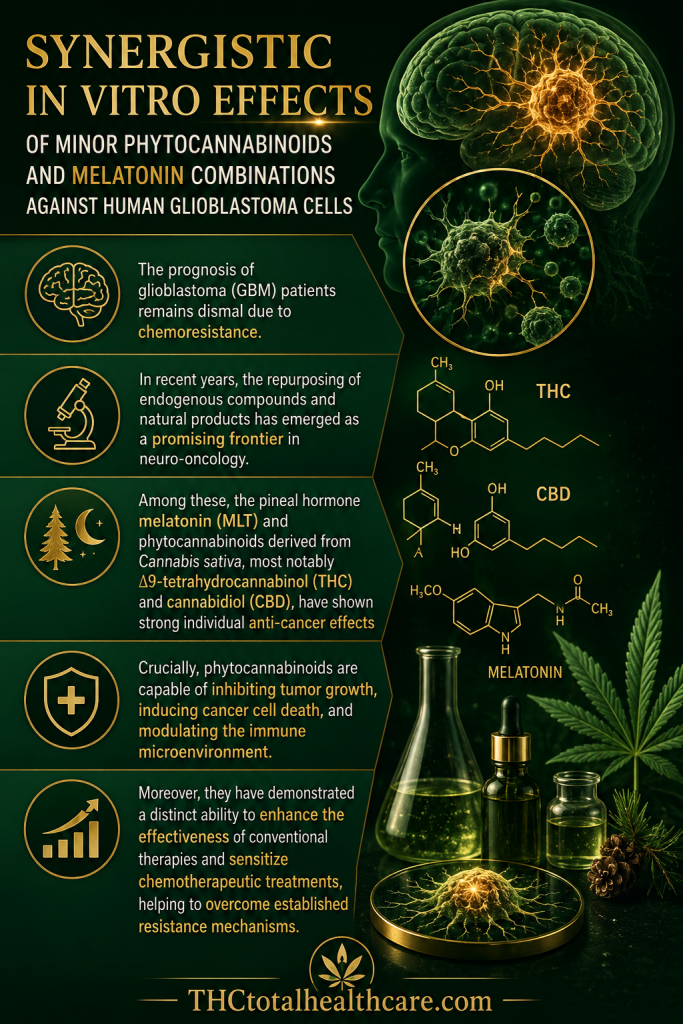
Glioblastoma remains one of the most difficult brain cancers to treat, in part because tumor cells can develop resistance to chemotherapy. In laboratory testing, combinations of the minor cannabinoids CBN or CBG with melatonin produced synergistic anticancer effects against human glioblastoma cells while sparing healthy astrocytes, and significantly enhanced the effectiveness of temozolomide.
“The prognosis of glioblastoma (GBM) patients remains dismal due to chemoresistance.
Repurposing of natural and endogenous compounds, such as the pineal hormone melatonin (MLT) and minor phytocannabinoids like cannabinol (CBN) or cannabigerol (CBG), represents a promising strategy.
This study investigates the cytotoxic potential of combining these phytocannabinoids with MLT, evaluating their efficacy both alone and synergistically with temozolomide (TMZ) to overcome drug resistance.
To achieve this, cytotoxicity, synergy (Bliss model), and selectivity were evaluated in U87, T98, and U251 GBM lines and normal astrocytes. Mechanisms of damage were characterized via Western blot (γH2AX and PARP-1), flow cytometry using fluorescent dyes/probes (DCFDA, JC-1, MitoBright, BODIPY, PI, and Annexin-V), or the protein marker COX IV and confocal analysis.
The results demonstrated that CBN-MLT and CBG-MLT regimens exerted synergistic cytotoxicity while sparing healthy astrocytes. Notably, combining these regimens (U87: MLT 0.3 mg/mL + CBN 25 µM; MLT 0.2 mg/mL + CBG 15 µM. T98: MLT 0.7 mg/mL + CBN 25 µM; MLT 0.6 mg/mL + CBG 30 µM. U251: MLT 0.4 mg/mL + CBN 20 µM; MLT 0.5 mg/mL + CBG 35 µM) with TMZ significantly enhanced chemotherapeutic efficacy, overcoming baseline effects of TMZ in these cell lines.
The combinations induced necrotic cell death characterized by severe double-strand DNA damage. This was driven by an early accumulation of intracellular ROS, which triggered mitochondrial depolarization, loss of organelle mass, and lipid peroxidation. CBN combinations consistently triggered more robust biochemical alterations than CBG-based treatments.
Taken together, this study provides a strong preclinical basis for utilizing minor cannabinoids combined with MLT in GBM management.
Crucially, this co-treatment emerges as a promising approach to potentiate TMZ efficacy, offering a novel and potentially effective therapeutic strategy to counter GBM resilience.”
“In recent years, the repurposing of endogenous compounds and natural products has emerged as a promising frontier in neuro-oncology. Among these, the pineal hormone melatonin (MLT) and phytocannabinoids derived from Cannabis sativa, most notably Δ9-tetrahydrocannabinol (THC) and cannabidiol (CBD), have shown strong individual anti-cancer effects “
“Crucially, phytocannabinoids are capable of inhibiting tumor growth, inducing cancer cell death, and modulating the immune microenvironment. Moreover, they have demonstrated a distinct ability to enhance the effectiveness of conventional therapies and sensitize chemotherapeutic treatments, helping to overcome established resistance mechanisms.”