
In Silico Assessment of Cannabidiol From Cannabis sativa as an Antiviral Agent Against Key Shrimp Pathogens in Aquaculture

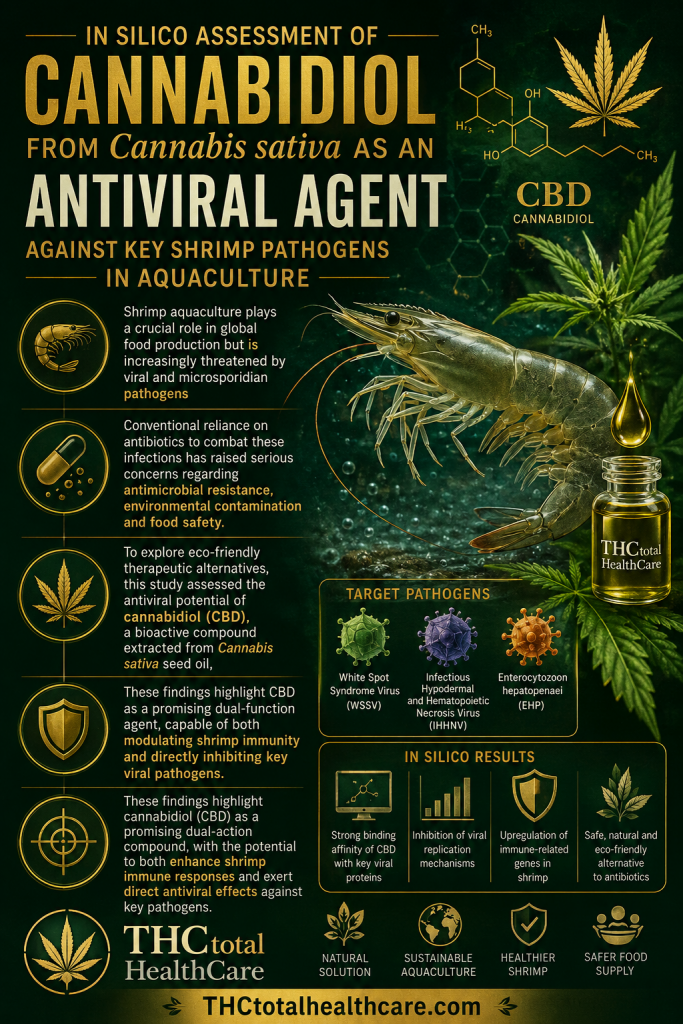
“Shrimp aquaculture plays a crucial role in global food production but is increasingly threatened by viral and microsporidian pathogens such as White Spot Syndrome Virus (WSSV), Enterocytozoon hepatopenaei (EHP) and Infectious Hypodermal and Haematopoietic Necrosis Virus (IHHNV). Conventional reliance on antibiotics to combat these infections has raised serious concerns regarding antimicrobial resistance, environmental contamination and food safety. Additionally, environmental stressors such as salinity shifts and poor water quality exacerbate disease outbreaks, leading to severe production losses across Asia and Latin America.

To explore eco-friendly therapeutic alternatives, this study assessed the antiviral potential of cannabidiol (CBD), a bioactive compound extracted from Cannabis sativa seed oil, identified through GC-MS analysis.

Using molecular docking techniques, we evaluated CBD’s interactions with key viral proteins: VP28 of WSSV, the tubulin β-chain of EHP and the capsid protein of IHHNV. The docking results revealed strong binding affinities of -6.61 kcal/mol (EHP), -6.72 kcal/mol (IHHNV) and -5.38 kcal/mol (WSSV), indicating stable and potentially inhibitory interactions. Structural models were retrieved from RCSB PDB and SwissModel, while ligand preparation and docking were performed using AutoDock 4.2.

CBD also demonstrated favourable pharmacokinetic and safety profiles, with predictions indicating no mutagenicity, hepatotoxicity or cardiotoxicity, and acceptable drug-likeness characteristics.

Compared to other plant-derived compounds previously tested in shrimp disease models, CBD exhibited superior binding stability, more interaction residues and better bioavailability scores.

These findings highlight CBD as a promising dual-function agent, capable of both modulating shrimp immunity and directly inhibiting key viral pathogens.

These findings highlight cannabidiol (CBD) as a promising dual-action compound, with the potential to both enhance shrimp immune responses and exert direct antiviral effects against key pathogens. This study lays a robust groundwork for future in vivo validations, formulation strategies and regulatory frameworks, ultimately supporting the development of sustainable, precision-based aquaculture health management.”

https://pubmed.ncbi.nlm.nih.gov/40657679/

https://onlinelibrary.wiley.com/doi/10.1111/jfd.70015

Public Attitudes Toward the Drug Enforcement Administration’s Proposal to Reschedule Marijuana: A Cross-Sectional Mixed-Methods Analysis

pubmed logo

“Introduction: On May 21, 2024, the Drug Enforcement Administration (DEA) published a proposed rule to reschedule marijuana from schedule I to III under the Controlled Substance Act (CSA), followed by a 60-day open comment period. The purpose of this study was to analyze the public attitudes regarding the proposed rule and identify trends based on time of comment submission and recurring arguments throughout the comments.

Methods: This was an observational, cross-sectional, mixed-methods study. Comments from the proposal were stratified according to the submission date as early (May 21 to June 11), mid- (June 12 to July 2), and late (July 3-22) respondents. Investigators were assigned an equal number of comments to code as in favor of, against, or no clear position on rescheduling. Comments were further coded based on type of comment (form letters, personal anecdotes), rationale for comment (racism, decriminalization, safety, and economic factors), and whether descheduling was favored. Chi-square tests were used to analyze categorical data. A random sample of comments was selected to assure a 5% margin of error.

Results: More than 42,000 comments were submitted. Of these, 380 comments were selected and coded, with 42% (n = 158) in support of rescheduling, 55% (n = 211) against rescheduling, and 2.9% (n = 11) with no clear position. Of all comments coded, 71% wanted to go further and were in support of descheduling. The early responses consisted of a majority in favor of rescheduling, while the mid- and late responses consisted of more comments against rescheduling (X 2 [2, N = 369] = 35.8, p < 0.00001). Of the comments against rescheduling, a large majority supported descheduling (X 2 [2, N = 265] = 32.0, p < 0.0001). As for comment structure, 69% (n = 263) of all comments coded were form letters, while 8.4% (n = 32) were personal anecdotes.

Conclusion: The number of comments in support of rescheduling decreased with time, only dominating the early respondent wave. Despite a larger number of negative attitudes toward the DEA’s proposed rule of rescheduling marijuana from schedule I to III, a majority of comments supported taking a step further to deschedule marijuana all together.”

https://pubmed.ncbi.nlm.nih.gov/40655530/

“The study’s findings suggest that future cannabis policy discussions may need to address not just rescheduling, but potentially more far-reaching reforms to align with evolving public sentiment. As the conversation around marijuana regulation continues, policymakers will need to carefully balance public health and safety concerns with growing calls for increased access and reduced criminalization.”

https://karger.com/mca/article/8/1/117/928534/Public-Attitudes-Toward-the-Drug-Enforcement

Exploring the Potential of Phytocannabinoids Against Multidrug-Resistant Bacteria

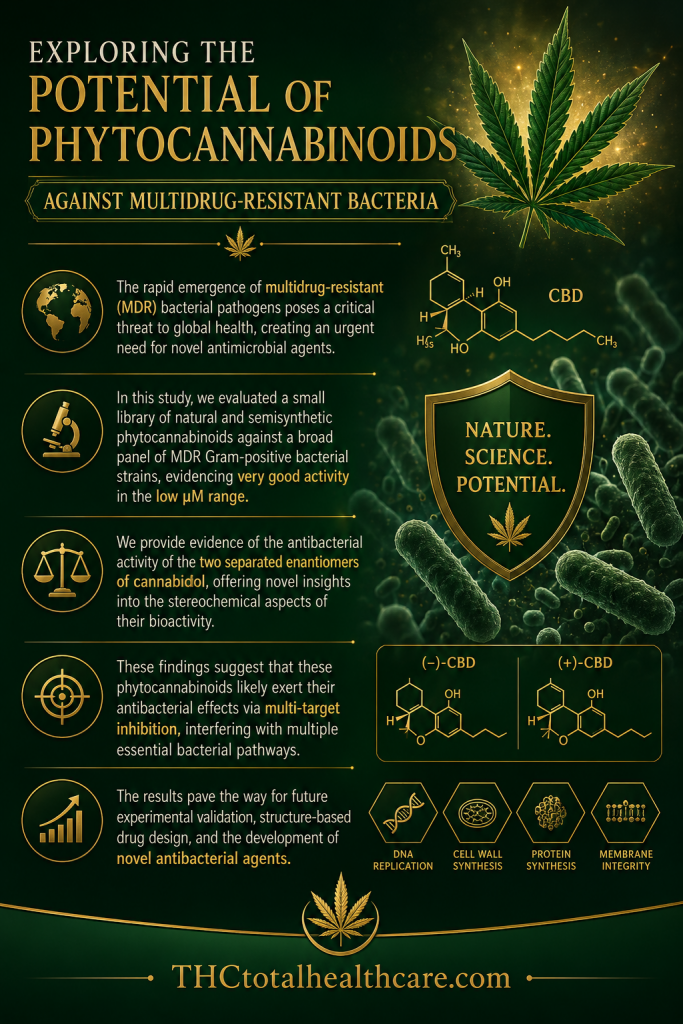
“The rapid emergence of multidrug-resistant (MDR) bacterial pathogens poses a critical threat to global health, creating an urgent need for novel antimicrobial agents.

In this study, we evaluated a small library of natural and semisynthetic phytocannabinoids against a broad panel of MDR Gram-positive bacterial strains, evidencing very good activity in the low µM range.

We provide evidence of the antibacterial activity of the two separated enantiomers of cannabidiol, offering novel insights into the stereochemical aspects of their bioactivity.

To investigate the possible molecular targets and clarify the mechanism of action, we employed Inverse Virtual Screening (IVS), a computational approach optimized for predicting potential protein-ligand interactions, on three selected MDR bacterial species. Interestingly, key targets belonging to important bacterial metabolic pathways and defense mechanisms were retrieved, and the results were used to rationalize the observed biological activities.

To the best of our knowledge, this study marks the first application of IVS to microorganisms, offering a novel strategy for identifying bacterial protein targets. The results pave the way for future experimental validation, structure-based drug design, and the development of novel antibacterial agents.”

https://pubmed.ncbi.nlm.nih.gov/40647911/

“These findings suggest that these phytocannabinoids likely exert their antibacterial effects via multi-target inhibition, interfering with multiple essential bacterial pathways.”

https://www.mdpi.com/2223-7747/14/13/1901

Multi-Target Protective Effects of β-Caryophyllene (BCP) at the Intersection of Neuroinflammation and Neurodegeneration

pubmed logo

“Recent advances in cannabinoid-based therapies identified the natural CB2 receptor agonist β-caryophyllene (BCP) as a promising anti-inflammatory and neuroprotective agent. To further explore its therapeutic potential on the management of neurodegenerative disorders, in the present study we investigated the ability of BCP to prevent neuroinflammation and promote neuroprotection by using both in vitro and ex vivo models of β-amyloid induced neurotoxicity.

Our data showed that BCP significantly protected human microglial HMC3 cells from Aβ25-35-induced cytotoxicity, reducing the release of pro-inflammatory cytokines (TNF-α, IL-6) while enhancing IL-10 secretion. These effects were associated with a reduced activation of the NF-κB pathway, which emerged as a central mediator of BCP action.

Notably, the use of CB2R- or PPARγ-selective antagonists revealed that the observed NF-κB inhibition by BCP may involve the coordinated activation of both canonical (e.g., CB2R) and non-canonical (e.g., PPARγ) receptors. Moreover, BCP restored the expression of SIRT1, PGC-1α, and BDNF, indicating the involvement of neurotrophic pathways.

Clear neuroprotective properties for BCP have been highlighted in Aβ1-42-treated brain slice preparations, where BCP demonstrated the rescue of both the amyloid-dependent depression of BDNF expression and long-term synaptic potentiation (LTP) impairment.

Overall, our results suggest that BCP constitutes an attractive natural molecule for the treatment of Aβ-induced neuroinflammation and synaptic dysfunction, warranting further exploration for its clinical application.”

https://pubmed.ncbi.nlm.nih.gov/40649806/

“In conclusion, the results of our study suggest a pleiotropic mechanism of action for the development of BCP neuroprotective effects in relation to amyloid-induced neuroinflammation and synaptic impairment, encouraging further investigations into an in vivo model of amyloid-dependent cognitive damage to clarify the exact mechanism of action of BCP and confirm whether this natural molecule may represent a novel option for the treatment of NDDs.

Furthermore, the potent anti-inflammatory effects exerted by BCP through the interaction of CB2 and PPARγ receptors support the therapeutic potential of BCP in a broad range of conditions, including neurodegenerative and metabolic diseases, neuropathic pain, and cancer. Taking into consideration the safety of BCP in humans, dietary use, and its efficacy in various experimental models of disease, BCP may be further explored as co-supplementary drug in experimental studies.”

https://www.mdpi.com/1422-0067/26/13/6027

“β-caryophyllene (BCP) is a common constitute of the essential oils of numerous spice, food plants and major component in Cannabis.”   http://www.ncbi.nlm.nih.gov/pubmed/23138934

“Beta-caryophyllene is a dietary cannabinoid.” https://www.ncbi.nlm.nih.gov/pubmed/18574142

Cannabidiol mitigates alcohol dependence and withdrawal with neuroprotective effects in the basolateral amygdala and striatum

pubmed logo

“Alcohol use disorder (AUD) remains a pervasive public health issue with limited effective treatments. Cannabidiol (CBD), a non-psychotropic constituent of cannabis, shows promise in modulating addictive behaviors.

This study investigated the effects of chronic CBD administration on alcohol dependence, withdrawal symptoms, and neurodegeneration using two complementary rodent models: chronic intermittent ethanol (CIE) exposure, which models established alcohol dependence, and ethanol vapor self-administration (EVSA), which captures the volitional aspects of alcohol intake. In the CIE model, CBD reduced alcohol self-administration during acute withdrawal without affecting alcohol metabolism or locomotor activity.

CBD decreased motivation for alcohol, somatic withdrawal signs, withdrawal-induced anxiety-like behaviors, and mechanical sensitivity. During extinction, CBD attenuated alcohol-seeking behavior and stress-induced reinstatement. Electrophysiological recordings revealed that CBD reversed alcohol-induced decreases in neuronal excitability in the basolateral amygdala, suggesting a mechanism involving normalization of neural function. In the EVSA model, CBD reduced voluntary alcohol intake during the escalation phase, impacting voluntary alcohol intake. This effect was specific to alcohol-related behaviors, as it did not affect saccharin self-administration.

Immunohistochemical analyses showed that CBD prevented alcohol-induced neurodegeneration in the nucleus accumbens shell and dorsomedial striatum, regions implicated in the volitional control of alcohol consumption. These findings indicate that chronic CBD administration attenuates both behavioral and neurobiological facets of alcohol dependence by modulating neuronal excitability and preventing neurodegeneration, supporting its therapeutic potential for AUD and providing mechanistic insights for future research.”

https://pubmed.ncbi.nlm.nih.gov/40640509/

“In conclusion, chronic CBD administration mitigates key behavioral and neurobiological features of alcohol dependence by reducing withdrawal symptoms, lowering relapse risk, restoring BLA neuronal excitability, and preventing neurodegeneration in striatal regions. Together, these findings highlight CBD’s capacity to preserve functional integrity in neural circuits underlying emotional regulation, reward processing, and habit formation.”

https://www.nature.com/articles/s41386-025-02164-6

Cannabidiol improves metabolic profiles and alleviates liver inflammation and fibrosis in conditions of androgenic obesity and polycystic ovary syndrome

pubmed logo

“Polycystic ovary syndrome (PCOS) is the most common endocrine disorder in women of reproductive age, with an estimated prevalence of 10%–15%.1 In addition to its reproductive features, that is, hyperandrogenism, anovulation, and polycystic ovarian morphology, PCOS is strongly associated with metabolic disturbances, including obesity, insulin resistance and an elevated risk of metabolic associated steatotic liver disease (MASLD).1 These complications not only worsen the quality of life but also increase long-term morbidity and mortality of women living with PCOS. The coexistence of these metabolic traits complicates clinical management and increases the risk of developing type-2 diabetes and cardiovascular diseases.

Lifestyle modifications are considered first-line interventions in PCOS, but they frequently fail to achieve sustained weight loss or ideal metabolic control, particularly in patients with pronounced hormonal perturbations (e.g., persistent hyperandrogenism) or psychological distress. Pharmacological approaches, such as metformin and GLP-1 receptor agonists, are currently used to handle metabolic complications, but they have limitations regarding efficacy, tolerability and/or accessibility, and are not universally approved for management of PCOS. Moreover, these treatments might overlook the inflammatory and fibrotic dimensions of PCOS, which are increasingly recognized as central contributors to its pathogenesis.

Cannabidiol (CBD), a non-psychotropic phytocannabinoid from Cannabis sativa,5 has garnered attention due to its anti-inflammatory, antioxidant and metabolic regulatory properties. Preclinical studies suggest that CBD acts as a negative allosteric modulator of the cannabinoid CB1 receptor (CB1R),6 and engages additional targets, such as PPARγ7 and the Nrf2 signalling pathway.8 Given these pleiotropic actions, CBD represents an attractive candidate for addressing the complex metabolic profile of PCOS. In this study, we evaluated the metabolic and hepatic effects, including proteomic profiles, of CBD in a validated murine model of PCOS associated with androgenic obesity (AO),9 aiming to provide insights into its therapeutic potential and underlying mechanisms of action.”

https://pubmed.ncbi.nlm.nih.gov/40635171/

“This study provides compelling preclinical evidence that CBD exerts broad metabolic benefits in a murine model of PCOS with androgenic obesity. Treatment with CBD led to significant reductions in weight gain, adiposity, insulin resistance, indices of hepatic fibrosis and systemic inflammation, with prominent favourable actions on MASLD traits. Liver proteomic and circulating biomarker analyses strongly supported the reprogramming of disease-associated molecular pathways caused by CBD, underscoring its potential to mitigate the multifactorial pathophysiology of PCOS.”

https://dom-pubs.pericles-prod.literatumonline.com/doi/10.1111/dom.16602

Long-term cannabinoid therapy can ameliorate chronic sleep deprivation-induced behavioral and neuroinflammatory changes in mice

pubmed logo

“Endocannabinoid system is an important contributor to body’s immune responses which are significantly impaired by chronic sleep deprivation (cSD). Although cannabinoids can modulate the endocannabinoid system, most are understudied, especially regarding cSD.

To investigate the therapeutic potential of CBD, CBG, CBC and their combinations, current study analyzed cSD-induced memory impairment, depression, microglial responses, cytokine profile and therapeutic effects of cannabinoid treatments using behavioral test and ELISA. Furthermore, molecular docking of these cannabinoids was performed to deduce the binding affinity with cannabinoid receptors and possible entrouge effects.

The results showed that memory impairment and depression were more evident in cSD groups. Moreover, microglial activation and pro-inflammatory polarization was also more evident and was supported by increased pro-inflammatory cytokine concentrations in cSD groups.

These changes were significantly reversed the cannabinoid groups but the combination of CBD + CBC was more effective than other treatments in reversing these cSD-induced behavioral and neuroinflammatory changes. Whereas, the molecular docking results also corroborated with the neuroimmunological changes observed in the current study, pointing towards the possible therapeutic role.

SIGNIFICANCE STATEMENT: Chronic SD employs microglial activation/polarization, to exert behavioral impairments and neuroinflammation.

This study signifies the therapeutic potential of proper sleep and cannabinoid intake.”

https://pubmed.ncbi.nlm.nih.gov/40628367/

“This study demonstrates the therapeutic efficacy of cannabinoid treatments in ameliorating cSD-induced behavioral and neuroinflammatory alterations. Notably, a multiple-compound treatment of CBD and CBC exhibited superior effectiveness compared to single-compound treatments. These findings suggest potential avenues for developing effective interventions against cSD-induced detrimental changes.”

https://www.sciencedirect.com/science/article/abs/pii/S0304394025002022?via%3Dihub

A 1:1 combination of cannabidiol and Δ9-tetrahydrocannabinol inhibit toll-like receptor 7- and 8-mediated inflammation in human immune cells

pubmed logo

“Cannabinoid regulation of endosomal signalling via innate immune toll-like receptors (TLRs) is understudied. Endosomal cell signalling via TLR7 and TLR8 governs cellular responses to infection with viral and bacterial single-stranded RNA. TLR7/8 activation is associated with neuroinflammation, with inappropriate activation of TLR7/8 linked to the propagation of autoimmune disease. Following activation, TLR7 and TLR8 control the cellular production of cytokines, chemokines and type I interferons (IFNs).

In this study we focused on two clinically relevant plant-derived (phyto) cannabinoids, cannabidiol (CBD) and Δ9-tetrahydrocannabinol (THC), given that cannabinoid-based therapeutics containing these compounds are currently available in the form of sativex® (nabiximols) and epidiolex®. The study aim was to determine the anti-inflammatory effects of CBD and THC, when delivered in isolation and in a sativex-like combination (1:1), on TLR7/8-induced inflammation in immune cells.

We employed the use of CL075 (3M-002), a thiazoloquinolone derivative that acts as an agonist of both TLR7 and TLR8. Using THP-1-derived macrophages and primary peripheral blood mononuclear cells (PBMCs) from healthy control subjects, we demonstrate that TLR7/8 activation promoted the time- and concentration-dependent production of the chemokine CXCL10, cytokine TNFα and type I IFNs in both macrophages and PBMCs. TLR7/8 activation promoted nuclear factor (NF)-κB activation, p38 MAPK phosphorylation and the transcription of interferon regulator factor 7 (IRF7).

We assessed the anti-inflammatory effects of CBD and THC, when delivered alone and in a 1:1 combination, on CL075-stimulated inflammatory mediator production in macrophages/PBMCs. Data presented herein indicate that CBD and THC, particularly when delivered in a 1:1 combination, can act as TLR7/8 immunomodulatory drugs to dampen inflammation in macrophages and PBMCs.

This study provides evidence that phytocannabinoids target TLR7/8-induced viral signalling on endosomal compartments to control inflammation in immune cells.”

https://pubmed.ncbi.nlm.nih.gov/40615103/

“The significant finding is that CBD and THC can differentially ameliorate TLR7/8-induced inflammation in immune cells, depending on whether the cannabinoids are administered alone or in combination. In particular, the 1:1 combination of CBD:THC (at 10 μM) was consistently anti-inflammatory in immune cells stimulated with CL075. The CB1, CB2, PPAR-γ and A2A receptors do not mediate the anti-inflammatory propensity of the phytocannabinoids in our cell models of inflammation.

Overall, data presented herein identifies TLR7/8-mediated inflammation as a phytocannabinoid target, and gives important insight regarding the cellular mechanisms by which CBD and THC regulate inflammation.”

https://www.sciencedirect.com/science/article/pii/S0014299925006326?via%3Dihub

Cannabinoid receptor ligands with potential therapeutic applications and mechanisms of action: a versatile natural therapeutic agent

pubmed logo

“The endocannabinoid system (ECS) is a complex signaling network essential for regulating various physiological processes in the body. Selective cannabinoid receptor ligands have been developed to modulate specific ECS signaling pathways, offering potential therapeutic benefits. These ligands, with high selectivity and affinity for cannabinoid receptors, demonstrate potential in managing diverse medical conditions. Standardizing dosing is crucial to ensure reliable therapeutic effects, as cannabinoids may exhibit biphasic effects. Combination strategies involving both CB1 and CB2 receptor modulation show promise in managing complex conditions, including chronic pain, autoimmune disorders, and neurodegenerative diseases.”

https://pubmed.ncbi.nlm.nih.gov/40600897/

https://www.tandfonline.com/doi/full/10.1080/10286020.2025.2522396

Differential metabolic pathways underlie THC- and CBD-mediated inhibition of B-cell activation in both young and aged mice

pubmed logo

“Objective: B lymphocytes play a crucial role in immunity but also contribute to the pathogenesis of various diseases. Cannabis plants produce numerous biologically active compounds, including cannabinoids. The two most studied phytocannabinoids are Δ9-tetrahydrocannabinol (THC) and cannabidiol (CBD). These cannabinoids exert diverse and potent biological effects primarily through the endocannabinoid system (ECS), which also plays a key role in mature B-cell function. Both the immune system and the ECS undergo age-related changes that lead to a clinically significant decline in function.

Methods: This study compares the effects of THC and CBD on B-cell activity in young and aged mice. Murine B lymphocytes were activated using lipopolysaccharide (LPS) and interleukin-4 (IL-4), and the impact of cannabinoid treatments was assessed in terms of cell phenotype, proliferation, antibody secretion, tumor necrosis factor-alpha (TNFα) secretion, extracellular signal-regulated kinase (ERK) phosphorylation, and the cellular metabolome.

Results: Both THC and CBD exhibited dose-dependent inhibitory effects on B-cell activation in young and aged mice. However, we show here, for the first time, that the treatments induce distinct metabolic profiles. Although some metabolites, such as glucose-6-phosphate, pentose phosphate pathway (PPP) and nucleotide metabolites, were reduced by both cannabinoids, THC selectively reduced the levels of a distinct set of amino acids, while only CBD increased the levels of Citrulline and Allantoin. Additionally, the effects of THC and CBD differed between young and aged B cells, suggesting that age-related changes in the ECS may influence cannabinoid sensitivity.

Conclusions: These findings provide insights into the distinct mechanisms by which THC and CBD regulate immune activation and may open the door for investigating the mechanisms behind cannabinoids effects on the immune system. They also highlight the need for further research into phytocannabinoid-based therapies, particularly in age-specific contexts. Given the immunoregulatory properties of cannabinoids, especially CBD, tailored therapeutic strategies may enhance their clinical applications.”

https://pubmed.ncbi.nlm.nih.gov/40599768/

“These findings emphasize the need for further investigation into phytocannabinoid-based therapies, particularly for age-specific applications. Given the immunoregulatory properties of cannabinoids, especially CBD, tailored therapeutic strategies may be developed to optimize their clinical use.”

https://www.frontiersin.org/journals/immunology/articles/10.3389/fimmu.2025.1605474/full