“Synthesis and biological evaluation of silicon-incorporated phytocannabinoids with improved pharmacological properties toward inflammatory diseases are described. The synthesized sila-analogues 15a, 15b, and 15c displayed potent inhibition of pro-inflammatory cytokines, including IL-1β, TNF-α, and IL-6 at 10 μM. Further, the release of heme during the lysis of red blood cells in hemolytic diseases is one of the major reasons for inflammation associated with the pathophysiology of these diseases. Due to scanty literature related to inhibitors of heme-mediated induction of the NLRP3 inflammasome, we decided to test these compounds against it. Compounds 15a and 15c significantly inhibited the heme-mediated induction of the NLRP3 inflammasome at a concentration of 0.1 μM. Interestingly, the sila-CBD derivatives also showed higher metabolic stability in contrast to their carbon analogues. Anti-NLRP3 inflammasome activity of compounds 15a and 15c were further validated in vivo against heme-mediated peritoneal inflammation. The anti-inflammatory activity of these compounds could be useful in treating diseases such as sickle cell anemia and thalassemia involving the hemolysis-mediated activation of the NLRP3 inflammasome.”
A preliminary study evaluating self-reported effects of cannabis and cannabinoids on neuropathic pain and pain medication use in people with spinal cord injury
“Approximately 60% of individuals with a spinal cord injury (SCI) experience neuropathic pain, which often persists despite the use of various pharmacological treatments. Increasingly, the potential analgesic effects of cannabis and cannabinoid products have been studied; however, little research has been conducted among those with SCI-related neuropathic pain. Therefore, the primary objective of the study was to investigate the perceived effects of cannabis and cannabinoid use on neuropathic pain among those who were currently or had previously used these approaches. Additionally, the study aimed to determine if common pain medications are being substituted by cannabis and cannabinoids. Participants (N = 342) were recruited from existing opt-in listserv sources within the United States. Of those, 227 met the inclusion criteria and were enrolled in the study. The participants took part in an anonymous online survey regarding past and current use of cannabis and their perceived effects on neuropathic pain, including the use of pain medication. Those in the sample reported average neuropathic pain intensity scores over the past week of 6.8 ± 2.1 (0 to 10 scale), reflecting a high moderate to severe level of pain. Additionally, 87.9% noted that cannabis reduced their neuropathic pain intensity by more than 30%, and 92.3% reported that cannabis helped them to better deal with their neuropathic pain symptoms. Most participants (83.3%) also reported substituting their pain medications with cannabis, with the most substituted medication categories being opioids (47.0%), gabapentinoids (42.8%) and over-the-counter pain medications (42.2%). These preliminary results suggest that cannabis and cannabinoids may be effective in reducing neuropathic pain among those with SCI and may help to limit the need for certain pain medications.”
https://pubmed.ncbi.nlm.nih.gov/38188193/
https://www.frontiersin.org/articles/10.3389/fpain.2023.1297223/full
Caregiver-reported outcomes with real-world use of cannabidiol in Lennox-Gastaut syndrome and Dravet syndrome from the BECOME survey
“Purpose: Plant-derived highly purified cannabidiol (CBD) reduced the frequency of seizures associated with Lennox-Gastaut syndrome (LGS) and Dravet syndrome (DS) and improved the overall condition of patients in placebo-controlled phase 3 clinical trials. Anecdotal reports also suggest a positive effect on nonseizure outcomes. In this study, we aimed to identify, through a caregiver survey which nonseizure outcomes were most likely to change in these patients.
Methods: The BEhavior, COgnition, and More with Epidiolex® (BECOME) was a 20-minute, cross-sectional, online survey that was developed with extensive input from caregivers, healthcare professionals, and epilepsy researchers, and was based on questions from validated measures and previously published caregiver reports. US-based caregivers (from Jazz Pharmaceuticals patient/caregiver database) of people with LGS or DS who were treated with CBD (Epidiolex®, 100 mg/mL oral solution) for ≥3 months were asked to compare the past month to the period before CBD initiation and rate their impression of changes using symmetrical Likert scales
Results: A total of 498 caregivers (97% parents) of patients with LGS (80%) or DS (20%) completed the survey. Mean (range) age of patients was 16 (1-73) years, and 52% were male. Patients were taking a median CBD dose of 14 mg/kg/d and median 4 concomitant antiseizure medications. A large proportion of respondents reported improvements in ≥1 survey question for all nonseizure-related domains: alertness, cognition, and executive function (85%); emotional functioning (82%); language and communication (79% in nonverbal patients and 74% in verbal); activities of daily living (51%); sleep (51%); and physical functioning (46%). Respondents reported improvements in seizure-related domains, including overall seizure frequency (85%), overall seizure severity (76%), seizure-free days per week for ≥1 seizure type (67%), and seizure freedom during the past month (16%). The majority of respondents who reported reduction in seizure frequency also reported improvements in nonseizure outcomes domains (51-80%). However, improvements in nonseizure outcomes (18-56%) were also reported in patients who either had no change or worsening of seizure frequency.
Conclusions: This survey characterized and quantified caregiver impression of changes in the seizure and nonseizure outcomes in patients taking add-on CBD treatment. Overall, 93% of caregivers reported planning to continue CBD treatment, primarily because of reduced seizure burden but also because of improvements in nonseizure-related outcomes. Despite the limitations that are associated with a retrospective survey-based study design, these results support further evaluation of the effect of CBD treatment on nonseizure outcomes among patients with LGS or DS.”
https://pubmed.ncbi.nlm.nih.gov/38183688/
https://www.sciencedirect.com/science/article/pii/S092012112300205X?via%3Dihub
Cannabinoids improve mitochondrial function in skeletal muscle of exhaustive exercise training rats by inhibiting mitophagy through the Pink1/Parkin and Bnip3 pathways
“Cannabidiol (CBD) is a pure natural phytocannabinoid derived from cannabis that has anti-inflammatory, antiapoptotic and antioxidative stress abilities. In recent years, an increasing number of studies have reported the regulatory effect of CBD on skeletal muscle injury induced by exercise, but its mechanism is still unclear. Mitochondria are the main organelles responsible for the energy supply within eukaryotic cells, and their function has been closely linked to cellular health. Moderate exercise improves mitochondrial function, but the excessive exercise has a negative impact on mitochondria. Therefore, we speculate that CBD may promote exercise induced skeletal muscle cell damage by improving mitochondrial function. In this study, by establishing an animal model of exhaustive exercise training in rats, the effects of CBD on the protective effect of CBD on skeletal muscle mitochondrial structure and function was elaborated, and the possible molecular mechanism was discussed based on transcriptomics. Our results indicate that skeletal muscle mitochondrial structure and function were improved after CBD intervention. GO and KEGG pathway enrichment analysis showed that exhaustive exercise training induced mitochondrial dysfunction in skeletal muscle is associated with excessive autophagy/mitophagy, the signaling pathways involved in FOXO3 and GABARAPL1 may play important roles. After CBD intervention, the protein expression of Pink1, Parkin and Bnip3 was down-regulated, indicating that CBD may improve the mitochondrial function by inhibiting mitophagy through the Pink1/Parkin and Bnip3 pathway.”
https://pubmed.ncbi.nlm.nih.gov/38182033/
https://www.sciencedirect.com/science/article/abs/pii/S0009279724000012?via%3Dihub
Awareness and interest in cannabis use for cancer management among cancer survivors
“Background: We examined the awareness, interest, and information sources relating to cannabis use for cancer management (including management of cancer symptoms and treatment-related side effects) and determined factors associated with cancer survivors’ awareness and interest in learning about cannabis use for cancer management.
Methods: This was a cross-sectional study of adult cancer survivors (N = 1886) receiving treatment at a comprehensive cancer center. Weighted prevalence and multivariable logistic regression analyses were conducted.
Results: Among cancer survivors, 88% were aware and 60% were interested in learning about cannabis use for cancer management. Common sources of information to learn about cannabis use for cancer management were cancer doctors/nurses (82%), other patients with cancer (27%), websites/blogs (26%), marijuana stores (20%), and family/friends (18%). The odds of being aware of cannabis use for cancer management was lower among male compared to female survivors (adjusted odds ratio [AOR]: 0.61; 95% confidence interval [CI]: 0.41-0.90), non-Hispanic Blacks compared to non-Hispanic Whites (AOR: 0.36; 95% CI: 0.21-0.62), and survivors who do not support the legalization of cannabis for medical use compared to those who do (AOR: 0.10; 95% CI: 0.04-0.23). On the other hand, the odds of being interested in cannabis use for cancer management was higher among non-Hispanic Blacks compared to non-Hispanic Whites (AOR: 1.65; 95% CI: 1.04-2.62), and among cancer survivors actively undergoing cancer treatment compared to patients on non-active treatment (AOR: 2.25; 95% CI: 1.74-2.91).
Conclusion: Awareness of cannabis use for cancer management is high within the cancer survivor population. Results indicated health care providers are leading information source and should receive continued medical education on cannabis-specific guidelines. Similarly, tailored educational interventions are needed to guide survivors on the benefits and risks of cannabis use for cancer management.”
https://pubmed.ncbi.nlm.nih.gov/38180296/
“In conclusion, most cancer survivors are aware of and interested in cannabis use for medical management. “
Cannabidiol Mediates In Vitro Attenuation of Proinflammatory Cytokine Responses in Psoriatic Disease
“Background: Cannabidiol (CBD), a substance that belongs to the phytocannabinoids, appears to exert antioxidant, neuroprotective, antipsychotic, anticonvulsant, and anticancer properties. Recent evidence supports the immunoregulatory effect of CBD on autoimmune and/or inflammatory disease. Psoriasis is a chronic skin disease. The main immune cell population involved in the pathogenesis of the disease is the interleukin- (IL-) 17-producing T helper (Th) 17 subset. Other subpopulations, such as interferon-γ (IFNγ) -producing Th1 and T cytotoxic (Tc) 1, IL-17-producing Tc17, as well as natural killer (NK) and natural killer T cells (NKT) have been implicated in psoriasis development.
Purpose: The aim of the present study was to evaluate the in vitro effect of CBD on the aforementioned subpopulations isolated from patients with psoriasis using flow cytometry.
Methods: Cells were stimulated in the presence or absence of CBD, stained and examined using surface and intracellular markers.
Results: CBD decreased IL-17 production within the CD3, Th, and NKT cell compartments and IFNγ production within the CD3 compartment in cells isolated from patients with psoriasis. Interestingly, CBD supplementation did not inhibit production of proinflammatory cytokines in cells isolated from healthy individuals. On the contrary, IFNγ-producing Th, Tc, and NK cells increased after CBD supplementation.
Conclusion: CBD provides anti-inflammatory effects in T cells isolated from patients with psoriasis. Our results could be the impetus for future investigations regarding the immunomodulatory properties of CBD and its utilization for development of CBD-containing antipsoriatic agents.”
Cannabis Sativa targets mediobasal hypothalamic neurons to stimulate appetite
“The neurobiological mechanisms that regulate the appetite-stimulatory properties of cannabis sativa are unresolved. This work examined the hypothesis that cannabinoid-1 receptor (CB1R) expressing neurons in the mediobasal hypothalamus (MBH) regulate increased appetite following cannabis vapor inhalation. Here we utilized a paradigm where vaporized cannabis plant matter was administered passively to rodents. Initial studies in rats characterized meal patterns and operant responding for palatable food following exposure to air or vapor cannabis. Studies conducted in mice used a combination of in vivo optical imaging, electrophysiology and chemogenetic manipulations to determine the importance of MBH neurons for cannabis-induced feeding behavior. Our data indicate that cannabis vapor increased meal frequency and food seeking behavior without altering locomotor activity. Importantly, we observed augmented MBH activity within distinct neuronal populations when mice anticipated or consumed food. Mechanistic experiments demonstrated that pharmacological activation of CB1R attenuated inhibitory synaptic tone onto hunger promoting Agouti Related Peptide (AgRP) neurons within the MBH. Lastly, chemogenetic inhibition of AgRP neurons attenuated the appetite promoting effects of cannabis vapor. Based on these results, we conclude that MBH neurons contribute to the appetite stimulatory properties of inhaled cannabis.”
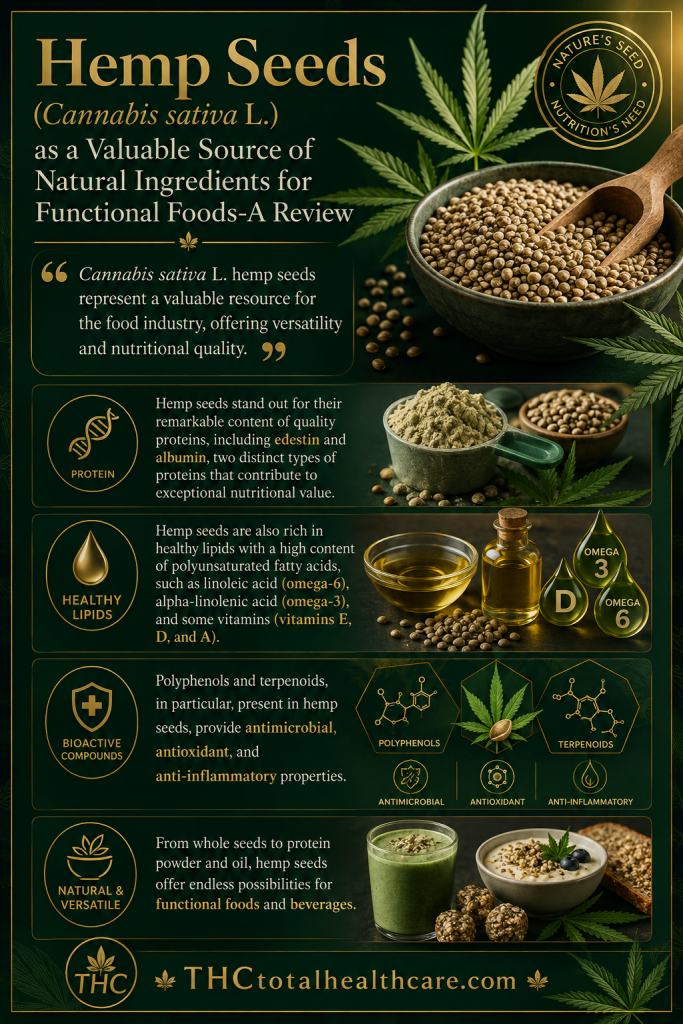
Hemp-Derived CBD Used in Food and Food Supplements
“Cannabis sativa L., a plant historically utilized for textile fibers, oil, and animal feed, is progressively being recognized as a potential food source. This review elucidates the nutritional and functional attributes of hemp and cannabidiol (CBD) within the context of food science. Hemp is characterized by the presence of approximately 545 secondary metabolites, among which around 144 are bioactive cannabinoids of primary importance. The study looks in detail at the nutritional components of cannabis and the potential health benefits of CBD, encompassing anti-inflammatory, anxiolytic, and antipsychotic effects. The review deals with the legislation and potential applications of hemp in the food industry and with the future directions of cannabis applications as well. The paper emphasizes the need for more scientific investigation to validate the safety and efficacy of hemp components in food products, as current research suggests that CBD may have great benefits for a wide range of consumers.”
Dietary Cannabidiol Activates PKA/AMPK Signaling and Attenuates Chronic Inflammation and Leaky Gut in DSS-Induced Colitis Mice
“Scope: Inflammatory bowel disease (IBD) is characterized by chronic inflammation in the gut, accompanied by impaired epithelial integrity, increased macrophage infiltration, and enhanced colon cancer risk.
Methods and results: Cannabidiol (CBD), a phytocannabinoid isolated from cannabis plants, is supplemented into mice diet, and its beneficial effects against dextran sulfate sodium (DSS)-induced experimental colitis is evaluated. Eight-week-old mice were fed a standard diet supplemented with or without CBD (200 mg kg-1 ) for 5 weeks. In the 4th week of dietary treatment, mice were subjected to 2.5% DSS induction for 7 days, followed by 7 days of recovery, to induce colitis. CBD supplementation reduced body weight loss, gross bleeding, fecal consistency, and disease activity index. In addition, CBD supplementation protected the colonic structure, promoted tissue recovery, and ameliorated macrophage infiltration in the colonic tissue, which was associated with the activation of cyclic AMP-protein kinase A, extracellular signal-regulated kinase ½, and AMP-activated protein kinase signaling pathways. CBD supplementation also suppressed NLRP3 inflammasome activation and related pro-inflammatory marker secretion. Consistently, CBD feeding reduced tight junction protein claudin2 and myosin light chain kinase in DSS-treated mice.
Conclusion: Dietary CBD protects against inflammation and colitis symptoms induced by DSS, providing an alternative approach to IBD management.”
Research progress in the management of vascular disease with cannabidiol: a review
“The morbidity and mortality rates associated with vascular disease (VD) have been gradually increasing. Currently, the most common treatment for VD is surgery, with the progress in drug therapy remaining slow. Cannabidiol (CBD) is a natural extract of Cannabis sativa L. with sedative, analgesic, and nonaddictive properties. CBD binds to 56 cardiovascular-related receptors and exerts extensive regulatory effects on the cardiovascular system, making it a potential pharmacological agent for the management of VD. However, most CBD studies have focused on neurological and cardiac diseases, and research on the management of VD with CBD is still rare. In this review, we summarize the currently available data on CBD in the management of VD, addressing four aspects: the major molecular targets of CBD in VD management, pharmacokinetic properties, therapeutic effects of CBD on common VDs, and side effects. The findings indicate that CBD has anti-anxiety, anti-oxidation, and anti-inflammatory properties and can inhibit abnormal proliferation and apoptosis of vascular smooth muscle and endothelial cells; these effects suggest CBD as a therapeutic agent for atherosclerosis, stress-induced hypertension, diabetes-related vasculopathy, ischemia-reperfusion injury, and vascular damage caused by smoking and alcohol abuse. This study provides a theoretical basis for further research on CBD in the management of VD.”
https://pubmed.ncbi.nlm.nih.gov/38172934/
https://cardiothoracicsurgery.biomedcentral.com/articles/10.1186/s13019-023-02476-y