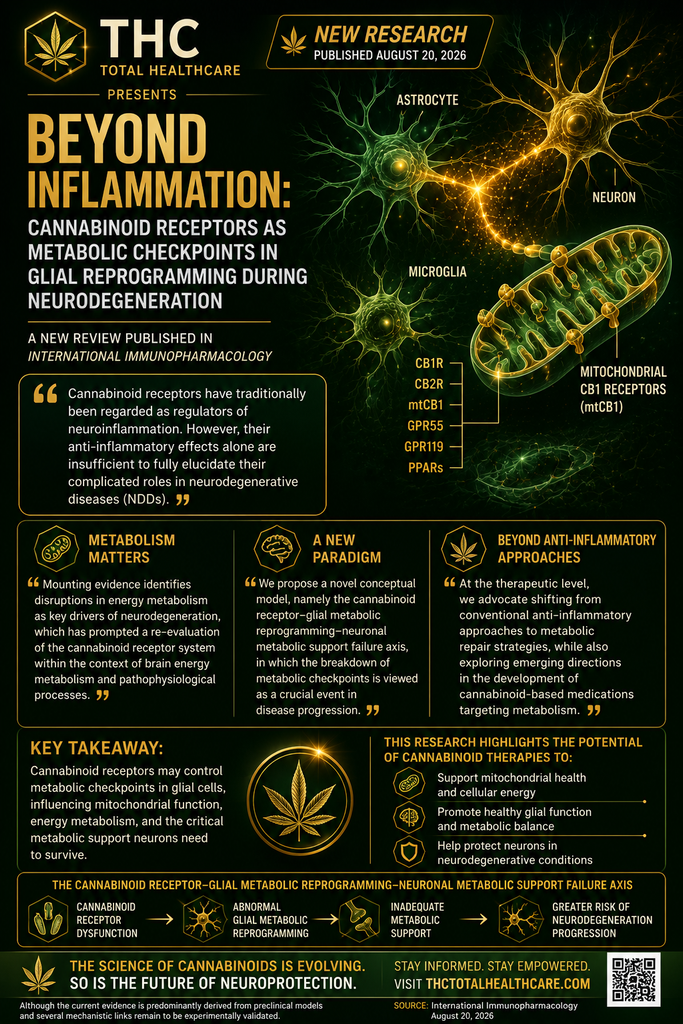
Beyond inflammation: Cannabinoid receptors as metabolic checkpoints in glial reprogramming during neurodegeneration

Cannabinoid receptors are increasingly being studied for roles that go beyond controlling inflammation in the brain.

This review examines how CB1 and CB2 receptors may act as metabolic checkpoints in glial cells, influencing how these cells use energy, respond to stress and change their behavior during neurodegenerative disease.

The findings highlight a broader role for the endocannabinoid system in shaping brain metabolism and glial function, with potential relevance to conditions such as Alzheimer’s, Parkinson’s and other neurodegenerative disorders.

“Cannabinoid receptors have traditionally been regarded as regulators of neuroinflammation. However, their anti-inflammatory effects alone are insufficient to fully elucidate their complicated roles in neurodegenerative diseases (NDDs).

Mounting evidence identifies disruptions in energy metabolism as key drivers of neurodegeneration, which has prompted a re-evaluation of the cannabinoid receptor system within the context of brain energy metabolism and pathophysiological processes. Accumulated findings from several independent preclinical studies have offered novel insights into the potential involvement of cannabinoid receptors in energy metabolism, mitochondrial function, and glial metabolic reprogramming.

This review focuses on the metabolic regulatory potential of classical cannabinoid receptors, including cannabinoid receptor type 1 (CB1R) and cannabinoid receptor type 2 (CB2R), with particular attention to mitochondrial CB1 receptors (mtCB1), as well as non-classical targets such as G protein-coupled receptor 55 (GPR55), G protein-coupled receptor 119 (GPR119), and peroxisome proliferator-activated receptors (PPARs). Additionally, the review explores the mechanisms by which astrocytes maintain neuronal support through cell-type-specific metabolic specialization and how metabolic reprogramming in microglia modulates neuroinflammatory phenotypes.

Although the current evidence is predominantly derived from preclinical models and several mechanistic links remain to be experimentally validated, we propose a novel conceptual model, namely the cannabinoid receptor-glial metabolic reprogramming-neuronal metabolic support failure axis, in which the breakdown of metabolic checkpoints is viewed as a crucial event in disease progression.

At the therapeutic level, we advocate shifting from conventional anti-inflammatory approaches to metabolic repair strategies, while also exploring emerging directions in the development of cannabinoid-based medications targeting metabolism.

Collectively, a deep understanding of the complex metabolic regulatory functions of cannabinoid receptors is critical for developing next-generation treatment strategies for NDDs.”

https://pubmed.ncbi.nlm.nih.gov/42624021

“Shift from anti-inflammation to metabolic repair for cannabinoid NDD therapy.”

https://www.sciencedirect.com/science/article/abs/pii/S1567576926011458?via%3Dihub
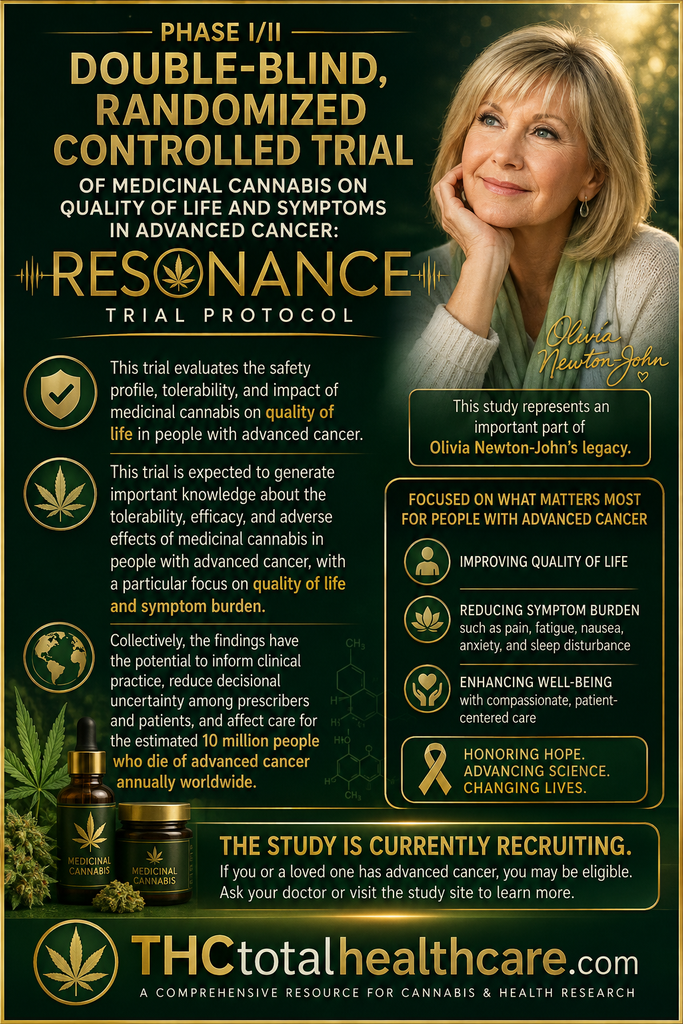

Phase I/II Double-Blind, Randomized Controlled Trial of Medicinal Cannabis on Quality of Life and Symptoms in Advanced Cancer: RESONANCE Trial Protocol

This study represents an important part of Olivia Newton-John’s legacy.

After experiencing medicinal cannabis personally during her long cancer journey, Olivia became an outspoken advocate not only for patient access, but for the scientific research needed to determine what cannabis could—and could not—do for people living with cancer.

The Olivia Newton-John Cancer Research Institute later stated that Olivia’s own experience with medicinal cannabis and her interest in pursuing the science behind its use in cancer helped lead the Institute to undertake its first medicinal-cannabis clinical trial.

That work developed into the RESONANCE trial, a Phase I/II double-blind, randomized controlled study examining medicinal cannabis in people with advanced cancer. The study is investigating its effects on quality of life and symptoms including pain, nausea, appetite loss, anxiety and sleep problems, as well as safety and how cannabinoids are metabolized by the body. The study protocol was published in Clinical Therapeutics in 2026.

Olivia repeatedly made clear that her personal experience was not enough. She wanted the science. She wanted researchers to investigate the benefits she believed she had experienced and determine whether other cancer patients could benefit as well.

The study is currently recruiting

As of August 2026, the RESONANCE trial is listed as open and recruiting in Victoria, Australia.

Potential participants may be eligible if they:

  • are 18 years of age or older;
  • have advanced cancer; and
  • have an estimated life expectancy of at least two months.

Additional inclusion and exclusion requirements apply, and final eligibility must be determined by the study team.

Two-thirds of participants receive medicinal cannabis and one-third receive placebo. Both are administered as an oral oil, beginning once daily and increasing, when appropriate, to a maximum of three times per day. Dosing is increased until symptoms are adequately controlled and is then maintained for up to one month. Participants provide blood samples and complete questionnaires, and researchers may also invite a participant’s caregiver to take part in aspects of the study.

After completion of the trial period, participants may be able to obtain medicinal cannabis through compassionate access.

Clinical trial registration: ACTRN12619001534178.

Interested in participating?

People interested in the trial should discuss participation with their doctor and contact the research center to determine whether they meet the complete eligibility requirements. Peter MacCallum Cancer Centre currently lists the study as open and recruiting and directs prospective participants to the full Australian clinical-trial registry criteria.

Dr. Jodie Palmer
Olivia Newton-John Cancer Research Institute
Level 5, ONJWRC
145 Studley Road
Heidelberg, Victoria 3084, Australia
Phone: +61 3 9496 3573
Email: trials@onjcri.org.au

Olivia spent the final years of her life asking that medicinal cannabis be taken seriously enough to study scientifically. She believed her own experience raised questions worth answering.

This study is part of the scientific legacy she helped set in motion.

Purpose: Medicinal cannabis is increasingly used in cancer care despite limited high-quality evidence to inform practice. It is increasingly legalized around the world; however, this has outpaced high-quality research on cancer symptom outcomes, leading to patient and prescriber uncertainty. This trial evaluates the safety profile, tolerability, and impact of medicinal cannabis on quality of life in advanced cancer.

Methods: This is a Phase I/II multicenter clinical trial. The Phase I component is open-label and aims to determine the safety profile and tolerability of medicinal cannabis use by evaluating clinical outcomes and pharmacokinetic profile. The Phase II component is a double-blind, randomized clinical trial that aims to determine the impact of medicinal cannabis on quality of life and symptom control (pain, anorexia, anxiety, sleep, nausea, treatment satisfaction, toxicity, and caregiver burden) using validated instruments in people with advanced cancer.

Findings & implications: This trial is expected to generate important knowledge about the tolerability, efficacy, and adverse effects of medicinal cannabis in people with advanced cancer, with a particular focus on quality of life and symptom burden. Protocol adaptations aimed at enhancing inclusivity may be worth noting in future studies. Collectively, the findings have the potential to inform clinical practice, reduce decisional uncertainty among prescribers and patients, and affect care for the estimated 10 million people who die of advanced cancer annually worldwide. Australian New Zealand Clinical Trials Registry identifier: ACTRN12619001534178.”

https://pubmed.ncbi.nlm.nih.gov/42476829

https://www.clinicaltherapeutics.com/article/S0149-2918(26)00233-X/fulltext

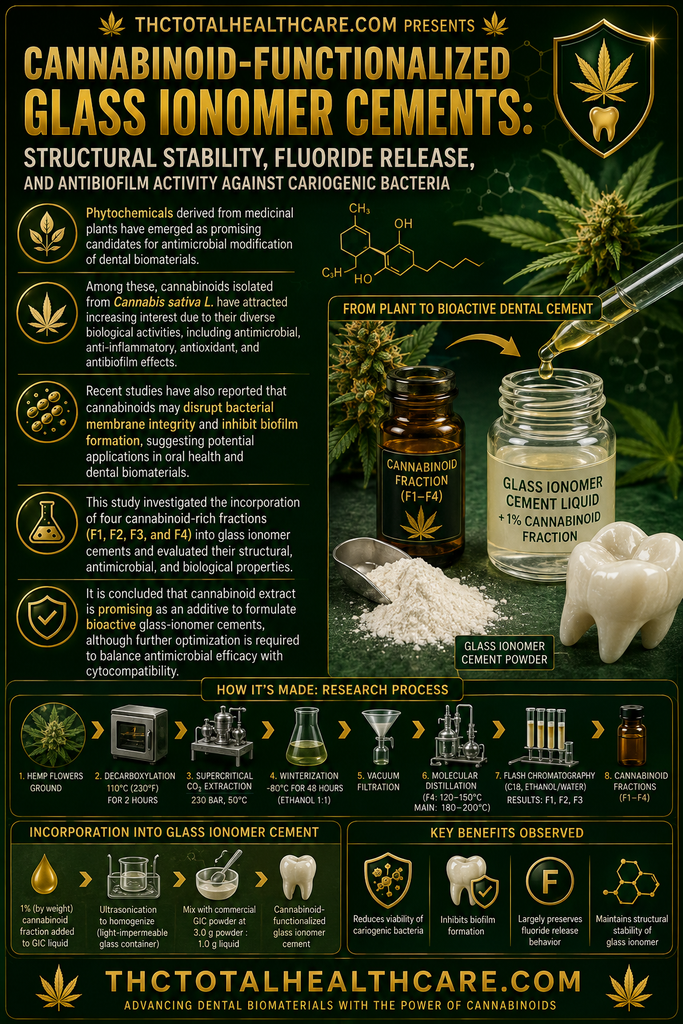
Cannabinoid-Functionalized Glass Ionomer Cements: Structural Stability, Fluoride Release, and Antibiofilm Activity against Cariogenic Bacteria

Cannabinoids are being explored for uses beyond conventional medicines, including dental materials designed to resist bacterial growth.

In this study, researchers incorporated cannabinoid compounds into glass ionomer cements and evaluated their structural stability, fluoride release and ability to inhibit biofilms formed by cavity-causing bacteria.

The findings suggest that cannabinoid-functionalized dental materials could combine traditional restorative properties with added antimicrobial activity.

“Dental caries is strongly associated with biofilm-forming bacteria such as Streptococcus mutans and Lactobacillus acidophilus, and improving the antimicrobial performance of restorative materials remains a major challenge in preventive dentistry.

Glass ionomer cements (GICs) exhibit favorable properties including chemical adhesion and fluoride release, yet their intrinsic antibacterial activity remains limited.

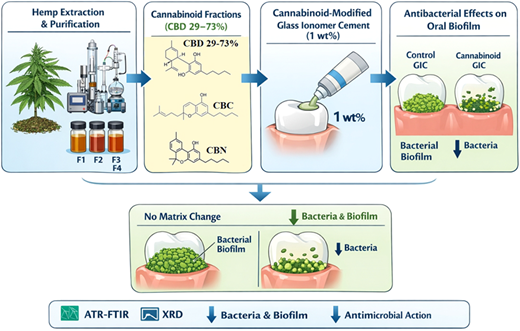
This study investigated the incorporation of four cannabinoid-rich fractions (F1, F2, F3, and F4) into glass ionomer cements and evaluated their structural, antimicrobial, and biological properties.

Cannabinoid fractions isolated from hemp flowers were incorporated into Ketac Cem Radiopaque and Ketac Molar Easymix formulations at 1 wt %. Data were analyzed using one-way ANOVA, Tukey’s post hoc test, and Kruskal-Wallis analysis (p < 0.05).

Attenuated Total Reflection-Fourier Transform Infrared Spectroscopy (ATR-FTIR) and X-ray diffraction (XRD) analyses demonstrated structural compatibility between the cannabinoid fractions and the glass ionomer matrix, indicating preservation of the original phase composition and the absence of disruption in the acid-base setting reaction. The modified cements exhibited strain-dependent antibacterial and antibiofilm activity, with KCR-F4 showing the strongest reduction in S. mutans viability (47.35%) and KME-F1 demonstrating the greatest activity against L. acidophilus (14.77%).

Significant differences were observed among GIC types and cannabinoid fractions for antimicrobial activity, fluoride release, and cytotoxicity. Scanning electron microscopy (SEM) imaging further confirmed decreased bacterial adhesion and disrupted surface colonization on cannabinoid-modified cement surfaces. Fluoride-release behavior was largely preserved following cannabinoid incorporation. However, cytotoxicity analysis revealed increased LDH release at the tested concentration, indicating a cytotoxicity trade-off associated with enhanced antimicrobial activity.

It is concluded that cannabinoid extract is promising as an additive to formulate bioactive glass-ionomer cements, although further optimization is required to balance antimicrobial efficacy with cytocompatibility.”

https://pubmed.ncbi.nlm.nih.gov/42626432

“Phytochemicals derived from medicinal plants have emerged as promising candidates for antimicrobial modification of dental biomaterials. Among these, cannabinoids isolated from Cannabis sativa L. have attracted increasing interest due to their diverse biological activities, including antimicrobial, anti-inflammatory, antioxidant, and antibiofilm effects.”

“Recent studies have also reported that cannabinoids may disrupt bacterial membrane integrity and inhibit biofilm formation, suggesting potential applications in oral health and dental biomaterials. “

https://pubs.acs.org/acsodf/article/11/32/47854/5246508/Cannabinoid-Functionalized-Glass-Ionomer-Cements


Fabrication and characterization of new levan@CBD biocomposite sponges as potential materials in natural, non-toxic wound dressing applications

Cannabidiol (CBD) is also being explored as a component of advanced wound-care materials, where its biological properties could be combined with biodegradable polymers.

In this study, researchers developed levan–CBD biocomposite sponges and evaluated their structure, stability and suitability for use as natural, non-toxic wound dressings.

The findings suggest that incorporating CBD into biocomposite materials may offer a promising approach for creating new wound-care products with both structural and bioactive properties.

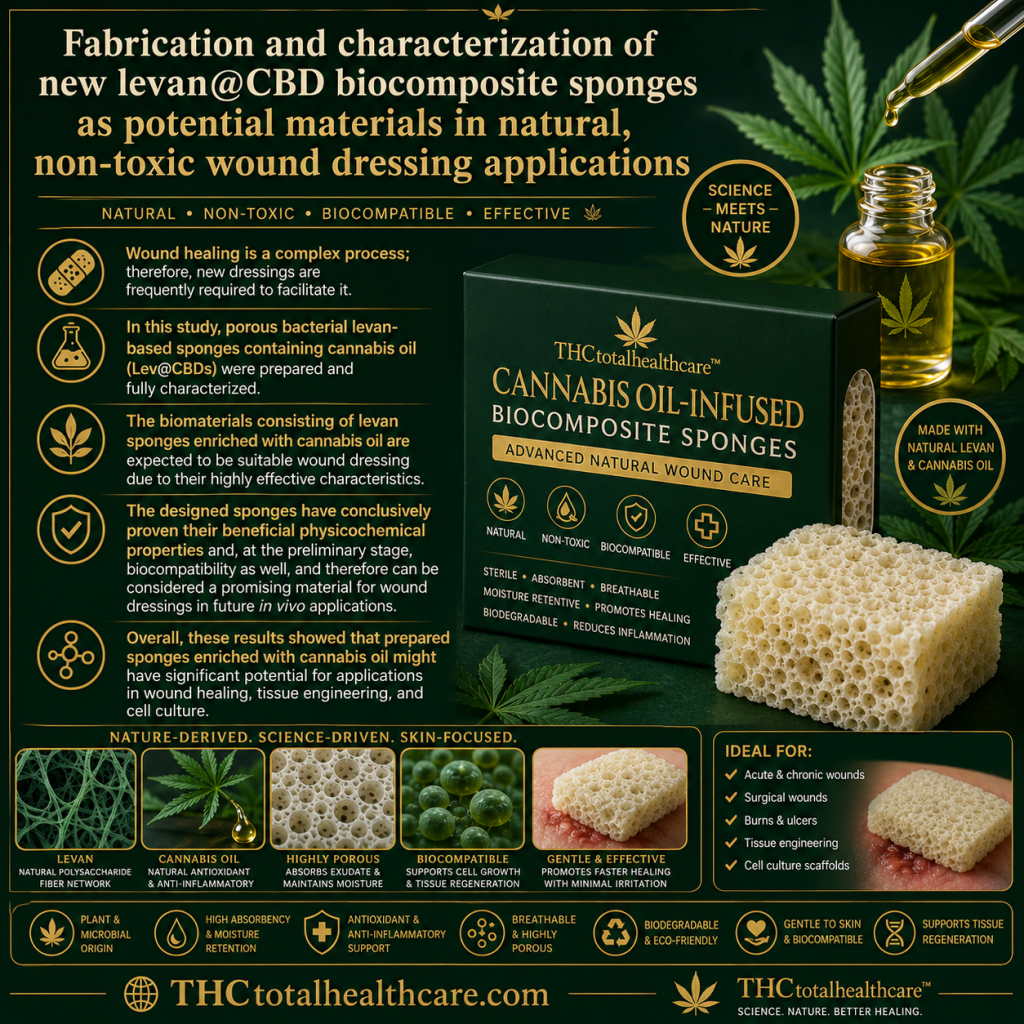
“Wound healing is a complex process; therefore, new dressings are frequently required to facilitate it.

In this study, porous bacterial levan-based sponges containing cannabis oil (Lev@CBDs) were prepared and fully characterized.

The sponges exhibited a suitable swelling ratio, proper water vapor transmission rate, sufficient thermal stability, desired mechanical properties, and good antioxidant and anti-inflammatory properties. The obtained Lev@CBD materials were evaluated in terms of their interaction with proteins, human serum albumin and fibrinogen, of which fibrinogen revealed the highest binding effect.

Moreover, the obtained biomaterials exhibited antibacterial activity against Staphylococcus aureus and Pseudomonas aeruginosa, as well as being non-hemolytic material as indicated by hemolysis tests. Furthermore, the sponges were non-toxic and compatible with L929 mouse fibroblasts and HDF cells.

Most significantly, the levan sponge with the highest content of cannabis oil, in comparison to others, retained its non-hemolytic, anti-inflammatory, and antimicrobial properties after prolonged storage in a climate chamber at a constant temperature and relative humidity.

The designed sponges have conclusively proven their beneficial physicochemical properties and, at the preliminary stage, biocompatibility as well, and therefore can be considered a promising material for wound dressings in future in vivo applications.”

https://pubmed.ncbi.nlm.nih.gov/37722631

“The biomaterials consisting of levan sponges enriched with cannabis oil are expected to be suitable wound dressing due to their highly effective characteristics”

“Overall, these results showed that prepared sponges enriched with cannabis oil might have significant potential for applications in wound healing, tissue engineering, and cell culture.”

https://www.sciencedirect.com/science/article/pii/S0141813023038308?via%3Dihub

Influence of a Transparent and Edible Coating of Encapsulated Cannabidiol Nanoparticles on the Quality and Shelf Life of Strawberries

Cannabidiol (CBD) is being explored in food technology as a functional ingredient that may help protect fresh produce and extend shelf life.

In this study, researchers developed a transparent, edible coating containing encapsulated CBD nanoparticles and applied it to strawberries to evaluate effects on quality, preservation and storage stability.

The findings suggest that CBD-based edible coatings may offer a new approach to reducing spoilage and maintaining the quality of fresh fruit during storage.

“Cannabidiol (CBD) has been shown to have antioxidant and antibacterial effects. The investigation into CBD’s potential as an antioxidant and antibacterial agent, meanwhile, is still in its initial stages.

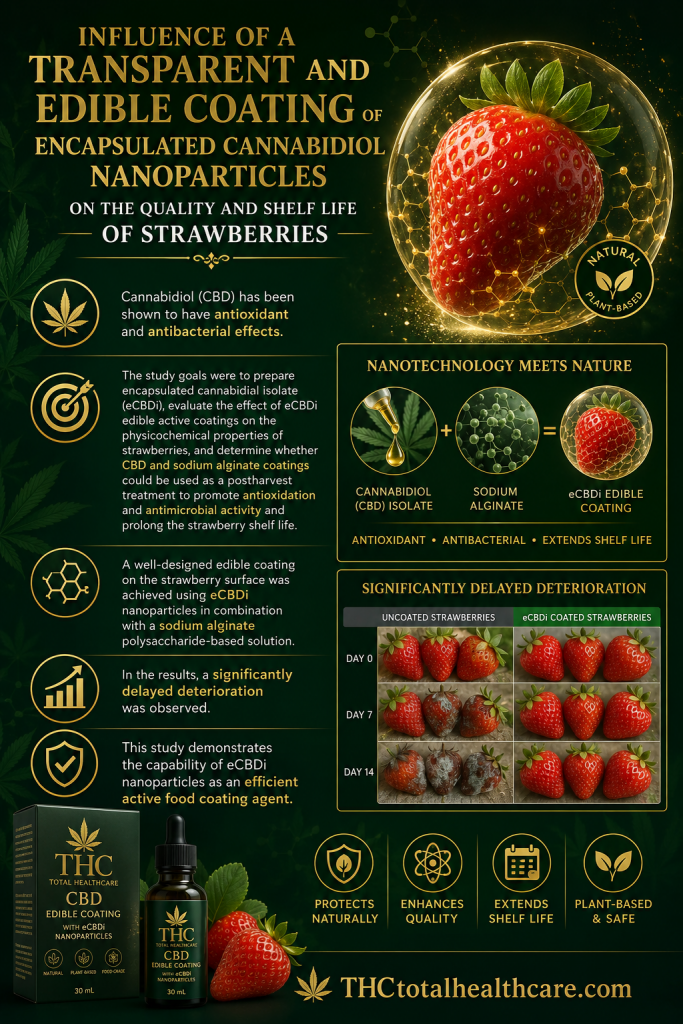
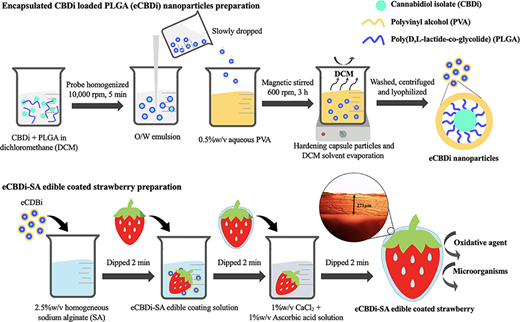
The study goals were to prepare encapsulated cannabidiol isolate (eCBDi), evaluate the effect of eCBDi edible active coatings on the physicochemical properties of strawberries, and determine whether CBD and sodium alginate coatings could be used as a postharvest treatment to promote antioxidation and antimicrobial activity and prolong the strawberry shelf life.

A well-designed edible coating on the strawberry surface was achieved using eCBDi nanoparticles in combination with a sodium alginate polysaccharide-based solution. Strawberries were examined for their visual appearance and quality parameters.

In the results, a significantly delayed deterioration was observed in terms of weight loss, total acidity, pH, microbial activity, and antioxidant activity for coated strawberries compared to the control.

This study demonstrates the capability of eCBDi nanoparticles as an efficient active food coating agent.”

https://pubmed.ncbi.nlm.nih.gov/37140618

https://pubs.acs.org/aamick/article-abstract/15/19/23834/1226785/Influence-of-a-Transparent-and-Edible-Coating-of?redirectedFrom=fulltext

Development and characterization of pectin-based composite film incorporated with cannabidiol/2,6-di-O-methyl-β-cyclodextrin inclusion complex for food packaging

Cannabidiol (CBD) is increasingly being explored in active food-packaging materials, where its biological properties may help improve preservation.

In this study, researchers incorporated a CBD–cyclodextrin inclusion complex into a pectin-based composite film and evaluated its physical, structural and functional properties for food-packaging applications.

The findings suggest that CBD-containing biopolymer films may offer a promising approach to developing more functional and sustainable packaging materials.

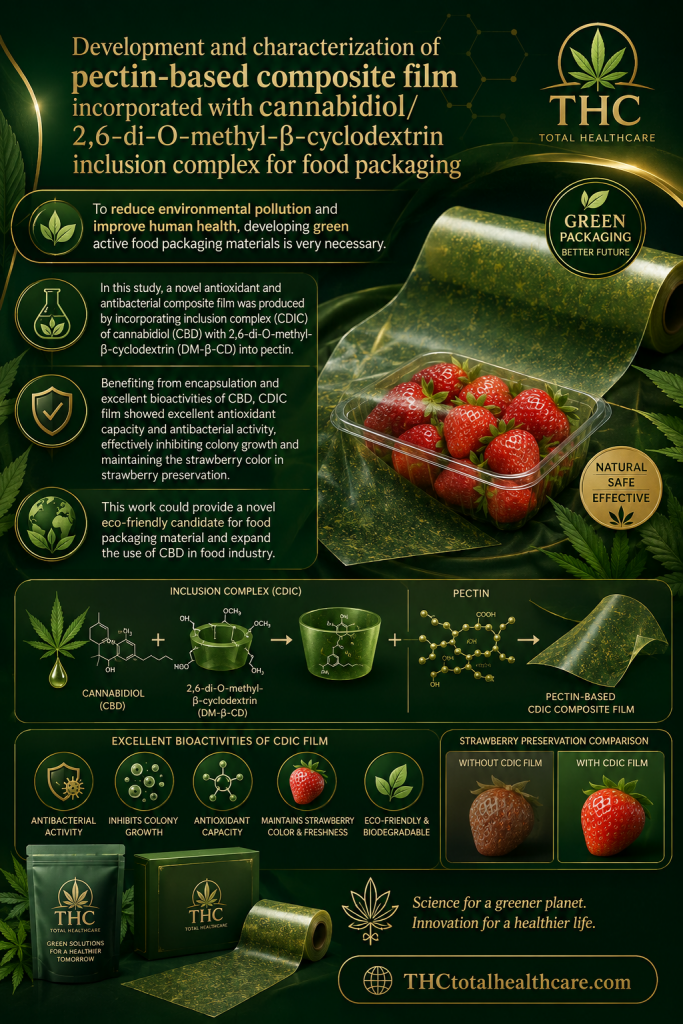
“To reduce environmental pollution and improve human health, developing green active food packaging materials is very necessary.

In this study, a novel antioxidant and antibacterial composite film was produced by incorporating inclusion complex (CDIC) of cannabidiol (CBD) with 2,6-di-O-methyl-β-cyclodextrin (DM-β-CD) into pectin.

The pectin films loaded with CBD and hemp leaf water extract (HLE) were prepared for comparison. Comprehensive characterizations showed CBD was encapsulated by DM-β-CD and CDIC was evenly dispersed into pectin matrix, forming the compact and intact film. The composite films showed good mechanical properties and biodegradability. CDIC film showed the highest transparency and smoothness (Rrms/Rmax: 2.6/16.8 nm). The addition of bioactives reduced the water-binding capacity and CDIC film had the strongest hydrophobicity. Besides, DM-β-CD encapsulation improved the thermal stability of CBD in CDIC film.

Benefiting from encapsulation and excellent bioactivities of CBD, CDIC film showed excellent antioxidant capacity and antibacterial activity, effectively inhibiting colony growth and maintaining the strawberry color in strawberry preservation.

This work could provide a novel eco-friendly candidate for food packaging material and expand the use of CBD in food industry.”

https://pubmed.ncbi.nlm.nih.gov/38945317

“CDIC film showed excellent antioxidant capacity and antibacterial activity.”

https://www.sciencedirect.com/science/article/abs/pii/S0141813024043307?via%3Dihub

Active Polysaccharide Films Incorporating Cannabis sativa Flower Extract for Extending the Shelf Life of Freeze-Dried Berries

Cannabis-derived plant extracts are also being investigated as natural additives in active food-packaging materials.

In this study, researchers incorporated Cannabis sativa flower extract into polysaccharide films and evaluated their ability to help preserve freeze-dried berries during storage.

The results suggest that cannabis-derived bioactive compounds may contribute antioxidant and protective properties that can help extend shelf life and support the development of more functional, plant-based packaging systems.

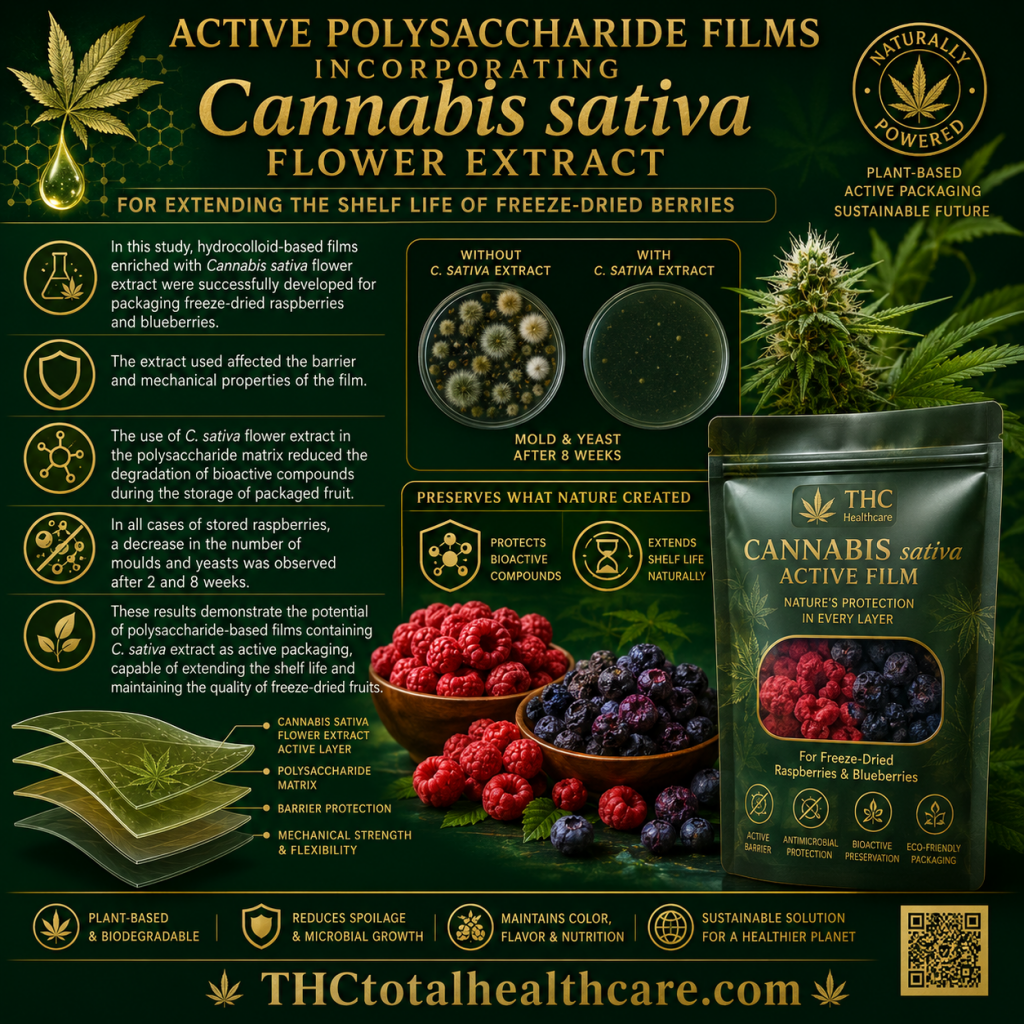
“In this study, films based on polysaccharides with Cannabis sativa flower extract were prepared for selected freeze-dried fruits: raspberry (Rubus idaeus L.) and blueberry (Vaccinium corymbosum L.).

The extract used affected the barrier and mechanical properties of the film.

The elongation values of the film ranged from 32.5 ± 8.6 [%] (for sample 0) to 44.8 ± 8.2 [%] (for sample 4.0 F). The addition of the extract resulted in an increase in polyphenol content, proportional to the quantity of extract used. Spearman’s rank correlation analysis showed particularly strong correlations between colour indices (L*, a*, b*) and parameters describing antioxidant activity.

The use of C. sativa flower extract in the polysaccharide matrix reduced the degradation of bioactive compounds during the storage of packaged fruit.

In all cases of stored raspberries, a decrease in the number of moulds and yeasts was observed after 2 and 8 weeks.

The greatest reduction in moulds and yeasts was recorded for the 4.0 F film (from 0.86 to 0.64 log cfu/g). In the case of blueberries, the total number of bacteria before storage was 2.52 log cfu/g, while after 8 weeks of storage in 4.0 F, this number significantly decreased to 2.28 log cfu/g. As in the case of raspberries, a reduction in mould and yeast was observed, with concentrations falling from an initial value of 0.89 to 0.67 log cfu/g after 8 weeks of storage at 4.0 F.”

https://pubmed.ncbi.nlm.nih.gov/41683420

“In this study, hydrocolloid-based films enriched with Cannabis sativa flower extract were successfully developed for packaging freeze-dried raspberries and blueberries.

These results demonstrate the potential of polysaccharide-based films containing C. sativa extract as active packaging, capable of extending the shelf life and maintaining the quality of freeze-dried fruits.”

https://www.mdpi.com/1420-3049/31/3/443

Bio-based pectin films with cannabidiol extract from pollen of Cannabis sativa L – active packaging to protect anthocyanins in Thomson seedless dark grapes

Cannabis-derived compounds are also being explored in active food-packaging systems designed to help protect sensitive nutrients and pigments.

In this study, researchers incorporated a cannabidiol-rich extract from Cannabis sativa pollen into bio-based pectin films and evaluated their ability to protect anthocyanins in dark grapes during storage.

The findings suggest that cannabis-derived extracts may help improve the protective function of sustainable packaging materials while supporting the preservation of food quality.

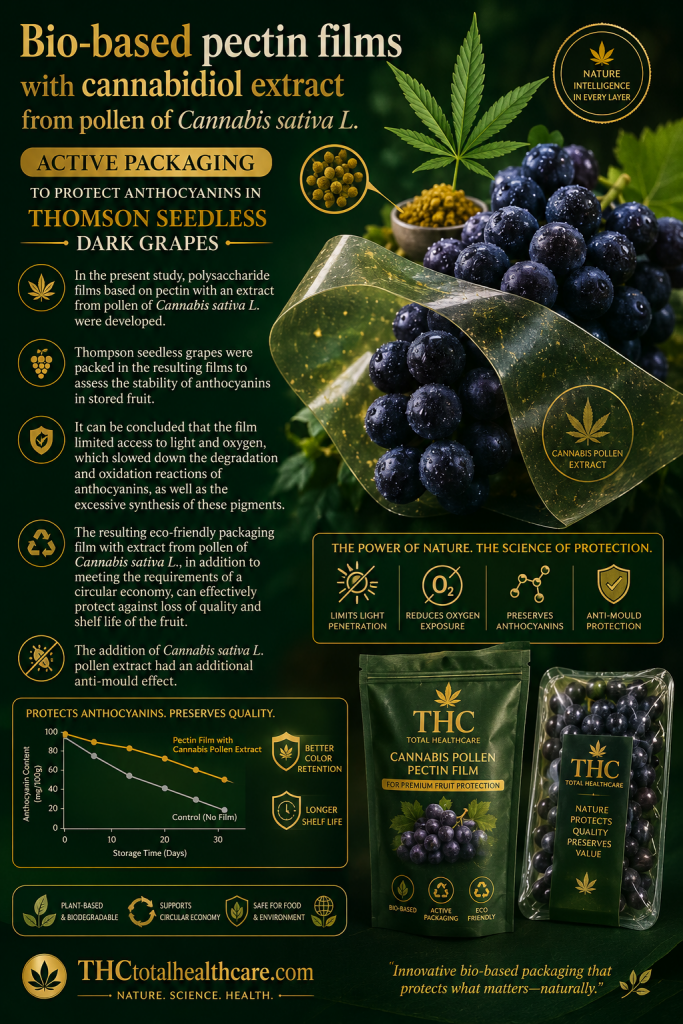
“In the present study, polysaccharide films based on pectin with an extract from pollen of Cannabis sativa L. were developed.

Thompson seedless grapes were packed in the resulting films to assess the stability of anthocyanins in stored fruit. Fruit that were packed in 0.5 F, 1.0 F films were characterised by a gradual increase in anthocyanins after 8,11 and 14 days. For fruit stored in 2.0 F film, the increase in anthocyanins was small (p > 0.05).

After 14 days of storage, the value of anthocyanins in the fruit was 0.51 ± 0.02 [%]. In combination with the obtained slow changes in L*, a*, b* parameters for the packaged fruit, it can be concluded that the film limited access to light and oxygen, which slowed down the degradation and oxidation reactions of anthocyanins, as well as the excessive synthesis of these pigments.

The resulting eco-friendly packaging film with extract from pollen of Cannabis sativa L., in addition to meeting the requirements of a circular economy, can effectively protect against loss of quality and shelf life of the fruit.”

https://pubmed.ncbi.nlm.nih.gov/40946603

“The addition of Cannabis sativa L. pollen extract had an additional anti-mould effect.”

https://www.sciencedirect.com/science/article/pii/S092777652500640X?via%3Dihub

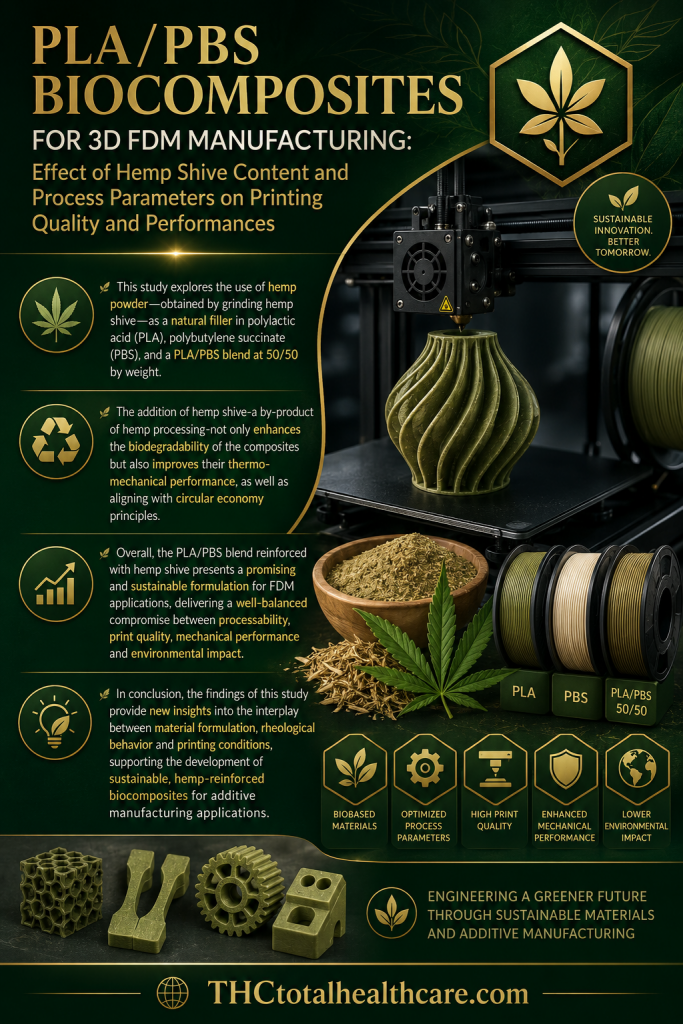
PLA/PBS Biocomposites for 3D FDM Manufacturing: Effect of Hemp Shive Content and Process Parameters on Printing Quality and Performances

Hemp byproducts are increasingly being explored as renewable fillers for more sustainable manufacturing materials.

In this study, researchers incorporated hemp shives into PLA/PBS biocomposites designed for fused-deposition 3D printing and examined how hemp content and printing conditions affected material performance and print quality.

The findings help define how hemp-based biocomposites can be optimized for additive manufacturing, expanding the potential use of agricultural hemp waste in engineered products.

“This study investigates the processability-via Fused Deposition Modeling (FDM) 3D printing-and mechanical performance of biocomposites based on polylactic acid (PLA), polybutylene succinate (PBS), and their 50/50 wt% blend, each reinforced with hemp shive at 3 and 5 wt%.

Blending PLA with PBS represents a straightforward and encouraging strategy to enhance both the printability and mechanical properties of the individual resins, expanding the range of their potential applications.

The addition of hemp shive-a by-product of hemp processing-not only enhances the biodegradability of the composites but also improves their thermo-mechanical performance, as well as aligning with circular economy principles.

The rheological characterization, performed on all the systems, evidenced that the PLA/PBS blend possesses viscoelastic properties well suited for FDM, enabling smooth extrusion through the nozzle, good shape stability after deposition, and effective interlayer adhesion. Moreover, the constrain effect of hemp shives within the polymer matrix reduced the extrudate swell, a key factor affecting the dimensional accuracy of the printed parts. Optimal processing conditions were identified at a nozzle temperature of 190 °C and a printing speed of 70 mm/s, providing a favorable compromise between print quality, final performances and production efficiency. From a mechanical perspective, the PLA/PBS blend exhibited an 8.6-fold increase in elongation at break compared to neat PLA, and its corresponding composite showed a ductility nearly three times higher than the PLA-based counterpart’s.

In conclusion, the findings of this study provide new insights into the interplay between material formulation, rheological behavior and printing conditions, supporting the development of sustainable, hemp-reinforced biocomposites for additive manufacturing applications.”

https://pubmed.ncbi.nlm.nih.gov/40942198

“This study explores the use of hemp powder—obtained by grinding hemp shive—as a natural filler in PLA, PBS, and a PLA/PBS blend at 50/50 by weight.”

“Overall, the PLA/PBS blend reinforced with hemp shive presents a promising and sustainable formulation for FDM applications, delivering a well-balanced compromise between processability, print quality, mechanical performance and environmental impact.”

https://www.mdpi.com/2073-4360/17/17/2280


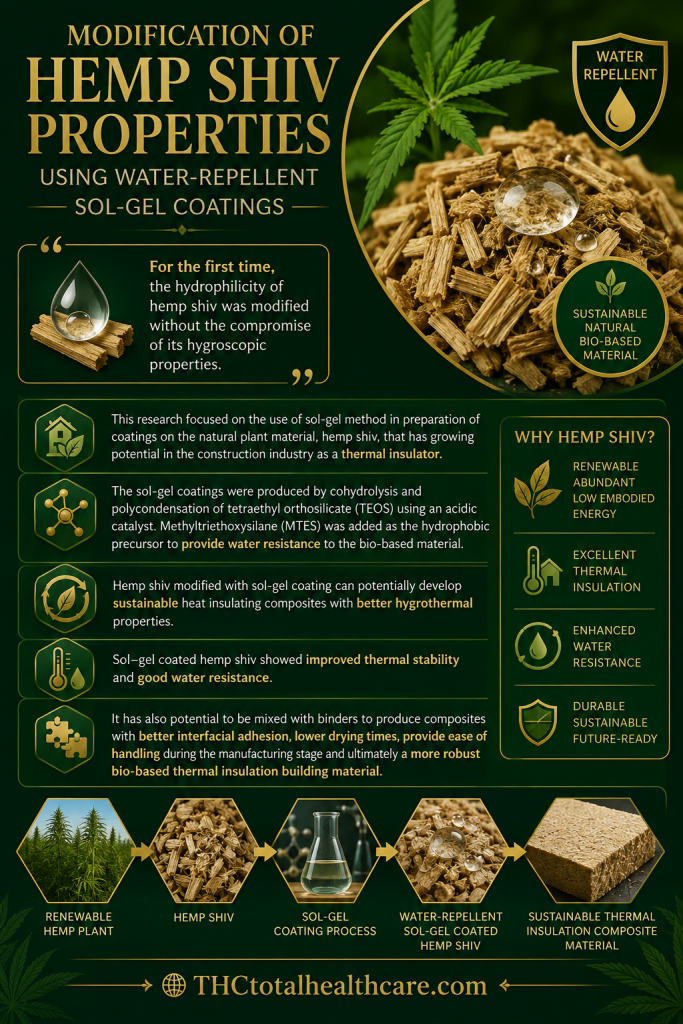
Modification of hemp shiv properties using water-repellent sol-gel coatings

Hemp shiv is increasingly being used in bio-based construction materials, but its tendency to absorb water can limit durability and performance.

In this study, researchers applied water-repellent sol-gel coatings to hemp shiv and examined how the treatments changed its surface and moisture-related properties.

The findings show how modifying hemp shiv could improve its resistance to water and expand its usefulness in more durable, sustainable building materials.

“For the first time, the hydrophilicity of hemp shiv was modified without the compromise of its hygroscopic properties.

This research focused on the use of sol-gel method in preparation of coatings on the natural plant material, hemp shiv, that has growing potential in the construction industry as a thermal insulator.

The sol-gel coatings were produced by cohydrolysis and polycondensation of tetraethyl orthosilicate (TEOS) using an acidic catalyst. Methyltriethoxysilane (MTES) was added as the hydrophobic precursor to provide water resistance to the bio-based material. Scanning electron microscopy (SEM) and focused ion beam (FIB) have been used to determine the morphological changes on the surface as well as within the hemp shiv.

It was found that the sol-gel coatings caused a reduction in water uptake but did not strongly influence the moisture sorption behaviour of hemp shiv. Fourier transformed infrared (FTIR) spectroscopy shows that the coating layer on hemp shiv acts a shield, thereby lowering peak intensity in the wavelength range 1200-1800 cm-1.

The sol-gel coating affected pore size distribution and cumulative pore volume of the shiv resulting in tailored porosity. The overall porosity of shiv decreased with a refinement in diameter of the larger pores. Thermal analysis was performed using TGA and stability of coated and uncoated hemp shiv have been evaluated.

Hemp shiv modified with sol-gel coating can potentially develop sustainable heat insulating composites with better hygrothermal properties.”

https://pubmed.ncbi.nlm.nih.gov/31258251

“Sol–gel coated hemp shiv showed improved thermal stability and good water resistance. It has also potential to be mixed with binders to produce composites with better interfacial adhesion, lower drying times, provide ease of handling during the manufacturing stage and ultimately a more robust bio-based thermal insulation building material.”

https://link.springer.com/article/10.1007/s10971-018-4621-2