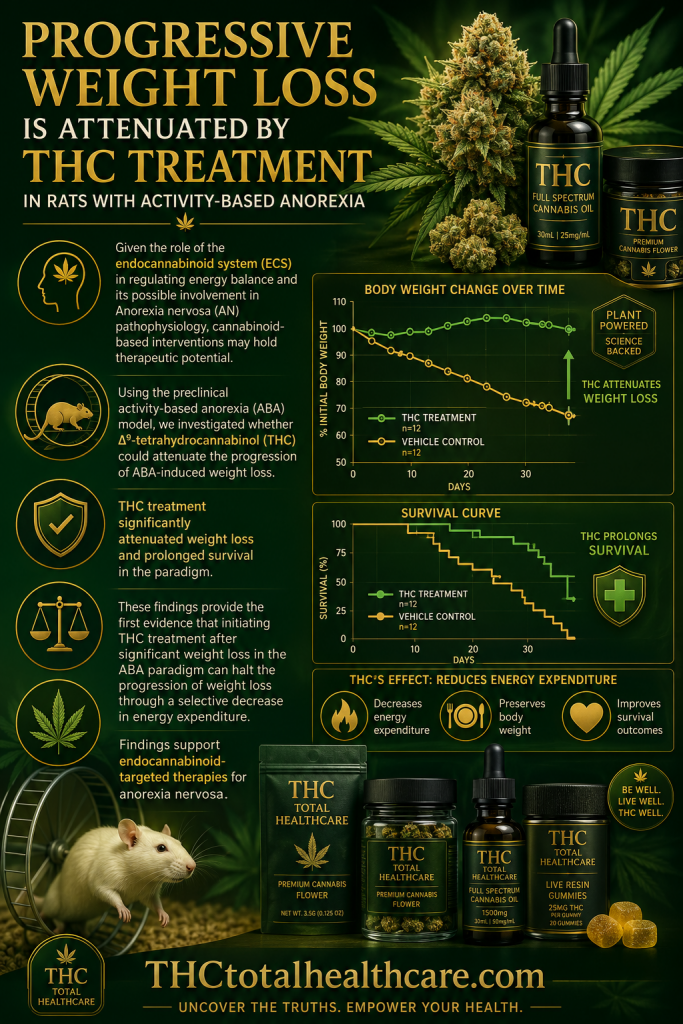
Anorexia nervosa remains one of the most difficult eating disorders to treat, with few effective medications available to stop the dangerous progression of weight loss. In this preclinical study, researchers tested THC after significant weight loss had already begun—not as a preventive measure—and found that it slowed further weight loss and prolonged survival in rats with activity-based anorexia. Interestingly, the effect was linked not to increased food intake, but to THC reducing excessive activity and therefore lowering energy expenditure. The findings add to growing evidence that the endocannabinoid system may represent a therapeutic target worth further investigation in anorexia nervosa.
“Anorexia nervosa (AN) is a severe psychiatric disorder with limited effective pharmacological treatments.
Given the role of the endocannabinoid system (ECS) in regulating energy balance and its possible involvement in AN pathophysiology, cannabinoid-based interventions may hold therapeutic potential.
Using the preclinical activity-based anorexia (ABA) model, we investigated whether Δ⁹-tetrahydrocannabinol (THC) could attenuate the progression of ABA-induced weight loss.
Female rats were exposed to the ABA paradigm, which combines restricted food access (2 h/day) with unrestricted access to running wheels. After 3 days, when ABA rats had lost 10-12% of their baseline body weight, they received daily injections of either THC or vehicle. Rats were removed from the paradigm after losing 23% of their body weight or on the morning of day 8, whichever occurred first.
THC treatment significantly attenuated weight loss and prolonged survival in the paradigm.
These beneficial effects of THC were mediated by a selective suppression of excessive dark- and light-phase wheel running with no additional effects on food intake.
These findings provide the first evidence that initiating THC treatment after significant weight loss in the ABA paradigm can halt the progression of weight loss through a selective decrease in energy expenditure.
Importantly, treatment was initiated after (rather than before) the emergence of ABA-induced weight loss, thus enhancing the translational relevance of the model and our findings.
Together, these findings suggest that pharmacological activation of the ECS may represent a promising treatment for individuals with AN.”
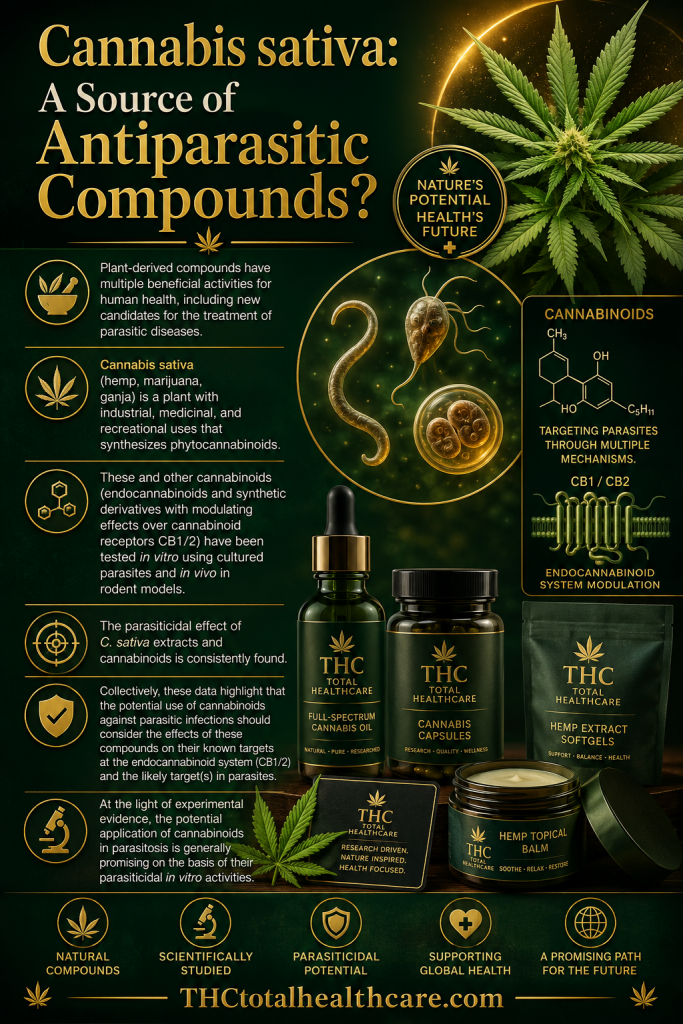
The medicinal potential of Cannabis sativa extends well beyond the conditions most commonly associated with cannabinoid research. This review examines experimental evidence that cannabis extracts and cannabinoids may also have direct activity against parasites responsible for diseases including malaria, toxoplasmosis, Chagas disease, leishmaniasis, schistosomiasis, and other parasitic infections. Across laboratory and animal studies, researchers have repeatedly observed antiparasitic effects, while also finding that CB1 and CB2 receptor activity can influence parasite burden and host survival in complex, organism-specific ways. The findings suggest that cannabinoids deserve further investigation not only for their effects on the human endocannabinoid system, but also for their potential ability to act directly on biological targets within parasites themselves.
“Cannabis sativa (hemp, marijuana, ganja) is a plant with industrial, medicinal, and recreational uses that synthesizes phytocannabinoids, a group of compounds from which tetrahydrocannabinol (THC) and cannabidiol (CBD) outstand by their known high and low psychoactive properties.
These and other cannabinoids (endocannabinoids and synthetic derivatives with modulating effects over cannabinoid receptors CB1/2) have been tested in vitro using cultured parasites and in vivo in rodent models of protozoosis affecting the central nervous system as are amoebic encephalopathy, cerebral malaria, brain toxoplasmosis as well as Chagas disease and Leishmaniasis. Helminthiasis mainly includes Nippotrongyloidosis and Schistosomiasis and even their effects on ticks as Boophilus have been reported.
The parasiticidal effect of C. sativa extracts and cannabinoids is consistently found although some points of concern arise from animal models because CB1 or CB2 inactivation/inhibition led to distinct outcomes –beneficial or deleteriousin parasite load and host survival, depending on the organism studied. Possible parasitic targets of cannabinoids include arginase, acetylcholinestherase and haemozoin, a product of hemoglobin digestion.
Collectively, these data highlight that the potential use of cannabinoids against parasitic infections should consider the effects of these compounds on their known targets at the endocannabinoid system (CB1/2) and the likely target(s) in parasites.”
“Plant-derived compounds have multiple beneficial activities for human health, including new candidates for the treatment of parasitic diseases. Among these are macrocyclic lactones terpenes and polyphenols. Unlike most plant species, C. sativa (hemp, marijuana or ganja) is a rich source of both products of industrial interest and phytomedicinal compounds as well”
“At the light of experimental evidence, the potential application of cannabinoids in parasitosis is generally promising on the basis of their parasiticidal in vitro activities”
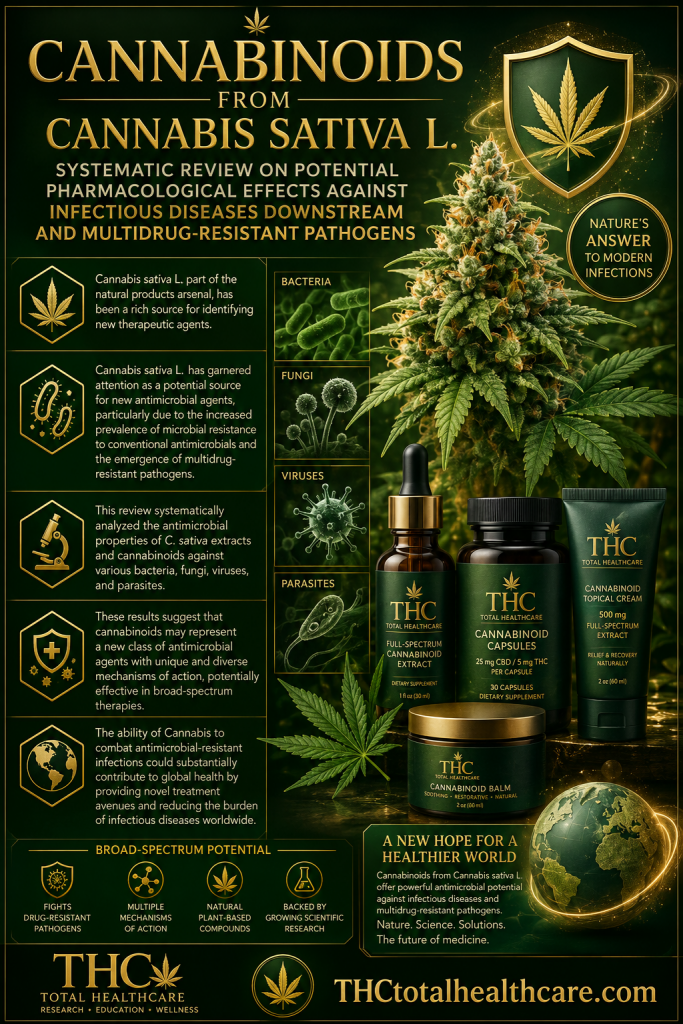
As antimicrobial resistance continues to erode the effectiveness of existing drugs, researchers are increasingly looking to natural compounds for new ways to fight infectious disease. This systematic review brings cannabis into that search, examining more than 100 published studies involving cannabinoids and Cannabis sativa extracts. The evidence spans bacteria, fungi, viruses, and parasites, with CBD emerging prominently in research involving organisms such as MRSA, Pseudomonas aeruginosa, Candida species, and several parasitic pathogens. While much of the evidence remains preclinical, the review concludes that cannabinoids warrant further investigation as potential antimicrobial agents, including possible use alongside conventional therapies against multidrug-resistant infections.
“Cannabis sativa L. has garnered attention as a potential source for new antimicrobial agents, particularly due to the increased prevalence of microbial resistance to conventional antimicrobials and the emergence of multidrug-resistant pathogens.
This review, conducted according to the PRISMA 2020 statement, systematically analyzed the antimicrobial properties of C. sativa extracts and cannabinoids against various bacteria, fungi, viruses, and parasites. Data were collected from the scientific literature (102 papers) and clinical trials (5 studies) from 2014 to June 2024.
Findings revealed that cannabinoids, especially CBD, demonstrate significant antimicrobial activity against Gram-positive bacteria like MRSA, Gram-negative bacteria such as Pseudomonas aeruginosa, various Candida species, SARS-CoV-2, and HIV. Additionally, CBD showed efficacy against parasitic infections like Echinococcus granulosus and Leishmania species.
These results suggest that cannabinoids may represent a new class of antimicrobial agents with unique and diverse mechanisms of action, potentially effective in broad-spectrum therapies.
This study highlights the urgent need for further research and standardized clinical trials to validate these findings and to develop cannabinoid-based treatments.
The antimicrobial properties of C. sativa align with WHO priorities and support global health initiatives, offering promising avenues for addressing antimicrobial resistance and improving public health outcomes.”
“Cannabis sativa L., part of the natural products arsenal, has been a rich source for identifying new therapeutic agents. In recent years, there has been a growing interest in using C. sativa and understanding how its bioactive compounds—phytocannabinoids—support the prevention and treatment of various diseases and conditions. This interest is particularly relevant given the growing prevalence of microbial resistance to conventional antibiotics and the emergence of multidrug-resistant (MDR) pathogens.”
“Cannabis extracts and cannabinoids have demonstrated the capacity to inhibit the growth of certain bacterial strains at concentrations comparable to traditional antimicrobials. These findings represent a significant advancement in the battle against antimicrobial resistance, offering a perspective for future treatments.”
“The ability of Cannabis to combat antimicrobial-resistant infections, potentially in combination with traditional antimicrobials, could substantially contribute to global health by providing novel treatment avenues and reducing the burden of infectious diseases worldwide.”
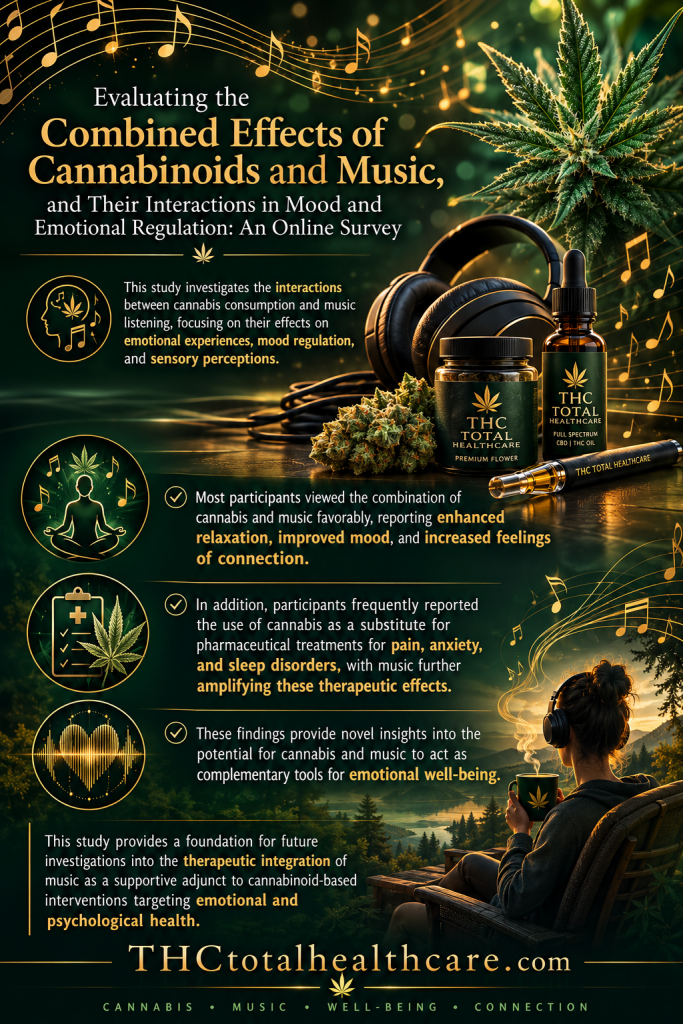
Music and cannabis can each influence mood, relaxation, and emotional experience, but far less is known about how they may interact when used together. In this survey of 122 cannabis users, participants commonly reported greater relaxation, improved mood, and stronger feelings of connection when combining cannabis with music. Many also described using cannabis for pain, anxiety, or sleep, with music perceived as enhancing those effects. Because the study relied on self-reported survey responses, it cannot establish a therapeutic benefit, but the findings suggest that music may be worth studying as a supportive adjunct to cannabinoid-based approaches for emotional well-being.
“Background: While both cannabis and music have demonstrated significant independent impacts on emotional states, the synergies between these two modalities remain underexplored. This study investigates the interactions between cannabis consumption and music listening, focusing on their effects on emotional experiences, mood regulation, and sensory perceptions.
Methods: An online cross-sectional survey consisting of 176 questions was administered to 122 cannabis users. The survey captured detailed information on demographics, cannabis use patterns, music engagement behaviors, emotional responsiveness, and the interplay between cannabis and music perception.
Results: Most participants viewed the combination of cannabis and music favorably, reporting enhanced relaxation, improved mood, and increased feelings of connection. Cannabis use was also associated with altered responses to imposed music in various settings and a heightened likelihood of using music during routine activities. In addition, participants frequently reported the use of cannabis as a substitute for pharmaceutical treatments for pain, anxiety, and sleep disorders, with music further amplifying these therapeutic effects. However, no significant differences were observed in overall music reward experiences with or without cannabis, highlighting the nuanced and context-dependent nature of these interactions.
Conclusion: These findings provide novel insights into the potential for cannabis and music to act as complementary tools for emotional well-being, underscoring the need for further research to elucidate the mechanisms underlying their combined effects. This study provides a foundation for future investigations into the therapeutic integration of music as a supportive adjunct to cannabinoid-based interventions targeting emotional and psychological health.”
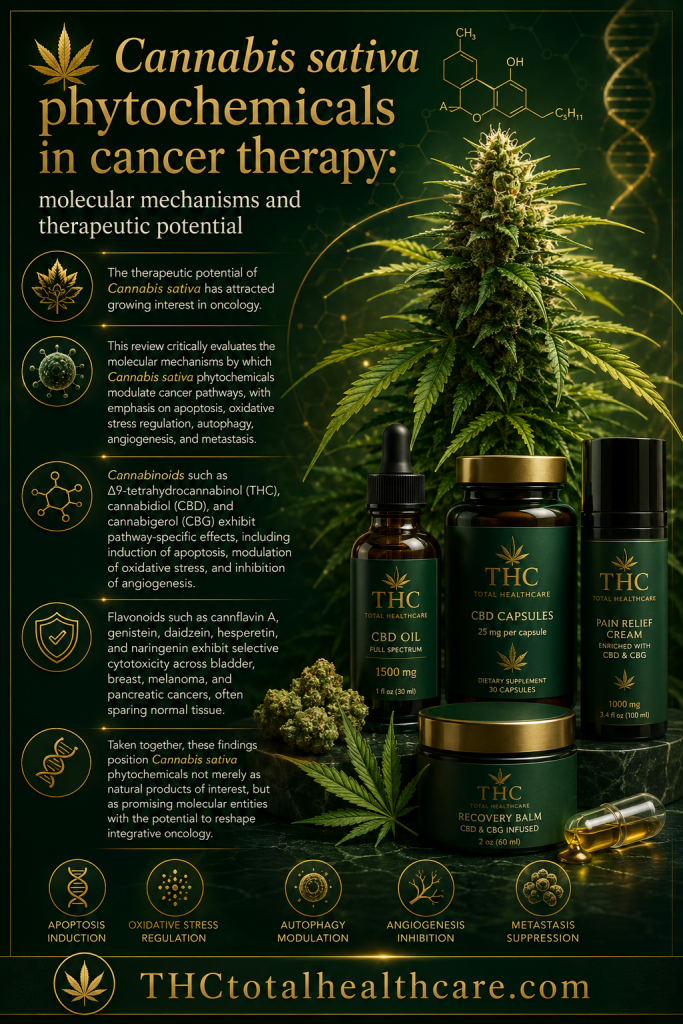
Cannabis cancer research now extends far beyond THC and CBD alone. This 2026 review examines how cannabinoids, flavonoids, and other Cannabis sativa phytochemicals interact with molecular pathways involved in tumor growth, including apoptosis, oxidative stress, autophagy, angiogenesis, and metastasis. The authors highlight evidence involving THC, CBD, CBG, and several flavonoids across cancers including breast, bladder, melanoma, and pancreatic cancer, while also emphasizing that combinations are not always synergistic and that promising laboratory findings have not consistently translated into clinical success. The review concludes that cannabis-derived compounds remain important candidates for integrative oncology, but their potential will depend on better dosing strategies, rational combinations, targeted delivery, and rigorous clinical evaluation.
“Background: The therapeutic potential of Cannabis sativa has attracted growing interest in oncology. Its diverse phytochemicals, including cannabinoids, flavonoids, and terpenes, interact with oncogenic signaling pathways and the endocannabinoid system influencing tumour progression and therapeutic responses.
Objective: This review critically evaluates the molecular mechanisms by which Cannabis sativa phytochemicals modulate cancer pathways, with emphasis on apoptosis, oxidative stress regulation, autophagy, angiogenesis, and metastasis. It also explores synergistic and additive interactions among cannabinoids and flavonoids, highlighting their translational relevance.
Key findings: Cannabinoids such as Δ9-tetrahydrocannabinol (THC), cannabidiol (CBD), and cannabigerol (CBG) exhibit pathway-specific effects, including induction of apoptosis, modulation of oxidative stress, and inhibition of angiogenesis. Flavonoids such as cannflavin A, genistein, daidzein, hesperetin, and naringenin exhibit selective cytotoxicity across bladder, breast, melanoma, and pancreatic cancers, often sparing normal tissue. Importantly, phytochemical interactions are not uniformly synergistic; while combinations such as THC and CBD amplify apoptotic signaling, others act additively or antagonistically. Clinical formulations such as Nabiximols provide translational evidence of cannabinoid synergy, although outcomes remain context-dependent.
Conclusion: The disconnect between preclinical efficacy and clinical outcomes underscores critical gaps in dosing strategies, patient selection, and combination regimens. Future research should prioritize mechanistic studies, rational phytochemical combinations, and innovative drug delivery systems. Taken together, Cannabis sativa phytochemicals emerge as promising molecular entities with the potential to reshape integrative oncology, provided their therapeutic promise is matched with rigorous, evidence-based evaluation.”
“Taken together, these findings position Cannabis sativa phytochemicals not merely as natural products of interest, but as promising molecular entities with the potential to reshape integrative oncology.”
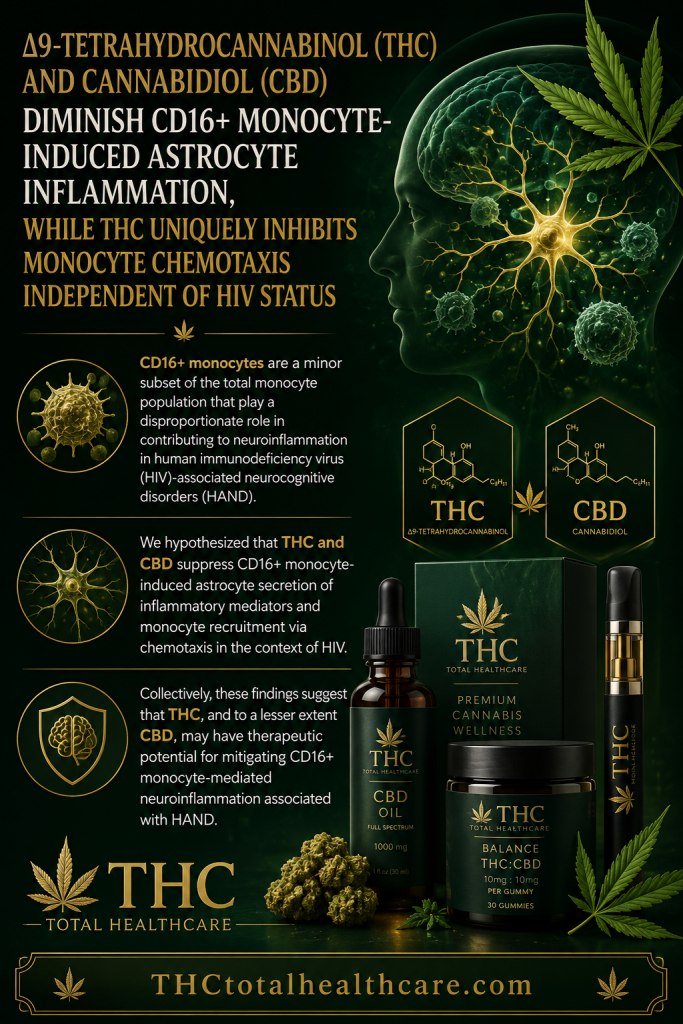
Neuroinflammation is an important contributor to HIV-associated neurocognitive disorders, in part because inflammatory monocytes can migrate into the brain and activate astrocytes. In this laboratory study, both THC and CBD reduced the production of several inflammatory mediators—including IL-6, IL-8, and MCP-1—during interactions between CD16+ monocytes and astrocytes. THC showed an additional effect not observed with CBD: it suppressed monocyte migration, including the heightened migration seen in cells from people with HIV. The findings suggest that THC, and to a lesser extent CBD, may influence multiple immune mechanisms involved in HIV-associated neuroinflammation and warrant further investigation as potential therapeutic targets.
“CD16+ monocytes are a minor subset of the total monocyte population that play a disproportionate role in contributing to neuroinflammation in human immunodeficiency virus (HIV)-associated neurocognitive disorders (HAND).
This has been evidenced by the enhanced transmigration of CD16+ monocytes into the brain compared to their CD16– counterpart. CD16+ monocytes can be activated by HIV ssRNAs through toll-like receptors (TLR) 7 and TLR8, and subsequently interact with brain-resident cells, including astrocytes. Previous studies from our laboratory identified monocyte-derived IL-1ß as an inducing cytokine for astrocyte-derived neuroinflammatory factors.
Despite cannabis use among the HIV community, the mechanisms by which immune-modulating cannabinoids, Δ9-tetrahydrocannabinol (THC) and cannabidiol (CBD), alter human immune responses in the context of HAND-associated neuroinflammation remain elusive.
We hypothesized that THC and CBD suppress CD16+ monocyte-induced astrocyte secretion of inflammatory mediators and monocyte recruitment via chemotaxis in the context of HIV.
Results from this study show that THC and CBD impair CD16+ monocyte IL-1ß-mediated astrocyte production of IL-6, IL-8, and MCP-1 when these two cell types are cocultured in the presence of TLR7 or TLR8 stimulation. Additionally, monocytes from HIV+ subjects exhibited enhanced migration compared to monocytes from HIV- subjects, which was suppressed by THC treatment but not by CBD. The effects on migration were associated with reduced cellular expression of polymerized actin and high-affinity conformation integrin receptors.
Collectively, these findings suggest that THC, and to a lesser extent CBD, may have therapeutic potential for mitigating CD16+ monocyte-mediated neuroinflammation associated with HAND.”
“Taken together, this study provides evidence to support that THC, and to a lesser extent CBD, exert anti-inflammatory effects on CD16+ monocyte-mediated inflammatory and migratory responses that may be associated with HAND.”
Restless legs syndrome can severely disrupt sleep and quality of life, and some patients continue to experience symptoms despite standard treatments. This report examines the use of THC and CBD in patients with restless legs syndrome, highlighting cases in which cannabis-based treatment was associated with marked symptom relief and improved sleep. The findings suggest that cannabinoids may deserve further study as a potential option for patients whose symptoms remain difficult to control with conventional therapy.
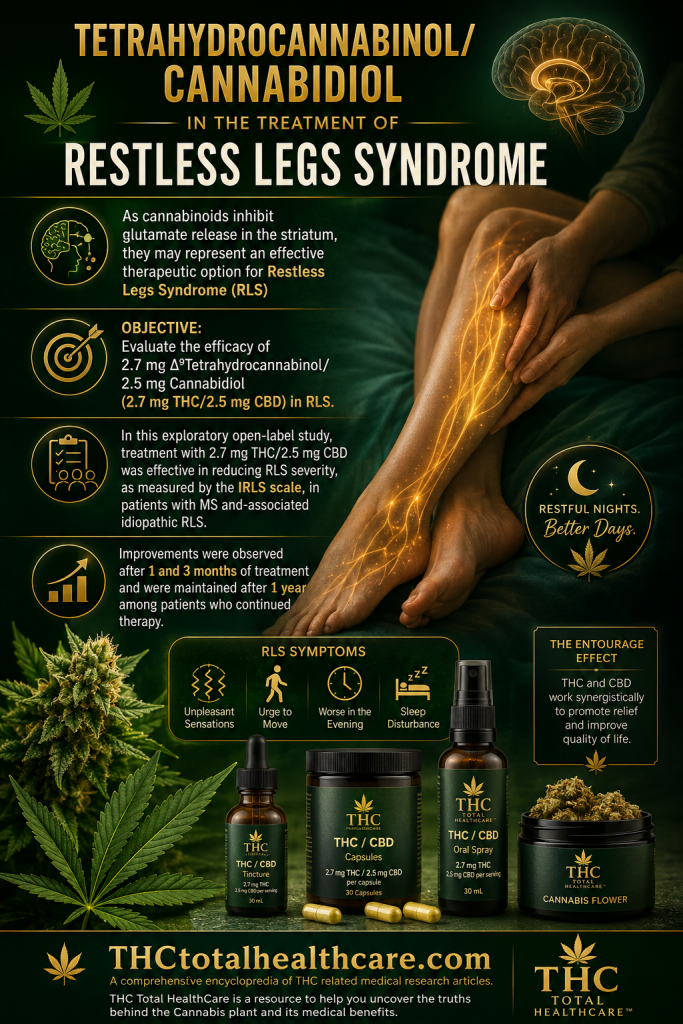
“Background: Dopamine agonists were previously considered the first-line treatment for Restless Legs Syndrome (RLS); however, α2δ ligands are now recommended to prevent augmentation. As cannabinoids inhibit glutamate release in the striatum, they may represent an effective therapeutic option for RLS.
Objective: Evaluate the efficacy of 2.7 mg Δ9Tetrahyedrocannabinol/2.5 mg Cannabidiol (2.7mgTHC/2.5mgCBD) in RLS.
Methods: This is an exploratory, prospective, 3-month open-label trial. At baseline, patients underwent blood testing, respiratory polygraphy, and a 14-day actigraphy. Treatment was initiated at baseline, with dose titration at week 4 if required. The Expanded Disability Status Scale (EDSS), Epworth Sleepiness Scale (ESS), International Restless Legs Syndrome Rating Scale (IRLS), Modified Ashworth Scale, and EQ-5D were assessed at baseline and at weeks 4 and 12. The 14-day actigraphy was repeated at week 12. The primary endpoint was improvement in IRLS scores. Sleep parameters were evaluated as secondary endpoints. Primary end point: improvement in IRLS. Sleep parameters were secondary end points.
Results: Eighteen patients with RLS were included, of whom 16 had multiple sclerosis (MS). The cohort comprised 55.5% women, with a mean age of 51.87 years, a median EDSS score of 2, and a mean Ashworth score of 1 ± 1.19. Median iron metabolism parameters were within the normal range. At baseline, patients exhibited low daytime sleepiness (ESS: 10.63 ± 3.46) and severe RLS (IRLS: 22.44 ± 8.77). Mean sleep efficiency (SE) was 83.64 ± 6.03%, sleep latency (SL) was 26.71 ± 18.64 min, and wake after sleep onset (WASO) was 40.29 ± 10.03 min. IRLS scores improved significantly after both 1 month and 3 months of treatment (p < 0.001). WASO was significantly reduced (p = 0.015), whereas no significant changes were observed in SL or SE. After 1 year, 66.66% of patients remained on treatment and continued to show sustained improvement in IRLS scores (p = 0.000).
Conclusions: In this exploratory open-label study, treatment with 2.7 mg THC/2.5 mg CBD was effective in reducing RLS severity, as measured by the IRLS scale, in patients with MS and-associated idiopathic RLS. Improvements were observed after 1 and 3 months of treatment and were maintained after 1 year among patients who continued therapy.”
Metabolic dysfunction-associated steatotic liver disease (MASLD) can progress from excess liver fat to chronic inflammation, vascular dysfunction, and fibrosis. In this preclinical study, researchers found that cannabis oil prevented several early signs of liver injury in rats fed a sucrose-rich diet, including hepatic fibrosis, inflammation, and endothelial dysfunction. The protective effects were linked in part to cannabinoid receptor signaling, suggesting that compounds within cannabis oil may influence biological pathways involved in the early progression of metabolic liver disease. These findings provide mechanistic evidence for further investigation of cannabinoid-based approaches to preventing or slowing MASLD-related liver damage.
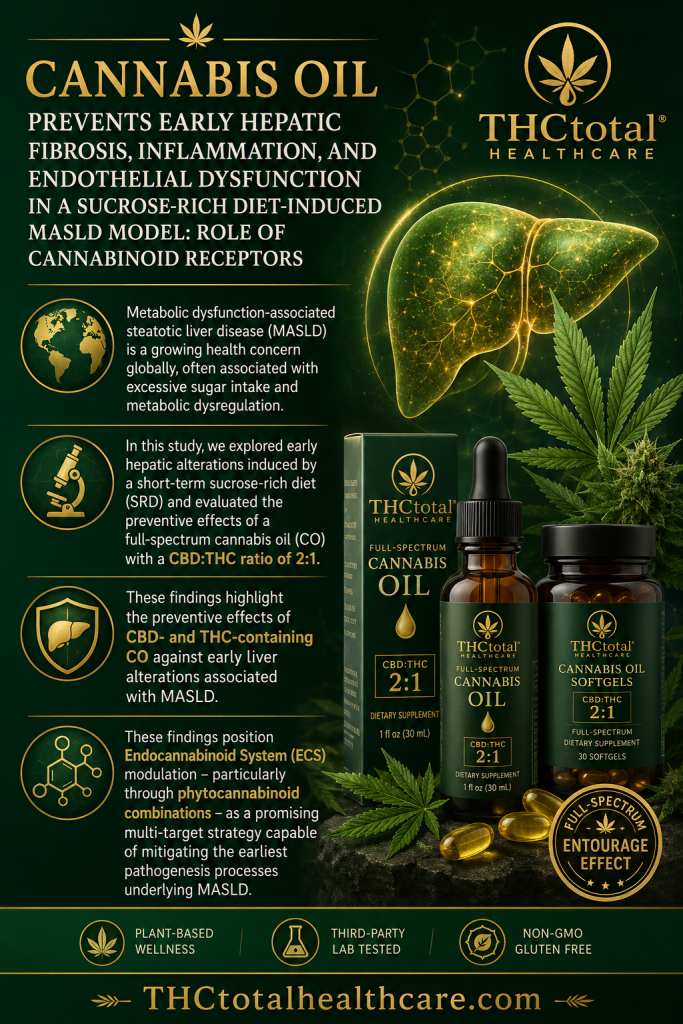
“Introduction: Metabolic dysfunction-associated steatotic liver disease (MASLD) is a growing health concern globally, often associated with excessive sugar intake and metabolic dysregulation. In this study, we explored early hepatic alterations induced by a short-term sucrose-rich diet (SRD) and evaluated the preventive effects of a full-spectrum cannabis oil (CO) with a CBD:THC ratio of 2:1.
Methods: Male Wistar rats were assigned to three groups: reference diet, SRD, and SRD plus CO (SRD + CO). CO was administered daily to the SRD + CO group from the onset of SRD exposure and throughout the 3-week experimental period. Liver fibrosis was assessed through hydroxyproline content, total collagen, TGF-β, and CB1R expression. Endothelial dysfunction was evaluated by measuring nitric oxide (NO) levels, endothelial nitric oxide synthase, myeloperoxidase, and VCAM-1 expression. Inflammatory responses were analyzed through hepatic expression of IL-10, TNF-α, PAI-1, MCP-1, F4/80, and CB2R. Transmission electron microscopy was performed on liver tissue to evaluate ultrastructural alterations.
Results: SRD induced significant hepatic fibrosis, endothelial dysfunction, and inflammation. Ultrastructural analysis revealed nuclear alterations, including chromatin condensation, reduced mitochondrial number, intracellular lipid accumulation, increased glycogen deposits, and stromal changes characterized by perisinusoidal and periportal fibrosis with inflammatory cell infiltration. CO administration attenuated these pathological features and was accompanied by modulation of cannabinoid receptor expression.
Conclusion: These findings highlight the preventive effects of CBD- and THC-containing CO against early liver alterations associated with MASLD.”
“Phytocannabinoids, such as cannabidiol (CBD) and Δ9-tetrahydrocannabinol (THC), interact with the ECS and various other signaling pathways, providing antioxidant, anti-inflammatory, and antifibrotic properties. Full-spectrum cannabis extracts, which combine phytocannabinoids like CBD and THC, have emerged as therapeutic candidates in preclinical studies for the treatment of liver disorders associated with metabolic dysfunction. Previous studies conducted by our group have demonstrated hepatoprotective and antioxidant effects following the administration of full-spectrum COs in rats fed an SRD for 3 weeks.”
“The present study was designed to evaluate the preventive effects of daily CO administration during the early stages of SRD-induced MASLD.”
“Daily CO administration prevented these alterations and the SRD-induced increase in cannabinoid receptor protein levels.”
“These findings position ECS modulation – particularly through phytocannabinoid combinations – as a promising multi-target strategy capable of mitigating the earliest pathogenesis processes underlying MASLD.”
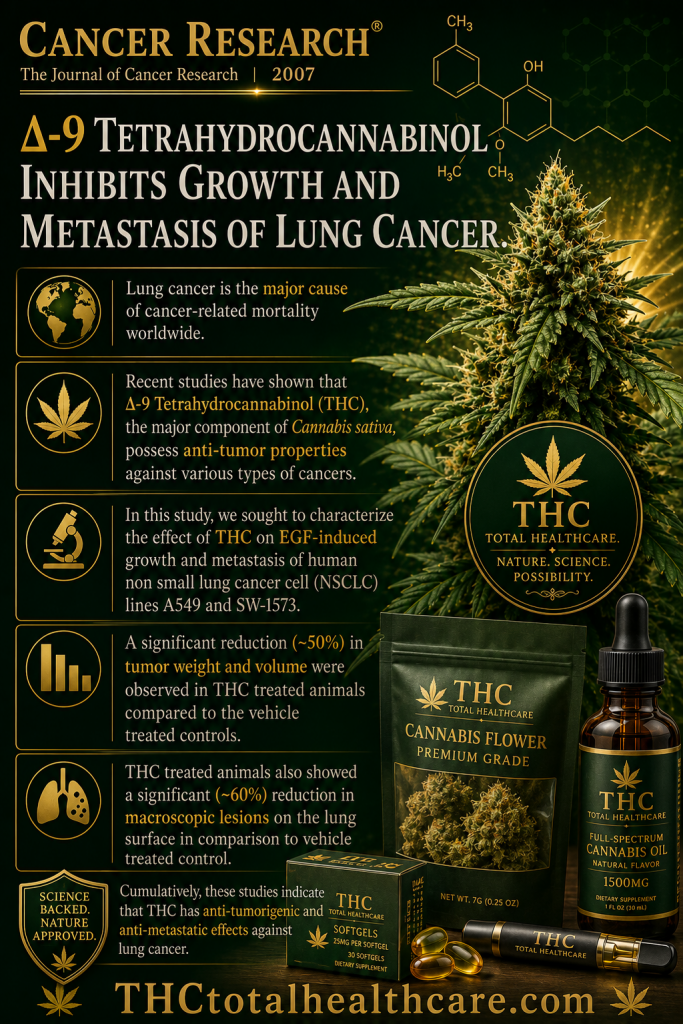
THC has been studied not only for symptom relief in cancer care, but also for possible direct effects on tumor biology. In this preclinical lung cancer study, Δ9-THC inhibited tumor-cell growth, reduced migration and invasion, and suppressed metastatic behavior through cannabinoid receptor–related signaling. The findings suggest that THC may interfere with molecular processes involved in lung cancer progression rather than acting solely as a supportive-care compound. The work provides mechanistic evidence supporting further investigation of cannabinoids in cancer growth and metastasis.
“Lung cancer is the major cause of cancer-related mortality worldwide.
Many of these over-express epidermal growth factor receptor (EGFR), and are usually highly aggressive and resistant to chemotherapy.
Recent studies have shown that Δ-9 Tetrahydrocannabinol (THC), the major component of Cannabis sativa, possess anti-tumor properties against various types of cancers. However, not much is known about its effect on lung cancer.
In this study, we sought to characterize the effect of THC on EGF-induced growth and metastasis of human non small lung cancer cell (NSCLC) lines A549 and SW-1573.
We demonstrate that these cell lines and primary tumor samples derived from lung cancer patients express cannabinoids receptors CB1 and CB2, the known targets for THC action. We further show that THC inhibits EGF-induced growth in these cell lines. In addition THC attenuated EGF-stimulated chemotaxis and chemoinvasion.
Next we characterized the effect of THC on in vivo lung cancer growth and metastasis in a murine model.
A549 cells were implanted in SCID mice (n=6 per group) through subcutaneous and intravenous injections to generate subcutaneous and lung metastatic cancer, respectively. THC (5mg/kg body wt.) was administered once daily through intraperitoneal injections for 21 days. The mice were analyzed for tumor growth and lung metastasis.
A significant reduction (~50%) in tumor weight and volume were observed in THC treated animals compared to the vehicle treated animals. THC treated animals also showed a significant (~60%) reduction in macroscopic lesions on the lung surface in comparison to vehicle treated control.
Immunohistochemical analysis of the tumor samples from THC treated animals revealed anti-proliferative and anti-angiogenic effects of THC with significant reduction in staining for Ki67, a proliferative marker and CD31, an endothelial marker indicative of vascularization. Investigation into the signaling events associated with reduced EGF-induced functional effects revealed that THC also inhibits EGF-induced Akt phosphorylation. Akt is a central signaling molecule of EGFR-mediated signaling pathways and it regulates a diverse array of cellular functions, including proliferation, angiogenesis, invasion and apoptosis.
Cumulatively, these studies indicate that THC has anti-tumorigenic and anti-metastatic effects against lung cancer.
Novel therapies against EGFR overexpressing, aggressive and chemotherapy resistant lung cancers may include targeting the cannabinoids receptors.”
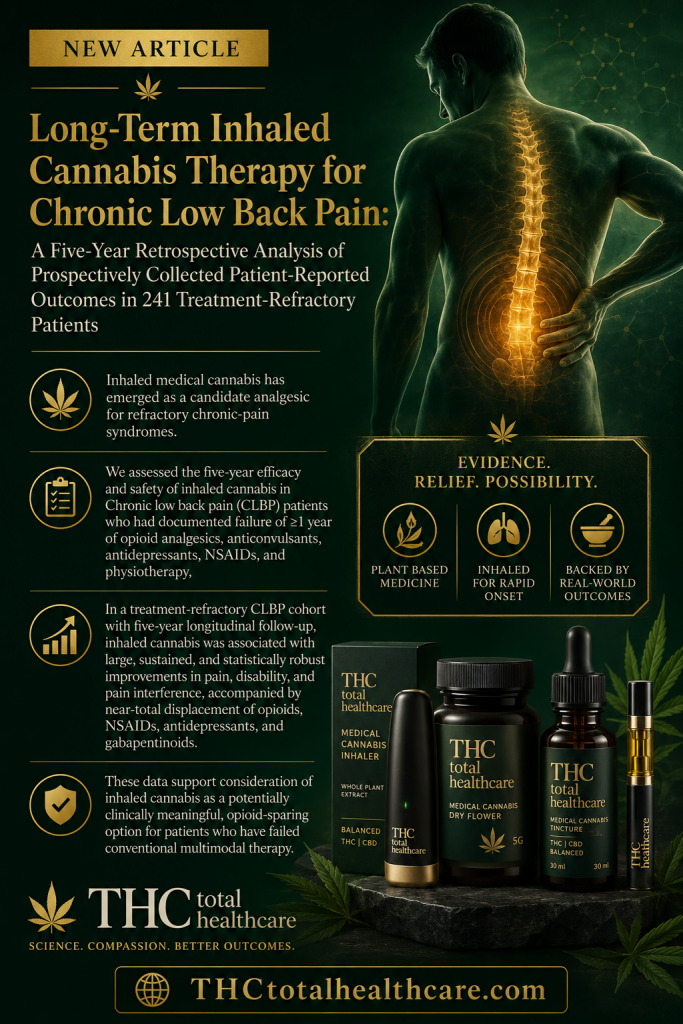
Chronic low back pain can remain difficult to control even after years of conventional treatment. This five-year analysis followed 241 treatment-refractory patients using inhaled medical cannabis and found sustained improvements in patient-reported pain and related outcomes over long-term follow-up. The study is notable for its duration and real-world clinical setting, offering a much longer view than most cannabis pain research. The findings suggest that inhaled cannabis may provide durable benefit for some patients with chronic low back pain who have not responded adequately to standard therapies.
“Background/Objectives: Chronic low back pain (CLBP) affects approximately 20% of the global population and is a leading cause of years lived with disability. Long-term, real-world evidence for inhaled cannabis in patients refractory to conventional multimodal therapy remains scarce. We assessed the five-year efficacy and safety of inhaled cannabis in CLBP patients who had documented failure of ≥1 year of opioid analgesics, anticonvulsants, antidepressants, NSAIDs, and physiotherapy, with each patient serving as their own historical control.
Methods: We analyzed prospectively collected clinical data from 241 consecutive adults with treatment-refractory CLBP (mean age 49.3 ± 14.9 years; 37.8% female; mean pain duration 15.1 years) initiated on inhaled medical cannabis (predominantly smoking, THC 4-22%, CBD 2-22%) in a single-center tertiary orthopedic clinic between 2020 and 2025 (Hasharon Hospital, Rabin Medical Center, Israel; IRB protocols 0807-21-RMC and 0634-25-RMC). Year-0 outcomes during conventional therapy were compared with outcomes at Years 1-5 on cannabis. Primary outcomes were the Numeric Rating Scale (NRS), Oswestry Disability Index (ODI), and Brief Pain Inventory severity/interference (BPI-S/BPI-I). Concomitant-medication trajectories were a secondary outcome. The primary analysis was a mixed model for repeated measures (MMRM) with random intercept and slope, REML estimation, and time as a categorical fixed effect. Multiple imputation (MAR, m = 20, Rubin’s rules) was the primary missing-data approach; complete-case and tipping-point pattern-mixture sensitivity analyses were used. A multivariate Hotelling T2 provided a joint test across the four correlated PROMs. Concomitant-medication discontinuation was modeled with GEE logistic regression and exact McNemar tests. Time to discontinuation was estimated by Kaplan-Meier and Cox regression. The Bonferroni-adjusted significance threshold for the four primary outcomes was α = 0.0125. BioWell gas-discharge-visualization (GDV) parameters were exploratory only.
Results: Of 241 patients, 238 (98.8%) provided Year-5 data and 224 (92.9%) remained on cannabis at Year 5; only five patients (2.1%) discontinued for adverse events or inefficacy. All four primary PROMs improved markedly and durably. MMRM-estimated Year-5 minus Year-0 changes were: NRS -5.36 (95% CI -5.65, -5.07), ODI -17.68 (95% CI -19.73, -15.63), BPI-S -6.73 (95% CI -6.99, -6.47), and BPI-I -3.41 (95% CI -3.65, -3.16); all four contrasts had |z| ≥ 16.9 and p < 10-20. MI-pooled estimates were within 0.05 of MMRM (FMI < 0.03 for all outcomes). Hotelling T2 was F(4, 232) = 872.8, p < 10-20. At Year 5, 89.2% achieved ≥30% NRS reduction, 77.2% ≥ 50%, and 93.4% met the NRS minimum clinically important difference (MCID); ODI MCID 65.6%, BPI-S MCID (≥1 pt) 98.3%, BPI-I MCID (≥1 pt) 91.3%. Concomitant opioid use fell from 100% at baseline to 4.6% at Year 5 (within-patient absolute risk reduction 95.4%, McNemar exact p = 1.16 × 10-69), NSAID from 100% to 7.1%, SSRI/SNRI from 80.5% to 5.4%, and gabapentinoid from 38.6% to 2.5%. The ARR-derived NNT for opioid discontinuation was 1.05; this NNT is referenced to each patient’s own documented maximal-conventional-therapy state and is not equivalent to a between-arm randomized-trial NNT. Cannabis dose × time interaction was consistent with no pharmacological tolerance (β = -0.0044 per gram-month per year, p = 0.074). Across 1205 patient-years of cannabis exposure (calculated as 241 patients × 5 follow-up years from Year 1 through Year 5; baseline Year 0 represents pre-cannabis state and is not included in person-time on cannabis), 1338 organ-system AE events were recorded at 1.110/patient-year (Poisson 95% CI 1.05-1.17); 99.8% of graded events were mild (grade 1), with ocular (476 events, 0.40/PY), cognitive (460, 0.38/PY), and gastrointestinal (368, 0.31/PY) reactions predominating. The Year-3 retention dip reflected a documented telemedicine-clinic phenomenon during 2022-2024, with patients returning to in-person follow-up by Year 4-5. BioWell GDV discriminated NRS ≥ 4 only at chance level (BWS AUC 0.574, 95% CI 0.54-0.60; BWV AUC 0.51).
Conclusions: In a treatment-refractory CLBP cohort with five-year longitudinal follow-up, inhaled cannabis was associated with large, sustained, and statistically robust improvements in pain, disability, and pain interference, accompanied by near-total displacement of opioids, NSAIDs, antidepressants, and gabapentinoids. These observational associations, although mechanically less susceptible to bias for the binary medication-discontinuation outcomes than for self-reported PROMs, cannot be interpreted causally in the absence of a concurrent randomized control arm and may reflect a combination of pharmacological effect, regression to the mean from a high pre-treatment baseline, expectancy and self-selection effects intrinsic to an actively chosen open-label therapy, and secular trends in pain reporting. The within-patient benefit-risk profile-ARR-derived NNT ≈ 1 for opioid sparing against a predominantly mild adverse-event burden-supports consideration of cannabis as a potentially clinically meaningful, opioid-sparing option in patients who have failed multimodal conventional therapy, pending confirmation in randomized comparative trials.”
“Inhaled medical cannabis has emerged as a candidate analgesic for refractory chronic-pain syndromes.
Mechanistically, exogenous Δ9-tetrahydrocannabinol (THC) and cannabidiol (CBD) modulate the endocannabinoid system through CB1- and CB2-receptor signaling, with downstream effects on descending pain modulation, peripheral nociceptor sensitization, and affective dimensions of suffering.”
“These data support consideration of inhaled cannabis as a potentially clinically meaningful, opioid-sparing option for patients who have failed conventional multimodal therapy.”