The cannabidiol (CBD): Tetrahydrocanabinol (THC) concentration ratio is critical for neuroprotection and recovery following traumatic brain injury

The balance between CBD and THC may be just as important as the individual cannabinoids themselves in traumatic brain injury. In this preclinical study, researchers found that specific CBD concentration ratios produced stronger neuroprotective effects and better recovery after brain injury than less favorable combinations. The optimized cannabinoid ratio reduced neuronal damage and improved functional outcomes, highlighting the importance of formulation when developing cannabis-based therapies for TBI. The findings suggest that carefully balanced CBD and THC combinations may offer greater protection and recovery support than either cannabinoid used without regard to ratio.

“An optimal ratio of cannabidiol (CBD) to tetrahydrocanabinol (THC) was hypothesized to protect against neuropathological consequences following traumatic brain injury (TBI).

Varied CBD:THC extract concentrations were compared with hemp CBD lacking THC (CBD0). Neurons, glia, and parvalbumin interneurons (PV-INs) were evaluated.

Weight loss was observed following high doses of THC dominant cannabis, THC100:1. Neuroscores and vestibulomotor performance were restored most with CBD:THC300:1-10:1. However, THC dominant treatments resulted in early onset to spontaneous seizures post-TBI.

The alternating T-maze showed the CBD10:1 group had the highest spontaneous alternation rates whereas TBI + vehicle, CBD0, CBD1:1, and THC100:1 groups had the lowest. The novel object recognition memory task showed CBD300:1 treated animals had the best performance, while TBI or THC100:1 treated groups had the worst. The forced swim test (FST) revealed immobility time was highest after TBI and lowest after THC20:1 or THC100:1 treatment post-TBI. The elevated plus maze (EPM) revealed the CBD0 group spent the most time in closed arms. Both tests indicate that reduced anxiety was THC dependent. In the absence of TBI, THC20:1 treatment resulted in the highest mobility.

All combinations resulted in reduced injury post-TBI but CBD10:1 and THC20:1 afforded the most protection and THC100:1 the least. Reduced GFAP labeling was highest with CBD dominant cannabis supporting its neuroprotective role against inflammation. Rescue of diminished bilateral PV-INs was observed within the hippocampus and medial prefrontal cortex (mPFC) with CBD dominant treatment (CBD300, CBD0) supporting their anticonvulsant effect. Loss of PV-INs with THC dominant treatment supports their proconvulsant effect. Thus, CBD and THC have different beneficial therapeutic effects indicating an optimal concentration ratio is critical for neuropathological therapeutics.

SIGNIFICANCE STATEMENT: There is currently no optimal treatment that can prevent behavioral and cellular pathology as well as onset of spontaneous seizures associated with traumatic brain injury (TBI). We hypothesized that an optimal ratio of CBD:THC is required to protect against neuropathological consequences following TBI. Six extracts with varied CBD:THC ratio concentrations were compared with hemp CBD lacking THC. CBD dominant cannabis with critical THC dosing afforded the most neuroprotection and behavioral recovery, whereas THC dominant cannabis stimulated spontaneous seizure onset. CBD and THC had different beneficial therapeutic effects indicating an optimal concentration ratio is critical for neuropathological therapeutics. Absorbable medical carriers will offer delivery treatment options to optimize both short- and long-term drug efficacy relating to neuropathological disorders.”

https://pubmed.ncbi.nlm.nih.gov/41997410

https://www.sciencedirect.com/science/article/pii/S0014488626001196?via%3Dihub
Real-world effectiveness of highly purified cannabidiol in epilepsy associated with 15q11.2-q13.1 duplication and deletion syndromes: A multicenter study

Highly purified cannabidiol is increasingly being used in rare genetic epilepsies that can be difficult to control with standard medications. In this multicenter real-world study, CBD treatment was associated with meaningful reductions in seizure frequency in patients with epilepsy linked to 15q11.2-q13.1 duplication and deletion syndromes. The findings show that cannabidiol may provide clinically important seizure control across these complex genetic conditions and add real-world evidence for its expanding role in treatment-resistant developmental epilepsies.

“This multicenter retrospective study evaluated the effectiveness and safety of highly purified cannabidiol (CBD) in 22 patients with 15q11.2-q13.1 duplication or deletion syndromes (15q-DDS), including 12 with 15q duplication syndrome (dup15q) and 10 with Angelman syndrome (AS).

Median (interquartile range [IQR]) age at CBD initiation was 14.5 (10-22.5) years, with a median (IQR) follow-up of 21 (14-33) months. All dup15q and two AS patients presented with a Lennox-Gastaut phenotype.

At last observation, mean seizure reduction was 55.7% (95% confidence interval 38.7-72.7), with 63.6% patients achieving ≥50% reduction, 40.9% achieving ≥75% reduction, and 18.2% achieving seizure freedom. Tonic seizures in dup15q and myoclonic seizures in AS showed the most notable reductions. EEG improvement was observed in 7/16 patients, with marked improvement observed in two dup15q patients.

Clinical improvement on the Clinical Global Impression-Improvement scale was reported in 72.7%, alongside nonseizure benefits such as improved sleep, behavior, and attention in a subset of patients. CBD was well tolerated; no patient discontinued CBD due to side effects alone, and retention at last visit was 81.8%.

These findings suggest that CBD may provide clinically meaningful benefit in patients with 15q-DDS, including seizure reduction and improvements in sleep, behavior, and attention in selected cases.

PLAIN LANGUAGE SUMMARY: Epilepsy secondary to 15q11.2-q13.1 duplication or deletion syndromes (15q-DDS) is often severe, making daily life difficult for patients and their families. In this study, treatment with highly purified cannabidiol (CBD) reduced seizures in many patients with 15q-DDS. CBD was generally well tolerated, and caregivers also reported improvements in sleep, behavior, and attention in a number of cases.

Overall, these findings suggest that CBD may be a helpful treatment option for people with 15q-DDS.”

https://pubmed.ncbi.nlm.nih.gov/41992447

“Given the substantial disease burden and drug resistance typical of epilepsy in 15q-DDS, CBD may emerge as a promising therapeutic option in these patients.”

https://onlinelibrary.wiley.com/doi/10.1002/epi4.70241

Cannabis use by people with HIV is associated with an anti-inflammatory immunometabolic phenotype in monocyte-derived macrophages

Chronic immune activation remains an important challenge in HIV, even when viral replication is well controlled. In this study, cannabis use among people with HIV was associated with an anti-inflammatory immunometabolic profile in monocyte-derived macrophages, including changes in inflammatory signaling and cellular metabolism. The findings suggest that cannabis exposure may shift macrophages toward a less inflammatory state, providing a possible biological explanation for some of the lower inflammatory markers observed in cannabis-using people with HIV.

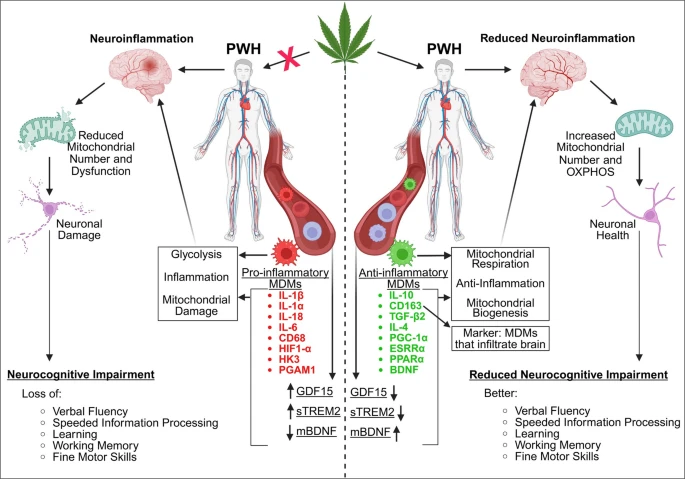
“Chronic neuroinflammation is associated with comorbidities in people with HIV (PWH) on antiretroviral therapy (ART).

While cannabis use is associated with reduced neuroinflammation and neurocognitive impairment (NCI) in PWH, the underlying mechanisms are unknown. 

To address this gap in knowledge, we analyzed monocyte-derived macrophages (MDMs) from a cohort of 50 PWH and 33 people without HIV (mean age: 61.9 years), categorized by frequency of cannabis use (naïve/low, moderate, daily). We performed immunocytochemistry, RNA sequencing, and qPCR on MDMs and quantified related biomarkers in donor plasma.

In this cohort study, daily cannabis use in PWH was associated with less global neurocognitive deficits, and with an anti-inflammatory immunometabolic-phenotype in MDMs characterized by (1) a metabolic shift from glycolysis to oxidative phosphorylation, (2) higher mitochondrial numbers, (3) altered cytokine profiles (pro-inflammatory downregulation, anti-inflammatory upregulation), and (4) higher brain-derived neurotrophic factor (BDNF) expression. These cellular changes were corroborated by a plasma biomarker profile in PWH including (1) lower levels of growth differentiation factor 15 and soluble triggering receptor expressed on myeloid cells 2, and (2) higher mature BDNF/precursor BDNF ratios that correlated with better cognition.

Thus, cannabis use may mitigate NCI in PWH by immunometabolically reprogramming MDM function towards an anti-inflammatory and neuroprotective state.”

https://pubmed.ncbi.nlm.nih.gov/41998680

“Cannabis use by people with HIV (PWH) is associated with neuroprotective and anti-inflammatory effects”

https://link.springer.com/article/10.1186/s12974-026-03779-2

Prenylated apigenin derivatives from Cannabis sativa L.: isolation, biosynthesis, and anti-inflammatory properties

Cannabis sativa contains anti-inflammatory compounds far beyond its better-known cannabinoids. In this study, researchers isolated prenylated apigenin derivatives from cannabis and characterized both their biosynthesis and biological activity. The compounds showed significant anti-inflammatory effects, demonstrating that cannabis flavonoids and related phytochemicals may contribute meaningful therapeutic activity of their own. The findings expand the pharmacological picture of cannabis and identify prenylated apigenin derivatives as promising natural anti-inflammatory agents.

Background: Cannabis sativa L. accumulates a wide array of specialized compounds, many of which are non-psychotropic and show significant promise in medical and therapeutic applications. One such group of C. sativa compounds is prenylated flavonoids, which have emerged as potential treatments for chronic pain and inflammation. Accordingly, the aim of this study was to isolate, identify, and synthesize prenylated flavonoids from C. sativa and test their efficacy as anti-inflammatory agents.

Methods: An enriched polyphenol extract from C. sativa was fractionated using flash chromatography and high-performance liquid chromatography to isolate prenylated flavonoids. Liquid chromatography-mass spectrometry (LC-MS) and nuclear magnetic resonance (NMR) spectroscopy were employed to determine their structures. Phylogenomic and classical biochemical approaches were combined to identify the enzyme involved in the biosynthesis of the isolated compounds. Finally, these prenylated flavonoids were tested to determine their inhibitory properties against microsomal prostaglandin E synthase-1 (mPGES-1) activity.

Results: Two prenylated flavonoids were isolated from the aerial parts of the C. sativa plant using classical chromatographic procedures and identified as 6-prenylapigenin (6-PA) and 6-geranylapigenin (6-GA). A C. sativa prenyltransferase (CsPT3) from the UbiA superfamily was identified to complete the final prenylation step in 6-PA and 6-GA biosynthesis from the widespread plant flavonoid known as apigenin. The inhibitory potentials of 6-PA and 6-GA against mPGES-1 activity were approximately as effective as, or better than, that of a leading commercially available inhibitor, MK-886. Molecular docking simulations confirmed strong binding affinities of 6-PA and 6-GA to mPGES-1 compared to its natural substrate.

Conclusions: 6-PA and 6-GA are prenylated derivatives of the widespread plant flavonoid known as apigenin. These non-psychotropic flavonoids accumulate in C. sativa and exhibit potent inhibition of mPGES-1, a chief mediator in the pro-inflammatory pathway. Identification of the final step in 6-PA and 6-GA biosynthesis, together with their now-established anti-inflammatory activity, presents propitious biotechnological avenues for these therapeutically relevant C. sativa compounds.”

https://pubmed.ncbi.nlm.nih.gov/41987337

https://link.springer.com/article/10.1186/s42238-026-00438-4

“Apigenin: A Promising Molecule for Cancer Prevention”

https://pmc.ncbi.nlm.nih.gov/articles/PMC2874462

“Apigenin: A Bioflavonoid with a Promising Role in Disease Prevention and Treatment”

https://pmc.ncbi.nlm.nih.gov/articles/PMC11202028

Electrophysiological modulation of pain‑related sodium channels by cannabinoids: a systematic review

Cannabinoids may reduce pain in part by directly modulating sodium channels that control how pain signals are generated and transmitted through nerves. This systematic review examined electrophysiological evidence showing that several cannabinoids can inhibit pain-related voltage-gated sodium channels, including subtypes involved in neuropathic and inflammatory pain. The findings provide a clear mechanistic basis for cannabinoid analgesia beyond CB1 and CB2 receptor signaling and highlight sodium-channel modulation as another important pathway through which cannabis-derived compounds may reduce pain.

“Voltage-gated sodium channels regulate dorsal root ganglion excitability and are critical for nociceptive transmission. Cannabidiol (CBD) and related phytocannabinoids have been proposed to modulate these channels, offering potential non-opioid analgesic strategies. This systematic review evaluated their in vitro effects on pain-related sodium channels, focusing on electrophysiological and biophysical mechanisms.

Following PRISMA guidelines, Embase®, LILACS®, PubMed®/MEDLINE®, and Scopus® were searched using the SPIDER strategy. Eligible studies evaluated CBD or its derivatives on voltage-gated sodium channels Nav1.3, Nav1.6, Nav1.7, Nav1.8, and Nav1.9 through electrophysiological assays. Data extraction and analysis were conducted independently by two reviewers, with inter-rater agreement assessed by Cohen’s kappa. Seven studies met the inclusion criteria.

CBD consistently inhibited sodium currents with IC₅₀ values in the low micromolar range (2–3.3 µM), reduced action potential firing, induced hyperpolarizing shifts in steady-state inactivation, and delayed recovery from inactivation. Other phytocannabinoids, such as cannabigerol, cannabinol, cannabigerolic acid, and cannabidivarinic acid, also inhibited sodium channels, though with variable potency and distinct effects on channel gating.

Cannabinoids, particularly CBD, act as non-selective inhibitors of voltage-gated sodium channels implicated in pain signaling. Their ability to stabilize inactivated channel states and reduce neuronal excitability supports their therapeutic potential in neuropathic pain. These findings highlight the relevance of phytocannabinoids as promising candidates for the development of non-opioid analgesics.”

https://pubmed.ncbi.nlm.nih.gov/41987259

https://link.springer.com/article/10.1186/s42238-026-00436-6


Phenolic Constituents Drive Antimicrobial and Antibiotic-Enhancing Activities of Cannabis sativa Seed Extracts Obtained by Two Extraction Methods

Cannabis sativa seeds contain phenolic compounds with antimicrobial activity that may also strengthen the effects of conventional antibiotics. In this study, seed extracts produced by two different extraction methods inhibited bacterial growth, while their phenolic constituents were strongly linked to the antimicrobial effects observed. The extracts also enhanced antibiotic activity against tested pathogens, suggesting that cannabis seed-derived compounds may have value both as natural antimicrobials and as partners for existing antibiotics. The findings highlight hemp seed chemistry as a promising source of antibiotic-enhancing agents.

“Hemp seeds (Cannabis sativa L.) are a rich source of phenolic compounds with antioxidant and antimicrobial potential.

Still, their genotype-dependent variability and ability to enhance antibiotic efficacy remain insufficiently explored. This study compared three Romanian hemp seed cultivars (Lovrin 110, Silvana, and LV 585) extracted by conventional hydroalcoholic extraction (CE) and ultrasound-assisted extraction (UAE) to evaluate their phenolic composition, antimicrobial effects, and synergistic interactions with amoxicillin and miconazole.

HPLC identified genotype- and method-dependent differences, with UAE extracts showing substantially higher levels of epicatechin, quercetin, rosmarinic acid, resveratrol, and ferulic acid. These patterns showed stronger antimicrobial inhibition against Gram-positive and Gram-negative bacteria and yeasts, confirmed by MIC, fold-reduction, and percent enhancement assays. The most pronounced synergy occurred in Streptococcus pyogenesStaphylococcus aureusBacillus cereus, and Candida albicans. PCA revealed two dominant phenolic-activity axes: a rosmarinic/resveratrol/ferulic axis associated with potent inhibition in Escherichia coli and C. albicans, and a quercetin-driven axis linked to Gram-positive bacteria.

Overall, UAE extracts displayed superior phenolic enrichment and bioactivity, demonstrating that specific phenolic structures-not total phenolic content-govern antimicrobial performance and antibiotic-enhancing potential in hemp seed extracts.”

https://pubmed.ncbi.nlm.nih.gov/41514973

Cannabis sativa L. (hemp) is an herbaceous, anemophilous species in the Cannabaceae family. It is considered one of the oldest domesticated crops. Due to its long history of use, it is now seen as a versatile, sustainable crop with a relatively low environmental impact and significance across sectors such as agriculture, phytoremediation, food and feed production, cosmetics, construction materials, and pharmaceuticals.”

“Hemp seed has historically served as a medicinal resource, used to address a range of conditions such as arthritis, asthma, menstrual discomfort, atopic dermatitis, cancer, hypertension, and other inflammatory diseases.”

“These findings identify hemp seeds—particularly when extracted by UAE—as promising natural antimicrobial agents and effective adjuvants for conventional antibiotics and antifungals.”

https://www.mdpi.com/2223-7747/15/1/27

Broad-spectrum bactericidal synergy of silver-cannabichromene-cannabigerol triple combinations against healthcare-associated pathogens

Cannabichromene (CBC) and cannabigerol (CBG) may become valuable partners in the fight against difficult healthcare-associated bacterial infections. In this study, combining silver with CBC and CBG produced broad-spectrum bactericidal synergy against multiple clinically important pathogens, with the three-part combination killing bacteria more effectively than the individual components alone. The findings show that lesser-known cannabinoids can enhance antimicrobial activity when used strategically with established antibacterial agents and highlight a promising new approach for combating drug-resistant and healthcare-associated infections.

Aims: Healthcare-associated infections (HAI) place substantial burden on healthcare systems globally, with growing antimicrobial resistance (AMR) restricting treatment options, increasing patient mortality and raising the cost of care. Silver is a broad-spectrum antimicrobial used widely to help control HAI. However, its utility is limited by AMR and concentration-dependent cytotoxicity. To address these challenges, we systematically evaluated the antimicrobial amplification properties of non-intoxicating cannabinoids, naturally occurring molecules having a narrow spectrum of antimicrobial activity, aiming to increase the antimicrobial effect of silver against gram-positive and gram-negative HAI pathogens.

Methods and results: Administered individually, silver and cannabinoid compounds CBD, CBC, CBG, CBDA, CBCA and CBGA produced modest bacteriostatic effects on time-kill analysis. Pairwise silver-cannabinoid combinations were neither synergistic nor bactericidal consistently against both Escherichia coli and Pseudomonas aeruginosa. Whereas triple combinations comprising silver (as silver sulfate or nanoparticles), CBC and CBG were consistently synergistic and bactericidal against Staphylococcus aureus (MRSA), E. coli and P. aeruginosa on time-kill analysis, and achieved up to 64-fold lowering of silver MIC on checkerboard assay. Silver-CBC-CBG triple combinations further precluded emergence of MRSA resistance on 20-day serial passaging, ameliorated the potential for cytotoxicity in fibroblasts and keratinocytes, and demonstrated significant clearing of biofilms formed by MRSA (p < 0.001) and P. aeruginosa (p < 0.001).

Conclusions: The increased potency, broad-spectrum bactericidal action and anti-biofilm properties of these novel synergistic silver-CBC-CBG triple combinations may provide a useful solution for bacterial silver resistance and the control of HAI.”

https://pubmed.ncbi.nlm.nih.gov/41983582

https://academic.oup.com/jambio/advance-article/doi/10.1093/jambio/lxag092/8654259

Impact of Preoperative Marijuana Use on Functional Recovery and Complications After Spinopelvic Fusion in Adult Spinal Deformity

Preoperative cannabis use does not necessarily translate into poorer recovery after major spine surgery. In this study of adults undergoing spinopelvic fusion for spinal deformity, marijuana use was evaluated in relation to postoperative complications and functional recovery. The findings showed that cannabis users achieved meaningful improvements in postoperative function without a clear increase in major complications, suggesting that preoperative marijuana use may not negatively affect recovery in this complex surgical population.

Background and objectives: With the rising prevalence of marijuana use and increasing rates of complex spinal deformity surgeries, understanding the impact of cannabis on perioperative outcomes is crucial. Previous studies yield mixed results on fusion success, complications, and opioid use in spine surgery, but none have focused on long-segment spinopelvic fusions.

Methods: This retrospective cohort study analyzed 155 adult patients undergoing posterior spinal fusion from the pelvis to L2 or higher between 2015 and 2023. Patients were stratified by preoperative marijuana use (n = 34 users vs n = 121 nonusers). Baseline demographics, surgical parameters, clinical outcomes [Oswestry Disability Index (ODI), visual analog scale], radiographic measures (pelvic tilt, lumbar lordosis, and sagittal vertical axis), and complications were compared using t-tests, χ2 tests, and logistic regression, with P < .05 considered significant.

Results: Marijuana users had higher preoperative opioid dependence (64.7% vs 42.9%, P = .025), more previous spine surgeries (52.9% vs 19.0%, P < .001), and elevated preoperative ODI scores (56.9 vs 52.8, P = .038), but demonstrated greater ODI improvement (43.7 vs 37.1, P = .003). No significant differences were observed in visual analog scale changes, radiographic corrections, hospital stay (8.8 vs 8.9 days, P = .920), transfusions (2.2 vs 1.5 units, P = .240), medical complications (eg, deep vein thrombosis/pulmonary embolism: 4 vs 21, P = .599), or mechanical complications (eg, pseudarthrosis: 10 vs 36, P > .999, and hardware failure: 12 vs 53, P = .434).

Conclusion: In this cohort, preoperative marijuana use was not associated with statistically significant differences in complication rates or inferior outcomes after long-segment spinopelvic fusion. Users experienced enhanced functional recovery, although this finding must be interpreted in the context of their higher baseline disability. Given the modest sample size, these findings should be viewed as preliminary; prospective studies with standardized cannabis exposure metrics are needed to confirm these results.”

https://pubmed.ncbi.nlm.nih.gov/41982324

https://journals.lww.com/neurosurgpraconline/fulltext/2026/06000/impact_of_preoperative_marijuana_use_on_functional.8.aspx

Real-world effectiveness and tolerability of highly purified cannabidiol in patients with monogenic developmental and epileptic encephalopathies with highly active epilepsy

“Developmental and epileptic encephalopathies (DEEs) represent a group of disorders characterized by developmental slowing or regression together with seizures, that are often drug-resistant.”

“With this background, we investigated the effectiveness and tolerability of highly purified CBD in a cohort of monogenic DEEs, focusing on patients with highly active epilepsy.”

“Taken together, these findings suggest that CBD represents a valid therapeutic option for patients with DEEs and highly active epilepsy, providing meaningful seizure reduction even in the most treatment-refractory cases.”

“Our study shows that highly purified CBD may represent a feasible treatment option for patients with DEEs and highly active epilepsy.”

https://www.epilepsybehavior.com/article/S1525-5050(26)00157-5/fulltext

Hemp seed oil mediates injury mitigation and anti-inflammation in radiated splenic T cells

Background: Exposure to acute radiation results in hematopoietic damage, immune defects, and organ injury, ultimately leading to severe lethality. However, few drugs or compounds have been reported to effectively mitigate the injuries induced by high-dose ionizing radiation.

Methods: To elucidate the radioprotective mechanisms of hemp seed oil against acute radiation, lethal radiation was applied to evaluate the radio-protective function. The survival rates of mice were recorded, and the immune populations, particularly T cells, in the spleen were analyzed using flow cytometry. The expression of inflammation-related cytokines was detected for proving the anti-inflammatory function of hemp seed oil. Single-cell RNA sequencing was employed to explore the mechanisms underlying the radio-protective effects of hemp seed oil. In addition, we integrated HPLC-based phytochemical profiling with network pharmacology to identify bioactive constituents and characterize their molecular targets and signaling pathways.

Results: Hemp seed oil exhibited outstanding radio-protecting function, raising the survival ratio to above 50 % in mice exposed to lethal irradiation. Additionally, hemp seed oil preserved the immune populations, especially T cells, in the spleen. Single-cell RNA sequencing demonstrated that hemp seed oil alleviated oxidative stress, apoptosis, and inflammation-related features in T cells. Treatment with hemp seed oil enhanced the expression of inflammation-suppressing genes and promoted the differentiation of naïve CD4 T cells towards Treg cells. Further analyses indicated that the enhanced differentiation of Treg cells induced by hemp seed oil might be contributed by signals from fibroblasts through upregulated Itgb8. Meanwhile, HPLC analysis characterized 10 bioactive compounds in hemp seed oil. Integrating network pharmacology with in silico molecular docking revealed statistically significant correlations between these phytochemicals and key pathways regulating immune response and inflammatory processes, suggesting multitargeted immunomodulatory effects.

Conclusions: This research demonstrated a strong role of hemp seed oil in increasing survival rates and protecting splenic lymphocytes in mice facing acute irradiation. These findings offer a promising alternative for radioprotective medications and provide insights into the mechanisms underlying the radio-protective effects of hemp seed oil.”

https://pubmed.ncbi.nlm.nih.gov/41797188

“Hemp seed oil (HSO) is the extraction of hemp seed, a traditional Chinese medicine that can be applied as medicine as well as food.”

“In the present study, we evaluated the radioprotective function of HSO in vivo and demonstrated the improvement of spleen immune cell survival rate induced by HSO treatment.”

“Overall, our data support the use of HSO as a radioprotective and anti-inflammatory drug under conditions including acute radiation exposure.”

https://www.sciencedirect.com/science/article/abs/pii/S0944711326002412?via%3Dihub