Hyperhidrosis can significantly affect daily life when excessive sweating persists despite standard treatment. This case report describes an unexpected improvement in hyperhidrosis following cannabidiol use, with the patient experiencing a noticeable reduction in sweating while taking CBD. The observation raises the possibility that cannabinoid signaling may influence autonomic pathways involved in sweat regulation. The report provides an unusual clinical signal that could justify further investigation of CBD in disorders of excessive sweating.
“Hyperhidrosis is characterized by excessive sweating and it affects almost 5% of the population. The affected age group is wide, and it can affect from children to elderlies. There are two types of hyperhidrosis: generalized and focal. Treatment depends on the symptoms presented. In more severe cases, radiofrequency sympatholysis and bilateral thoracic sympathectomy are the options. However, recurrence is possible or the postoperative appearance of conditions called compensatory hyperhidrosis or reflex hyperhidrosis.
We describe two cases of patients treated with Cannabidiol who had significant and unexpected improvement of hyperhidrosis.
The first patient received Cannabidiol specific for public presentations at work, and the second patient had a diagnosis of autism spectrum disorder.
The hyperhidrosis improved in both patients immediately after using Cannabidiol.”
The endocannabinoid system may play a previously underappreciated role in controlling sweat production. In this preclinical study, researchers found that activation of cannabinoid CB1 receptors reduced sweating in a mouse model, providing mechanistic evidence that cannabinoid signaling can directly influence sweat-gland activity. The findings complement emerging clinical observations involving CBD and hyperhidrosis and suggest that the endocannabinoid system could represent a new biological target for excessive sweating disorders. Further research will be needed to determine whether these effects can be translated into practical treatments for people with hyperhidrosis.
“Numerous exocrine glands play key physiological roles in the body that include tearing, salivation, and lactation, as well as the control of body temperature via sweating. Malfunction of sweat glands can be deeply problematic or-in the case of anhidrosis-life-threatening. The prevalence of sweating disorders is high, affecting millions. The few available therapies are generally of limited effectiveness.
Several lines of evidence point to regulation of sweating by the cannabinoid signaling system, an arrangement that would mirror cannabinoid regulation of tearing and salivation.
Mice sweat in their paws via glands that closely resemble human eccrine sweat glands, including regulation by muscarinic signaling and by temperature. We applied a galvanic skin response-based assay to investigate cannabinoid regulation of sweating in awake, unanesthetized mice. The muscarinic agonist pilocarpine increased conductance while the antagonist glycopyrrolate reduced conductance, validating the model as a measure of sweating. The cannabinoid receptor agonist CP55940 substantially reduced conductance in wild-type and CB2 but not CB1 receptor knockout mice.
The phytocannabinoid tetrahydrocannabinol (THC) also reduced conductance, while the non-psychoactive cannabidiol (CBD) did not. Using immunohistochemistry, we detected CB1 receptors in periglandular cholinergic axons, the anandamide-synthesizing enzyme NAPE-PLD in myoepithelial cells, and the anandamide metabolizing enzyme FAAH in acinar cells. This indicates that a local CB1/anandamide-based circuit is present in mouse walking pads.
In summary, we employed a novel galvanic skin response-based assay to determine that cannabinoid CB1 receptors reduce sweating in a mouse model. This may point to a previously unappreciated effect on sweating in cannabis users.”
“In summary, we have made use of a galvanic skin response-based assay to measure the conductivity in the hind paws of awake, unanesthetized mice as a measure of sweating. We find the galvanic skin responses to be stable and consistent over time and, importantly, to be responsive to stimuli that increase or decrease basal sweating. Using this model, we determined that cannabinoid CB1 receptor activation reduces the galvanic skin response.
We propose that cannabinoid CB1 receptor activation reduces basal sweating in mice.
This effect may point the way to a new class of therapeutics for hyperhidrosis.”
Hyperhidrosis is driven by excessive sweat production and can be difficult to control with existing therapies. This review examines the emerging evidence that cannabinoids and the endocannabinoid system may influence sweating through CB1-related signaling and other autonomic mechanisms. The authors discuss both preclinical findings and early clinical observations suggesting that cannabinoid-based approaches could reduce excessive sweating in some settings. The review identifies cannabinoid signaling as a potentially novel therapeutic target for hyperhidrosis and supports further clinical study.
“In our literature search for alternative treatments, we identified multiple unscientific and anecdotal sources claiming that cannabis can inhibit sweating. Our search of the medical literature revealed no evidence of a treatment attempt using cannabinoids, and thus, we initiated our study of one case with refractory generalized hyperhidrosis treated with cannabinoids from March to May 2021.
We observed a marked reduction in measured sweat and a significant improvement in the patient’s psychological well-being.
We conclude that, potentially, cannabinoids represent an effective therapeutic agent for hyperhidrosis and are worthy of further high-quality clinical investigation.”
“Hyperhidrosis can significantly curtail patient quality of life, from debilitating physical symptoms to social stigmatization and reduced life opportunities. Current treatments often prove unsatisfactory, especially in sufferers of generalized hyperhidrosis. In this open trial, we present the case of a refractory generalized hyperhidrosis treated with cannabinoids.
We found a remarkable reduction in the volume of sweat and an improvement to the patient’s quality of life using this novel low-cost and low-impact approach.”
“In summary, we report a case of precisely analyzed effects of cannabinoid therapy in generalized hyperhidrosis.
We believe cannabinoids hold potential as a low side-effect and well-tolerated therapy, especially in refractory cases of hyperhidrosis.
This reflects not only in the reduced perspiration, but also in the significant improvement in the participant’s quality of life.”
Ultraviolet B radiation can damage skin cells through oxidative stress, inflammation, and disruption of cellular repair mechanisms. In this laboratory study, researchers investigated extracellular vesicle-like nanoparticles derived from Cannabis sativa adventitious roots and found that they protected human keratinocytes against UVB-induced damage. The nanoparticles reduced oxidative and inflammatory responses while helping preserve cell viability and normal cellular function. The findings highlight a novel cannabis-derived biological material with potential applications in skin protection, dermatology, and the development of new approaches to preventing UV-related cellular injury.
“Background: Plant-derived bioactive compounds are increasingly sought after in the cosmetics and pharmaceutical industries, prompting the development of sustainable production methods. This study explored the potential of Cannabis sativa adventitious root cultures to produce extracellular vesicle-like nanoparticles (CA-NPs) and investigated their protective effects against UVB-induced damage in human keratinocytes.
Methods: CA-NPs were isolated from Cannabis sativa root cultures and characterized for particle size, zeta potential and stability. HaCaT keratinocytes were used to assess the nanoparticles’ ability to improve cell viability, reduce apoptosis and alleviate oxidative stress after UVB exposure. Gene expression of skin barrier components and matrix metalloproteinases (MMPs) was analysed, and underlying signalling pathways (MAPK, Nrf2) were examined.
Results: CA-NPs (~128 nm, -12.9 mV) showed strong physicochemical stability and effectively protected HaCaT cells from UVB-induced damage. They suppressed MMP-1, MMP-3 and MMP-9 expression while enhancing skin barrier-related genes (HAS1, FLG, LOR, IVL). CA-NPs also modulated MAPK and Nrf2 pathways, reducing inflammation and boosting antioxidant defences.
Conclusion: Cannabis sativa-derived CA-NPs offer a promising natural approach to protect the skin from UVB-induced damage, supporting their potential as bioactive candidates for future skincare or cosmeceutical applications for preventing photoaging and inflammation.”
“These findings support the potential of CA-NPs as bioactive candidates for topical or cosmeceutical formulations aimed at alleviating UVB-induced skin damage and photoageing.”
Pain and opioid use disorder are closely linked, creating a need for treatments that can reduce pain without reinforcing opioid dependence. This review examines the endocannabinoid system as a potential therapeutic target for both conditions, focusing on how cannabinoid receptors and endogenous cannabinoid signaling influence pain perception, reward, withdrawal, and opioid-related behaviors. The authors discuss evidence that activating or modulating this system may reduce pain while also affecting mechanisms involved in opioid dependence and relapse. The review highlights the endocannabinoid system as a promising bridge between pain management and addiction treatment, supporting further development of cannabinoid-based and endocannabinoid-targeted therapies.
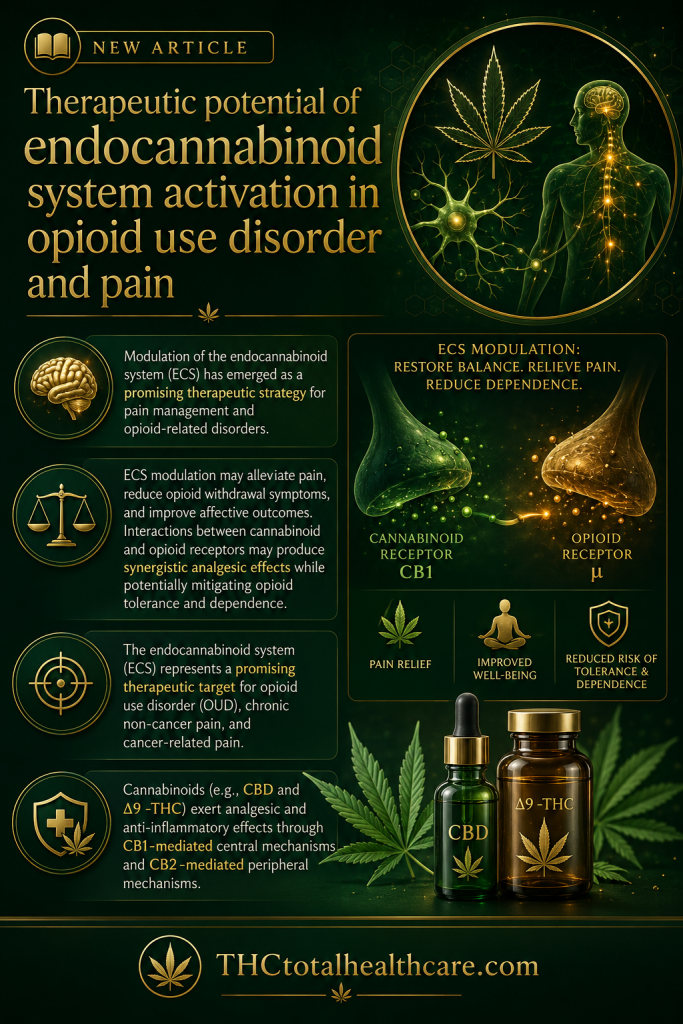
“Introduction: Opioid use disorder (OUD) and chronic pain remain major global health challenges. Although opioid-based therapies provide effective analgesia, their long-term use is limited by safety concerns, dependence, and variable efficacy. Modulation of the endocannabinoid system (ECS) has emerged as a promising therapeutic strategy for pain management and opioid-related disorders.
Areas covered: This narrative review summarizes current evidence on ECS-targeted interventions for OUD, chronic non-cancer pain, and cancer-related pain. Relevant literature was identified through PubMed using search terms related to the ECS, cannabinoid receptors (CB1 and CB2), phytocannabinoids (Δ9 -tetrahydrocannabinol [THC] and cannabidiol [CBD]), synthetic cannabinoids, fatty acid amide hydrolase (FAAH) and monoacylglycerol lipase (MAGL) inhibitors, and opioid – cannabinoid interactions. Particular emphasis is placed on mechanistic interactions between ECS and opioid signaling pathways, as well as evidence from preclinical and clinical studies evaluating therapeutic efficacy and safety.
Expert opinion: ECS modulation may alleviate pain, reduce opioid withdrawal symptoms, and improve affective outcomes. Interactions between cannabinoid and opioid receptors may produce synergistic analgesic effects while potentially mitigating opioid tolerance and dependence. However, clinical translation remains limited by small sample sizes, heterogeneous study populations, and variability in trial design. Well-controlled clinical trials are needed to establish optimal dosing strategies, evaluate long-term safety, and clarify the therapeutic role of ECS-targeted interventions in OUD and pain management.”
“The endocannabinoid system (ECS) represents a promising therapeutic target for opioid use disorder (OUD), chronic non-cancer pain, and cancer-related pain.”
“Cannabinoids (e.g., CBD and Δ9 -THC) exert analgesic and anti-inflammatory effects through CB1-mediated central mechanisms and CB2-mediated peripheral mechanisms.”
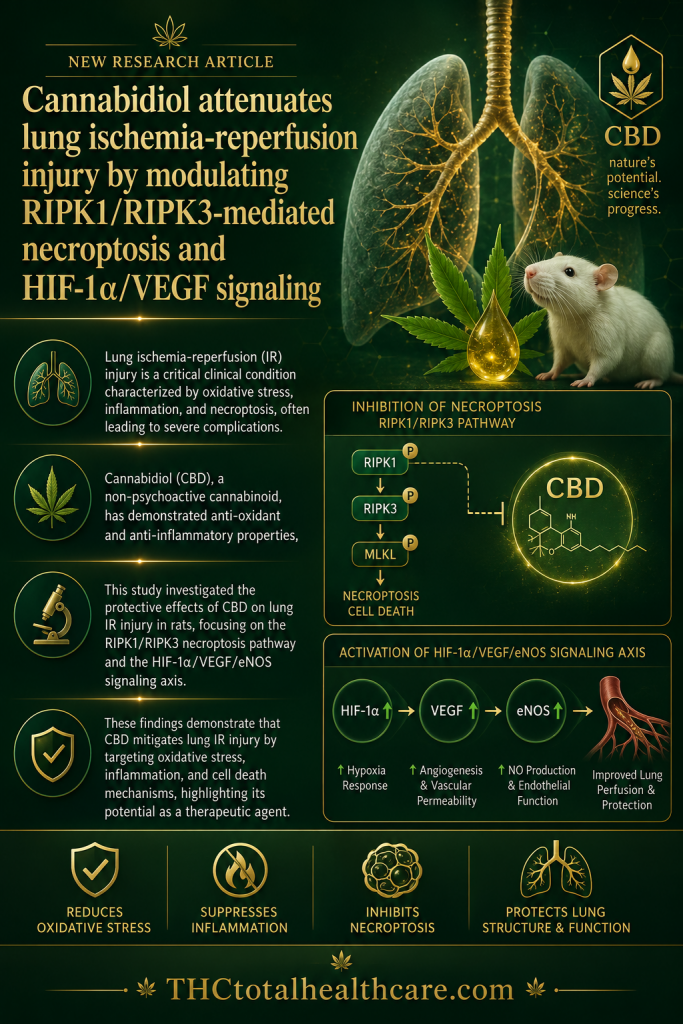
Lung ischemia-reperfusion injury can occur when blood flow returns to lung tissue after a period of oxygen deprivation, triggering inflammation, oxidative stress, and cell death. In this preclinical study, researchers found that CBD reduced lung injury by suppressing RIPK1/RIPK3-mediated necroptosis while also regulating HIF-1α/VEGF signaling involved in hypoxia and vascular responses. The treatment was associated with less tissue damage and inflammation, suggesting that CBD may protect the lungs by acting on multiple injury pathways at once. The findings add mechanistic evidence supporting further investigation of CBD in acute lung injury and ischemia-reperfusion conditions.
“Objectives: Lung ischemia-reperfusion (IR) injury is a critical clinical condition characterized by oxidative stress, inflammation, and necroptosis, often leading to severe complications. Cannabidiol (CBD), a non-psychoactive cannabinoid, has demonstrated anti-oxidant and anti-inflammatory properties, but its role in modulating lung IR injury remains incompletely understood. This study investigated the protective effects of CBD on lung IR injury in rats, focusing on the RIPK1/RIPK3 necroptosis pathway and the HIF-1α/VEGF/eNOS signaling axis.
Materials and methods: Forty male Wistar albino rats were randomized into four groups: control, IR, IR+CBD (5 mg/kg), and CBD-only. Histopathological, immunohistochemical (TNF-α, Caspase-3), biochemical (TOS, TAS, OSI), and gene expression (RIPK1, RIPK3, HIF-1α, VEGF, eNOS) analyses were performed. The IR group exhibited significant oxidative stress, inflammation, and tissue damage, with elevated TNF-α, caspase-3, TOS, OSI, and necroptosis/apoptosis markers.
Results: CBD treatment markedly attenuated these effects, reducing oxidative stress (↑TAS, ↓TOS/OSI), suppressing inflammation (↓TNF-α), and inhibiting both apoptotic (↓Caspase-3) and necroptotic (↓RIPK1/RIPK3) pathways. Additionally, CBD down-regulated HIF-1α/VEGF/eNOS expression, suggesting modulation of hypoxia-responsive signaling.
Conclusion: These findings demonstrate that CBD mitigates lung IR injury by targeting oxidative stress, inflammation, and cell death mechanisms, highlighting its potential as a therapeutic agent. Further preclinical and clinical studies are warranted to validate these results.”
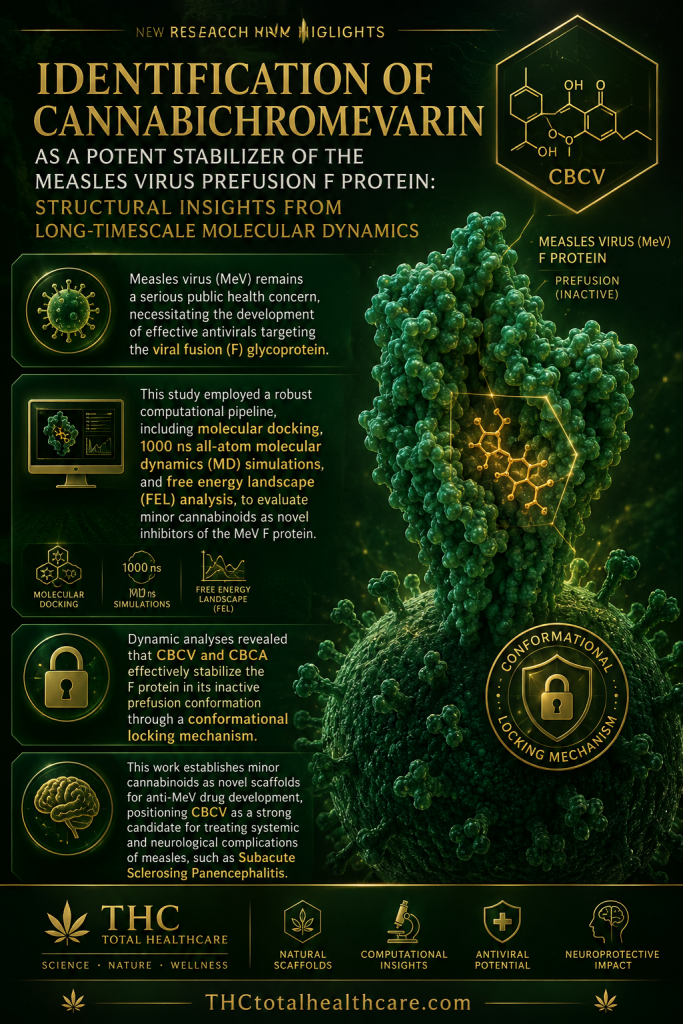
Cannabis research continues to uncover biological activity in lesser-known cannabinoids beyond THC and CBD. In this computational study, researchers identified cannabichromevarin (CBCV) as a potent stabilizer of the measles virus prefusion F protein, a structure essential for viral entry into host cells. Long-timescale molecular dynamics simulations suggested that CBCV could bind and stabilize this vulnerable viral state, potentially interfering with the conformational changes required for infection. The findings are early and entirely in silico, but they highlight CBCV as an unexpected cannabinoid candidate for further antiviral research.
“Measles virus (MeV) remains a serious public health concern, necessitating the development of effective antivirals targeting the viral fusion (F) glycoprotein.
This study employed a robust computational pipeline, including molecular docking, 1000 ns all-atom molecular dynamics (MD) simulations, and free energy landscape (FEL) analysis, to evaluate minor cannabinoids as novel inhibitors of the MeV F protein.
Initial virtual screening identified Cannabichromenic acid (CBCA), Cannabichromevarin (CBCV), and Cannabiripsol (CBR) as high-affinity leads, with docking scores of – 8.5, – 8.2, and – 8.1 kcal/mol, respectively, outperforming the reference inhibitor AS-48 (- 7.6 kcal/mol). Post-MD binding free energy calculations (MM-GBSA) further confirmed the thermodynamic superiority of CBCV (ΔGbind = – 44.7 kcal/mol) and CBCA (ΔGbind = – 30.1 kcal/mol) over the reference.
Dynamic analyses revealed that CBCV and CBCA effectively stabilize the F protein in its inactive prefusion conformation through a conformational locking mechanism. CBCV induced the most significant structural compaction (Rg = 2.4 nm) and displayed the sharpest global energy minimum (0.3 kcal/mol) in the FEL. Furthermore, ADMET profiling and ProTox-3.0 toxicity modeling identified CBCV as the most promising lead, possessing excellent drug-likeness, an inactive toxicity profile, and predicted blood-brain barrier permeability.
This work establishes minor cannabinoids as novel scaffolds for anti-MeV drug development, positioning CBCV as a strong candidate for treating systemic and neurological complications of measles, such as Subacute Sclerosing Panencephalitis.”
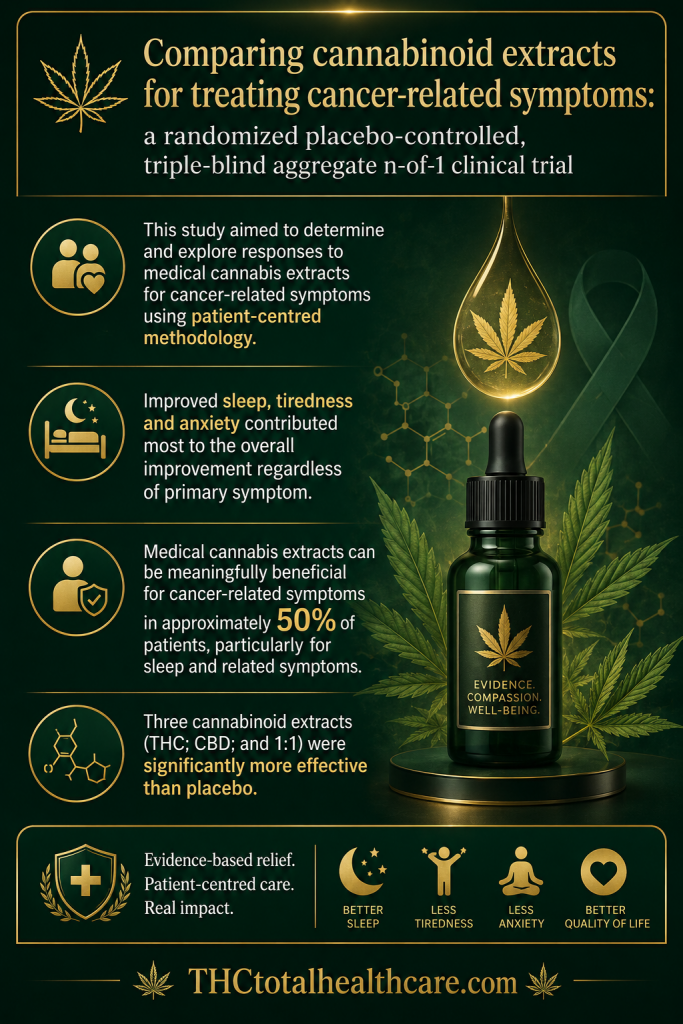
Cancer-related symptoms such as poor sleep, anxiety, fatigue, and pain can remain difficult to manage despite standard supportive care. In this randomized, placebo-controlled, triple-blind clinical trial, 56% of participants achieved a clinically meaningful improvement with at least one cannabis extract compared with placebo. THC, CBD, and a 1:1 THC extract were significantly more effective than placebo overall, with improvements in sleep, anxiety, and daytime tiredness contributing most strongly to the benefit. The most effective formulation varied between individuals, supporting a personalized approach to cannabinoid treatment for cancer-related symptoms.
“Context Despite widespread use of medical cannabinoids for cancer-related symptom management, systematic reviews consistently call for more clinical trial evidence.
Objectives This study aimed to determine and explore responses to medical cannabis extracts for cancer-related symptoms using patient-centred methodology.
Methods An aggregate N-of-1 study of clinically stable but symptomatic outpatients from 8 Canadian cancer centres, comparing three blinded sublingual extracts (THC; CBD; 1:1) with placebo, self-titrated within a prescribed schedule for four consecutive days each in randomized sequence for up to three cycles (total 16-48 days). The primary outcome was the frequency of at least a 1.4-point (20%) improvement in a 7-point Patient Global Impression of Change (PGIC) for at least one extract over placebo.
Results The primary outcome was achieved in 50/89 (56%) participants (p<0.001), with no significant preference of one extract over another on average, but a clear preference between extracts for most individuals. Changes in a modified Edmonton Symptom Assessment score and participant preference (n=91) confirmed these findings. Improved sleep, tiredness and anxiety contributed most to the overall improvement regardless of primary symptom. There were no demographic predictors of response. Mild adverse effects were common with all extracts including placebo but resolved rapidly on dose reduction/cessation. Moderate/severe adverse effects were rare but associated with THC.
Conclusions Medical cannabis extracts can be meaningfully beneficial for cancer-related symptoms in approximately 50% of patients, particularly for sleep and related symptoms. A starting dose of 2.5mg of THC/CBD three times a day was well-tolerated. Personalization of treatment is required to optimize response.
Key Messages Three cannabinoid extracts (THC; CBD; and 1:1) were significantly more effective than placebo based on a Patient Global Impression of Change, a modified Edmonton Symptom Assessment System and participant preference. The most helpful extract differed between individuals. Benefits were mostly in sleep, anxiety, and daytime tiredness irrespective of primary symptom.”
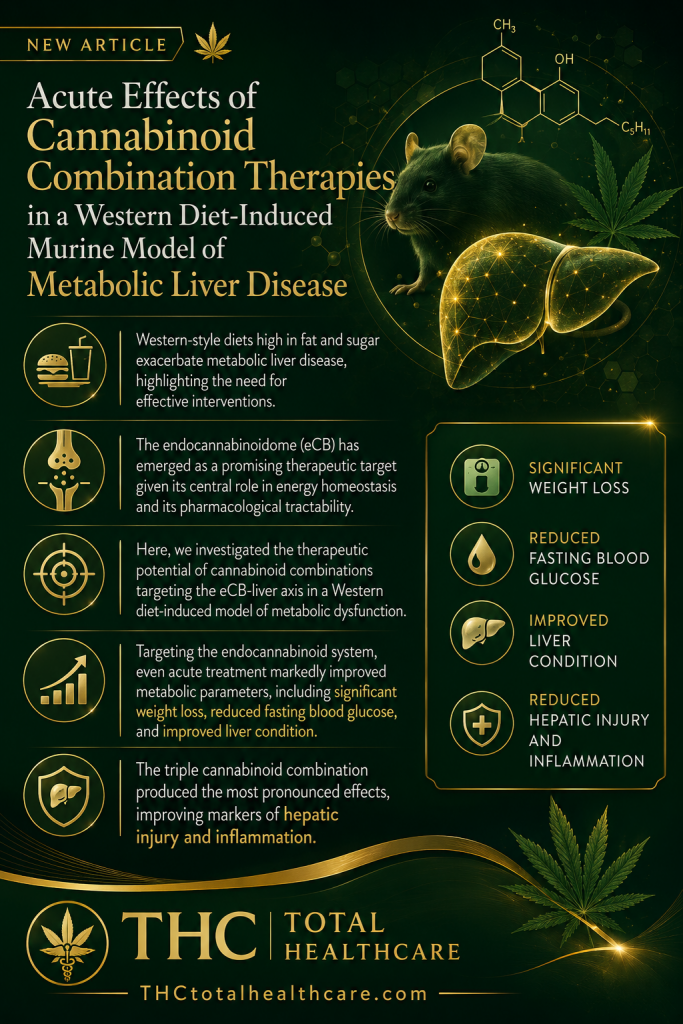
Metabolic liver disease is closely tied to inflammation, lipid accumulation, and broader metabolic dysfunction, making it an important target for cannabinoid research. In this preclinical study, researchers tested cannabinoid combination therapies in mice with Western diet–induced metabolic liver disease and found beneficial acute effects on several markers linked to liver injury and metabolism. The results showed that specific cannabinoid combinations could improve aspects of hepatic and metabolic function, supporting the idea that carefully selected cannabinoid profiles may influence multiple pathways involved in fatty liver disease. The study adds to growing evidence that combination cannabinoid therapies may have therapeutic potential in metabolic liver disorders.
“Pharmacological treatment of metabolic-dysfunction-associated steatohepatitis remains challenging due to its complex pathophysiology. The endocannabinoidome (eCB) has emerged as a promising therapeutic target given its central role in energy homeostasis and its pharmacological tractability. Western-style diets high in fat and sugar exacerbate metabolic liver disease, highlighting the need for effective interventions.
Here, we investigated the therapeutic potential of cannabinoid combinations targeting the eCB-liver axis in a Western diet-induced model of metabolic dysfunction.
Two weeks of treatment reduced body weight, improved glycaemic control, and ameliorated liver pathology. These effects were accompanied by decreased liver weight, improved liver enzyme profiles, and reduced histological features of steatosis and injury.
Overall, these findings suggest that modulation of the eCB system can induce acute improvements in metabolic and hepatic parameters under conditions of diet-induced metabolic stress. These results support further investigation into the eCB system as a therapeutic target, particularly to elucidate underlying mechanisms and longer-term effects.”
“To our knowledge, this is the first study to investigate the therapeutic effects of combination cannabinoid treatment in a mouse model of metabolic liver disease.
Targeting the endocannabinoid system, even acute treatment markedly improved metabolic parameters, including significant weight loss, reduced fasting blood glucose, and improved liver condition.
The triple cannabinoid combination produced the most pronounced effects, improving markers of hepatic injury and inflammation.
Mechanistically, modulation of the LPI/GPR55 and GPR119/incretin axes highlights the therapeutic potential of targeting the gut–liver axis using small-molecule agonists and endogenous bioactive lipids.”
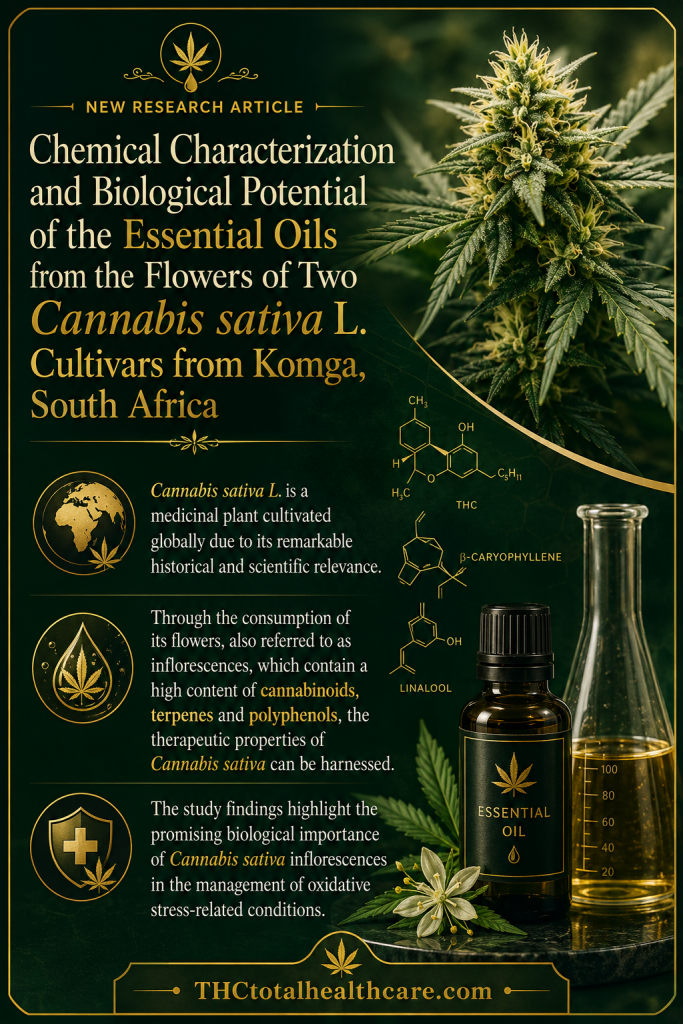
Cannabis sativa flowers contain complex essential oils rich in terpenes and other bioactive compounds that may contribute to the plant’s broader therapeutic potential. In this study, researchers characterized the essential oils from two South African cannabis cultivars and found distinct chemical profiles together with promising biological activity. The oils demonstrated antioxidant and antimicrobial effects, highlighting the importance of cannabis terpenes and volatile compounds beyond the better-known cannabinoids. The findings add to growing evidence that cannabis essential oils may have value in pharmaceutical, antimicrobial, and natural-product applications.
“Cannabis sativa L. is a medicinal plant cultivated globally due to its remarkable historical and scientific relevance. Through the consumption of its flowers, also referred to as inflorescences, which contain a high content of cannabinoids, terpenes and polyphenols, the therapeutic properties of C. sativa can be harnessed.
This study therefore aimed to determine the chemical profile, antioxidant and anti-inflammatory activities of the essential oils (EOs) obtained from the fresh and dried flowers of two C. sativa cultivars, Lifter and Cherrywine, grown in Komga, South Africa, to assess which cultivar has greater biological potential.
The chemical profiles of the hydro-distilled EOs were analyzed by gas chromatography-mass spectrometry (GC-MS), while the in vitro antioxidant and anti-inflammatory activity of the EOs was analyzed using the DPPH and EAD methods, respectively. The identified constituents from the EOs were molecularly docked against NOX2 and NIK (NF-κB-inducing kinase) protein, which are implicated in oxidative stress. The afforded EOs were yellow (pale and bright yellow) in color with a sweet to mildly sweet aroma description.
A total of 51 constituents were identified in both fresh and dry oils from the Lifter cultivar, while the Cherrywine cultivar contained a total of 44 constituents. Eighteen compounds, were found to be the main chemical constituents consistent in the flower EOs of both cultivars, notably, caryophyllene (10.71-19.96%), levo-β-pinene (1.37-13.21%), humulene (5.88-9.77%), caryophyllene oxide (4.32-7.49%), D-limonene (1.40-5.48%), α-pinene (2.22-5.22%), nerolidol (0.63-4.97%), cis-β-ocimene (0.22-4.37%), linalool (1.12-4.28%), selina-3,7(11)-diene (0.15-4.23%), humulene-1,2-epoxide (1.23-3.32%), guaiol (0.17-2.60%), (+)-β-selinene (1.20-2.51%), trans-α-bergamotene (0.68-2.37%), β-ocimene (0.90-2.27%), fenchol exo- (0.15-1.27), terpineol (0.14-1.38%) and α-terpineol (0.19-0.75%). The fresh Lifter flower oil (LFO) showed 50% inhibition at 100 μg/mL, with an IC50 of 69.50 ± 4.05 µg/mL against DPPH, suggesting moderate to low radical scavenging activity. The maximum percentage inhibition response of DLFO, CFO and DCFO remained below 50% at all concentrations.
The antioxidant activity of fresh LFO may be attributed to its overall chemical composition. The flower oils showed in vitro inhibition of protein denaturation; however, the high standard deviation relative to the mean IC50 values limited the ability to rank the samples’ potencies. Further in silico studies on the putative constituents in the Lifter and Cherrywine cultivars revealed β-bisabolene and α-curcumene as potential molecular targets, with binding energy scores of -7.7 and -7.9 kcal/mol, respectively.
Thus, the study findings highlight the promising biological importance of C. sativa inflorescences in the management of oxidative stress-related conditions. Further studies may investigate the influence of environmental growing conditions on their chemical composition, total ROS analysis, pharmacokinetic properties, and in vivo efficacy against oxidative damage to DNA, proteins and lipids. Evaluating the toxicity of the flower EOs is also recommended.”