Cannabinoids ameliorate disease progression in a model of multiple sclerosis in mice, acting preferentially through CB1 receptor-mediated anti-inflammatory effects

“Cannabinoids have been proposed as promising therapeutic agents in MS given their capability to alleviate specific MS symptoms (e.g., spasticity, pain).

Although MS has been considered mainly an inflammatory disorder, recent evidence, however, revealed the importance of neurodegenerative events, opening the possibility that cannabinoid agonists, given their cytoprotective properties, may also serve to reduce oligodendrocyte death and axonal damage in MS.

Thus, the treatment with WIN55,512-2, a potent CB1 and CB2 agonist, was reported to be effective to ameliorate tremor and spasticity in mice with chronic relapsing experimental autoimmune encephalomyelitis, a murine model of MS, but also to delay disease progression in this and other murine models of MS….”

http://www.sciencedirect.com/science/article/pii/S0028390812000500

Chemicals in marijuana ‘protect nervous system’ against MS

Cannabis

“Chemical compounds found in marijuana can help treat multiple sclerosis-like diseases in mice by preventing inflammation in the brain and spinal cord, according to a study reported in the Journal of Neuroimmune Pharmacology.

“Inflammation is part of the body’s natural immune response, but in cases like MS, it gets out of hand,” says Dr. Ewa Kozela of Tel Aviv University, Israel.

“Our study looks at how compounds isolated from marijuana can be used to regulate inflammation to protect the nervous system and its functions.”

Dr. Kozela and colleagues set out to see if the known anti-inflammatory properties of two substances found in marijuana – the cannabinoids known as tetrahydrocannabinol (THC) and cannabidiol (CBD) – could also be applied to the treatment of inflammation associated with MS.

With either THC or CBD, the researchers treated immune cells that specifically target and harm the brain and spinal cord. In response to both chemicals, the immune cells, isolated from paralyzed mice, produced fewer inflammatory molecules, particularly interleukin 17 (IL-17).

Interleukin 17 “is strongly associated with MS and very harmful to nerve cells and their insulating covers,” the researchers say. They conclude:

“The presence of CBD or THC restrains the immune cells from triggering the production of inflammatory molecules, and limits the molecules’ ability to reach and damage the brain and spinal cord.” 

More: http://www.medicalnewstoday.com/articles/267161.php 


“Cannabinoids Decrease the Th17 Inflammatory Autoimmune Phenotype” http://link.springer.com/article/10.1007/s11481-013-9493-1

Chemicals in Marijuana Could Help Treat MS

TAU researchers have found that chemicals in marijuana could help treat multiple sclerosis. (Source: AFTAU)

“TAU researchers have found that chemicals in marijuana could help treat multiple sclerosis.

Multiple sclerosis is an inflammatory disease in which the immune system attacks the nervous system. The result can be a wide range of debilitating motor, physical, and mental problems. No one knows why people get the disease or how to treat it. 

In a new study published in the Journal of Neuroimmune Pharmacology, Drs. Ewa Kozela, Ana Juknat, Neta Rimmerman and Zvi Vogel of Tel Aviv University’s Dr. Miriam and Sheldon G. Adelson Center for the Biology of Addictive Diseases and Sackler Faculty of Medicine demonstrate that some chemical compounds found in marijuana can help treat MS-like diseases in mice by preventing inflammation in the brain and spinal cord…”


“Cannabinoids Decrease the Th17 Inflammatory Autoimmune Phenotype” http://link.springer.com/article/10.1007/s11481-013-9493-1 

Sending Multiple Sclerosis Up in Smoke

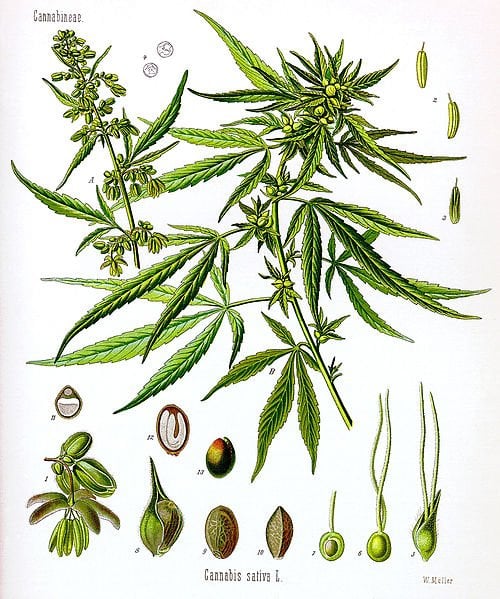
The illustration is of the cannabis sativa plant.

 “TAU researchers find chemicals in marijuana could help treat MS.

Multiple sclerosis is an inflammatory disease in which the immune system attacks the nervous system. The result can be a wide range of debilitating motor, physical, and mental problems. No one knows why people get the disease or how to treat it.

In a new study published in the Journal of Neuroimmune Pharmacology, Drs. Ewa Kozela, Ana Juknat, Neta Rimmerman and Zvi Vogel of Tel Aviv University’s Dr. Miriam and Sheldon G. Adelson Center for the Biology of Addictive Diseases and Sackler Faculty of Medicine demonstrate that some chemical compounds found in marijuana can help treat MS-like diseases in mice by preventing inflammation in the brain and spinal cord.

“Inflammation is part of the body’s natural immune response, but in cases like MS it gets out of hand,” says Kozela. “Our study looks at how compounds isolated from marijuana can be used to regulate inflammation to protect the nervous system and its functions.” Researchers from the Weizmann Institute of Science co-authored the study…”

More: http://neurosciencenews.com/neurology-thc-cbd-multiple-sclerosis-482/

 “Sending Multiple Sclerosis Up in Smoke” http://www.sciencedaily.com/releases/2013/10/131007132253.htm

“Cannabinoids Decrease the Th17 Inflammatory Autoimmune Phenotype” http://link.springer.com/article/10.1007/s11481-013-9493-1

Researchers find chemicals in marijuana could help treat MS

Researchers find chemicals in marijuana could help treat MS

“In a new study published in the Journal of Neuroimmune Pharmacology, Drs. Ewa Kozela, Ana Juknat, Neta Rimmerman and Zvi Vogel of Tel Aviv University’s Dr. Miriam and Sheldon G. Adelson Center for the Biology of Addictive Diseases and Sackler Faculty of Medicine demonstrate that some chemical compounds found in marijuana can help treat MS-like diseases in mice by preventing inflammation in the brain and spinal cord.

“Inflammation is part of the body’s natural immune response, but in cases like MS it gets out of hand,” says Kozela. “Our study looks at how compounds isolated from marijuana can be used to regulate inflammation to protect the nervous system and its functions.” Researchers from the Weizmann Institute of Science co-authored the study.”

More: http://medicalxpress.com/news/2013-10-chemicals-marijuana-ms.html

“Cannabinoids Decrease the Th17 Inflammatory Autoimmune Phenotype” http://link.springer.com/article/10.1007/s11481-013-9493-1

Tel Aviv University researchers find chemicals in marijuana could help treat MS

“Multiple sclerosis is an inflammatory disease in which the immune system attacks the nervous system. The result can be a wide range of debilitating motor, physical, and mental problems. No one knows why people get the disease or how to treat it.

In a new study published in the Journal of Neuroimmune Pharmacology, Drs. Ewa Kozela, Ana Juknat, Neta Rimmerman and Zvi Vogel of Tel Aviv University’s Dr. Miriam and Sheldon G. Adelson Center for the Biology of Addictive Diseases and Sackler Faculty of Medicine demonstrate that some chemical compounds found in marijuana can help treat MS-like diseases in mice by preventing inflammation in the brain and spinal cord…”

More: http://www.news-medical.net/news/20131008/Tel-Aviv-University-researchers-find-chemicals-in-marijuana-could-help-treat-MS.aspx

“Cannabinoids Decrease the Th17 Inflammatory Autoimmune Phenotype” http://link.springer.com/article/10.1007/s11481-013-9493-1

Cannabinoid Receptor 2 Activation: A Means to Prevent Monocyte-Endothelium Engagement.

“This Commenatry highlights the article by Rom et al which shows that selective cannabinoid receptor 2 activation in leukocytes decreases key steps in monocyte-blood brain barrier engagement suppressing inflammatory leukocyte responses and preventing neuroinflammation.”

http://www.ncbi.nlm.nih.gov/pubmed/24055258

Selective Activation of Cannabinoid Receptor 2 in Leukocytes Suppresses Their Engagement of the Brain Endothelium and Protects the Blood-Brain Barrier.

“Cannabinoid receptor 2 (CB2) is highly expressed in immune cells and stimulation decreases inflammatory responses. We tested the idea that selective CB2 activation in human monocytes suppresses their ability to engage the brain endothelium and migrate across the blood-brain barrier (BBB), preventing consequent injury…

These results indicate that selective CB2 activation in leukocytes decreases key steps in monocyte-BBB engagement, thus suppressing inflammatory leukocyte responses and preventing neuroinflammation.”

http://www.ncbi.nlm.nih.gov/pubmed/24055259

The role of androgen receptor in transcriptional modulation of cannabinoid receptor type 1 gene in rat trigeminal ganglia.

“We have previously shown that anti-hyperalgesic effects of cannabinoid agonists under inflammatory condition are much greater in male than female, and that inflammatory cytokines upregulate cannabinoid receptor type 1 (CB1) expression in male, but not female, trigeminal ganglia (TG) in a testosterone-dependent manner. In this study, we investigated the mechanisms underlying the testosterone-mediated regulation of peripheral CB1 expression…

These experiments provided compelling evidence that testosterone regulates CB1 gene transcription in TG through AR following cytokine stimulation.

These results should provide mechanistic bases for understanding cytokine-hormone-neuron interactions in peripheral cannabinoid systems, and have important clinical implications for pain patients in whom testosterone level is naturally low, gradually declining or pharmacologically compromised.”

http://www.ncbi.nlm.nih.gov/pubmed/24055403

Therapeutic Potential of a Novel Cannabinoid Agent CB52 in the Mouse Model ofExperimental Autoimmune Encephalomyelitis.

“The endocannabinoid system has recently emerged as a promising therapeutic target for MS. The protective mechanisms of cannabinoids are thought to be mediated by activation of cannabinoid receptor 1 (CB1) and 2 (CB2)…

activation of CB1 receptors contributes significantly to the anti-inflammatory and neuroprotective effects of cannabinoids on MS.”

http://www.ncbi.nlm.nih.gov/pubmed/24036373