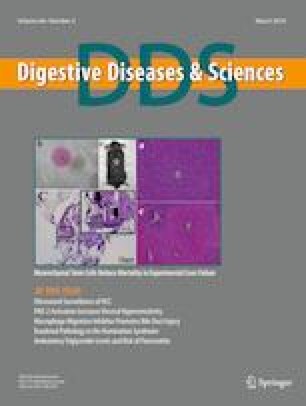
“Preclinical studies have demonstrated that the endocannabinoid system (ECS) plays an important role in the protection against intestinal inflammation and colorectal cancer (CRC); however, human data are scarce. We determined members of the ECS and related components of the ‘endocannabinoidome’ in patients with inflammatory bowel disease (IBD) and CRC, and compared them to control subjects. Anandamide (AEA) and oleoylethanolamide (OEA) were increased in plasma of ulcerative colitis (UC) and Crohn’s disease (CD) patients while 2-arachidonoylglycerol (2-AG) was elevated in patients with CD, but not UC. 2-AG, but not AEA, PEA and OEA, was elevated in CRC patients. Lysophosphatidylinositol (LPI) 18:0 showed higher levels in patients with IBD than in control subjects whereas LPI 20:4 was elevated in both CRC and IBD. Gene expression in intestinal mucosal biopsies revealed different profiles in CD and UC. CD, but not UC patients, showed increased gene expression for the 2-AG synthesizing enzyme diacylglycerol lipase alpha. Transcripts of CNR1 and GPR119 were predominantly decreased in CD. Our data show altered plasma levels of endocannabinoids and endocannabinoid-like lipids in IBD and CRC and distinct transcript profiles in UC and CD. We also report alterations for less known components in intestinal inflammation, such as GPR119, OEA and LPI.”
Tag Archives: anti-inflammatory
New Insights of Uterine Leiomyoma Pathogenesis: Endocannabinoid System.

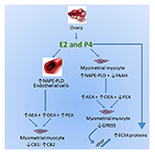
“The aim of this study was to determine if components of the endocannabinoid system are modulated in uterine leiomyomas (fibroids). Components studied included cannabinoid receptors 1 (CB1) and 2 (CB2); the G protein-coupled receptor GPR55; transient potential vanilloid receptor 1 (TRPV1) and the endocannabinoid modulating enzymes N-acylphosphatidylethanolamine-specific phospholipase D (NAPE-PLD) and fatty acid amide hydrolase (FAAH), and their N-acylethanolamine (NAE) ligands: N-arachidonylethanolamine (AEA), N-oleoylethanolamine (OEA), and N-palmityolethanaolamine (PEA). MATERIAL AND METHODS Transcript levels of CB1, CB2, TRPV1, GPR55, NAPE-PLD, and FAAH were measured using RT-PCR and correlated with the tissue levels of the 3 NAEs in myometrial tissues. The tissues studied were: 1) fibroids, 2) myometrium adjacent/juxtaposed to the fibroid lesions, and 3) normal myometrium. Thirty-seven samples were processed for NAE measurements and 28 samples were used for RT-PCR analyses. RESULTS FAAH expression was significantly lower in fibroids, resulting in a NAPE-PLD: FAAH ratio that favors higher AEA levels in pre-menopausal tissues, whilst PEA levels were significantly lower, particularly in post-menopausal women, suggesting PEA protects against fibroid pathogenesis. The CB1: CB2 ratio was lower in fibroids, suggesting that loss of CB1 expression affects the fibroid cell phenotype. Significant correlations between reduced FAAH, CB1, and GPR55 expression and PEA in fibroids indicate that the loss of these endocannabinoid system components are biomarkers of leiomyomata. CONCLUSIONS Loss of expression of CB1, FAAH, GPR55, and PEA production are linked to the pathogenesis of uterine fibroids and further understanding of this might eventually lead to better disease indicators or the development of therapeutic potentials that might eventually be used in the management of uterine fibroids.”
Association Between Cannabis Use and Complications Related to Crohn’s Disease: A Retrospective Cohort Study.

“Crohn’s disease is an idiopathic inflammatory process that is occasionally associated with complications, which cause significant morbidity and mortality. The anti-inflammatory effect of cannabis in intestinal inflammation has been shown in several experimental models; it is unknown whether this correlates with fewer complications in Crohn’s disease patients.
AIMS:
To compare the prevalence of Crohn’s disease-related complications among cannabis users and non-users in patients admitted with a primary diagnosis of Crohn’s disease or a primary diagnosis of Crohn’s related complication and a secondary diagnosis of Crohn’s disease between 2012 and 2014.
METHODS:
We used data from the Healthcare Cost and Utilization Project-National Inpatient Sample. Cannabis users (615) were compared directly after propensity score match to non-users, in aspects of various complications and clinical end-points.
RESULTS:
Among matched cohorts, Cannabis users were less likely to have the following: active fistulizing disease and intra-abdominal abscess (11.5% vs. 15.9%; aOR 0.68 [0.49 to 0.94], p = 0.025), blood product transfusion (5.0% vs. 8.0%; aOR 0.48 [0.30 to 0.79], p = 0.037), colectomy (3.7% vs. 7.5%; aOR 0.48 [0.29-0.80], p = 0.004), and parenteral nutrition requirement (3.4% vs. 6.7%, aOR 0.39 [0.23 to 0.68], p = 0.009).
CONCLUSION:
Cannabis use may mitigate several of the well-described complications of Crohn’s disease among hospital inpatients. These effects could possibly be through the effect of cannabis in the endocannabinoid system.”
https://www.ncbi.nlm.nih.gov/pubmed/30825109
https://link.springer.com/article/10.1007%2Fs10620-019-05556-z
Cannabinoid derivatives acting as dual PPARγ/CB2 agonists as therapeutic agents for Systemic Sclerosis.

“The endocannabinoid system(ECS) may play a role in the pathophysiology of systemic sclerosis (SSc). Cannabinoids actingas dual PPARγ/CB2agonists, such as VCE-004.8 and Ajulemic acid (AjA), havebeen shown to alleviate skin fibrosis and inflammation in SSc models. Since bothcompounds are being tested in humans, we compared their activities in the bleomycin(BLM) SSc model.Specifically, the pharmacotranscriptomicsignature of the compounds was determined by RNA-Seq changes in the skin of BLM mice treated orallywith AjA or EHP-101, a lipidicformulation of VCE-004.8. While both compounds down-regulatedthe expression of genes involved in the inflammatoryand fibrotic components of the disease and the pharmacotranscriptomicsignatures were similar for both compounds in some pathways, we found keydifferences between the compounds in vasculogenesis. Additionally, we found 28 specific genes withtranslation potential by comparing with a list of humanscleroderma genes. Immunohistochemical analysis revealed that both compounds prevented fibrosis, collagen accumulation andTenascin C (TNC) expression. Theendothelial CD31+/CD34+ cells and telocyteswere reduced in BLM mice and restored only byEHP-101 treatment. Finally, differences were found inplasmatic biomarker analysis; EHP-101, but not AjA, enhanced the expressionof some factors related to angiogenesisand vasculogenesis. Altogether the results indicate that dual PPARγ/CB2agonists qualify as a novel therapeutic approach for the treatment of SSc and other fibrotic diseases. EHP-101 demonstratedunique mechanisms of action related to the pathophysiology of SSc that could be beneficial in the treatment of this complex disease without current therapeutic options.”
https://www.ncbi.nlm.nih.gov/pubmed/30825431
https://www.sciencedirect.com/science/article/abs/pii/S0006295219300772?via%3Dihub
CB2 Receptor Stimulation and Dexamethasone Restore the Anti-Inflammatory and Immune-Regulatory Properties of Mesenchymal Stromal Cells of Children with Immune Thrombocytopenia.

“Immune thrombocytopenia (ITP) is an autoimmune disorder characterized by antibody-mediated platelet destruction, with a complex and unclear pathogenesis. The impaired immunosuppressive capacity of mesenchymal stromal cells in ITP patients (ITP-MSCs) might play a role in the development of the disease. Correcting the MSC defects could represent an alternative therapeutic approach for ITP.
High-dose dexamethasone (HD-Dexa) is the mainstay of the ITP therapeutic regimen, although it has several side effects. We previously demonstrated a role for cannabinoid receptor 2 (CB₂) as a mediator of anti-inflammatory and immunoregulatory properties of human MSCs.
We analyzed the effects of CB₂ stimulation, with the selective agonist JWH-133, and of Dexa alone and in combination on ITP-MSC survival and immunosuppressive capacity. We provided new insights into the pathogenesis of ITP, suggesting CB₂ receptor involvement in the impairment of ITP-MSC function and confirming MSCs as responsive cellular targets of Dexa. Moreover, we demonstrated that CB₂ stimulation and Dexa attenuate apoptosis, via Bcl2 signaling, and restore the immune-modulatory properties of MSCs derived from ITP patients.
These data suggest the possibility of using Dexa in combination with JWH-133 in ITP, reducing its dose and side effects but maintaining its therapeutic benefits.”
Crystal Structure of the Human Cannabinoid Receptor CB2

“Structure of human type 2 cannabinoid receptor revealed” https://www.news-medical.net/news/20190228/Structure-of-human-type-2-cannabinoid-receptor-revealed.aspx
“Structure of the Human Cannabinoid Receptor CB2 Solved” https://www.technologynetworks.com/drug-discovery/news/structure-of-the-human-cannabinoid-receptor-cb2-solved-316091
CBN: The cancer fighting Cannabinoid

“CBN, cannabinol, is a mildly psychoactive cannabinoid found within the cannabis plant. We examine the very complex mechanisms that give allowance for this cannabinoids entrance into the cell membrane and its effect on cannabinoid receptors and the inhibition of the enzyme adenylate cyclase that is responsible for phosphate production. Prior study bears weight accordingly; we examine this phosphate as a potent energy source, the enzymes responsible for cell replication cycle and inhibition thereof. Moreover, how IL-2, (Interleukin-2), a type of cytokine signaling molecule in the immune system stops being produced when immune T cells are exposed to cannabinoids. How IL-2 stimulates the cell cycle via promotion of the c-Fos protein and is responsible for modulation of the immune response. This is shown by Faubert and Kaminski, that administration of CBN can slow cell replication and endure cell death (apoptosis).”
http://www.imedpub.com/proceedings/cbn-the-cancer-fighting-cannabinoid-5528.html
“Programmed Cell Death (Apoptosis)” http://www.ncbi.nlm.nih.gov/books/NBK26873/
Cannabis Oil Use by Adolescents and Young Adults With Inflammatory Bowel Disease.

“The aim of the study was to describe use of oral or sublingual cannabis oil (CO) by adolescent and young adult patients with inflammatory bowel disease (IBD).
METHODS:
A descriptive study of IBD patients 13 to 23 years of age seen between January 2015 through December 2017 at Children’s Hospital Colorado. Information obtained included chart abstraction, electronic and interview self-report, and serum cannabinoid levels. We compared CO users and cannabis non-users for clinical characteristics and perceptions of risk. Users of CO provided information on routes, patterns, motivations, and perceived benefits and problems with use.
RESULTS:
The 15 users and 67 non-users were similar for clinical characteristics and pain and appetite scores. 9 of 15 (60%) CO users had used in the past 30 days, an average of 22 ± 9 times; and 4 used daily. A variety of strengths and CBD:THC ratios were reported. Most common perceived effect of use was on sleep quality, nausea, and increase in appetite. Of the 15 users, 6 used only CO and no additional forms of cannabis. Of these 6 CO only users, 5 reported a medical reason for use, most commonly to relieve pain.
CONCLUSIONS:
Adolescent and young adults with IBD used oral CO and many used other cannabis products as well. Users perceived some medical benefit. Care teams should strive for open communication about use until further information on safety and efficacy becomes available.”
Cannabinoid receptor 2 deficiency exacerbates inflammation and neutrophil recruitment.

“Cannabinoid receptor (CB)2 is an immune cell-localized GPCR that has been hypothesized to regulate the magnitude of inflammatory responses.
However, there is currently no consensus as to the mechanism by which CB2 mediates its anti-inflammatory effects in vivo. To address this question, we employed a murine dorsal air pouch model with wild-type and CB2-/- 8-12-wk-old female and male C57BL/6 mice and found that acute neutrophil and lymphocyte antigen 6 complex, locus Chi monocyte recruitment in response to Zymosan was significantly enhanced in CB2-/- mice.
Additionally, levels of matrix metalloproteinase 9 and the chemokines C-C motif chemokine ligand (CCL)2, CCL4, and C-X-C motif chemokine ligand 10 in CB2-/- pouch exudates were elevated at earlier time points. Importantly, using mixed bone marrow chimeras, we revealed that the proinflammatory phenotype in CB2-/- mice is neutrophil-intrinsic rather than stromal cell-dependent. Indeed, neutrophils isolated from CB2-/- mice exhibited an enhanced migration-related transcriptional profile and increased adhesive phenotype, and treatment of human neutrophils with a CB2 agonist blocked their endothelial transmigration.
Overall, we have demonstrated that CB2 plays a nonredundant role during acute neutrophil mobilization to sites of inflammation and, as such, it could represent a therapeutic target for the development of novel anti-inflammatory compounds to treat inflammatory human diseases.”
Palmitoylethanolamide and Cannabidiol Prevent Inflammation-induced Hyperpermeability of the Human Gut In Vitro and In Vivo—A Randomized, Placebo-controlled, Double-blind Controlled Trial
“We aimed to examine, for the first time, the effect of cannabidiol (CBD) and palmitoylethanolamide (PEA) on the permeability of the human gastrointestinal tract in vitro, ex vivo, and in vivo.
Cannabidiol and palmitoylethanolamide reduce permeability in the human colon. These findings have implications in disorders associated with increased gut permeability, such as inflammatory bowel disease.”