
 “Alzheimer’s disease (AD) is a multifactorial neurodegenerative disorder linked to various converging toxic mechanisms. Evidence suggests that hyperglycemia induces oxidative stress, mitochondrial dysfunction, inflammation and excitotoxicity, all of which play important roles in the onset and progression of AD pathogenesis.
The endocannabinoid system (ECS) orchestrates major physiological responses, including neuronal plasticity, neuroprotection, and redox homeostasis, to name a few. The multi-targeted effectiveness of the ECS emerges as a potential approach to treat AD.
Here we characterized the protective properties of the endocannabinoids arachidonylethanolamide (AEA) and 2-arachidonoylglycerol (2-AG), the synthetic cannabinoids CP 55-940 and WIN 55,212-2, and the fatty acid amide hydrolase (FAAH) inhibitor URB597, on a combined hyperglycemia+oligomeric amyloid β peptide (Aβ1-42) neurotoxic model in primary hippocampal neurons which exhibit several AD features.
All agents tested preserved cell viability and stimulated mitochondrial membrane potential, while reducing all the evaluated toxic endpoints in a differential manner, with URB597 showing the highest efficacy. The neuroprotective efficacy of all cannabinoid agents, except for URB597, led to partial recruitment of specific antioxidant activity and Nrf2 pathway regulation.
Our results support the neuroprotective potential of these agents at low concentrations against the damaging effects of GLU+Aβ1-42, affording new potential modalities for the design of AD therapies.”
https://pubmed.ncbi.nlm.nih.gov/32781098/
“All cannabinoid agents prevented the GLU + Aβ1-42 toxicity in a differential manner. All cannabinoid agents recruited Nrf2 signaling to protect cells.”
https://www.sciencedirect.com/science/article/abs/pii/S0197018620302084?via%3Dihub
 “Cannabis has been used for its medicinal purposes since ancient times. Its consumption leads to the activation of Cannabis receptors CB1 and CB2 that, through specific mechanisms can lead to modulation and progression of inflammation or repair. The novel findings are linked to the medical use of Cannabis in gastrointestinal (GI) system.
 “Purpose of review: To evaluate the impact of flavonoids and cannabinoids as anti-inflammatory and antiallergic treatments on the anterior surface of the eye.
 “Although several lines of evidence support the hypothesis of a dysregulation of serotoninergic neurotransmission in the pathophysiology of obsessive-compulsive disorder (OCD), there is also evidence for an involvement of other pathways such as the GABAergic, glutamatergic, and dopaminergic systems.
 “Melanoma is the fourth most common type of cancer diagnosed in Australians after breast, prostate, and colorectal cancers. While there has been substantial progress in the treatment of cancer in general, malignant melanoma, in particular, is resistant to existing medical therapies requiring an urgent need to develop effective treatments with lesser side effects.
 “The etiopathogenesis of autism spectrum disorder (ASD) remains largely unclear.
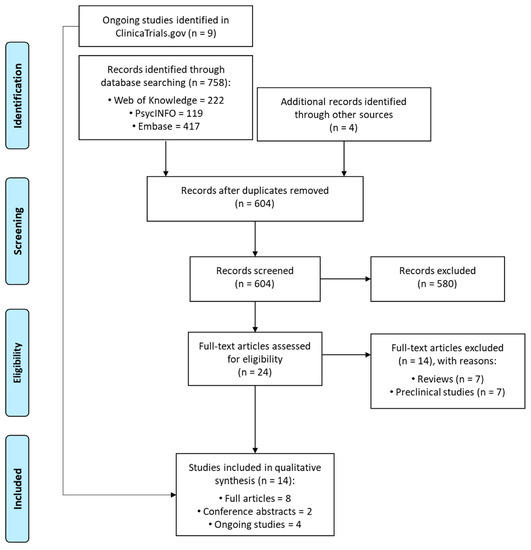
 “Posttraumatic stress disorder (PTSD) may stem from the formation of aberrant and enduring aversive memories. Some PTSD patients have recreationally used Cannabis, probably aiming at relieving their symptomatology.
 “Colorectal cancer represents a heavy burden for health systems worldwide, being the third most common cancer worldwide. Despite the breakthroughs in medicine, current chemotherapeutic options continue to have important side effects and may not be effective in preventing disease progression.

 “Alcohol is a psychoactive substance highly used worldwide, whose harmful use might cause a broad range of mental and behavioural disorders. Underlying brain impact, the neuroinflammatory response induced by alcohol is recognised as a key contributing factor in the progression of other neuropathological processes, such as neurodegeneration. These sequels are determined by multiple factors, including age of exposure.

