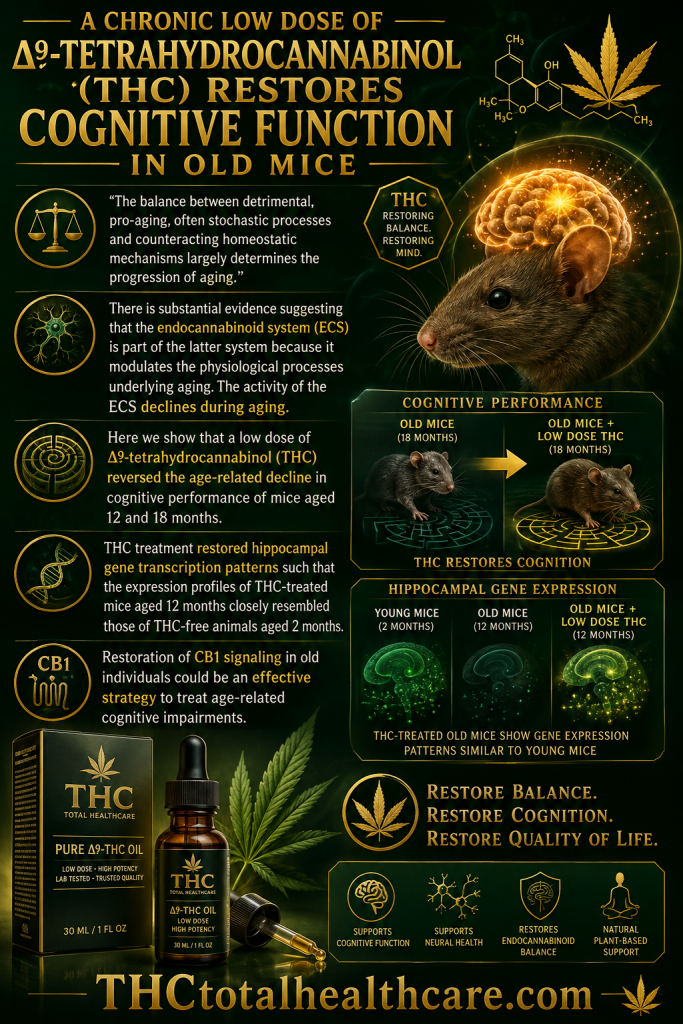
“Most neurodegenerative disorders (NDDs) are characterized by cognitive impairment and other neurological defects. The definite cause of and pathways underlying the progression of these NDDs are not well defined. Several mechanisms have been proposed to contribute to the development of NDDs. These mechanisms may proceed concurrently or successively, and they differ among cell types at different developmental stages in distinct brain regions. The endocannabinoid system, which involves cannabinoid receptors type 1 (CB1R) and type 2 (CB2R), endogenous cannabinoids and the enzymes that catabolize these compounds, has been shown to contribute to the development of NDDs in several animal models and human studies. In this review, we discuss the functions of the endocannabinoid (EC) system in NDDs and converse the therapeutic efficacy of targeting the endocannabinoid system to rescue NDDs.” https://www.ncbi.nlm.nih.gov/pubmed/28608560 http://onlinelibrary.wiley.com/doi/10.1111/jnc.14098/abstract]]>
Tag Archives: endocannabinoid system
The endocannabinoid system as a target for addiction treatment: Trials and tribulations.
“Addiction remains a major public health concern, and while pharmacotherapies can be effective, clinicians are limited by the paucity of existing interventions. Endocannabinoid signaling is involved in reward and addiction, which raises the possibility that drugs targeting this system could be used to treat substance use disorders. This review discusses findings from randomized controlled trials evaluating cannabinergic medications for addiction. Current evidence suggests that pharmacotherapies containing delta-9-tetrahydrocannabinol, such as dronabinol and nabiximols, are effective for cannabis withdrawal. Dronabinol may also reduce symptoms of opioid withdrawal. The cannabinoid receptor 1 (CB1) inverse agonist rimonabant showed promising effects for smoking cessation but also caused psychiatric side effects and currently lacks regulatory approval. Few trials have investigated cannabinergic medications for alcohol use disorder. Overall, the endocannabinoid system remains a promising target for addiction treatment. Development of novel medications such as fatty acid amide hydrolase inhibitors and neutral CB1 antagonists promises to extend the range of available interventions.” https://www.ncbi.nlm.nih.gov/pubmed/28564576 http://www.sciencedirect.com/science/article/pii/S0028390817302563]]>
Nonopioid placebo analgesia is mediated by CB1 cannabinoid receptors.
 “Placebo analgesia is mediated by both opioid and nonopioid mechanisms, but so far nothing is known about the nonopioid component. Here we show that the specific CB1 cannabinoid receptor antagonist 5-(4-chlorophenyl)-1-(2,4-dichloro-phenyl)-4-methyl-N-(piperidin-1-yl)-1H-pyrazole-3-carboxamide (rimonabant or SR141716) blocks nonopioid placebo analgesic responses but has no effect on opioid placebo responses. These findings suggest that the endocannabinoid system has a pivotal role in placebo analgesia in some circumstances when the opioid system is not involved.”
Endocannabinoids modulate apoptosis in endometriosis and adenomyosis.
“Adenomyosis that is a form of endometriosis is the growth of ectopic endometrial tissue within the muscular wall of the uterus (myometrium), which may cause dysmenorrhea and infertility. Endocannabinoid mediated apoptotic mechanisms of endometriosis and adenomyosis are not known. We hypothesized that the down regulation of endocannabinoid receptors and/or alteration in their regulatory enzymes may have a direct role in the pathogenesis of endometriosis and adenomyosis through apoptosis. Endocannabinoid receptors CB1 and CB2, their synthesizing and catabolizing enzymes (FAAH, NAPE-PLD, DAGL, MAGL) and the apoptotic indexes were immunohistochemically assessed in endometriotic and adenomyotic tissues. Findings were compared to normal endometrium and myometrium. Endometrial adenocarcinoma (Ishikawa) and ovarian endometriosis cyst wall stromal (CRL-7566) cell lines were furthermore cultured with or without cannabinoid receptor agonists. The IC50 value for CB1 and CB2 receptor agonists was quantified. Cannabinoid agonists on cell death were investigated by Annexin-V/Propidium iodide labeling with flow cytometry. CB1 and CB2 receptor levels decreased in endometriotic and adenomyotic tissues compared to the control group (p=0,001 and p=0,001). FAAH, NAPE-PLD, MAGL and DAGL enzyme levels decreased in endometriotic and adenomyotic tissues compared to control (p=0,001, p=0,001, p=0,001 and p=0,002 respectively). Apoptotic cell indexes both in endometriotic and adenomyotic tissues also decreased significantly, compared to the control group (p=0,001 and p=0,001). CB1 and CB2 receptor agonist mediated dose dependent fast anti-proliferative and pro-apoptotic effects were detected in Ishikawa and ovarian endometriosis cyst wall stromal cell lines (CRL-7566). Endocannabinoids are suggested to increase apoptosis mechanisms in endometriosis and adenomyosis. CB1 and CB2 antagonists can be considered as potential medical therapeutic agents for endometriosis and adenomyosis.” https://www.ncbi.nlm.nih.gov/pubmed/28549792 http://www.sciencedirect.com/science/article/pii/S0065128116303154]]>
Targeting cannabinoid signaling for peritoneal dialysis-induced oxidative stress and fibrosis.
“Long-term exposure to bioincompatible peritoneal dialysis (PD) solutions frequently results in peritoneal fibrosis and ultrafiltration failure, which limits the life-long use of and leads to the cessation of PD therapy. Therefore, it is important to elucidate the pathogenesis of peritoneal fibrosis in order to design therapeutic strategies to prevent its occurrence. Peritoneal fibrosis is associated with a chronic inflammatory status as well as an elevated oxidative stress (OS) status. Beyond uremia per se, OS also results from chronic exposure to high glucose load, glucose degradation products, advanced glycation end products, and hypertonic stress. Therapy targeting the cannabinoid (CB) signaling pathway has been reported in several chronic inflammatory diseases with elevated OS. We recently reported that the intra-peritoneal administration of CB receptor ligands, including CB1 receptor antagonists and CB2receptor agonists, ameliorated dialysis-related peritoneal fibrosis. As targeting the CB signaling pathway has been reported to be beneficial in attenuating the processes of several chronic inflammatory diseases, we reviewed the interaction among the cannabinoid system, inflammation, and OS, through which clinicians ultimately aim to prolong the peritoneal survival of PD patients.” https://www.ncbi.nlm.nih.gov/pubmed/28540200 http://www.wjgnet.com/2220-6124/full/v6/i3/111.htm]]>
Neuroprotection in oxidative stress-related neurodegenerative diseases: role of endocannabinoid system modulation.
 “Redox imbalance may lead to overproduction of reactive oxygen and nitrogen species (ROS/RNS) and subsequent oxidative tissue damage which is a critical event in the course of neurodegenerative diseases. It is still not fully elucidated, however, whether oxidative stress is the primary trigger or a consequence in process of neurodegeneration.
Recent Advances: Increasing evidence suggests that oxidative stress is involved in the propagation of neuronal injury and consequent inflammatory response, which in concert promote development of pathological alterations characteristic of most common neurodegenerative diseases.
Critical Issue: Accumulating recent evidence also suggests that there is an important interplay between the lipid endocannabinoid system (ECS; comprising of the main cannabinoid 1 and 2 receptors (CB1 and CB2), endocannabinoids and their synthetic and metabolizing enzymes) and various key inflammatory and redox-dependent processes.