
 “In this review we discuss the emerging evidence for the effectiveness of cannabinoids in the treatment of cancer and inflammation. The remarkable effects complete the traditional evidence for their successful application in the treatment of pain and cancer-related side effects.
Results: Cannabinoids are described in three different forms, comprising endo- phyto- and synthetic compounds that exert biological effects. The molecular and cellular pathways of endogenous cannabinoids in the maintenance of homeostasis are well documented. In addition to classical cannabinoid receptors type 1 and 2, Vanilloid receptors and G protein-coupled receptor 55 were identified as common receptors. Subsequently, the effectiveness of phyto- and synthetic cannabinoids mediated by cannabinoid receptors has been demonstrated in the treatment of inflammatory diseases including neurodegenerative diseases as well as gastrointestinal and respiratory inflammations.
Another accepted property of cannabinoids is their anti-cancer effects. Cannabinoids were found to be effective in the treatment of lung, colorectal, prostate, breast, pancreas and hepatic cancers. The anticancer effects of cannabinoids were characterized by their anti-proliferative property, inhibition of cancer cells migration, suppression of vascularization and induction of apoptosis.
Conclusion: The current review provides and overview the role of endocannabinoid system in the mediation of physiological functions, the type and expression of cannabinoids receptors under physiological and pathological conditions. In additions, the molecular pathways involved in the effects of cannabinoids and the effectiveness of cannabinoids in the treatment of inflammations and cancers are highlighted.”

 “Gynaecological cancers can be primary neoplasms, originating either from the reproductive tract or the products of conception, or secondary neoplasms, representative of metastatic disease. For some of these cancers, the exact causes are unknown; however, it is recognised that the precise aetiopathogeneses for most are multifactorial and include exogenous (such as diet) and endogenous factors (such as genetic predisposition), which mutually interact in a complex manner.
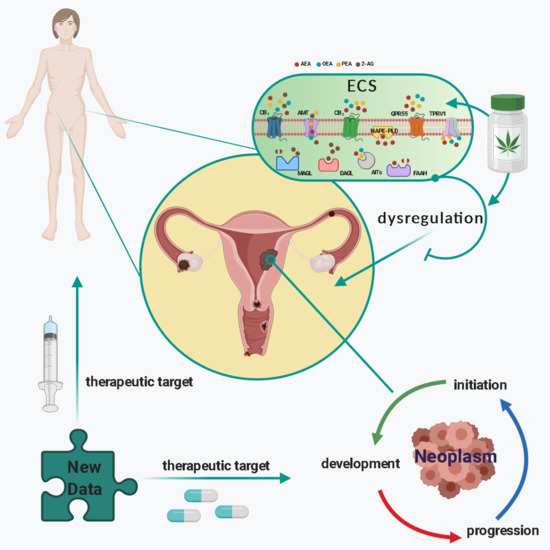
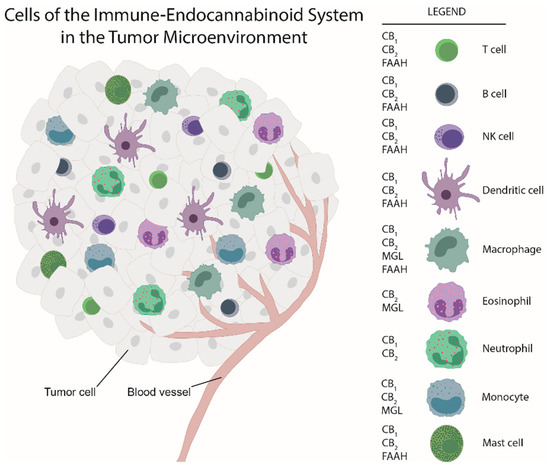
 “Leukocytes are part of the tumor microenvironment (TME) and are critical determinants of tumor progression. Because of the immunoregulatory properties of cannabinoids, the endocannabinoid system (ECS) may have an important role in shaping the TME.
 “Coronavirus disease 2019 (COVID-19) is a highly infectious respiratory disease caused by the severe acute respiratory syndrome coronavirus 2. A significant proportion of COVID-19 patients develop Acute Respiratory Distress Syndrome (ARDS) resulting from hyperactivation of the immune system and cytokine storm, which leads to respiratory and multi-organ failure, and death. Currently, there are no effective treatments against hyperimmune syndrome and ARDS.
 “The endocannabinoid (eCB) system encompasses the eCBs anandamide and 2-arachidonoylglycerol, their anabolic/catabolic enzymes, and the cannabinoid CB1 and CB2 receptors. Its expansion to include several eCB-like lipid mediators, their metabolic enzymes, and their molecular targets, forms the endocannabinoidome (eCBome).