Marijuana Kills MRSA and Inhibits Prions That Cause Neurodegenerative Disease; Still Recognized by Feds As a Dangerous Drug

“Research indicates that marijuana could effectively fight off MRSA, as well as prions — the proteins that cause mad cow disease and Creutzfeld-Jakob disease.”

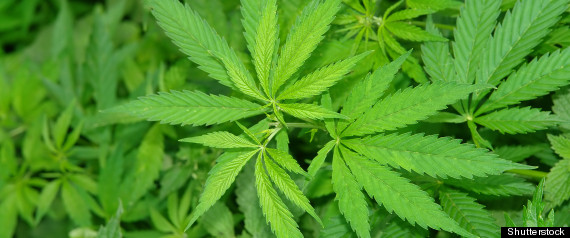
(Photo : Flickr, "it was 3 a.m.") Pot's constituent molecules kill bacteria and inhibit the formation of prions, a protein that can cause neurodegenerative diseases.

“New research reveals that several marijuana ingredients exhibit a potent antibiotic capacity in cases of methicillin-resistant Staphylococcus aureus (MRSA) infections as well as the ability to fight off proteins called prions that can lead to Mad Cow disease and Creutzfeld-Jakob disease (CDJ).”

More: http://www.medicaldaily.com/articles/17941/20130730/marijuana-mrsa-prions-mad-cow-disease.htm

Anti-inflammatory activity of topical THC in DNFB-mediated mouse allergic contact dermatitis independent of CB1 and CB2 receptors.

“∆9 -Tetrahydrocannabinol (THC), the active constituent of Cannabis sativa, exerts its biological effects in part through the G-protein-coupled CB1 and CB2 receptors, which were initially discovered in brain and spleen tissue, respectively. However, THC also has CB1/2 receptor-independent effects. Because of its immune-inhibitory potential, THC and related cannabinoids are being considered for the treatment of inflammatory skin diseases.

Here we investigated the mechanism of the anti-inflammatory activity of THC and the role of CB1 and CB2 receptors…

CONCLUSIONS:

Topically applied THC can effectively attenuate contact allergic inflammation by decreasing keratinocyte-derived pro-inflammatory mediators that orchestrate myeloid immune cell infiltration independent of CB1/2 receptors.

This has important implications for the future development of strategies to harness cannabinoids for the treatment of inflammatory skin diseases.”

http://www.ncbi.nlm.nih.gov/pubmed/23889474

The pot diet

“Never mind the munchies, study finds that pot smokers weigh less than non-smokers.”

“Turns out that in spite of the late-night pizza binges and countless bags of Doritos they consume, the average marijuana user is actually less likely to be obese than the general, non-pot-smoking public.”

 More: http://healthyliving.msn.com/blogs/daily-apple-blog-post?post=5adb2a7c-1969-4a65-8554-1275f46faa94&_p=f178c720-63e5-4a6a-b939-6ba03f0bdc94

[Marihuana and cannobinoids as medicaments].

“Biological activity of cannabinoids is caused by binding to two cannabinoid receptors CB1 and CB2. Psychoactive is not only tetrahydrocannabinol (THC) but also: cannabidiol, cannabigerol or cannabichromen.

Formerly, the usefulness of hemp was assessed in the relation to temporary appeasement of the symptoms of some ailments as nausea or vomiting.

Present discoveries indicates that cannabis-based drugs has shown ability to alleviate of autoimmunological disorders such as: Multiple sclerosis (MS), Rheumatoid arthritis (RA) or inflammatory bowel disease.

Another studies indicates that cannabinoids play role in treatment of neurological disorders like Alzheimer disease or Amyotrophic lateral sclerosis (ALS) or even can reduce spreading of tumor cells.

Cannabinoids stand out high safety profile considering acute toxicity, it is low possibility of deadly overdosing and side-effects are comprise in range of tolerated side-effects of other medications.

In some countries marinol and nabilone are used as anti vomiting and nausea drug. First cannabis-based drug containg naturally occurring cannabinoids is Sativex. Sativex is delivered in an mucosal spray for patients suffering from spasticity in MS, pain relevant with cancer and neuropathic pain of various origin.

Cannabis side-effects varies and depend from several factors like administrated dose, rout of administration and present state of mind. After sudden break from long-lasting use, withdrawal symptoms can appear, although they entirely disappear after a week or two.”

http://www.ncbi.nlm.nih.gov/pubmed/23421098

Medical Marijuana: 76% Of Doctors Would Prescribe It, Poll Finds – HUFFPOST

“Three out of four doctors would prescribe marijuana to a patient who was experiencing pain from cancer, according to the results of a poll published in the New England Journal of Medicine.”

Doctors Medical Marijuana

Most Docs OK With Medical Marijuana: Survey – US News and World Report

“Majority would give a prescription to an advanced cancer patient in pain. Three-quarters of doctors who responded to a survey about medical marijuana said they would approve the use of the drug to help ease pain in an older woman with advanced breast cancer.”

“The point of the vignette was to illustrate the kinds of patients that show up on our doorstep who need help. This issue is not one you can ignore, and some states have already taken matters into their own hands,” said Dr. J. Michael Bostwick, a professor of psychiatry at the Mayo Clinic in Rochester, Minn.

“There are no 100 percents in medicine. There’s a lot of anecdotal evidence that this is something we should study more. Forgive the pun, but there’s probably some fire where there’s smoke, and we should investigate the medicinal use of marijuana or its components,” Bostwick said.

Marijuana comes from the hemp plant Cannabis sativa. It’s a dry, shredded mix of the plant’s leaves, flowers, stems and seeds. It can be smoked as a cigarette or in a pipe, or it can be added to certain foods, such as brownies.”

More: http://health.usnews.com/health-news/news/articles/2013/05/29/most-docs-ok-with-medical-marijuana-survey

Marijuana first plants cultivated by man for medication (Update)

“Marijuana (Cannabis sativa L.) is one of the first plants cultivated by man. Shrouded in controversy, the intriguing history of cannabis as a medication dates back thousands of years before the era of Christianity.

Scientists believe the hemp plant originated in Asia. In 2737 B.C., Emperor Shen Neng of China prescribed tea brewed from marijuana leaves as a remedy for muscle injuries, rheumatism, gout, malaria, and memory loss. During the Bronze Age in 1400 B.C., cannabis was used throughout the eastern Mediterranean to ease the pain of childbirth and menstrual maladies.

More than 800 years before the birth of Christ, hemp was extensively cultivated in India for both its fiber and healing medicinal properties. William Brooke O’Shaughnessy, an Irish physician famous for his investigative research in pharmacology, is credited with introducing the therapeutic, healing properties of cannabis to Western medicine. During the 1830’s Dr. O’Shaughnessy, working for the British in India, conducted extensive experiments on lab animals. Encouraged by his results, Dr. O’Shaughnessy commenced patient treatment with marijuana for pain and muscle spasms. Further experiments indicated that marijuana was beneficial in the treatment of stomach cramps, migraine headaches, insomnia and nausea. Marijuana was also proven to be an effective anticonvulsant.

From the 1840s to the 1890s, hashish and marijuana extracts were among the most widely prescribed medications in the United States The 1850 United States Census records 8,327 marijuana plantations, each larger than 2000 acres. Recreational use of marijuana was not evident until early in the 20th century. Marijuana cigarettes became popular, introduced by migrants workers that brought marijuana with them from Mexico. With the onset of Prohibition, recreational use of marijuana skyrocketed. During the early 1930s, hash bars could be found all across the United States.

Although protested by the American Medical Association, the 1937 Marijuana Tax Act banned the cultivation and use of cannabis by federal law. Under the law, cultivation, distribution and consumption of cannabis products for medicinal, practical or recreational was criminalized and harsh penalties were implemented.”

More: http://guardianlv.com/2013/06/marijuana-first-plants-cultivated-by-man-for-medication/

marijuana

A Brief History of Medical Marijuana – TIME

“Should Professors Cheech and Chong ever receive university tenure teaching the medical history of their favorite subject, the course pack would be surprisingly thick.

As early as 2737 B.C., the mystical Emperor Shen Neng of China was prescribing marijuana tea for the treatment of gout, rheumatism, malaria and, oddly enough, poor memory. The drug’s popularity as a medicine spread throughout Asia, the Middle East and down the eastern coast of Africa, and certain Hindu sects in India used marijuana for religious purposes and stress relief. Ancient physicians prescribed marijuana for everything from pain relief to earache to childbirth…

By the late 18th century, early editions of American medical journals recommend hemp seeds and roots for the treatment of inflamed skin, incontinence and venereal disease. Irish doctor William O’Shaughnessy first popularized marijuana’s medical use in England and America. As a physician with the British East India Company, he found marijuana eased the pain of rheumatism and was helpful against discomfort and nausea in cases of rabies, cholera and tetanus.”

http://content.time.com/time/health/article/0,8599,1931247,00.html

What Is Marijuana? What Is Cannabis?

“When talking about the drug, marijuana and cannabis both have the same meaning. When talking botanically – talking about the plant genus – we use the word Cannabis. Cannabis is a flowering plant genus that includes three acknowledged varieties:

  • Cannabis sativa
  • Cannabis indica
  • Cannabis ruderalis

The three types originally come from South and Central Asia.”

Bubba Kush

“Cannabis has been used for hundreds of years by humans, for fiber (hemp), seed oils, seed, medical treatment and recreationally.

This article focuses on cannabis’ medicinal and recreational aspects.”

Read more: http://www.medicalnewstoday.com/articles/246392.php

No ‘Smoking’ Gun: Research Indicates Teen Marijuana Use Does Not Predict Drug, Alcohol Abuse

“Marijuana is not a “gateway” drug that predicts or eventually leads to substance abuse, suggests a 12-year University of Pittsburgh study. Moreover, the study’s findings call into question the long-held belief that has shaped prevention efforts and governmental policy for six decades and caused many a parent to panic upon discovering a bag of pot in their child’s bedroom.

The Pitt researchers tracked 214 boys beginning at ages 10-12, all of whom eventually used either legal or illegal drugs. When the boys reached age 22, they were categorized into three groups: those who used only alcohol or tobacco, those who started with alcohol and tobacco and then used marijuana (gateway sequence) and those who used marijuana prior to alcohol or tobacco (reverse sequence).

Nearly a quarter of the study population who used both legal and illegal drugs at some point — 28 boys — exhibited the reverse pattern of using marijuana prior to alcohol or tobacco, and those individuals were no more likely to develop a substance use disorder than those who followed the traditional succession of alcohol and tobacco before illegal drugs, according to the study, which appears in this month’s issue of the American Journal of Psychiatry.

“The gateway progression may be the most common pattern, but it’s certainly not the only order of drug use,” said Ralph E. Tarter, Ph.D., professor of pharmaceutical sciences at the University of Pittsburgh School of Pharmacy and lead author of the study. “In fact, the reverse pattern is just as accurate for predicting who might be at risk for developing a drug dependence disorder.”

In addition to determining whether the gateway hypothesis was a better predictor of substance abuse than competing theories, the investigators sought to identify characteristics that distinguished users in the gateway sequence from those who took the reverse path. Out of the 35 variables they examined, only three emerged to be differentiating factors: Reverse pattern users were more likely to have lived in poor physical neighborhood environments, had more exposure to drugs in their neighborhoods and had less parental involvement as young children. Most importantly, a general inclination for deviance from sanctioned behaviors, which can become evident early in childhood, was strongly associated with all illicit drug use, whether it came in the gateway sequence, or the reverse.

While the gateway theory posits that each type of drug is associated with certain specific risk factors that cause the use of subsequent drugs, such as cigarettes or alcohol leading to marijuana, this study’s findings indicate that environmental aspects have stronger influence on which type of substance is used. That is, if it’s easier for a teen to get his hands on marijuana than beer, then he’ll be more likely to smoke pot. This evidence supports what’s known as the common liability model, an emerging theory that states the likelihood that someone will transition to the use of illegal drugs is determined not by the preceding use of a particular drug but instead by the user’s individual tendencies and environmental circumstances.

“The emphasis on the drugs themselves, rather than other, more important factors that shape a person’s behavior, has been detrimental to drug policy and prevention programs,” Dr. Tarter said. “To become more effective in our efforts to fight drug abuse, we should devote more attention to interventions that address these issues, particularly to parenting skills that shape the child’s behavior as well as peer and neighborhood environments.”

Indeed, according to the study, interventions focusing on behavior modification may be more effective prevention tactics than current anti-drug initiatives. For example, providing guidance to parents — particularly those in high-risk neighborhoods — on how to boost their caregiving skills and foster bonding with their children, could have a measurable effect on a child’s likelihood to smoke marijuana. Also, early identification of children who exhibit antisocial tendencies could allow for interventions before drug use even begins.

Although this research has significant implications for drug abuse prevention approaches, Dr. Tarter notes that the study has some limitations. First, as only male behaviors were studied, further investigation should explore if the results apply to women as well. Also, the examination of behaviors in phases beyond alcohol and marijuana consumption in the gateway series will be necessary.

Other study authors include Michael Vanyukov, Ph.D., and Maureen Reynolds, Ph.D., and Levent Kirisci, Ph.D., also of the University of Pittsburgh School of Pharmacy; and Duncan Clark, M.D., Ph.D., of the University of Pittsburgh School of Medicine. The research was funded by the National Institute on Drug Abuse.”

http://www.sciencedaily.com/releases/2006/12/061204123422.htm