Cannabinoids ameliorate disease progression in a model of multiple sclerosis in mice, acting preferentially through CB1 receptor-mediated anti-inflammatory effects

“Cannabinoids have been proposed as promising therapeutic agents in MS given their capability to alleviate specific MS symptoms (e.g., spasticity, pain).

Although MS has been considered mainly an inflammatory disorder, recent evidence, however, revealed the importance of neurodegenerative events, opening the possibility that cannabinoid agonists, given their cytoprotective properties, may also serve to reduce oligodendrocyte death and axonal damage in MS.

Thus, the treatment with WIN55,512-2, a potent CB1 and CB2 agonist, was reported to be effective to ameliorate tremor and spasticity in mice with chronic relapsing experimental autoimmune encephalomyelitis, a murine model of MS, but also to delay disease progression in this and other murine models of MS….”

http://www.sciencedirect.com/science/article/pii/S0028390812000500

Control of Spasticity in a Multiple Sclerosis Model is mediated by CB1, not CB2, Cannabinoid Receptors

Figure 1

“There is increasing evidence to suggest that cannabis can ameliorate muscle-spasticity in multiple sclerosis, as was objectively shown in experimental autoimmune encephalomyelitis models. The purpose of this study was to investigate further the involvement of CB1 and CB2 cannabinoid receptors in the control of experimental spasticity…

Conclusions and Implications:

The CB1 receptor controls spasticity and cross-reactivity to this receptor appears to account for the therapeutic action of some CB2 agonists.

 As cannabinoid-induced psychoactivity is also mediated by the CB1 receptor, it will be difficult to truly dissociate the therapeutic effects from the well-known, adverse effects of cannabinoids when using cannabis as a medicine.

The lack of knowledge on the true diversity of the cannabinoid system coupled with the lack of total specificity of current cannabinoid reagents makes interpretation of in vivo results difficult, if using a purely pharmacological approach.

Gene knockout technology provides an important tool in target validation and indicates that the CB1 receptor is the main cannabinoid target for an anti-spastic effect.”

http://www.ncbi.nlm.nih.gov/pmc/articles/PMC2189718/

Control of spasticity in a multiple sclerosis model using central nervous system-excluded CB1 cannabinoid receptor agonists.

“The purpose of this study was the generation of central nervous system (CNS)-excluded cannabinoid receptor agonists to test the hypothesis that inhibition of spasticity, due to CNS autoimmunity, could be controlled by affecting neurotransmission within the periphery…

In summary, CNS-excluded CB1 receptor agonists are a novel class of therapeutic agent for spasticity.”

http://www.ncbi.nlm.nih.gov/pubmed/24121462

Chemicals in marijuana ‘protect nervous system’ against MS

Cannabis

“Chemical compounds found in marijuana can help treat multiple sclerosis-like diseases in mice by preventing inflammation in the brain and spinal cord, according to a study reported in the Journal of Neuroimmune Pharmacology.

“Inflammation is part of the body’s natural immune response, but in cases like MS, it gets out of hand,” says Dr. Ewa Kozela of Tel Aviv University, Israel.

“Our study looks at how compounds isolated from marijuana can be used to regulate inflammation to protect the nervous system and its functions.”

Dr. Kozela and colleagues set out to see if the known anti-inflammatory properties of two substances found in marijuana – the cannabinoids known as tetrahydrocannabinol (THC) and cannabidiol (CBD) – could also be applied to the treatment of inflammation associated with MS.

With either THC or CBD, the researchers treated immune cells that specifically target and harm the brain and spinal cord. In response to both chemicals, the immune cells, isolated from paralyzed mice, produced fewer inflammatory molecules, particularly interleukin 17 (IL-17).

Interleukin 17 “is strongly associated with MS and very harmful to nerve cells and their insulating covers,” the researchers say. They conclude:

“The presence of CBD or THC restrains the immune cells from triggering the production of inflammatory molecules, and limits the molecules’ ability to reach and damage the brain and spinal cord.” 

More: http://www.medicalnewstoday.com/articles/267161.php 


“Cannabinoids Decrease the Th17 Inflammatory Autoimmune Phenotype” http://link.springer.com/article/10.1007/s11481-013-9493-1

Chemicals in Marijuana Could Help Treat MS

TAU researchers have found that chemicals in marijuana could help treat multiple sclerosis. (Source: AFTAU)

“TAU researchers have found that chemicals in marijuana could help treat multiple sclerosis.

Multiple sclerosis is an inflammatory disease in which the immune system attacks the nervous system. The result can be a wide range of debilitating motor, physical, and mental problems. No one knows why people get the disease or how to treat it. 

In a new study published in the Journal of Neuroimmune Pharmacology, Drs. Ewa Kozela, Ana Juknat, Neta Rimmerman and Zvi Vogel of Tel Aviv University’s Dr. Miriam and Sheldon G. Adelson Center for the Biology of Addictive Diseases and Sackler Faculty of Medicine demonstrate that some chemical compounds found in marijuana can help treat MS-like diseases in mice by preventing inflammation in the brain and spinal cord…”


“Cannabinoids Decrease the Th17 Inflammatory Autoimmune Phenotype” http://link.springer.com/article/10.1007/s11481-013-9493-1 

Sending Multiple Sclerosis Up in Smoke

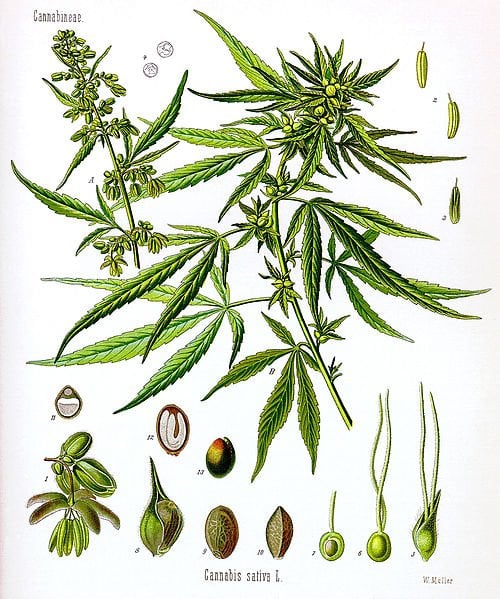
The illustration is of the cannabis sativa plant.

 “TAU researchers find chemicals in marijuana could help treat MS.

Multiple sclerosis is an inflammatory disease in which the immune system attacks the nervous system. The result can be a wide range of debilitating motor, physical, and mental problems. No one knows why people get the disease or how to treat it.

In a new study published in the Journal of Neuroimmune Pharmacology, Drs. Ewa Kozela, Ana Juknat, Neta Rimmerman and Zvi Vogel of Tel Aviv University’s Dr. Miriam and Sheldon G. Adelson Center for the Biology of Addictive Diseases and Sackler Faculty of Medicine demonstrate that some chemical compounds found in marijuana can help treat MS-like diseases in mice by preventing inflammation in the brain and spinal cord.

“Inflammation is part of the body’s natural immune response, but in cases like MS it gets out of hand,” says Kozela. “Our study looks at how compounds isolated from marijuana can be used to regulate inflammation to protect the nervous system and its functions.” Researchers from the Weizmann Institute of Science co-authored the study…”

More: http://neurosciencenews.com/neurology-thc-cbd-multiple-sclerosis-482/

 “Sending Multiple Sclerosis Up in Smoke” http://www.sciencedaily.com/releases/2013/10/131007132253.htm

“Cannabinoids Decrease the Th17 Inflammatory Autoimmune Phenotype” http://link.springer.com/article/10.1007/s11481-013-9493-1

Researchers find chemicals in marijuana could help treat MS

Researchers find chemicals in marijuana could help treat MS

“In a new study published in the Journal of Neuroimmune Pharmacology, Drs. Ewa Kozela, Ana Juknat, Neta Rimmerman and Zvi Vogel of Tel Aviv University’s Dr. Miriam and Sheldon G. Adelson Center for the Biology of Addictive Diseases and Sackler Faculty of Medicine demonstrate that some chemical compounds found in marijuana can help treat MS-like diseases in mice by preventing inflammation in the brain and spinal cord.

“Inflammation is part of the body’s natural immune response, but in cases like MS it gets out of hand,” says Kozela. “Our study looks at how compounds isolated from marijuana can be used to regulate inflammation to protect the nervous system and its functions.” Researchers from the Weizmann Institute of Science co-authored the study.”

More: http://medicalxpress.com/news/2013-10-chemicals-marijuana-ms.html

“Cannabinoids Decrease the Th17 Inflammatory Autoimmune Phenotype” http://link.springer.com/article/10.1007/s11481-013-9493-1

Tel Aviv University researchers find chemicals in marijuana could help treat MS

“Multiple sclerosis is an inflammatory disease in which the immune system attacks the nervous system. The result can be a wide range of debilitating motor, physical, and mental problems. No one knows why people get the disease or how to treat it.

In a new study published in the Journal of Neuroimmune Pharmacology, Drs. Ewa Kozela, Ana Juknat, Neta Rimmerman and Zvi Vogel of Tel Aviv University’s Dr. Miriam and Sheldon G. Adelson Center for the Biology of Addictive Diseases and Sackler Faculty of Medicine demonstrate that some chemical compounds found in marijuana can help treat MS-like diseases in mice by preventing inflammation in the brain and spinal cord…”

More: http://www.news-medical.net/news/20131008/Tel-Aviv-University-researchers-find-chemicals-in-marijuana-could-help-treat-MS.aspx

“Cannabinoids Decrease the Th17 Inflammatory Autoimmune Phenotype” http://link.springer.com/article/10.1007/s11481-013-9493-1

Parkinson’s Symptoms Reduced by Smoking Cannabis – Parkinson Research Foundation

Cannabis_Clones_in_Box

 “Ruth Djaldetti, M.D., of Tel Aviv University in Israel, presented the findings of her research at a recent International Congress on Parkinson’s Disease and Movement Disorders.  She reported improvement in tremor, pain, rigidity and bradykinesia (slowness of movement).  Twenty subjects, all in their mid-sixties, and were rated using the Unified Parkinson’s Disease Rating Scale (UPDRS) both before and after smoking.  Their overall “before” scores were over 30 and within 30 minutes of smoking, their scores dropped to 24..  Their tremor scores averaged 7.5 on the UPDRS before and dropped to a score of 3.5 after smoking cannabis.  Bradykinesia scores dropped from 13.2 to 8.6 and rigidity went from 7.4 to 6.4.  Dr. Djaldetti also saw a marked relief in the pain her subjects were experiencing and this relief of pain led to better sleep and feeling more rested.

This bears out the results of other studies.  A study done in Great Britain that was published in 2011 found the principal ingredient in cannabis provided neuroprotection for people with Parkinson’s disease.  Its neuroprotective properties included reduction of inflammation and control of spasms, making it an ideal drug for treating Parkinson’s.  However, its confusing legal status make it very difficult for people to obtain or consider using and for doctors to even recommend to patients.

Another interesting study done in 2010 found that cannabinoid receptors are located in many parts of the brain and that cannabinoids are produced naturally in the brain.  People with Parkinson’s have even higher levels of endocannabinoids (cannabinoids produced within the brain).  The main ingredient in cannabis, Tetrahydrcannibol (THC) actually increases dopamine production temporarily.  Cannabidiol (CBD) another component of cannabis, also provides neuroprotective properties and has been shown to reduce dystonias .  CDB could be a very vital improvement for treating Parkinson’s, and a recent study has shown it useful in treating certain cancers as well.

While there have been many, many people reporting the anecdotal benefits of smoking cannabis, clinical trials are lagging behind.  Laboratory and animal studies have shown many benefits, but perplexing issues around the legality of cannabis are slowing the efforts and impeding progress.”

http://parkinsonresearchfoundation.org/blog/2013/07/11/parkinsons-symptoms-reduced-by-smoking-cannabis/

Δ9-TETRAHYDROCANNABINOL IS PROTECTIVE THROUGH PPARγ DEPENDENT MITOCHONDRIAL BIOGENESIS IN A CELL CULTURE MODEL OF PARKINSON’S DISEASE

“Cannabinoids such as Δ9-tetrahydrocannabinol (Δ9-THC) are neuroprotective in animal and cell culture models of Parkinson’s disease (PD).

In a PD cell culture model we recently demonstrated that Δ9-THC is neuroprotective through activation of the nuclear receptor peroxisomal proliferator-activated receptor γ (PPARγ)…

Here we investigate the effect of Δ9-THC and pioglitazone on mitochondrial biogenesis…

CONCLUSIONS:

Even though Δ9-THC and pioglitazone are both protective against MPP+ only Δ9-THC induces PPARγ dependent mitochondrial biogenesis, a mechanism that may be beneficial for the treatment of PD.”

http://jnnp.bmj.com/content/84/11/e2.58

“Δ⁹-tetrahydrocannabinol (Δ⁹-THC) exerts a direct neuroprotective effect in a human cell culture model of Parkinson’s disease.” http://www.ncbi.nlm.nih.gov/pubmed/22236282