
“Is there a difference in quality of life and psychosocial outcomes between marijuana users and nonusers who have newly diagnosed head and neck cancer? In this case-matched cohort study, 74 patients with newly diagnosed head and neck cancer who were marijuana users appeared to have quality of life differences compared with 74 who did not use marijuana, including decreased anxiety, pain, and depression and increased appetite and generalized feelings of well-being on the Edmonton Symptom Assessment System and the EuroQol-5D questionnaires. Recreational marijuana use potentially improves quality of life and psychosocial symptoms among patients with newly diagnosed head and neck cancer. Recreational use of C sativa potentially alleviates anxiety, depression, pain, and nausea and improves general well-being in patients with newly diagnosed HNC.” https://jamanetwork.com/journals/jamaotolaryngology/fullarticle/2688527
Category Archives: Cancer
GPR55 signalling promotes proliferation of pancreatic cancer cells and tumour growth in mice, and its inhibition increases effects of gemcitabine
 “The life expectancy for pancreatic cancer patients has seen no substantial changes in the last 40 years as very few and mostly just palliative treatments are available. As the five years survival rate remains around 5%, the identification of novel pharmacological targets and development of new therapeutic strategies are urgently needed.
Here we demonstrate that inhibition of the G protein-coupled receptor GPR55, using genetic and pharmacological approaches, reduces pancreatic cancer cell growth in vitro and in vivo and we propose that this may represent a novel strategy to inhibit pancreatic ductal adenocarcinoma (PDAC) progression.
Specifically, we show that genetic ablation of Gpr55 in the KRASWT/G12D/TP53WT/R172H/Pdx1-Cre+/+ (KPC) mouse model of PDAC significantly prolonged survival.
Importantly, KPC mice treated with a combination of the GPR55 antagonist Cannabidiol (CBD) and gemcitabine (GEM, one of the most used drugs to treat PDAC), survived nearly three times longer compared to mice treated with vehicle or GEM alone.
Mechanistically, knockdown or pharmacologic inhibition of GPR55 reduced anchorage-dependent and independent growth, cell cycle progression, activation of mitogen-activated protein kinase (MAPK) signalling and protein levels of ribonucleotide reductases in PDAC cells. Consistent with this, genetic ablation of Gpr55 reduced proliferation of tumour cells, MAPK signalling and ribonucleotide reductase M1 levels in KPC mice.
Combination of CBD and GEM inhibited tumour cell proliferation in KPC mice and it opposed mechanisms involved in development of resistance to GEM in vitro and in vivo. Finally, we demonstrate that the tumour suppressor p53 regulates GPR55 protein expression through modulation of the microRNA miR34b-3p.
Our results demonstrate the important role played by GPR55 downstream of p53 in PDAC progression. Moreover our data indicate that combination of CBD and GEM, both currently approved for medical use, might be tested in clinical trials as a novel promising treatment to improve PDAC patients’ outcome.”
https://www.nature.com/articles/s41388-018-0390-1
“The life expectancy for pancreatic cancer patients has seen no substantial changes in the last 40 years as very few and mostly just palliative treatments are available. As the five years survival rate remains around 5%, the identification of novel pharmacological targets and development of new therapeutic strategies are urgently needed.
Here we demonstrate that inhibition of the G protein-coupled receptor GPR55, using genetic and pharmacological approaches, reduces pancreatic cancer cell growth in vitro and in vivo and we propose that this may represent a novel strategy to inhibit pancreatic ductal adenocarcinoma (PDAC) progression.
Specifically, we show that genetic ablation of Gpr55 in the KRASWT/G12D/TP53WT/R172H/Pdx1-Cre+/+ (KPC) mouse model of PDAC significantly prolonged survival.
Importantly, KPC mice treated with a combination of the GPR55 antagonist Cannabidiol (CBD) and gemcitabine (GEM, one of the most used drugs to treat PDAC), survived nearly three times longer compared to mice treated with vehicle or GEM alone.
Mechanistically, knockdown or pharmacologic inhibition of GPR55 reduced anchorage-dependent and independent growth, cell cycle progression, activation of mitogen-activated protein kinase (MAPK) signalling and protein levels of ribonucleotide reductases in PDAC cells. Consistent with this, genetic ablation of Gpr55 reduced proliferation of tumour cells, MAPK signalling and ribonucleotide reductase M1 levels in KPC mice.
Combination of CBD and GEM inhibited tumour cell proliferation in KPC mice and it opposed mechanisms involved in development of resistance to GEM in vitro and in vivo. Finally, we demonstrate that the tumour suppressor p53 regulates GPR55 protein expression through modulation of the microRNA miR34b-3p.
Our results demonstrate the important role played by GPR55 downstream of p53 in PDAC progression. Moreover our data indicate that combination of CBD and GEM, both currently approved for medical use, might be tested in clinical trials as a novel promising treatment to improve PDAC patients’ outcome.”
https://www.nature.com/articles/s41388-018-0390-1
“Cannabinoid improves survival rates of mice with pancreatic cancer” https://medicalxpress.com/news/2018-07-cannabinoid-survival-mice-pancreatic-cancer.html
“Study: CBD From Marijuana Plus Chemotherapy Tripled Cancer Survival Rates In Mice” https://www.forbes.com/sites/daviddisalvo/2018/07/31/study-cbd-from-marijuana-plus-chemotherapy-triples-cancer-survival-rates-in-mice/#491942d44630
“Cannabis drug may help pancreatic-cancer patients live almost THREE TIMES longer, study finds” http://www.dailymail.co.uk/health/article-6007275/Cannabis-drug-help-pancreatic-cancer-patients-live-THREE-TIMES-longer-study-finds.html
“Substance in cannabis ‘could boost pancreatic cancer treatments’. Scientists say cannabidiol could extend patients’ lives by a matter of years” https://www.theguardian.com/science/2018/jul/30/substance-in-cannabis-could-boost-pancreatic-cancer-treatments
“Cannabinoid mice trial holds hope for pancreatic cancer patients” https://www.smh.com.au/national/cannabinoid-mice-trial-holds-hope-for-pancreatic-cancer-patients-20180731-p4zuls.html
“Medical cannabis extract could help pancreatic cancer patients live longer, early study suggests” https://www.independent.co.uk/news/health/pancreatic-cancer-medical-cannabis-cbd-oil-cannabidiol-chemotherapy-a8470406.html
“Cancer ‘remarkable’ treatment – cannabis CBD could improve survival rate by THREE times. CANCER symptoms could be prevented with a “remarkable” new treatment, which includes cannabis CBD, scientists have revealed. Pancreatic cancer survival rates could be improved by three times, by adding CBD into chemotherapy treatments, they said.” https://www.express.co.uk/life-style/health/996657/cancer-treatment-pancreatic-symptoms-cannabis-cbd
“Compound in cannabis could help pancreatic cancer patients live significantly longer” https://www.deccanchronicle.com/lifestyle/health-and-wellbeing/310718/compound-in-cannabis-could-help-pancreatic-cancer-patients-live-signif.html
Anti-tumoural actions of cannabinoids.
 “The endocannabinoid system has emerged as a considerable target for the treatment of diverse diseases.
In addition to the well-established palliative effects of cannabinoids in cancer therapy, phytocannabinoids, synthetic cannabinoid compounds as well as inhibitors of endocannabinoid degradation have attracted attention as possible systemic anticancer drugs.
As a matter of fact, accumulating data from preclinical studies suggest cannabinoids elicit effects on different levels of cancer progression, comprising inhibition of proliferation, neovascularisation, invasion and chemoresistance, induction of apoptosis and autophagy as well as enhancement of tumour immune surveillance.
Although the clinical use of cannabinoid receptor ligands is limited by their psychoactivity, nonpsychoactive compounds, such as cannabidiol, have gained attention due to preclinically established anticancer properties and a favourable risk-to-benefit profile.
Thus, cannabinoids may complement the currently used collection of chemotherapeutics, as a broadly diversified option for cancer treatment, while counteracting some of their severe side effects.” https://www.ncbi.nlm.nih.gov/pubmed/30019449
“The endocannabinoid system has emerged as a considerable target for the treatment of diverse diseases.
In addition to the well-established palliative effects of cannabinoids in cancer therapy, phytocannabinoids, synthetic cannabinoid compounds as well as inhibitors of endocannabinoid degradation have attracted attention as possible systemic anticancer drugs.
As a matter of fact, accumulating data from preclinical studies suggest cannabinoids elicit effects on different levels of cancer progression, comprising inhibition of proliferation, neovascularisation, invasion and chemoresistance, induction of apoptosis and autophagy as well as enhancement of tumour immune surveillance.
Although the clinical use of cannabinoid receptor ligands is limited by their psychoactivity, nonpsychoactive compounds, such as cannabidiol, have gained attention due to preclinically established anticancer properties and a favourable risk-to-benefit profile.
Thus, cannabinoids may complement the currently used collection of chemotherapeutics, as a broadly diversified option for cancer treatment, while counteracting some of their severe side effects.” https://www.ncbi.nlm.nih.gov/pubmed/30019449
“During the last few decades, a large body of evidence has accumulated to suggest endocannabinoids, phytocannabinoids and synthetic cannabinoids exert an inhibitory effect on cancer growth via blockade of cell proliferation and induction of apoptosis. Some studies support the hypothesis that cannabinoids may enhance immune responses against the progressive growth and spread of tumours.” https://bpspubs.onlinelibrary.wiley.com/doi/full/10.1111/bph.14426#bph14426-fig-0001
“Previous research has shown that cannabinoids can help lessen side effects of anti-cancer therapies. Now a new British Journal of Pharmacology review has examined their potential for the direct treatment of cancer. Studies have shown that cannabinoids may stop cancer cells from dividing and invading normal tissue, and they may block the blood supply to tumors. Some studies also indicate that cannabinoids may enhance the body’s immune response against the growth and spread of tumors.” https://www.eurasiareview.com/19072018-cannabinoids-may-have-a-vast-array-of-anti-cancer-effects/
“Cannabinoids may have a vast array of anti-cancer effects” https://www.sciencedaily.com/releases/2018/07/180718082143.htm
“Cannabinoids may have a vast array of anti-cancer effects” https://www.eurekalert.org/pub_releases/2018-07/w-cmh071718.php
“Marijuana may help fight cancer” https://nypost.com/2018/07/18/marijuana-may-help-fight-cancer/
“Cannabis stops cancer spreading and boosts immune system, say scientists. Studies show cannabinoids can stop cancer cells from dividing and spreading, and blocks blood supply to tumours” https://www.plymouthherald.co.uk/news/health/cannabis-can-cure-cancer-proof-1803485
“Cannabis stops cancer spreading and boosts immune system, say scientists. Cannabis can act as a treatment for cancer and boost the immune system, claims a new study.” https://www.devonlive.com/news/health/cannabis-can-cure-cancer-proof-1803485
“Cannabis stops cancer spreading and boosts immune system, say scientists. Cannabis can act as a treatment for cancer and boost the immune system, claims a new study.” https://www.cornwalllive.com/news/uk-world-news/cannabis-can-cure-cancer-proof-1803485
“Cannabis ‘can act as a treatment for cancer’. Cannabis can enhance the immune system and act as a treatment for cancer, claims a new study. Scientists at Rostock University Medical Centre in Germany claimed the benefits following a review of more than 100 studies.” https://www.thelondoneconomic.com/news/cannabis-can-act-as-a-treatment-for-cancer/19/07/
Novel mechanism of cannabidiol-induced apoptosis in breast cancer cell lines.
 “Studies have emphasized an antineoplastic effect of the non-psychoactive, phyto-cannabinoid, Cannabidiol (CBD). However, the molecular mechanism underlying its antitumor activity is not fully elucidated.
Herein, we have examined the effect of CBD on two different human breast cancer cell lines: the ER-positive, well differentiated, T-47D and the triple negative, poor differentiated, MDA-MB-231 cells.
In both cell lines, CBD inhibited cell survival and induced apoptosis in a dose dependent manner as observed by MTT assay, morphological changes, DNA fragmentation and ELISA apoptosis assay. CBD-induced apoptosis was accompanied by down-regulation of mTOR, cyclin D1 and up-regulation and localization of PPARγ protein expression in the nuclei and cytoplasmic of the tested cells.
The results suggest that CBD treatment induces an interplay among PPARγ, mTOR and cyclin D1 in favor of apoptosis induction in both ER-positive and triple negative breast cancer cells, proposing CBD as a useful treatment for different breast cancer subtypes.”
“Studies have emphasized an antineoplastic effect of the non-psychoactive, phyto-cannabinoid, Cannabidiol (CBD). However, the molecular mechanism underlying its antitumor activity is not fully elucidated.
Herein, we have examined the effect of CBD on two different human breast cancer cell lines: the ER-positive, well differentiated, T-47D and the triple negative, poor differentiated, MDA-MB-231 cells.
In both cell lines, CBD inhibited cell survival and induced apoptosis in a dose dependent manner as observed by MTT assay, morphological changes, DNA fragmentation and ELISA apoptosis assay. CBD-induced apoptosis was accompanied by down-regulation of mTOR, cyclin D1 and up-regulation and localization of PPARγ protein expression in the nuclei and cytoplasmic of the tested cells.
The results suggest that CBD treatment induces an interplay among PPARγ, mTOR and cyclin D1 in favor of apoptosis induction in both ER-positive and triple negative breast cancer cells, proposing CBD as a useful treatment for different breast cancer subtypes.”
“Programmed Cell Death (Apoptosis)” http://www.ncbi.nlm.nih.gov/books/NBK26873/
]]>
 “Chemotherapy-induced peripheral neuropathy (CIPN) is a severe and dose-limiting side effect of cancer treatment that affects millions of cancer survivors throughout the world and current treatment options are extremely limited by their side effects.
 “Several studies demonstrated that
 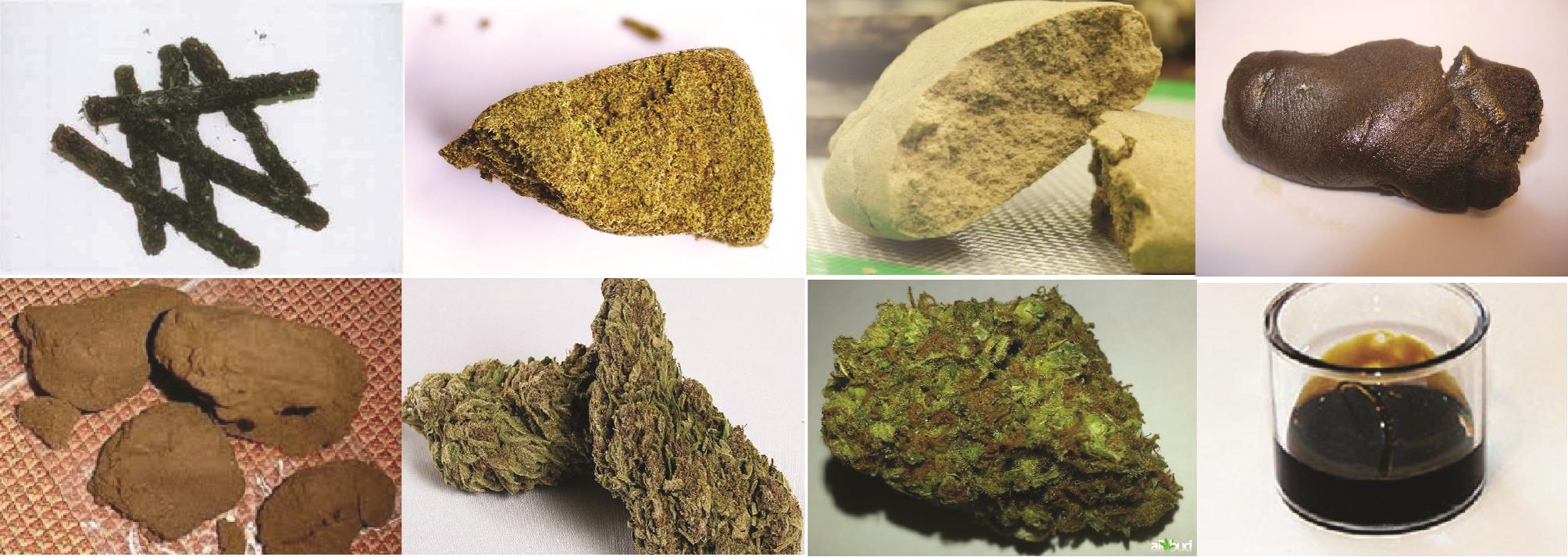 “Cannabis products. First row, left to right: Indian, Lebanese, Turkish and Pakistani hashish. Second row, left to right: Swiss hashish, Zairean marijuana, Swiss marijuana, Moroccan hash oil.”]]>
  “The G protein-coupled receptors 3, 6, and 12 (GPR3, GPR6, and GPR12) comprise a family of closely related orphan receptors with no confirmed endogenous ligands. These receptors are constitutively active and capable of signaling through G protein-mediated and non-G protein-mediated mechanisms. These orphan receptors have previously been reported to play important roles in many normal physiological functions and to be involved in a variety of pathological conditions.
Although they are orphans, GPR3, GPR6, and GPR12 are phylogenetically most closely related to the
“The G protein-coupled receptors 3, 6, and 12 (GPR3, GPR6, and GPR12) comprise a family of closely related orphan receptors with no confirmed endogenous ligands. These receptors are constitutively active and capable of signaling through G protein-mediated and non-G protein-mediated mechanisms. These orphan receptors have previously been reported to play important roles in many normal physiological functions and to be involved in a variety of pathological conditions.
Although they are orphans, GPR3, GPR6, and GPR12 are phylogenetically most closely related to the  “Breast cancer is the second leading cause of death among women. Although early diagnosis and development of new treatments have improved their prognosis, many patients present innate or acquired resistance to current therapies. New therapeutic approaches are therefore warranted for the management of this disease.
Extensive preclinical research has demonstrated that cannabinoids, the active ingredients of
“Breast cancer is the second leading cause of death among women. Although early diagnosis and development of new treatments have improved their prognosis, many patients present innate or acquired resistance to current therapies. New therapeutic approaches are therefore warranted for the management of this disease.
Extensive preclinical research has demonstrated that cannabinoids, the active ingredients of