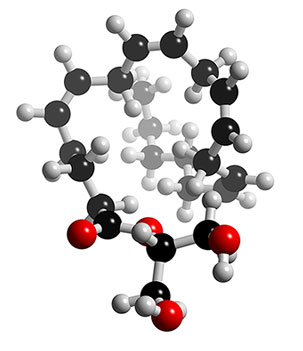
Medical Marijuana Inc. Marijuana Extract Cannabidiol (CBD) Anti-inflammatory Properties

 “SAN DIEGO–(BUSINESS WIRE)–Medical Marijuana Inc (OTC: MJNA) is pleased to announce that studies have shown Cannabidiol (CBD) has anti-inflammatory properties. Medical Marijuana Inc. through CannaBANK has a patent pending on an extraction method from Cannabis (Marijuana) and its industrialized non psychoactive counterpart Hemp, allowing Cannabidiol (CBD) to be isolated in its pure form. Once isolated the Cannabidiol can be added as a direct counter agent or as an additive to other current anti-inflammatory products.

Medical Marijuana Inc. is planning on expanding its Cannabidiol sales through licensing agreements with companies already involved in the heavily marketed nutraceutical and pharmaceutical markets.

Resources and Abstracts on Anti-inflammatory properties of Cannabidiol:
United States National Library of Medicine (PubMed)”

http://www.ncbi.nlm.nih.gov/pubmed/19199042
http://www.ncbi.nlm.nih.gov/pmc/articles/PMC3034694/
http://www.ncbi.nlm.nih.gov/pubmed/19070683
http://www.ncbi.nlm.nih.gov/pubmed/18641283
http://www.ncbi.nlm.nih.gov/pubmed/18469842
http://www.ncbi.nlm.nih.gov/pubmed/14963641

http://www.businesswire.com/news/home/20110923005989/en/Medical-Marijuana-Marijuana-Extract-Cannabidiol-CBD-Anti-inflammatory?fb_action_ids=459561104080536&fb_action_types=og.likes&fb_ref=news_view&fb_source=aggregation&fb_aggregation_id=288381481237582

Hippies Vindicated: Human-produced Cannabinoids Have Anti-inflammatory Powers

“Extracts of the hemp plant cannabis are traditionally used as a popular remedy against inflammation. At the beginning of the last century this natural remedy was even available at every chemist’s. But due to the intoxicating effect of the component THC (tetrahydrocannabinol) the plant was taken off the chemist’s shelves in the 1930s.”

“Scientists from the University of Bonn have discovered in experiments with mice that Endocannabinoids play an important role in regulating inflammation processes. In their animal experiments, a solution with an important component made from cannabis reduced allergic reactions of the skin.”

 “When inflammation occurs the endocannabinoids act like someone stepping on the brakes. They prevent the body from doing too much of a good thing and the immune reaction from getting out of control. This is consistent with the fact that at the beginning of the infection the endocannabinoid concentration increased in the mice. ‘Apart from that there are strains of mice in which the breakdown of these active substances produced by the body is malfunction-ing,’ Evelyn Gaffal says. ‘They have an increased endocannabinoid concen-tration in their skin. In our experiments these animals also showed a less marked allergic reaction.'”

“The results open up new options for the treatment of skin allergies and inflammation. Firstly, drugs which prevent the breakdown of endocannabin-oids look promising. But the old household remedy cannabis could also make a comeback as an ointment. In the experiment on mice this approach has already been successful. ‘If we dabbed THC solution on to the animals’ skin shortly before and after applying the allergen, a lot less swelling occurred than normal,’ Professor Thomas Tüting explains. ‘THC attaches itself to cannabin-oid receptors and activates them. In this way the active substance reduces the allergic reaction.’ Incidentally, ointment like this would probably not have an intoxicating effect, for this the amount of THC contained would be much too small.”

http://www.science20.com//news/marijuana_benefit_also_human_produced_cannabinoids_have_anti_inflammatory_powers?fb_action_ids=459596310743682&fb_action_types=og.likes&fb_source=aggregation&fb_aggregation_id=288381481237582


How Cannabinoids May Slow Brain Aging

Stoners aren’t known for their memory prowess but a new review suggests that drugs similar to marijuana’s active ingredients may hold promise for preventing— or even reversing— brain aging and possibly Alzheimer‘s and other degenerative brain diseases.

Read more: http://healthland.time.com/2012/10/29/how-cannabinoids-may-slow-brain-aging/#ixzz2AjCxutuI

Curing addiction with cannabis medicines

“Smokers trying to quit in the future could do it with the help of cannabis based medicines, according to research from The University of Nottingham.

Teams of pharmacologists, studying the cannabis-like compounds which exist naturally in our bodies (endocannabinoids), are exploring the potential for medical treatment. This includes treating conditions as diverse as obesity, diabetes, depression and addiction to substances like nicotine.

Scientists have known about endocannabinoids since the mid-1990s. This led to an explosion in the number of researchers looking into the future medical uses of cannabinoids and cannabis compounds.

Dr Steve Alexander, Associate Professor in the School of Biomedical Sciences, focused on a number of these projects in editing the first themed podcast for the British Journal of Pharmacology.

Dr Alexander said: “It is clear that there is very realistic potential for cannabinoids as medicines. Scientists are looking at a range of possible applications.”

One of these researchers is Professor David Kendall, a cellular pharmacologist at the University: “The brain is full of cannabinoid receptors. And so, not surprisingly with diseases like depression and anxiety, there’s a great deal of interest in exploiting these receptors and in doing so, developing anti-depressant compounds.”

Addiction is a real target – researchers like Professor Kendall believe the endocannabinoids could be a crucial link to addictive behaviour: “We know that the endocannabinoid system is intimately involved in reward pathways and drug seeking behaviour. So this tends to indicate that that if the link involving endocannabinoids and the reward pathway, using inhibitors, can be interrupted, it could turn down the drive to seek addictive agents like nicotine.”

Because cannabinoids have also been shown to bring down blood pressure, it is hoped that related compounds can be used in patients with conditions like hypertension.

Dr Michael Randall, a cardiovascular pharmacologist at the University has looked at how endocannabinoids cause blood vessels to relax. “This could have many implications,” Dr Randall said. “The endocannabinoids appear to lower blood pressure under certain conditions; states of shock for example. If the endocannabinoids are of physiological importance, this could have real therapeutic possibilities.”

“In terms of getting better medicines the endocannabinoid system has a lot to offer,” said Dr Alexander. “The range of cannabis-related medicines is currently limited, but by increasing our knowledge in this area we can increase our stock.”

The University of Nottingham”

http://www.brightsurf.com/news/headlines/36296/Curing_addiction_with_cannabis_medicines.html

Medical Marijuana as Treatment for Alcoholism & Addiction

Medical marijuana is frequently in the news, and hopefully the growing awareness of the benefits of medical marijuana will lead to more sensible regulations and deeper research into why cannabis is so helpful in treating so many different conditions. Among the conditions that medical marijuana can treatis addiction, whether to drugs or alcohol.”

“Medical Marijuana as a Recovery Treatment”

“Marijuana as a recovery treatment is controversial, not least because there is conflicting research about whether medical marijuana is or is not addictive. However, many studies have found that medical marijuana is not addictive, or as harmful, as other drugs such as alcohol and opiates. Additionally, several studies have shown that marijuana can be an effective treatment for recovery from other substances.”

Read more: http://www.unitedpatientsgroup.com/blog/2012/07/26/medical-marijuana-as-treatment-for-alcoholism-addiction/

Marijuana To Control Alcohol Abuse

By Senior News Editor
Reviewed by John M. Grohol, Psy.D. on December 1, 2009

New Strategy Uses Pot To Control Alcohol Abuse “A new research effort has a provocative outcome as University of California-Berkeley researchers suggest substituting cannabis for treatment of heavy alcohol abuse.

Research published in BioMed Central’s open access Harm Reduction Journal features a poll of 350 cannabis users, finding that 40 percent used cannabis to control their alcohol cravings, 66 percent as a replacement for prescription drugs and 26 percent for other, more potent illegal drugs.

Amanda Reiman carried out the study at the UC-Berkeley Patient’s Group, a medical cannabis dispensary.

She said, “Substituting cannabis for alcohol has been described as a radical alcohol treatment protocol. This approach could be used to address heavy alcohol use in the British Isles – people might substitute cannabis, a potentially safer drug than alcohol with less negative side effects, if it were socially acceptable and available.”

Reiman found that 65 percent of people reported using cannabis as a substitute because it has fewer adverse side effects than alcohol, illicit or prescription drugs, 34 percent because it has less withdrawal potential and 57.4 percent because cannabis provides better symptom management.

Reiman believes this discovery brings up two important points.

“First, self-determination, the right of an individual to decide which treatment or substance is most effective and least harmful for them. Secondly, the recognition that substitution might be a viable alternative to abstinence for those who can’t or won’t completely stop using psychoactive substances.”

Speaking about legalization of cannabis, Reiman added, “The economic hardship of the Great Depression helped bring about the end of alcohol prohibition. Now, as we are again faced with economic struggles, the U.S. is looking to marijuana as a potential revenue generator.

“Public support is rising for the legalization of recreational use and remains high for the use of marijuana as a medicine. The hope is that this interest will translate into increased research support and the removal of current barriers to conducting such research, such as the Schedule I/Class B status of marijuana.””

http://psychcentral.com/news/2009/12/01/marijuana-to-control-alcohol-abuse/9863.html

Endometriosis: Marijuana Treatment

“Dr. Phillip Leveque has spent his life as a Combat Infantryman, Physician, Toxicologist and Pharmacologist.

(MOLALLA, Ore.) – I don’t think I have to explain what this is to anybody. If you have it, you know it. Endometriosis is graded in stages I,II, III & IV, with stage I being “minimized” inconvenience while stage IV is severe and usually requires surgery.

As a physician, I had known about endometriosis for years and that some women become narcotic addicts because of it. Pre Menstrual Tension (PMS) may be concurrent though different and I had many PMS patients as well. Some of them became addicts also. I was not surprised when lady patients came to our clinics offering chart notes that they had been prescribed every conceivable analgesic and other medications but they also told me marijuana works better than any regular prescription.

I have a severe pain problem myself caused by too high of a concentration of spinal anesthesia. I got disgusted by the anesthesiologist telling me he didn’t cause it but I got a new understanding for patients in pain.

If the patient says marijuana works for pain, I believe them. Actually in Oregon about sixty percent of patients have some chronic pain syndrome of nerve, muscle, joint, bone, intestinal or genitourinary. It doesn’t seem to matter whatever the source of pain, the bottom line is that MJ gives relief.

I presume stage I endometriosis and minor PMS are effectively treated with aspirin-like drugs, but when the pain etc. is in the moderate/severe level, the ladies have found out by themselves that marijuana/cannabis is effective without the hazard of narcotic addiction or alcoholism.

The U.S. government publicizes that as many as 77 million Americans have used marijuana and perhaps ten million use it frequently.

Marijuana as folk medicine has been used in the U.S. since the middle 1800’s and probably in Mexico and Latin America since the Spanish introduced it in the late 1500’s.

It is no longer amazing to me when a patient tells me of some new disease for which they have discovered marijuana treatment is beneficial.

It is time the DEA and its hoodlums backed off and allow the therapeutic use of medical marijuana, as more and more people are reverting to this tried and true “folk medicine” everyday.”

http://www.salem-news.com/articles/january032008/endo_med_1308.php

Marijuana Compound Effective In Treating Tourette’s Syndrome, Study Says

“Thursday, 15 May 2003

Hanover, Germany: A primary compound in marijuana, delta-9-tetrahydrocannabinol (THC), is effective in reducing “tics” in patients suffering from Tourette’s Syndrome (TS), according to clinical trail data published in a recent edition of the Journal of Clinical Psychiatry. Tourette’s Syndrome is a complex neuropsychiatric disorder characterized by motor tics (sudden spasms especially in the facial muscles, neck and shoulders) and one or more vocal tics.

Twenty-four patients participated in the double-blind placebo-controlled trial over a period of six weeks. Treatment with up to 10 mg of THC resulted in significant improvement of tic severity, authors wrote. No serious adverse effects to the treatment were reported.

In a separate article published in Neuropsychopharmacology, authors elaborated, “No detrimental effect was seen on learning curve, interference, recall and recognition of word lists, immediate visual memory span, and divided attention” from THC during or after the treatment.

The 24-patient study confirmed previous smaller patient trials that also found THC to be effective in the treatment of tics and behavioral problems in patients with Tourette’s Syndrome.”

http://norml.org/news/2003/05/15/marijuana-compound-effective-in-treating-tourette-s-syndrome-study-says

Marijuana Successfully Treats Tourette’s Syndrome, Study Shows

“Thursday, 11 March 1999

German researchers report that the consumption of the marijuana compound THC alleviates symptoms of Tourette’s Syndrome. The researchers published their findings in this month’s issue of the American Journal of Psychiatry.

“Earlier reports suggested beneficial effects in Tourette’s syndrome when smoking marijuana,” the German research team wrote. “We report a successful treatment of Tourette’s syndrome with delta-9-tetrahydocannabinol, the major psychoactive ingredient of marijuana.”

Tourette’s syndrome is a complex neuropsychiatric disorder that is characterized by sudden spasms, so called “tics,” that occur especially in the face, neck, and shoulders.

The researchers found that a 25-year-old patient treated with 10 mg of THC experienced marked improvement of both vocal and motor tics associated with behavioral disorders. “The improvement began 30 minutes after treatment and lasted for about seven hours,” the researchers reported. “No adverse effects occurred.”

Researchers stated, “This is the first report of a successful treatment of Tourette’s syndrome with delta-9-THC.” They said they are planning to confirm their preliminary results in an upcoming double-blind, placebo controlled, crossover study.

NORML board member Dr. Lester Grinspoon of Harvard Medical School called inhaled marijuana’s effects on patients suffering from Tourette’s “impressive,” and said that the drug holds tremendous potential as a course of treatment for the disease.

For more information, please contact either Allen St. Pierre of The NORML Foundation @ (202) 483-8751 or NORML board member Dr. Lester Grinspoon of Harvard Medical School @ (617) 277-3621.”

http://norml.org/news/1999/03/11/marijuana-successfully-treats-tourette-s-syndrome-study-shows

The therapeutic potential of novel cannabinoid receptors.

Cover image

“Cannabinoids produce a plethora of biological effects, including the modulation of neuronal activity through the activation of CB(1) receptors and of immune responses through the activation of CB(2) receptors. The selective targeting of either of these two receptor subtypes has clear therapeutic value. Recent evidence indicates that some of the cannabinomimetic effects previously thought to be produced through CB(1) and/or CB(2) receptors, be they on neuronal activity, on the vasculature tone or immune responses, still persist despite the pharmacological blockade or genetic ablation of CB(1) and/or CB(2) receptors. This suggests that additional cannabinoid and cannabinoid-like receptors exist. Here we will review this evidence in the context of their therapeutic value and discuss their true belonging to the endocannabinoid signaling system.”  http://www.ncbi.nlm.nih.gov/pubmed/19248809

“The therapeutic potential of novel cannabinoid receptors”  http://www.sciencedirect.com/science/article/pii/S0163725809000266