Epigenetic Control of Skin Differentiation Genes by Phytocannabinoids.

“A role for endocannabinoid signaling has been reported in the control of epidermal physiology, whereby anandamide is able to regulate the expression of skin differentiation genes through DNA methylation. Here, we have investigated the possible epigenetic regulation of these genes by selected phytocannabinoids, plant-derived cannabinoids holding potential as novel therapeutics for various human diseases.

CONCLUSIONS AND IMPLICATIONS:

These findings identify the phytocannabinoids cannabidiol and cannabigerol as transcriptional repressors that can control cell proliferation and differentiation, suggesting (especially for cannabidiol) a possible exploitation as lead compounds to be used in the development of novel therapeutics for skin diseases.”

http://www.ncbi.nlm.nih.gov/pubmed/23869687

The Cannabinoid Receptor Agonist THC Attenuates Weight Loss in a Rodent Model of Activity-Based Anorexia

“Anorexia nervosa (AN) is characterized by anhedonia whereby patients experience little pleasure or reward in many aspects of their lives. Reward pathways and the endocannabionid system have been implicated in the mediation of food intake. The potential to exploit these systems to reverse weight loss is investigated in a rodent model of activity-based anorexia (ABA).

Given the powerful role of the endocannabionid system in stimulating reward processes and the apparent poor development of these processes in AN, it is important to test the hypothesis that exogenous administration of cannabinoid type 1 (CB1) receptor agonists can reverse the anorexia displayed in a rodent ABA model…

Importantly, the data presented here show for the first time the efficacy of THC  in retarding the progression of ABA…

In conclusion, these data establish for the first time the effectiveness of THC in rescuing animals from profound body weight loss associated with the development of ABA, independent of physical activity, which is enhanced if allowed access to highly palatable foods.

These results from the animal-based model of AN highlight the potential of cannabinoids and of the endocannabinoid system in the treatment of human anorexia.”

Full text: http://www.ncbi.nlm.nih.gov/pmc/articles/PMC3096804/

Cannabinoid receptor 1 deficiency in a mouse model of Alzheimer’s disease leads to enhanced cognitive impairment despite of a reduction in amyloid deposition.

“Alzheimer’s disease (AD) is characterized by amyloid-β deposition in amyloid plaques, neurofibrillary tangles, inflammation, neuronal loss, and cognitive deficits. Cannabinoids display neuromodulatory and neuroprotective effects and affect memory acquisition. Here, we studied the impact of cannabinoid receptor type 1 (CB1) deficiency on the development of AD pathology…

…the findings indicate that CB1 deficiency can worsen AD-related cognitive deficits and support a potential role of CB1 as a pharmacologic target.”

http://www.ncbi.nlm.nih.gov/pubmed/23838176

Structure-dependent inhibitory effects of synthetic cannabinoids against 12-O-tetradecanoylphorbol-13-acetate-induced inflammation and skin tumour promotion in mice.

“Whether and how synthetic cannabinoids affect inflammation and carcinogenesis has not been well studied. The present study was thus conducted to assess effects of synthetic cannabinoids on inflammation and carcinogenesis in vivo in mice…

The present results suggest that synthetic cannabinoids, such as JWH-018, -122 and -210, may be used as cancer chemopreventive agents in the future.”

http://www.ncbi.nlm.nih.gov/pubmed/23837590

CB1 Cannabinoid Receptor Agonist Prevents NGF-Induced Sensitization of TRPV1 in Sensory Neurons.

“The transient receptor potential vanilloid type 1 channel (TRPV1) and nerve growth factor (NGF) are important mediators of inflammatory pain…

Cannabinoids, by activating CB1 G protein-coupled receptors, produce analgesia in a variety of pain models, though the exact mechanisms are not known. We tested the hypothesis that activation of the CB1 receptor by cannabinoids attenuates NGF-induced TRPV1 sensitization….

These results support the hypothesis that cannabinoids, acting through CB1 receptors, may produce analgesia in part by preventing NGF-induced sensitization of TRPV1 in afferent nociceptor nerve endings.”

http://www.ncbi.nlm.nih.gov/pubmed/23850608

Cannabinoids and Schizophrenia: Therapeutic Prospects.

“Approximately one third of patients diagnosed with schizophrenia do not achieve adequate symptom control with standard antipsychotic drugs (APs).

The endocannabinoid system (ECS) in the brain plays an important role in maintaining normal mental health.

ECS modulates emotion, reward processing, sleep regulation, aversive memory extinction and HPA axis regulation…

The cannabis plant synthesises a large number of pharmacologically active compounds unique to it known as phytocannabinoids. In contrast to the euphoric and pro-psychotic effects of delta-9-tetrahydrocannabinol (THC), certain non-intoxicating phytocannabinoids have emerged in pre-clinical and clinical models as potential APs.

Since the likely mechanism of action does not rely upon dopamine D2 receptor antagonism, synergistic combinations with existing APs are plausible.

The anti-inflammatory and immunomodulatory effects of the non-intoxicating phytocannabinoid cannabidiol (CBD) are well established and are summarised below.

Preliminary data reviewed in this paper suggest that CBD in combination with a CB1 receptor neutral antagonist could not only augment the effects of standard APs but also target the metabolic, inflammatory and stress-related components of the schizophrenia phenotype.”

http://www.ncbi.nlm.nih.gov/pubmed/23829368

“6”-Azidohex-2″-yne-cannabidiol: a potential neutral, competitive cannabinoid CB1 receptor antagonist… 6″-azidohex-2″-yne-cannabidiol was as potent as cannabidiol in producing surmountable antagonism… it is a competitive cannabinoid CB(1) receptor antagonist…it may be a neutral cannabinoid CB(1) receptor antagonist.”  http://www.ncbi.nlm.nih.gov/pubmed/15033394

 

Anti-inflammatory compound from cannabis found in herbs

“A compound found in cannabis as well as in herbs such as basil and oregano could help to treat inflammatory bowel diseases and arthritis, Swiss scientists believe.”

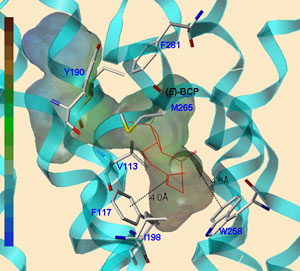
Model of the interaction of BCP with the CB2 receptor

“(E)-beta-caryophyllene (BCP) is an aromatic sesquiterpene that has used for many years as a food additive because of its peppery flavour. The researchers now say that it interacts selectively with one of two cannabinoid receptors, CB2, blocking the chemical signals that lead to inflammation without triggering cannabis’s mood-altering effects.
 
Many cannabinoids bind to the CB2 receptor, but few target it selectively. Most also interact with CB1, which is responsible for cannabis’ psychoactive properties. CB1 is found in brain tissue, whereas CB2is found only in cells elsewhere in the body.”
 

More:http://www.rsc.org/chemistryworld/News/2008/June/24060801.asp

Anti-inflammatory property of the cannabinoid receptor-2-selective agonist JWH-133 in a rodent model of autoimmune uveoretinitis.

“Previous studies have shown that cannabinoids have anti-inflammatory and immune-modulating effects, but the precise mechanisms of action remain to be elucidated.

In this study, we investigated the effect of JWH 133, a selective agonist for cannabinoid receptor 2, the main receptor expressed on immune cells, in a model of autoimmune disease, experimental autoimmune uveoretinitis (EAU).

JWH 133 suppressed EAU in a dose-dependent manner (0.015-15 mg/kg), and the suppressive effect could be achieved in the disease-induction stage and the effector stage. Leukocytes from mice, which had been treated with JWH 133, had diminished responses to retinal peptide and mitogen Con A stimulation in vitro. In vivo JWH 133 treatment also abrogated leukocyte cytokine/chemokine production. Further in vitro studies indicated that JWH 133 down-regulated the TLR4 via Myd88 signal transduction, which may be responsible for its moderate, suppressive effect on antigen presentation. In vivo JWH 133 treatment (1 mg/kg) also suppressed leukocyte trafficking (rolling and infiltration) in inflamed retina as a result of an effect on reducing adhesion molecules CD162 (P-selectin glycoprotein ligand 1) and CD11a (LFA-1) expression on T cells.

In conclusion, the cannabinoid agonist JWH 133 has a high in vivo, anti-inflammatory property and may exert its effect via inhibiting the activation and function of autoreactive T cells and preventing leukocyte trafficking into the inflamed tissue.”

Full text: http://www.jleukbio.org/content/82/3/532.long

1′,1′-Dimethylheptyl-delta-8-tetrahydrocannabinol-11-oic acid: a novel, orally effective cannabinoid with analgesic and anti-inflammatory properties.

“Chemical structures of Δ-9-THC (dronabinol), nabilone, and CT-3”

Figure 1

“1′,1′-Dimethylheptyl-Delta-8-tetrahydrocannabinol-11-oic acid (CT-3) is a novel cannabinoid that is under development by Atlantic Pharmaceuticals as an anti-inflammatory and analgesic drug.

The objective of the study was to investigate the effects of CT-3 on overt symptom complex (Irwin’s test), nociception, gastrointestinal (GI) ulceration, and pharmacological availability after intragastric (i.g.) and intraperitoneal (i.p.) administration.

  The evidence indicates that CT-3 exhibits a large dissociation between its anti-inflammatory/analgesic effects and its ulcerogenic actions. CT-3 warrants clinical development as a novel anti-inflammatory and analgesic drug.”

Full text: http://jpet.aspetjournals.org/content/291/1/31.long

WIN55212-2 attenuates amyloid-beta-induced neuroinflammation in rats through activation of cannabinoid receptors and PPAR-γ pathway.

“Cannabinoids have been shown to exert neuroprotective effects in a plethora of neurodegenerative conditions.

Over the past decade, some studies demonstrate that cannabinoids can interact with nuclear peroxisome proliferator-activated receptors (PPARs).We investigated protective properties of WIN55212-2 (WIN, a non-selective cannabinoid receptor agonist) in beta-amyloid (Aβ)-induced neurodegeneration in rat hippocampus and possible involvement of PPAR-gamma (PPAR-γ). Aβ (1-42) was injected into the hippocampus of male rats. Animals were administered by intracerebroventricular rout the following treatments on days 1, 3, 5, 7: vehicle, WIN, GW9662 (selective PPAR-γ antagonist) plus WIN, AM251 (selective CB₁ receptor antagonist) plus WIN, SR144528 (selective CB₂ receptor antagonist) plus WIN, each of antagonists alone. Injection of Aβ-induced spatial memory impairment and a dramatic rise in hippocampal TNF-α, active caspase 3, nuclear NF-kB levels and TUNEL-positive neurons. WIN administration significantly improved memory function and diminished the elevated levels of these markers, while antagonizing either CB₁ or CB₂ receptor subtype partially attenuated the protective effects. Intriguingly, WIN significantly increased PPAR-γ level and transcriptional activity, the latter being partially inhibited with AM251 but not with SR144528. The enhancing effect on PPAR-γ pathway was crucial to WIN-induced neuroprotection since GW9662 partially reversed the beneficial actions of WIN. Co-administration of the three antagonists led to the complete abrogation of WIN effects.

Our findings indicate that WIN exerts neuroprotective and anti-inflammatory actions against Aβ damage through both CB₁ and CB₂ receptors. Of great note, both direct and CB₁-mediated increase in PPAR-γ signaling also contributes to WIN-induced neuroprotection.”

http://www.ncbi.nlm.nih.gov/pubmed/22634229