Chemicals in Marijuana May Help Stroke Victims

NewsBriefs

“Scientists at the National Institute of Mental Health (NIMH) said a chemical in marijuana may protect the brain from damage inflicted by a stroke.

Their study was reported in the Proceedings of the National Academy of Sciences (Aidan Hampson, et al., “Cannabidiol and Delta-9-tetrahydrocannabinol Are Neuroprotective Antioxidants,” Proceedings of the National Academy of Sciences, July 7, 1998, Vol. 95, Issue 14, p. 8268; “Pot Chemicals Might Inhibit Breast Tumors, Stroke Damage,” Dallas Morning News, July 13, 1998; Vanessa Thorpe, “Chemicals Help Brain Damage After Stroke,” The Independent (UK), July 19, 1998).

NIMH scientists researched the effects of two cannabinoids, cannabidiol and THC, on the brains of rats. THC is the ingredient in marijuana that causes a psychoactive effect. However, cannabidiol is “a better candidate,” in part, because it does not cause a “high” in the patient, said Aidan Hampson, a neuropharmacologist at NIMH who led the study.

The cannabinoids block a neurochemical, known as glutamate, that leads to the formation of toxic oxidizing molecules that kill brain cells. Glutamate is produced in the brain if the oxygen supply is cut off, for example, as the result of blood clot leading to a stroke.

Researchers found that cannabidiol is a more effective antioxidant than vitamins A and E, which already are known to block the damaging effects of glutamate.”

http://www.ndsn.org/julaug98/medmj1.html

Cannabis Counter Brain Cell Damage After a Stroke

“New research by University of Otago scientists suggests some mechanisms in the brain targeted by cannabis could become drugs targets to counter brain cell damage after a stroke.

Researchers from the Medical School’s Department of Pharmacology and Toxicology have been the first in the world to show the cannabinoid CB2 receptor appears in the rat brain following a stroke.

Their findings were published recently in the journal Neuroscience Letters.

Dr John Ashton says the CB2 receptor is a protein produced as part of the body’s immune response system.

“This response is triggered by stroke and causes the inflammation that leads to damage in the area of the brain around where the stroke has occurred.

“If the inflammation can be stopped or reduced then it offers the hope of reducing the extent of the damage caused by stroke – and CB2 offers a potential target for such a drug.”

Dr Ashton says cannabis targets both the CB2 and the related CB1 receptors.

“THC, the major active ingredient of cannabis, acts mainly on CB1 but it also affects CB2. While THC is known to have some positive effects in terms of pain management its use is severely limited because of the way it triggers the psychoactive CB1 receptors in the brain,” he says.

“The aim would be to develop a drug that targets the CB2 receptor without affecting CB1.”

Dr Ashton says the relationship between cannabis and cannabinoid drugs has similarities to the relationship between heroin and codeine.

“Heroin and codeine share common targets, but by designing codeine in such a way that it eliminated the psychoactive side-effects seen with heroin, a therapeutically useful drug was developed. There is the potential to do the same with cannabinoids.”

Drugs targeting CB2 could also have potential therapeutic use in other conditions involving inflammatory damage to the brain, such as Huntington’s Disease and Alzheimer’s Disease. There may also be scope to use them in pain management.

“CB2 cells are also found in the spinal cord. They regulate pain signals making them a potential target for new pain killing drugs.””

http://www.hightimes.com/read/cannabis-counter-brain-cell-damage-after-stroke

Cannabis compounds may limit stroke damage

“Chemical compounds found in cannabis may help to reduce brain damage following a stroke, new research has revealed.

Researchers at the University of Nottingham conducted a meta-analysis of experimental studies into cannabinoids; chemicals related to those found in cannabis, some of which also occur naturally in the body.

The findings showed that the compounds could reduce the size of stroke and improve .

Cannabinoids can be classified into those found naturally in the body (endocannabinoids), those made artificially (synthetic cannabinoids) or those derived from extracts from the plant cannabis sativa (phytocannabinoids).

The research, announced at the annual UK Stroke Forum, indicates that all three classes of cannabinoid could be effective in shrinking the area of the brain affected by stroke and in recovering neurological function.”

http://healthmedicinet.com/i/cannabis-compounds-may-limit-stroke-damage/

Compounds in cannabis could limit stroke damage

“Researchers at the University of Nottingham conducted a meta-analysis of experimental studies into cannabinoids; chemicals related to those found in cannabis, some of which also occur naturally in the body.

The findings showed that the compounds could reduce the size of stroke and improve neurological function.”

http://www.myscience.org.uk/news/2013/compounds_in_cannabis_could_limit_stroke_damage-2013-nottingham

The Inhibitory Effects of Cannabidiol on Systemic Malignant Tumors

“Cannabidiol may attenuate tumor growth in a number of other systemic malignancies.

Decreased tumor growth in pulmonary malignancies is seen after administration of cannabidiol.

Tumor metastasis also is markedly attenuated.

Similar attenuation of tumor growth is seen in breast malignancies.

The above examples clearly illustrate the significant antineoplastic effects of cannabidiol.

Hopefully, the next few years will see increased studies to fully and further evaluate these antineoplastic effects.”

https://www.ncbi.nlm.nih.gov/pubmed/23544909

http://www.jpsmjournal.com/article/S0885-3924(13)00115-2/fulltext#article-outline

http://www.thctotalhealthcare.com/category/cancer/

Study: Habitual Marijuana Smoking Not Associated With Increased Risk Of Lung Cancer

eNews Park Forest

“Subjects who regularly inhale cannabis smoke possess no greater risk of contracting lung cancer than do those who consume it occasionally or not at all, according to data published online ahead of print in the International Journal of Cancer.

An international team of investigators from Canada, New Zealand, the United Kingdom, and the United States analyzed data from six case-control studies involving over 5,000 subjects (2,159 cases and 2,985 controls) from around the world.

Authors concluded, “Results from our pooled analyses provide little evidence for an increased risk of lung cancer among habitual or long-term cannabis smokers.””

http://www.enewspf.com/latest-news/health-and-fitness/53910-study-habitual-marijuana-smoking-not-associated-with-increased-risk-of-lung-cancer.html

“Cannabis smoking and lung cancer risk: Pooled analysis in the International Lung Cancer Consortium”  http://onlinelibrary.wiley.com/doi/10.1002/ijc.29036/abstract

http://www.thctotalhealthcare.com/category/lung-cancer/

Cannabinoids drug for inflammatory bowel

Medindia

“Researchers from the University of Bath, UK has found that Cannabinoids derived from Cannabis has found to be effective in the treatment of inflammatory bowel diseases like Crohn’s disease and ulcerative colitis.

“The system that responds to cannabis in the brain is present and functioning in the lining of the gut,” lead researcher Dr. Karen Wright, of the University of Bath, explained to Reuters Health. “There is an increased presence of one component of this system during inflammatory bowel diseases,” she explained.

The report of the study was published in the Journal of Gastroenterology in which she has explained the location of CB1 and CB2 receptors in human colon tissue which binds to the Cannabinoid. She has used Human colon cell lines to establish the binding of the cannabinoid compounds and in her wound healing experiments.

Increased CB2 receptors are found in colonic tissue characteristic of inflammatory bowel disease. They found that the Cannabinoids helps in wound healing of the surface by CB1 related receptor mechanism.

“Cannabinoids, which we make ourselves, as well as synthetic Cannabinoids, can promote wound healing in the gut, which is extremely interesting given that inflammatory bowel disease involves damaged gut linings,” Wright said.”

http://www.medindia.net/news/view_news_main.asp?x=4578

A Vapourized Δ9-Tetrahydrocannabinol (Δ9-THC) Delivery System Part II: Comparison of Behavioural Effects of Pulmonary Versus Parenteral Cannabinoid Exposure in Rodents.

“These results suggest vapourized Δ9-THC administration produces behavioural effects qualitatively different from those induced by IP administration in rodents. Furthermore, vapourized Δ9-THC delivery in rodents may produce behavioural effects more comparable to those observed in humans. We conclude that some of the conflicting findings in animal and human cannabinoid studies may be related to pharmacokinetic differences associated with route of administration.”

http://www.ncbi.nlm.nih.gov/pubmed/24956154

Vaporized Cannabis for Chronic Pain Associated With Sickle Cell Disease (Cannabis-SCD) -ClinicalTrials.gov Identifier: NCT01771731

“Cannabinoid-Based Therapy and Approaches to Quantify Pain in Sickle Cell Disease.

Our primary objective is to assess whether inhaling vaporized cannabis ameliorates chronic pain in patients with sickle cell disease (SCD). As these patients will all be on chronic opioid analgesics, the investigators will also assess the possible synergistic affect between inhaled cannabis and opioids.

The investigators will also assess the clinical safety of the concomitant use of cannabinoids and these opioids in patients with SCD by monitoring the short-term side effects associated with combined therapy.

Finally, the investigators will evaluate the short-term effects of inhaled cannabis on markers of inflammation and disease progression in patients with SCD.

Hypotheses are as follows:

  1. Inhaled cannabis will significantly reduce chronic pain in patients with SCD.
  2. Inhaled cannabis will significantly alter the short-term side effects experienced by patients who take opioids for SCD.
  3. Inhaled cannabis will significantly alter markers of inflammation and disease progression in patients with SCD compared to placebo.
Subjects will complete a 5-day pain diary prior to admission to the Clinical Research Center (CRC) to establish a baseline of pain. They will then be assigned to inhale either vaporized cannabis of mixed THC/CBD content (4.7% THC/5.1% CBD) or placebo cannabis (0% THC/0% CBD). Participants and personnel will be blinded as to assignment. Pain will be evaluated during the 5-day inpatient exposure. Participants will be asked to participate in two such 5-day sessions separated by at least a 2-week washout so that each will be exposed to the two experimental conditions.
Detailed Description:

This is a proof-of-principle investigation of the safety and potential effectiveness of inhaled vaporized cannabis when added to a stable analgesic regimen in sickle cell disease (SCD) patients with chronic pain. The study will be comprised of two 5-day intervention periods in the inpatient setting (the Clinical Research Center at SFGH), with completion of a 5-day daily pain diary prior to admission to establish an outpatient baseline. Participants will be randomly assigned, in double-blind fashion, to treatment with (A) vaporized cannabis with an approximately 1:1 ration of delta-9-tetrahydrocannabinol:cannabidiol or (B) vaporized placebo. Those who receive treatment A during the first admission will receive treatment B in the second, and those who receive treatment B during the first admission will receive treatment A in the second. The two admissions will be spaced at least 14 days apart.

On Day 1 of each admission, subjects will provide blood samples for baseline markers of inflammation and SCD disease progression. They will undergo assessments of pain, mood, and quality of life. At 12 pm on Day 1, they will inhale vaporized study agent (equivalent to 1 cannabis/placebo cigarette) using the Volcano® vaporizer; on Days 2-4 they will inhale study agent at 8 am, 2 pm, and 8 pm, and they will inhale their final dose on Day 5 at 8 am. Subjects will continue their pre-study analgesic regimen while in the study. If additional analgesia is required, supplemental therapy will be administered and the dose recorded. Pain measurements by visual analogue scale will be obtained every 2 hours while subjects are awake. On Day 5 a second set of blood samples for inflammation markers and disease progression will be obtained, and subjects will again complete pain, mood, and quality of life assessments.”

http://www.clinicaltrials.gov/ct2/show/study/NCT01771731#contacts

Sickle Cell Pain May be Managed with Cannabis

“Can Medical Cannabis Help to Cure SCD?”

Sickle Cell Disease Pain May Be Managed 2

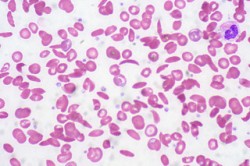
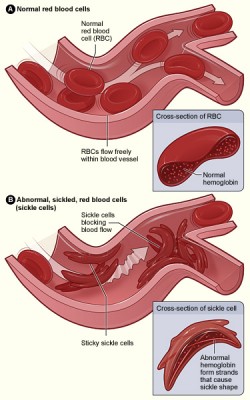
“Sickle cell disease (SCD) is a hereditary condition caused by a mutation in the haemoglobin gene, which leads to symptoms of anaemia, extreme pain, and organ damage if unmanaged.”

Sickle Cell Disease Pain May Be Managed 1

“Individuals suffering from SCD are far more likely to use cannabis than the general population, potentially for its analgesic properties.

In 2010, researchers at the University of Minnesota found that the synthetic THC analogue CP 55,940 was as effective as morphine sulphate in treating SCD-related severe pain in transgenic mice expressing human sickle haemoglobin, and that it was effective at smaller doses than the opioid.

In 2011, a further paper submitted by the same researchers to Blood (the Journal of the American Association of Hematology) indicated that CP 55,940 ameliorated severe pain associated with the hypoxia/reoxygenation cycle. CP 55,940 is a full agonist of both CB receptors, and is thought to act as an antagonist at the GPR55 receptor.

As well as this, cannabis has been repeatedly shown to act as a vasodilator, which could in itself assist in easing the blockages caused by build-up of sickle cells…

SCD is a painful and debilitating disease, and the overall inefficacy of opioid treatments and resultant poor quality of life for many sufferers is an indication that our approach to it is far from perfect.

If cannabis is a good candidate to replace opioids, it should be implemented forthwith to prevent ongoing suffering for existing patients.”

http://sensiseeds.com/en/blog/sickle-cell-pain-may-managed-cannabis/