“Graft versus host disease (GVHD) pathophysiology is a complex interplay between cells that comprise the adaptive and innate arms of the immune system. Effective prophylactic strategies are therefore contingent upon approaches that address contributions from both immune cell compartments.
In the current study, we examined the role of the type 2 cannabinoid receptor (CB2R) which is expressed on nearly all immune cells and demonstrated that absence of the CB2R on donor CD4+ or CD8+ T cells, or administration of a selective CB2R pharmacological antagonist, exacerbated acute GVHD lethality. This was accompanied primarily by the expansion of proinflammatory CD8+ T cells indicating that constitutive CB2R expression on T cells preferentially regulated CD8+ T cell alloreactivity. Using a novel CB2R-EGFP reporter mouse, we observed significant loss of CB2R expression on T cells, but not macrophages, during acute GVHD, indicative of differential alterations in receptor expression under inflammatory conditions.
Therapeutic targeting of the CB2R with the agonists, tetrahydrocannabinol (THC) and JWH-133, revealed that only THC mitigated lethal T cell-mediated acute GVHD. Conversely, only JWH-133 was effective in a sclerodermatous chronic GVHD model where macrophages contribute to disease biology. In vitro, both THC and JWH-133 induced arrestin recruitment and ERK phosphorylation via CB2R, but THC had no effect on CB2R-mediated inhibition of adenylyl cyclase.
These studies demonstrate that the CB2R plays a critical role in the regulation of GVHD and suggest that effective therapeutic targeting is dependent upon agonist signaling characteristics and receptor selectivity in conjunction with the composition of pathogenic immune effector cells.”
 “Cannabinoids have long been used for their psychotropic and possible medical properties of symptom relief. In the past few years, a vast literature shows that cannabinoids are neuroprotective under different pathological situations.
 “Cannabinoids help in pain treatment through their action on CB1 and CB2 receptors.
 “While activation of cannabinoid (CB2) receptors has been shown to be neuroprotective, no studies have examined whether this neuroprotection is directed at cerebral arterioles and no studies have examined whether activation of CB2 receptors can rescue cerebrovascular dysfunction during a chronic disease state such as type 1 diabetes (T1D).


 “Alcohol is a psychoactive substance highly used worldwide, whose harmful use might cause a broad range of mental and behavioural disorders. Underlying brain impact, the neuroinflammatory response induced by alcohol is recognised as a key contributing factor in the progression of other neuropathological processes, such as neurodegeneration. These sequels are determined by multiple factors, including age of exposure.

 “Cannabinoid CB2 receptor (CB2) agonists are potential analgesics void of psychotropic effects.
 “Chronic ethanol abuse can lead to harmful consequences for the heart, resulting in systolic dysfunction, variability in the heart rate, arrhythmia, and cardiac remodelling. However, the precise molecular mechanism responsible for ethanol-induced cardiomyopathy is poorly understood. In this regard, the present study aimed to describe the RIP1/RIP3/MLKL-mediated necroptotic cell death that may be involved in ethanol-induced cardiomyopathy and characterize CBR-mediated effects on the signalling pathway and myocardial injury.
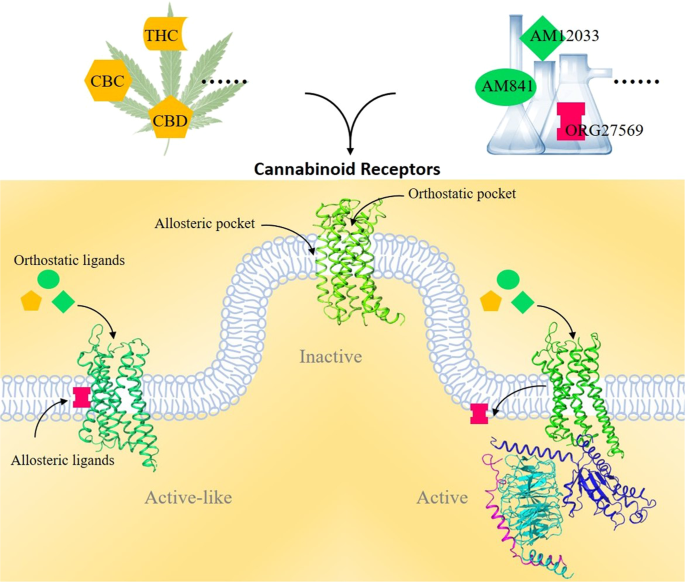
 “Cannabinoids (CBs), analgesic drugs used for thousands of years, were first found in Cannabis sativa, and the multiple CBs used medicinally, such as tetrahydrocannabinol (THC), cannabidiol (CBD) and dozens more, have complex structures. In addition to their production by plants, CBs are naturally present in the nerves and immune systems of humans and animals.