
 “Grade IV glioblastoma multiforme is a deadly disease, with a median survival of around 14 to 16 months. Maximal resection followed by adjuvant radiochemotherapy has been the mainstay of treatment since many years, although survival is only extended by a few months. In recent years, an increasing number of data from in vitro and in vivo research with cannabinoids, particularly with the non-intoxicating cannabidiol (CBD), point to their potential role as tumour-inhibiting agents. Herein, a total of nine consecutive patients with brain tumours are described as case series; all patients received CBD in a daily dose of 400 mg concomitantly to the standard therapeutic procedure of maximal resection followed by radiochemotherapy. By the time of the submission of this article, all but one patient are still alive with a mean survival time of 22.3 months (range=7-47 months). This is longer than what would have been expected.”
Tag Archives: CBD
Cannabidiol Counteracts the Psychotropic Side-Effects of Δ-9-Tetrahydrocannabinol in the Ventral Hippocampus Through Bi-Directional Control of ERK1-2 Phosphorylation
 “Evidence suggests that the phytocannabinoids Δ-9-tetrahydrocannabinol (THC) and cannabidiol (CBD) differentially regulate salience attribution and psychiatric risk. The ventral hippocampus (vHipp) relays emotional salience via control of dopamine (DA) neuronal activity states, which are dysregulated in psychosis and schizophrenia. Using in-vivo electrophysiology in male Sprague Dawley rats, we demonstrate that intra-vHipp THC strongly increases ventral tegmental area (VTA) DA neuronal frequency and bursting rates, decreases GABA frequency, and amplifies VTA beta, gamma and epsilon oscillatory magnitudes via modulation of local extracellular signal-regulated kinase phosphorylation (pERK1-2). Remarkably, whereas intra-vHipp THC also potentiates salience attribution in morphine place-preference and fear conditioning assays, CBD co-administration reverses these changes by down-regulating pERK1-2 signaling, as pharmacological re-activation of pERK1-2 blocked the inhibitory properties of CBD. These results identify vHipp pERK1-2 signaling as a critical neural nexus point mediating THC-induced affective disturbances and suggest a potential mechanism by which CBD may counteract the psychotomimetic and psychotropic side-effects of THC.
SIGNIFICANCE STATEMENT
Strains of marijuana with high levels of delta-9-tetrahydrocannabinol (THC) and low levels of cannabidiol (CBD) have been shown to underlie neuropsychiatric risks associated with high potency cannabis use. However, the mechanisms by which CBD mitigates the side effects of THC have not been identified. We demonstrate that THC induces cognitive and affective abnormalities resembling neuropsychiatric symptoms directly in the hippocampus, while dysregulating dopamine activity states and amplifying oscillatory frequencies in the ventral tegmental area via modulation of the extracellular signal-regulated kinase (ERK) signaling pathway. In contrast, CBD co-administration blocked THC-induced ERK phosphorylation, and prevented THC-induced behavioural and neural abnormalities. These findings identify a novel molecular mechanism that may account for how CBD functionally mitigates the neuropsychiatric side-effects of THC.”
https://www.ncbi.nlm.nih.gov/pubmed/31570536
https://www.jneurosci.org/content/early/2019/09/27/JNEUROSCI.0708-19.2019
“Western University researchers show how CBD blocks side-effects of THC in cannabis. Research out of Western University is showing for the first time how cannabidiol (CBD) helps to lessen negative psychiatric side effects of tetrahydrocannabinol (THC) in cannabis.” https://globalnews.ca/news/5970908/western-university-research-cbd-thc-cannabis/
“Cannabis study reveals how CBD offsets the psychiatric side-effects of THC” https://neurosciencenews.com/cbd-thc-psychosis-15002/
Medical cannabis for inflammatory bowel disease: real-life experience of mode of consumption and assessment of side-effects.
 “Use of medical cannabis for improving symptoms of inflammatory bowel disease is increasing. However, reports on long-term outcomes are lacking. This prospective, observational study assessed the effects of licensed cannabis use among patients with inflammatory bowel disease.
METHODS:
Dose and mode of consumption, adverse events, use of other medications, and long-term effects were evaluated among 127 patients with inflammatory bowel disease using legalized medical cannabis. Blood count, albumin, and C-reactive protein were assessed before, 1 month, and at least 1 year after medical cannabis therapy was initiated. Questionnaires on disease activity, patient function, and signs of addiction were completed by patients and by a significant family member to assess its effects.
RESULTS:
The average dose used was 31 ± 15 g/month. The average Harvey-Bradshaw index improved from 14 ± 6.7 to 7 ± 4.7 (P < 0.001) during a median follow-up of 44 months (interquartile range, 24-56 months). There was a slight, but statistically significant, average weight gain of 2 kg within 1 year of cannabis use. The need for other medications was significantly reduced. Employment among patients increased from 65 to 74% (P < 0.05). We conclude that the majority of inflammatory bowel disease patients using cannabis are satisfied with a dose of 30 g/month. We did not observe negative effects of cannabis use on the patients’ social or occupational status.
CONCLUSIONS:
Cannabis use by inflammatory bowel disease patients can induce clinical improvement and is associated with reduced use of medication and slight weight gain. Most patients respond well to a dose of 30 g/month, or 21 mg Δ9-tetra- hydrocannabinol (THC) and 170 mg Cannabidiol (CBD) per day.”
Molecular mechanism of TRPV2 channel modulation by cannabidiol.

“Transient receptor potential vanilloid 2 (TRPV2) plays a critical role in neuronal development, cardiac function, immunity, and cancer.
Cannabidiol (CBD), the non-psychotropic therapeutically active ingredient of Cannabis sativa, is an activator of TRPV2 and also modulates other transient receptor potential (TRP) channels.
We show that CBD interacts with TRPV2 through a hydrophobic pocket located between S5 and S6 helices of adjacent subunits, which differs from known ligand and lipid binding sites in other TRP channels. CBD-bound TRPV2 structures revealed that the S4-S5 linker plays a critical role in channel gating upon CBD binding. Additionally, nanodiscs permitted us to visualize two distinct TRPV2 apo states in a lipid environment.
Together these results provide a foundation to further understand TRPV channel gating, their divergent physiological functions, and to accelerate structure-based drug design.”
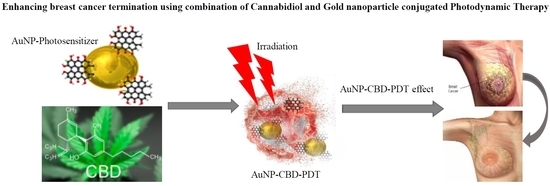
Enhancing Breast Cancer Treatment Using a Combination of Cannabidiol and Gold Nanoparticles for Photodynamic Therapy.
 “Indisputably, cancer is a global crisis that requires immediate intervention. Despite the use of conventional treatments over the past decades, it is acceptable to admit that these are expensive, invasive, associated with many side effects and, therefore, a reduced quality of life.
One of the most possible solutions to this could be the use of gold nanoparticle (AuNP) conjugated photodynamic therapy (PDT) in combination with cannabidiol (CBD), a Cannabis derivative from the Cannabis sativa.
Since the use of Cannabis has always been associated with recreation and psychoactive qualities, the positive effects of Cannabis or its derivatives on cancer treatment have been misunderstood and hence misinterpreted.
On the other hand, AuNP-PDT is the most favoured form of treatment for cancer, due to its augmented specificity and minimal risk of side effects compared to conventional treatments. However, its use requires the consideration of several physical, biologic, pharmacologic and immunological factors, which may hinder its effectiveness if not taken into consideration.
In this review, the role of gold nanoparticle mediated PDT combined with CBD treatment on breast cancer cells will be deliberated.”
https://www.ncbi.nlm.nih.gov/pubmed/31561450
https://www.mdpi.com/1422-0067/20/19/4771
Preclinical and Clinical Evidence Supporting Use of Cannabidiol in Psychiatry.
 “Cannabidiol (CBD) is a major chemical compound present in Cannabis sativa.
CBD is a nonpsychotomimetic substance, and it is considered one of the most promising candidates for the treatment of psychiatric disorders.
The aim of this review is to illustrate the state of art about scientific research and the evidence of effectiveness of CBD in psychiatric patients.
RESULTS:
Preclinical and clinical studies on potential role of CBD in psychiatry were collected and further discussed. We found four clinical studies describing the effects of CBD in psychiatric patients: two studies about schizophrenic patients and the other two studies carried out on CBD effects in patients affected by generalized social anxiety disorder (SAD).
CONCLUSION:
Results from these studies are promising and suggest that CBD may have a role in the development of new therapeutic strategies in mental diseases, and they justify an in-depth commitment in this field. However, clinical evidence we show for CBD in psychiatric patients is instead still poor and limited to schizophrenia and anxiety, and it needs to be implemented with further studies carried out on psychiatric patients.”
https://www.ncbi.nlm.nih.gov/pubmed/31558911
“Results of our research, enriched in assessment of methodological quality of the studies, confirm the view of this cannabinoid as a promising molecule especially in particular sectors of psychiatry such as schizophrenia, anxiety, depression, and autism. CBD is considered a safe substance and is one of the most promising candidates for the treatment of psychiatric disorders”.
Cannabidiol Is a Novel Modulator of Bacterial Membrane Vesicles.
 “Membrane vesicles (MVs) released from bacteria participate in cell communication and host-pathogen interactions.
Roles for MVs in antibiotic resistance are gaining increased attention and in this study we investigated if known anti-bacterial effects of cannabidiol (CBD), a phytocannabinoid from Cannabis sativa, could be in part attributed to effects on bacterial MV profile and MV release.
We found that CBD is a strong inhibitor of MV release from Gram-negative bacteria (E. coli VCS257), while inhibitory effect on MV release from Gram-positive bacteria (S. aureus subsp. aureus Rosenbach) was negligible. When used in combination with selected antibiotics, CBD significantly increased the bactericidal action of several antibiotics in the Gram-negative bacteria.
In addition, CBD increased antibiotic effects of kanamycin in the Gram-positive bacteria, without affecting MV release. CBD furthermore changed protein profiles of MVs released from E. coli after 1 h CBD treatment.
Our findings indicate that CBD may pose as a putative adjuvant agent for tailored co-application with selected antibiotics, depending on bacterial species, to increase antibiotic activity, including via MV inhibition, and help reduce antibiotic resistance.”
https://www.ncbi.nlm.nih.gov/pubmed/31552202
https://www.frontiersin.org/articles/10.3389/fcimb.2019.00324/full
Potential of Cannabinoid Receptor Ligands as Treatment for Substance Use Disorders.
 “Substance use disorder (SUD) is a major public health crisis worldwide, and effective treatment options are limited.
During the past 2 decades, researchers have investigated the impact of a variety of pharmacological approaches to treat SUD, one of which is the use of medical cannabis or cannabinoids.
Significant progress was made with the discovery of rimonabant, a selective CB1 receptor (CB1R) antagonist (also an inverse agonist), as a promising therapeutic for SUDs and obesity. However, serious adverse effects such as depression and suicidality led to the withdrawal of rimonabant (and almost all other CB1R antagonists/inverse agonists) from clinical trials worldwide in 2008.
Since then, much research interest has shifted to other cannabinoid-based strategies, such as peripheral CB1R antagonists/inverse agonists, neutral CB1R antagonists, allosteric CB1R modulators, CB2R agonists, fatty acid amide hydrolase (FAAH) inhibitors, monoacylglycerol lipase (MAGL) inhibitors, fatty acid binding protein (FABP) inhibitors, or nonaddictive phytocannabinoids with CB1R or CB2R-binding profiles, as new therapeutics for SUDs.
In this article, we first review recent progress in research regarding the endocannabinoid systems, cannabis reward versus aversion, and the underlying receptor mechanisms. We then review recent progress in cannabinoid-based medication development for the treatment of SUDs.
As evidence continues to accumulate, neutral CB1R antagonists (such as AM4113), CB2R agonists (JWH133, Xie2-64), and nonselective phytocannabinoids (cannabidiol, β-caryophyllene, ∆9-tetrahydrocannabivarin) have shown great therapeutic potential for SUDs, as shown in experimental animals.
Several cannabinoid-based medications (e.g., dronabinol, nabilone, PF-04457845) that entered clinical trials have shown promising results in reducing withdrawal symptoms in cannabis and opioid users.”
https://www.ncbi.nlm.nih.gov/pubmed/31549358
https://link.springer.com/article/10.1007%2Fs40263-019-00664-w
Insights into the role of cannabis in the management of inflammatory bowel disease.
 “Cannabis, a drug made up of the flowers and buds of the Cannabis sativa plant, has been used therapeutically for centuries. Ancient Chinese cultures have reported use in their medical practices, dating back as early as 2700 BC. Although widely used recreationally during the 19th and 20th centuries, the use of medical cannabis has exploded over the last decade, as a result of mainstream cultural acceptance and legalization in several countries around the world.
Over the last decade, interest in the therapeutic potential of cannabis and its constituents (e.g. cannabidiol) in the management of inflammatory bowel diseases (IBD) has escalated. Cannabis has been increasingly approved for a variety of medical conditions in several jurisdictions around the world.
In animal models, cannabinoids have been shown to improve intestinal inflammation in experimental models of IBD through their interaction with the endocannabinoid system. However, the few randomized controlled trials of cannabis or cannabidiol in patients with IBD have not demonstrated efficacy in modulating inflammatory disease activity.
Cannabis may be effective in the symptomatic management of IBD. Given the increasing utilization and cultural acceptance of cannabis, physicians need to be aware of its safety and efficacy in order to better counsel patients. The aim of this review is to provide an overview of the role of cannabis in the management of patients with IBD.
There is emerging evidence that cannabis may play a role in the management of patients with IBD. Many patients are already using cannabis to help manage symptoms associated with the disease, and physicians cannot ignore this when taking histories and managing their patients.”
Evaluation of the effects of cannabinoids CBD and CBG on human ovarian cancer cells in vitro
 “Ovarian cancer, with over a 90% reoccurrence within 18 months of treatment, and approximately a 30% mortality rate after 5 years, is the leading cause of death in cases of gynaecological malignancies. Acquired resistance, and toxic side effects by clinically used agents are major challenges associated with current treatments, indicating the need for new approaches in ovarian cancer treatment.
Increased tumour cell proliferation associated with upregulation of cannabinoid (CB) receptors has been observed in ovarian cancer. As cannabinoids reported to bind to CB receptors, and can potentially modulate their downstream signalling, this raises the possibility of cannabinoids as potential anticancer drugs for ovarian cancer treatment.
Amongst the cannabinoids, non-psychoactive CBD and CBG have been shown to have anticancer activities towards prostate and colon cancer cells through multiple mechanisms of action. However, CBD and CBG have yet to be investigated in relation to ovarian cancer therapy either in vitro or in vivo.
Aim:
The aims of this study were to evaluate the potential cytotoxic effects of CBD and CBG in human ovarian cancer cells, their ability to potentiate existing clinically used agents for ovarian cancer, and to perform initial mode of action studies in vitro.
Conclusions:
Both CBD and CBG showed preferential cytotoxicity against the ovarian cancer cells analysed compared to the non-cancer cells; however, this was less than for carboplatin. Importantly, in contrast to carboplatin, CBD and CBG showed similar activity towards cisplatin sensitive and cisplatin resistant cells indicating distinctive mechanisms of action to platinum drugs.
Preferential cytotoxicity towards cancer cells in vitro and ability to potentiate carboplatin and overcome cisplatin resistance identify CBD and CBG as promising candidates that warrant further investigation, both in terms of detailed mechanism of action studies and also in vivo studies to assess whether this promising activity translates into an in vivo setting and their potential for further progression towards the clinic.”