Cannabidiol attenuates methamphetamine-induced conditioned place preference via the Sigma1R/AKT/GSK-3β/CREB signaling pathway in rats

 Issue Cover“Methamphetamine (METH) is a highly addictive psychostimulant.

Cannabidiol (CBD) is an exogenous cannabinoid without psychostimulating activity, which has potential therapeutic effects on opioid addiction. However, it is unclear whether CBD has therapeutic effects on METH-induced motivational effects.

The present study examines whether CBD has a protective effect on METH-induced conditioned place preference (CPP) in rats by regulating the Sigma1R and AKT-GSK3β-CREB signaling pathway.

The present study found that METH can induce CPP in rats. When a pretreatment of CBD is applied, the CBD can weaken CPP in METH-induced rats by regulating the SigmaR1/AKT/GSK-3β/CREB signaling pathway.

The results of this study indicate that CBD has a potential therapeutic effect on METH-induced rewarding effects.”

https://pubmed.ncbi.nlm.nih.gov/32670551/

https://academic.oup.com/toxres/article-abstract/9/3/202/5831937?redirectedFrom=fulltext

Understanding the basics of cannabidiol from cannabis to apply to therapeutics in epilepsy

Page Header“The compounds present in cannabis have been in use for both recreational and medicinal purposes for many centuries. Changes in the legislation in South Africa have led to an increase in the number of people interested in using these compounds for self-medication. Many of them may approach their general practitioner as the first source of information about possible therapeutic effects. It is important that medical professionals are able to give patients the correct information. Cannabidiol (CBD) is one of the main compounds in cannabis plants, and there is evidence that it can successfully treat certain patients with epilepsy. This review looks at the most recent evidence on the use of CBD in the treatment of epilepsy and explores the mechanisms behind these beneficial effects.”

https://pubmed.ncbi.nlm.nih.gov/32657678/

http://www.samj.org.za/index.php/samj/article/view/12839

Cannabidiol induces osteoblast differentiation via angiopoietin1 and p38 MAPK

Publication cover image“In this study, we report the potential of cannabidiol, one of the major cannabis constituents, for enhancing osteoblastic differentiation in U2OS and MG-63 cells.

Cannabidiol increased the expression of Angiopoietin1 and the enzyme activity of alkaline phosphatase in U2OS and MG-63. Invasion and migration assay results indicated that the cell mobility was activated by cannabidiol in U2OS and MG-63. Western blotting analysis showed that the expression of tight junction related proteins such as Claudin1, Claudin4, Occuludin1, and ZO1 was increased by cannabidiol in U2OS and MG-63.

Alizarin Red S staining analysis showed that calcium deposition and mineralization was enhanced by cannabidiol in U2OS and MG-63. Western blotting analysis indicated that the expression of osteoblast differentiation related proteins such as distal-less homeobox 5, bone sialoprotein, osteocalcin, type I collagen, Runt-related transcription factor 2 (RUNX2), osterix (OSX), and alkaline phosphatase was time dependently upregulated by cannabidiol in U2OS and MG-63. Mechanistically, cannabidiol-regulated osteoblastic differentiation in U2OS and MG-63 by strengthen the protein-protein interaction among RUNX2, OSX, or the phosphorylated p38 mitogen-activated protein kinase (MAPK).

In conclusion, cannabidiol increased Angiopoietin1 expression and p38 MAPK activation for osteoblastic differentiation in U2OS and MG-63 suggesting that cannabidiol might provide a novel therapeutic option for the bone regeneration.”

https://pubmed.ncbi.nlm.nih.gov/32656944/

https://onlinelibrary.wiley.com/doi/abs/10.1002/tox.22996

Anticonvulsive Properties of Cannabidiol in a Model of Generalized Seizure Are Transient Receptor Potential Vanilloid 1 Dependent

View details for Cannabis and Cannabinoid Research cover image“Highly purified cannabidiol (CBD) (approved as Epidiolex® in the United States) has demonstrated efficacy with an acceptable safety profile in patients with Lennox-Gastaut or Dravet syndrome in four randomized controlled trials. CBD possesses affinity for many target classes with functional effects relevant to the pathophysiology of many disease types, including epilepsy.

Although the mechanism of action of CBD underlying the reduction of seizures in humans is unknown, transient receptor potential vanilloid 1 (TRPV1) represents a plausible target because (1) CBD activates and then desensitizes TRPV1, (2) TRPV1 is overexpressed in models of temporal lobe epilepsy and patients with epilepsy, (3) and TRPV1 modulates neuronal excitability.

Methods: To investigate a potential role of TRPV1 in the anticonvulsive effects of CBD, the effect of CBD on seizure threshold was assessed using a mouse maximal electroshock threshold model of generalized seizure in TRPV1 knockout and wildtype mice. The dose dependence of the CBD effect was determined and compared with that of the positive comparator diazepam and vehicle.

Results: At 50 and 100 mg/kg, CBD significantly (p<0.0001) increased seizure threshold in wildtype mice compared with TRPV1 knockout and vehicle controls. This effect was observed only at 100 mg/kg in TRPV1 knockout mice compared with knockout vehicle mice, in which gene deletion partially attenuated the CBD-increased seizure threshold. The effect of high-dose CBD in wildtype mice was nevertheless significantly different from vehicle-treated TRPV1 knockout mice (p<0.0001). Bioanalysis confirmed that genotype-specific differential brain exposure to CBD was not responsible for the observed effect on seizure threshold.

Conclusion: These data strongly implicate TRPV1 in the potential mechanisms of action for the anticonvulsive effects of CBD. The partial inhibition of the anticonvulsive effect of high-dose CBD in TRPV1 knockout mice may indicate the involvement of targets other than TRPV1. Further characterization of TRPV1 in the anticonvulsive effect of CBD in validated models of seizure is warranted, as is pharmacological investigation of the molecular interaction between CBD and TRPV1.”

https://pubmed.ncbi.nlm.nih.gov/32656346/

https://www.liebertpub.com/doi/10.1089/can.2019.0028

Phytocannabinoids: Origins and Biosynthesis

 Cell Press Internship (part 1) – lionfishexplorer“Phytocannabinoids are bioactive natural products found in some flowering plants, liverworts, and fungi that can be beneficial for the treatment of human ailments such as pain, anxiety, and cachexia. Targeted biosynthesis of cannabinoids with desirable properties requires identification of the underlying genes and their expression in a suitable heterologous host. We provide an overview of the structural classification of phytocannabinoids based on their decorated resorcinol core and the bioactivities of naturally occurring cannabinoids, and we review current knowledge of phytocannabinoid biosynthesis in Cannabis, Rhododendron, and Radula species. We also highlight the potential in planta roles of phytocannabinoids and the opportunity for synthetic biology approaches based on combinatorial biochemistry and protein engineering to produce cannabinoid derivatives with improved properties.”

https://pubmed.ncbi.nlm.nih.gov/32646718/

https://linkinghub.elsevier.com/retrieve/pii/S1360138520301874

Evaluation of the Potential Use of Cannabidiol in the Treatment of Cocaine Use Disorder: A Systematic Review

 Pharmacology Biochemistry and Behavior“Cannabinoids may have an important therapeutic potential for the treatment of dependence on crack cocaine.

Cannabidiol (CBD), in particular, has anxiolytic, antipsychotic and anticonvulsant properties and plays a role in regulating motivation circuitry and controlling sleep disorders. Several studies were performed evaluating CBD in experimental models for cocaine.

This systematic review aims evaluate the potential use of CBD in the treatment of cocaine use disorder.

Major findings: Fifty-one studies were analyzed, and 14 were selected. No studies conducted with humans were found; only one clinical trial was ongoing. The results were grouped into the following categories: cocaine self-administration, brain-stimulation reward, conditioned place preference, neuronal proliferation, anxiety, hepatic protection, anticonvulsant effect and locomotor sensitization response Only four studies had a low risk of bias. CBD promotes reduction on cocaine self-administration. Also, it interferes in cocaine induce brain reward stimulation and dopamine release. CBD promotes alteration in contextual memory associated with cocaine and in the neuroadaptations, hepatotoxicity and seizures induced by cocaine.

Conclusion: The evidence indicates that CBD is a promising adjunct therapy for the treatment of cocaine dependence due to its effect on: cocaine reward effects, cocaine consumption, behavioral responses, anxiety, neuronal proliferation, hepatic protection and safety. Moreover, clinical trials are strongly required to determine whether the findings in animal models occur in humans diagnosed for cocaine or crack cocaine use disorder.”

https://pubmed.ncbi.nlm.nih.gov/32645315/

“CBD is a promising adjunct therapy for the treatment of cocaine dependence. CBD promotes reduction on cocaine self-administration.”

https://www.sciencedirect.com/science/article/pii/S0091305720300307?via%3Dihub

Anticancer Effect of New Cannabinoids Derived From Tetrahydrocannabinolic Acid on PANC-1 and AsPC-1 Human Pancreas Tumor Cells

View details for Journal of Pancreatic Cancer cover image

“New tetrahydrocannabinolic acid (THCA) derivatives ALAM027 and ALAM108 were proposed for the treatment of the pancreatic cancer disease.

Methods: The in vitro effect of new cannabinoids ALAM027 and ALAM108 was tested against PANC-1 and AsPC-1 cell lines by CellTiter Glo assay. Pancreatic cancer xenograft model was used for the in vivo anticancer activity study of these compounds on PANC-1 cells.

Results: The in vitro study of new cannabinoids showed greater activity of ALAM108 than ALAM027 both for PANC-1 and AsPC-1 cells. The in vivo study of new cannabinoids on PANC-1 cells showed that their oral administration was effective in reducing tumor volume and tumor weight, and did not lead to any discomfort and weight loss of mice.

Conclusion: The cannabinoids ALAM108 and ALAM027 inhibited the tumor growing 1.6-2 times in mice with human PANC-1 cells.”

https://pubmed.ncbi.nlm.nih.gov/32642629/

“The in vitro study of new cannabinoids showed greater activity of ALAM108 than of ALAM027 both for PANC-1 and AsPC-1 pancreas tumor cells. The in vivo study of these cannabinoids on PANC-1 cells showed that their oral administration decreased the tumor size 1.6–2 times and did not lead to any discomfort, psychotic effects, and weight loss of mice. Further study of these compounds will allow to determine the mechanism of their action on cancer cells and may open the way to new therapeutic drugs based on THCA.”

https://www.liebertpub.com/doi/10.1089/pancan.2020.0003

FIG. 1.

Cannabinoids and Cannabinoid Receptors: The Story So Far

 iScience journal (@iScience_CP) | Twitter“Like most modern molecular biology and natural product chemistry, understanding cannabinoid pharmacology centers around molecular interactions, in this case, between the cannabinoids and their putative targets, the G-protein coupled receptors (GPCRs) cannabinoid receptor 1 (CB1) and cannabinoid receptor 2 (CB2). Understanding the complex structure and interplay between the partners in this molecular dance is required to understand the mechanism of action of synthetic, endogenous, and phytochemical cannabinoids. This review, with 91 references, surveys our understanding of the structural biology of the cannabinoids and their target receptors including both a critical comparison of the extant crystal structures and the computationally derived homology models, as well as an in-depth discussion about the binding modes of the major cannabinoids. The aim is to assist in situating structural biochemists, synthetic chemists, and molecular biologists who are new to the field of cannabis research.”

https://pubmed.ncbi.nlm.nih.gov/32629422/

https://www.cell.com/iscience/pdf/S2589-0042(20)30488-0.pdf?_returnURL=https%3A%2F%2Flinkinghub.elsevier.com%2Fretrieve%2Fpii%2FS2589004220304880%3Fshowall%3Dtrue

Cannabidiol and Sports Performance: A Narrative Review of Relevant Evidence and Recommendations for Future Research

Sports Medicine - Open Cover Image “Cannabidiol (CBD) is a non-intoxicating cannabinoid derived from Cannabis sativa. CBD initially drew scientific interest due to its anticonvulsant properties but increasing evidence of other therapeutic effects has attracted the attention of additional clinical and non-clinical populations, including athletes.

Unlike the intoxicating cannabinoid, Δ9-tetrahydrocannabinol (Δ9-THC), CBD is no longer prohibited by the World Anti-Doping Agency and appears to be safe and well-tolerated in humans. It has also become readily available in many countries with the introduction of over-the-counter “nutraceutical” products.

The aim of this narrative review was to explore various physiological and psychological effects of CBD that may be relevant to the sport and/or exercise context and to identify key areas for future research. As direct studies of CBD and sports performance are is currently lacking, evidence for this narrative review was sourced from preclinical studies and a limited number of clinical trials in non-athlete populations.

Preclinical studies have observed robust anti-inflammatory, neuroprotective and analgesic effects of CBD in animal models. Preliminary preclinical evidence also suggests that CBD may protect against gastrointestinal damage associated with inflammation and promote healing of traumatic skeletal injuries. However, further research is required to confirm these observations.

Early stage clinical studies suggest that CBD may be anxiolytic in “stress-inducing” situations and in individuals with anxiety disorders. While some case reports indicate that CBD improves sleep, robust evidence is currently lacking. Cognitive function and thermoregulation appear to be unaffected by CBD while effects on food intake, metabolic function, cardiovascular function, and infection require further study.

CBD may exert a number of physiological, biochemical, and psychological effects with the potential to benefit athletes. However, well controlled, studies in athlete populations are required before definitive conclusions can be reached regarding the utility of CBD in supporting athletic performance.”

https://pubmed.ncbi.nlm.nih.gov/32632671/

“CBD has been reported to exert a number of physiological, biochemical, and psychological effects that have the potential to benefit athletes. For instance, there is preliminary supportive evidence for anti-inflammatory, neuroprotective, analgesic, and anxiolytic actions of CBD and the possibility it may protect against GI damage associated with inflammation and promote the healing of traumatic skeletal injuries.”

https://sportsmedicine-open.springeropen.com/articles/10.1186/s40798-020-00251-0

The Seed of Industrial Hemp ( Cannabis sativa L.): Nutritional Quality and Potential Functionality for Human Health and Nutrition

nutrients-logo“Hempseeds, the edible fruits of the Cannabis sativa L. plant, were initially considered a by-product of the hemp technical fibre industry. Nowadays, following the restorationing of the cultivation of C. sativa L. plants containing an amount of delta-9-tetrahydrocannabinol (THC) <0.3% or 0.2% (industrial hemp) there is a growing interest for the hempseeds production due to their high nutritional value and functional features.
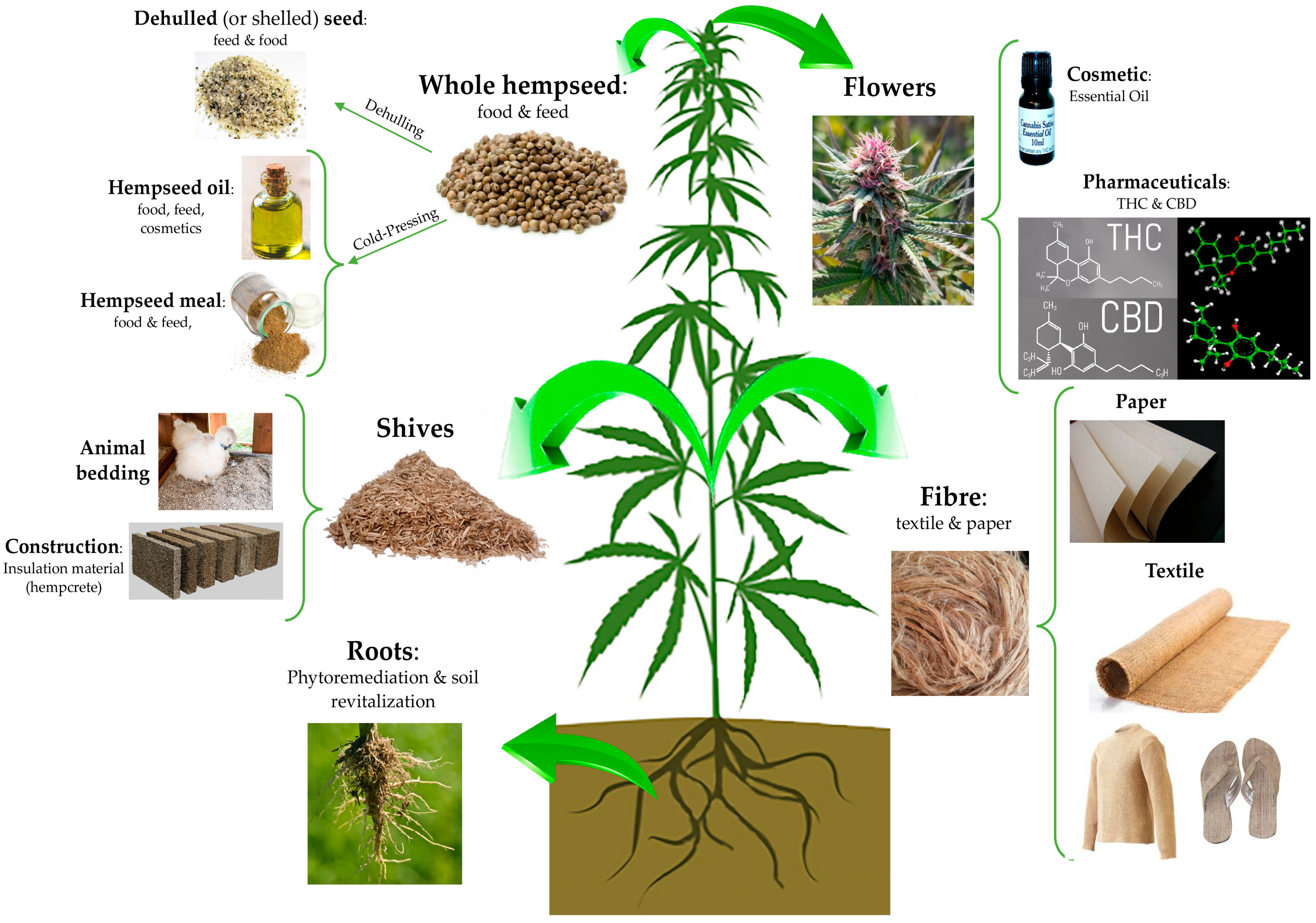
The goal of this review is to examine the scientific literature concerning the nutritional and functional properties of hempseeds. Furthermore, we revised the scientific literature regarding the potential use of hempseeds and their derivatives as a dietary supplement for the prevention and treatment of inflammatory and chronic-degenerative diseases on animal models and humans too.

In the first part of the work, we provide information regarding the genetic, biochemical, and legislative aspects of this plant that are, in our opinion essential to understand the difference between “industrial” and “drug-type” hemp. In the final part of the review, the employment of hempseeds by the food industry as livestock feed supplement and as ingredient to enrich or fortify daily foods has also revised.

Overall, this review intends to encourage further and comprehensive investigations about the adoption of hempseeds in the functional foods field.”

https://pubmed.ncbi.nlm.nih.gov/32610691/

https://www.mdpi.com/2072-6643/12/7/1935