“The endocannabinoid system (ECS) comprises the canonical receptor subtypes CB1R and CB2R and endocannabinoids (anandamide, AEA and 2-arachidonoylglycerol, 2-AG), and a “non-canonical” extended signaling network consisting of: (i) other fatty acid derivatives; (ii) the defined “ionotropic cannabinoid receptors” (TRP channels); other GPCRs (GPR55, PPARα); (iii) enzymes involved in the biosynthesis and degradation of endocannabinoids (FAAH and MAGL); and (iv) protein transporters (FABP family).The ECS is currently a hot topic due to its involvement in cancer and pain.
The current Research Topic highlights various ways the endocannabinoid system (ECS) can impact cancer and pain. Ramer et al. review the anticancer potential of the canonical and noncanonical endocannabinoid system. Morales and Jagerovic provide a much needed summary of cannabinoid ligands as promising antitumor agents in a wide variety of tumors, in contrast to their palliative applications. In their article, the authors classify cannabinoids with anticancer potential in endocannabinoids, phytocannabinoids, and synthetic cannabinoids. Moreno et al. in their review explored the value of cannabinoid receptor heteromers as potential new targets for anti-cancer therapies and as prognostic biomarkers, showing the potential of the endocannabinoid network in the anti-cancer setting as well as the clinical and ethical pitfalls behind it.
As an ensemble, these studies provide further fuel to the discussion and underline the potential for targeting the ECS at multiple levels to treat certain cancers and for pain relief. Importantly, they also help to move the focal point of the discussion beyond THC, CBD, and the cannonical receptors. Several of these reports either review or provide data to support the use of/targeting of other members of the ECS system as well as alternative natural products beyond THC and CBD.”
https://www.frontiersin.org/articles/10.3389/fphar.2020.00312/full
 “In the sports domain, cannabis is prohibited by the World Anti-Doping Agency (WADA) across all sports in competition since 2004. The few studies on physical exercise and cannabis focused on the main compound i.e. Δ9-tetrahydrocannabinol.


 “Cannabis use among inflammatory bowel disease (IBD) patients is common. There are many studies of various laboratory models demonstrating the anti-inflammatory effect of cannabis, but their translation to human disease is still lacking.
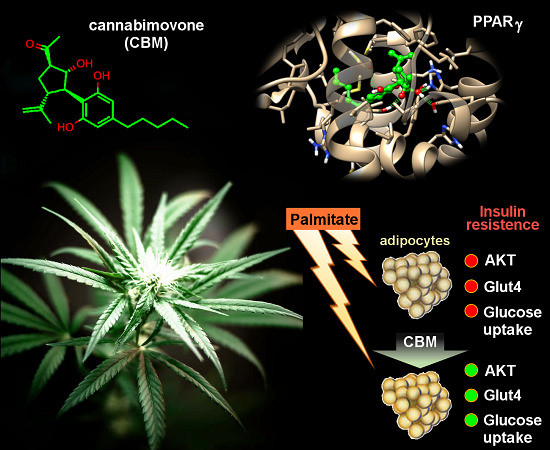
 “Phytocannabinoids (pCBs) are a large family of meroterpenoids isolated from the plant Cannabis sativa. Δ9-Tetrahydrocannabinol (THC) and cannabidiol (CBD) are the best investigated phytocannabinoids due to their relative abundance and interesting bioactivity profiles. In addition to various targets, THC and CBD are also well-known agonists of peroxisome proliferator-activated receptor gamma (PPARγ), a nuclear receptor involved in energy homeostasis and lipid metabolism. In the search of new pCBs potentially acting as PPARγ agonists, we identified cannabimovone (CBM), a structurally unique abeo-menthane pCB, as a novel PPARγ modulator via a combined computational and experimental approach. The ability of CBM to act as dual PPARγ/α agonist was also evaluated. Computational studies suggested a different binding mode toward the two isoforms, with the compound able to recapitulate the pattern of H-bonds of a canonical agonist only in the case of PPARγ. Luciferase assays confirmed the computational results, showing a selective activation of PPARγ by CBM in the low micromolar range. CBM promoted the expression of PPARγ target genes regulating the adipocyte differentiation and prevented palmitate-induced insulin signaling impairment. Altogether, these results candidate CBM as a novel bioactive compound potentially useful for the treatment of insulin resistance-related disorders.”
 “Psoriasis is a chronic inflammatory skin disease characterized by dysregulated keratinocyte differentiation, but oxidative stress also plays an important role in the pathogenesis of this disease.
 “Alzheimer’s disease (AD) is characterized by progressive cognitive decline and pathologically by the accumulation of amyloid-β (Aβ) and tau hyperphosphorylation causing neurodegeneration and neuroinflammation. Current AD treatments do not stop or reverse the disease progression, highlighting the need for more effective therapeutics.