
 “Cannabis sativa L. is a plant long used for its textile fibers, seed oil, and oleoresin with medicinal and psychoactive properties. It is the main source of phytocannabinoids, with over 100 compounds detected so far. In recent years, a lot of attention has been given to the main phytochemicals present in Cannabis sativa L., namely, cannabidiol (CBD) and Δ9-tetrahydrocannabinol (THC). Compared to THC, CBD has non-psychoactive effects, an advantage for clinical applications of anti-tumor benefits. The review is designed to provide an update regarding the multi-target effects of CBD in different types of cancer. The main focus is on the latest in vitro and in vivo studies that present data regarding the anti-proliferative, pro-apoptotic, cytotoxic, anti-invasive, anti-antiangiogenic, anti-inflammatory, and immunomodulatory properties of CBD together with their mechanisms of action. The latest clinical evidence of the anticancer effects of CBD is also outlined. Moreover, the main aspects of the pharmacological and toxicological profiles are given.”
Tag Archives: tetrahydrocannabinol
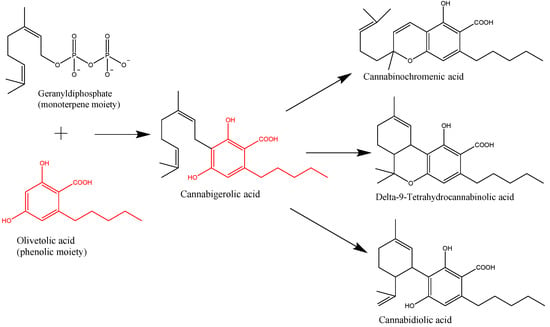
Δ9-THC and related cannabinoids suppress substance P- induced neurokinin NK1-receptor-mediated vomiting via activation of cannabinoid CB1 receptor.

“Δ9-THC suppresses cisplatin-induced vomiting through activation of cannabinoid CB1 receptors.
Cisplatin-evoked emesis is predominantly due to release of serotonin and substance P (SP) in the gut and the brainstem which subsequently stimulate their corresponding 5-HT3-and neurokinin NK1-receptors to induce vomiting. Δ9-THC can inhibit vomiting caused either by the serotonin precursor 5-HTP, or the 5-HT3 receptor selective agonist, 2-methyserotonin.
In the current study, we explored whether Δ9-THC and related CB1/CB2 receptor agonists (WIN55,212-2 and CP55,940) inhibit vomiting evoked by SP (50 mg/kg, i.p.) or the NK1 receptor selective agonist GR73632 (5 mg/kg, i.p.). Behavioral methods were employed to determine the antiemetic efficacy of cannabinoids in least shrews.
Our results showed that administration of varying doses of Δ9-THC (i.p. or s.c.), WIN55,212-2 (i.p.), or CP55,940 (i.p.) caused significant suppression of SP-evoked vomiting in a dose-dependent manner. When tested against GR73632, Δ9-THC also dose-dependently reduced the evoked emesis.
The antiemetic effect of Δ9-THC against SP-induced vomiting was prevented by low non-emetic doses of the CB1 receptor inverse-agonist/antagonist SR141716A (<10 mg/kg). We also found that the NK1 receptor antagonist netupitant can significantly suppress vomiting caused by a large emetic dose of SR141716A (20 mg/kg).
In sum, Δ9-THC and related cannabinoids suppress vomiting evoked by the nonselective (SP) and selective (GR73632) neurokinin NK1 receptor agonists via stimulation of cannabinoid CB1 receptors.”
https://www.ncbi.nlm.nih.gov/pubmed/31738934
https://www.sciencedirect.com/science/article/pii/S0014299919307587?via%3Dihub
Short- and Long-Term Effects of Cannabis on Headache and Migraine.
 “Use of cannabis to alleviate headache and migraine is relatively common, yet research on its effectiveness remains sparse.
We sought to determine whether inhalation of cannabis decreases headache and migraine ratings as well as whether gender, type of cannabis (concentrate vs. flower), THC, CBD, or dose contribute to changes in these ratings. Finally, we explored evidence for tolerance to these effects.
Archival data were obtained from StrainprintTM, a medical cannabis app that allows patients to track symptoms before and after using different strains and doses of cannabis. Latent change score models and multilevel models were used to analyze data from 12,293 sessions where cannabis was used to treat headache and 7,441 sessions where cannabis was used to treat migraine.
There were significant reductions in headache and migraine ratings after cannabis use.
Men reported larger reductions in headache than women and use of concentrates was associated with larger reductions in headache than flower. Further, there was evidence of tolerance to these effects.
Perspective: Inhaled cannabis reduces self-reported headache and migraine severity by approximately 50%. However, its effectiveness appears to diminish across time and patients appear to use larger doses across time, suggesting tolerance to these effects may develop with continued use.”
https://www.ncbi.nlm.nih.gov/pubmed/31715263
“Headache and migraine ratings were reduced by nearly 50% after using cannabis.”
https://www.jpain.org/article/S1526-5900(19)30848-X/fulltext
Inhibition of tremulous jaw movements in rats by memantine-Δ9 -tetrahydrocannabinol combination: neuroanatomical correlates.
 “Memantine and marijuana smoking have been previously found to inhibit tremor in parkinsonian patients, however, the observed effects were relatively weak. The tremorolytic efficacy of memantine and cannabinoid co-administration is unstudied.
This work aimed to evaluate antitremor activity of memantine-Δ9 -tetrahydrocannabinol combination; additionally, the involvement of some neuroanatomical structures in the regulation of the combination effect was evaluated.
EXPERIMENTAL APPROACH:
Haloperidol-induced tremulous jaw movements in rats were used as a model of parkinsonian-like tremor. To evaluate the role of central receptor systems in the drug effect, receptor-targeting agents were administered locally into certain brain areas.
KEY RESULTS:
Memantine and Δ9 -tetrahydrocannabinol alone were without effect, however, co-administration of the drugs significantly decreased number of haloperidol-induced jaw movements. The antitremor activity of the combination was antagonized (i) by injections of L-glutamate into the dorsal striatum, entopeduncular nucleus, substantia nigra pars reticulata, globus pallidus, supratrigeminal and trigeminal motor nuclei but not into the subthalamic and cuneiform nuclei; (ii) by injections of CGS 21680 into the ventrolateral striatum; (iii) by injections of bicuculline into the rostral part of the parvicellular reticular nucleus.
CONCLUSION AND IMPLICATIONS:
Memantine and Δ9 -tetrahydrocannabinol supra-additively inhibit haloperidol-induced tremulous jaw movements. Apparently, the co-administration of the drugs might be a new approach to the treatment of tremor. The presented results identify brain areas influencing parkinsonian-like tremor in rats; these data can help advance the development of novel treatments for repetitive involuntary movements.”
https://www.ncbi.nlm.nih.gov/pubmed/31696510
https://bpspubs.onlinelibrary.wiley.com/doi/abs/10.1111/bph.14914
“Memantine is a prescription drug used to treat moderate to severe confusion (dementia) related to Alzheimer’s disease. Memantine is available under the following different brand names: Namenda XR, and Namenda.” https://www.rxlist.com/consumer_memantine_namenda/drugs-condition.htm
A role for cannabinoids in the treatment of myotonia? Report of compassionate use in a small cohort of patients.
 “The symptomatic treatment of myotonia and myalgia in patients with dystrophic and non-dystrophic myotonias is often not satisfactory.
Some patients anecdotally report symptoms’ relief through consumption of cannabis.
METHODS:
A combination of cannabidiol and tetrahydrocannabinol (CBD/THC) was prescribed as compassionate use to six patients (four patients with myotonic dystrophy types 1 and 2, and 2 patients with CLCN1-myotonia) with therapy-resistant myotonia and myalgia. CBD/THC oil was administered on a low dose in the first 2 weeks and adjusted to a higher dose in the following 2 weeks. Myotonia behaviour scale (MBS), hand-opening time, visual analogue scales (VAS) for myalgia and myotonia, and fatigue and daytime sleepiness severity scale (FSS, ESS) were performed weekly to monitor treatment response.
RESULTS:
All patients reported an improvement of myotonia especially in weeks 3 and 4 of treatment: MBS improved of at least 2 points in all patients, the hand-opening time variously improved in 5 out of 6 patients. Chronic myalgia was reported by both DM2 patients at baseline, one of them experienced a significant improvement of myalgia under treatment. Some gastrointestinal complaints, as abdominal pain and diarrhoea, improved in 3 patients; however, 4 out of 6 patients reported new-onset constipation. No other relevant side effect was noticed.
CONCLUSIONS:
These first empirical results suggest a potentially beneficial role of CBD/THC in alleviating myotonia and should encourage further research in this field including a randomized-controlled trial on larger cohorts.”
https://www.ncbi.nlm.nih.gov/pubmed/31655890
https://link.springer.com/article/10.1007%2Fs00415-019-09593-6
“Myotonia is a medical term that refers to a neuromuscular condition in which the relaxation of a muscle is impaired.” https://www.ninds.nih.gov/Disorders/All-Disorders/Myotonia-Information-Page
Effects of Cannabis and Its Components on the Retina: A Systematic Review.
 “Cannabis is the most prevalent drug in the world and its consumption is growing. Cannabinoid receptors are present in the human central nervous system. Recent studies show evidence of the effects of cannabinoids on the retina, and synthesizing the results of these studies may be relevant for ophthalmologists. Thus, this review adopts standardized, systematic review methodology to investigate the effects of exposure to cannabis and components on the retina.
RESULTS:
We retrieved 495 studies, screened 229 studies, assessed 52 studies for eligibility, and included 16 studies for qualitative analysis. The cannabinoids most frequently investigated were delta-9-tetrahydrocannabinol (THC), abnormal cannabidiol, synthetic cannabinoid, and cannabidiol (CDB). The outcomes most studied were neuroretinal dysfunction, followed by vascular effects. The studies also included investigation of neuroprotective and anti-inflammatory effects and teratogenic effects.
CONCLUSIONS:
This review suggests that cannabinoids may have an important role in retinal processing and function.”
https://www.ncbi.nlm.nih.gov/pubmed/31648567
https://www.tandfonline.com/doi/abs/10.1080/15569527.2019.1685534?journalCode=icot20
Acute and residual effects of smoked cannabis: Impact on driving speed and lateral control, heart rate, and self-reported drug effects
 “Although driving under the influence of cannabis is increasingly common among young adults, little is known about residual effects on driver behavior.
This study examined acute and residual effects of smoked cannabis on simulated driving performance of young cannabis users.
Methods
In this double-blind, placebo-controlled, parallel-group randomized clinical trial, cannabis users (1-4 days/week) aged 19-25 years were randomized with a 2:1 allocation ratio to receive active (12.5% THC) or placebo (0.009% THC) cannabis in a single 750 mg cigarette. A median split (based on whole-blood THC concentrations at the time of driving) was used to divide the active group into low and high THC groups. Our primary outcome was simulated driving performance, assessed 30 minutes and 24 and 48 hours after smoking. Secondary outcomes included blood THC concentrations, subjective drug effects, and heart rate.
Results
Ninety-six participants were randomized, and 91 were included in the final analysis (30 high THC, 31 low THC, 30 placebo). Mean speed (but not lateral control) significantly differed between groups 30 minutes after smoking cannabis (p ≤ 0.02); low and high THC groups decreased their speed compared to placebo. Heart rate, VAS drug effect and drug high increased significantly immediately after smoking cannabis and declined steadily after that. There was little evidence of residual effects in any of the measures.
Conclusion
Acutely, cannabis caused decreased speed, increased heart rate, and increases in VAS drug effect and drug high. There was no evidence of residual effects on these measures over the two days following cannabis administration.
Smoked cannabis (12.5% THC) led to an acute decrease in speed in young adults. There was no clear effect of smoked cannabis on lateral control. There was little evidence of residual effects of smoked cannabis on driving performance.”
https://www.sciencedirect.com/science/article/abs/pii/S0376871619304181
‘Standard THC Units’: a proposal to standardise dose across all cannabis products and methods of administration.
 “Cannabis products are becoming increasingly diverse, and they vary considerably in concentrations of ∆9 -tetrahydrocannabinol (THC) and cannabidiol (CBD). Higher doses of THC can increase the risk of harm from cannabis, while CBD may partially offset some of these effects. Lower Risk Cannabis Use Guidelines currently lack recommendations based on quantity of use, and could be improved by implementing standard units. However, there is currently no consensus on how units should be measured or standardised across different cannabis products or methods of administration.
ARGUMENT:
Existing proposals for standard cannabis units have been based on specific methods of administration (e.g. joints) and these may not capture other methods including pipes, bongs, blunts, dabbing, vaporizers, vape pens, edibles and liquids. Other proposals (e.g. grams of cannabis) cannot account for heterogeneity in THC concentrations across different cannabis products. Similar to alcohol units, we argue that standard cannabis units should reflect the quantity of active pharmacological constituents (dose of THC). On the basis of experimental and ecological data, public health considerations, and existing policy we propose that a ‘Standard THC Unit’ should be fixed at 5 milligrams of THC for all cannabis products and methods of administration. If supported by sufficient evidence in future, consumption of Standard CBD Units might offer an additional strategy for harm reduction.
CONCLUSIONS:
Standard THC Units can potentially be applied across all cannabis products and methods of administration to guide consumers and promote safer patterns of use.”
The Effects of Dosage-Controlled Cannabis Capsules on Cancer-Related Cachexia and Anorexia Syndrome in Advanced Cancer Patients: Pilot Study.
 “Cancer-related cachexia and anorexia syndrome (CACS) is a common phenomenon in cancer patients. Cannabis has been suggested to stimulate appetite but research on this issue has yielded mixed results. The current study aimed to evaluate the effect of dosage-controlled cannabis capsules on CACS in advanced cancer patients.
Methods: The cannabis capsules used in this study contained two fractions of oil-based compounds. The planned treatment was 2 × 10 mg per 24 hours for six months of tetrahydrocannabinol (THC) 9.5 mg and cannabidiol (CBD) 0.5 mg. If patients suffered from side effects, dosage was reduced to 5 mg × 2 per day (THC 4.75 mg, CBD 0.25 mg). Participants were weighed on every physician visit. The primary objective of the study was a weight gain of ≥10% from baseline.
Results: Of 24 patients who signed the consent form, 17 started the cannabis capsules treatment, but only 11 received the capsules for more than two weeks. Three of six patients who completed the study period met the primary end-point. The remaining three patients had stable weights. In quality of life quaternaries, patients reported less appetite loss after the cannabis treatment (p=0.05). Tumor necrosis factor-α (TNF-α) levels decreased after the cannabis treatment but without statistical significance. According to patients’ self-reports, improvement in appetite and mood as well as a reduction in pain and fatigue was demonstrated.
Conclusions: Despite various limitations, this preliminary study demonstrated a weight increase of ≥10% in 3/17 (17.6%) patients with doses of 5mgx1 or 5mgx2 capsules daily, without significant side effects. The results justify a larger study with dosage-controlled cannabis capsules in CACS.”
https://www.ncbi.nlm.nih.gov/pubmed/31595793
“The primary objective of the study was a weight gain of ≥10% from baseline. Despite various limitations, the current preliminary study demonstrated a weight increase of ≥10% in 3/17 (17.6%) of the patients with doses of 5 mg × 1 or 5 mg × 2 capsules daily, without significant side effects.”
Δ9-Tetrahydrocannabinol Derivative-Loaded Nanoformulation Lowers Intraocular Pressure in Normotensive Rabbits.
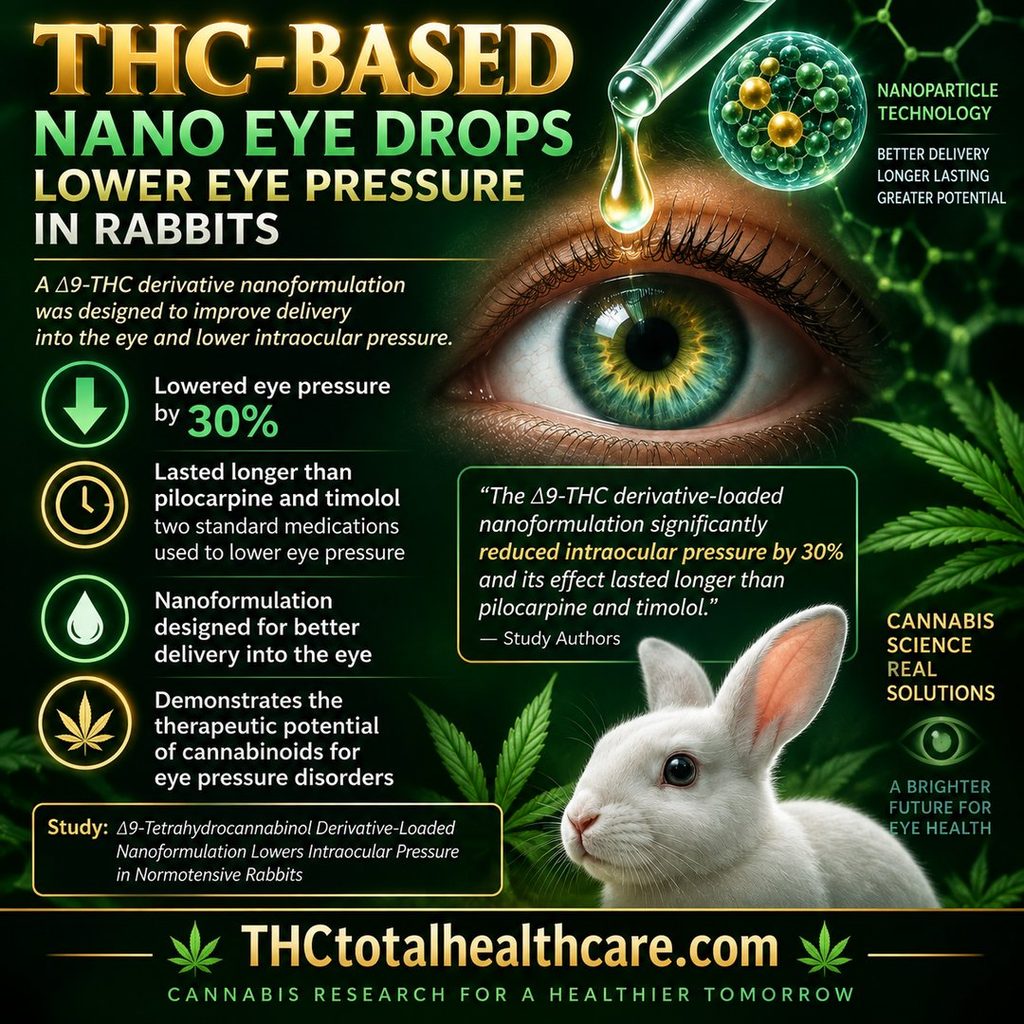
THC has been known for decades to lower intraocular pressure, which helped spark early interest in cannabinoids as a possible treatment for glaucoma. Researchers are now exploring whether newer delivery technologies can make that effect more practical and longer lasting. In this study, a nanoformulation containing a Δ9-THC derivative reduced eye pressure by 30% in normotensive rabbits and lasted longer than pilocarpine and timolol, two standard medications used to lower eye pressure.
“Δ9-Tetrahydrocannabinol-valine-hemisuccinate, a hydrophilic prodrug of Δ9-tetrahydrocannabinol, synthesized with the aim of improving the ocular bioavailability of the parent molecule, was investigated in a lipid-based nanoparticle dosage form for ocular delivery.
RESULTS:
A peak intraocular pressure (IOP) drop of 30% from baseline was observed in rabbits treated with SLNs loaded with Δ9-tetrahydrocannabinol-valine-hemisuccinate at 90 minutes. Treated eyes of rabbits receiving Δ9-tetrahydrocannabinol-valine-hemisuccinate SLNs had significantly lower IOP than untreated eyes until 360 minutes, whereas the group receiving the emulsion formulation showed a drop in IOP until 90 minutes only. In comparison to marketed pilocarpine and timolol maleate ophthalmic solutions, Δ9-tetrahydrocannabinol-valine-hemisuccinate SLNs produced a greater effect on IOP in terms of both intensity and duration. In terms of tissue concentrations, significantly higher concentrations of Δ9-tetrahydrocannabinol-valine-hemisuccinate were observed in iris-ciliary bodies and retina-choroid with SLNs.
CONCLUSION:
Δ9-Tetrahydrocannabinol-valine-hemisuccinate formulated in a lipid-based nanoparticulate carrier shows promise in glaucoma pharmacotherapy.
TRANSLATIONAL RELEVANCE:
Glaucoma therapies usually focus on decreased aqueous humor production and increased outflow. However, such therapy is not curative, and there lies a need in preclinical research to focus efforts on agents that not only affect the aqueous humor dynamics but also provide neuroprotection. Historically, there have been bench-scale studies looking at retinal ganglion cell death post-axonal injury. However, for a smooth translation of this in vitro activity to the clinic, animal models examining IOP reduction, i.e., connecting the neuroprotective activity to a measurable outcome in glaucoma management (IOP), need to be investigated. This study investigated the IOP reduction efficacy of cannabinoids for glaucoma pharmacotherapy in a normotensive rabbit model, bringing forth a new class of agents with the potential of IOP reduction and improved permeation to the back of the eye, possibly providing neuroprotective benefits in glaucoma management.”
https://www.ncbi.nlm.nih.gov/pubmed/31588378
“THC has been demonstrated to be effective in glaucoma management, helping to lower IOP in human subjects after smoking marijuana; however, the molecule fails to manifest a similar effect when dosed topically. This research explores molecular bioengineering and formulation-based strategies to improve the ocular bioavailability of THC, facilitating the molecule to translate into a dosage form capable of demonstrating a desired IOP-lowering effect even on topical application. These studies suggest that formulation development efforts along with prodrug derivatization can effectively improve the overall ocular bioavailability of THC. Thus, THC-VHS represents a potential new therapy option for the treatment and management of glaucoma by virtue of its superiority in lowering IOP when compared to antiholinergic and beta blockers, as studied in this model.”
Need this THC study explained? thcXplained.com