
 “The compounds present in cannabis have been in use for both recreational and medicinal purposes for many centuries. Changes in the legislation in South Africa have led to an increase in the number of people interested in using these compounds for self-medication. Many of them may approach their general practitioner as the first source of information about possible therapeutic effects. It is important that medical professionals are able to give patients the correct information. Cannabidiol (CBD) is one of the main compounds in cannabis plants, and there is evidence that it can successfully treat certain patients with epilepsy. This review looks at the most recent evidence on the use of CBD in the treatment of epilepsy and explores the mechanisms behind these beneficial effects.”
Author Archives: David Worrell
Cannabidiol induces osteoblast differentiation via angiopoietin1 and p38 MAPK
 “In this study, we report the potential of cannabidiol, one of the major cannabis constituents, for enhancing osteoblastic differentiation in U2OS and MG-63 cells.
Cannabidiol increased the expression of Angiopoietin1 and the enzyme activity of alkaline phosphatase in U2OS and MG-63. Invasion and migration assay results indicated that the cell mobility was activated by cannabidiol in U2OS and MG-63. Western blotting analysis showed that the expression of tight junction related proteins such as Claudin1, Claudin4, Occuludin1, and ZO1 was increased by cannabidiol in U2OS and MG-63.
Alizarin Red S staining analysis showed that calcium deposition and mineralization was enhanced by cannabidiol in U2OS and MG-63. Western blotting analysis indicated that the expression of osteoblast differentiation related proteins such as distal-less homeobox 5, bone sialoprotein, osteocalcin, type I collagen, Runt-related transcription factor 2 (RUNX2), osterix (OSX), and alkaline phosphatase was time dependently upregulated by cannabidiol in U2OS and MG-63. Mechanistically, cannabidiol-regulated osteoblastic differentiation in U2OS and MG-63 by strengthen the protein-protein interaction among RUNX2, OSX, or the phosphorylated p38 mitogen-activated protein kinase (MAPK).
In conclusion, cannabidiol increased Angiopoietin1 expression and p38 MAPK activation for osteoblastic differentiation in U2OS and MG-63 suggesting that cannabidiol might provide a novel therapeutic option for the bone regeneration.”
Anticonvulsive Properties of Cannabidiol in a Model of Generalized Seizure Are Transient Receptor Potential Vanilloid 1 Dependent
 “Highly purified cannabidiol (CBD) (approved as Epidiolex® in the United States) has demonstrated efficacy with an acceptable safety profile in patients with Lennox-Gastaut or Dravet syndrome in four randomized controlled trials. CBD possesses affinity for many target classes with functional effects relevant to the pathophysiology of many disease types, including epilepsy.
Although the mechanism of action of CBD underlying the reduction of seizures in humans is unknown, transient receptor potential vanilloid 1 (TRPV1) represents a plausible target because (1) CBD activates and then desensitizes TRPV1, (2) TRPV1 is overexpressed in models of temporal lobe epilepsy and patients with epilepsy, (3) and TRPV1 modulates neuronal excitability.
Methods: To investigate a potential role of TRPV1 in the anticonvulsive effects of CBD, the effect of CBD on seizure threshold was assessed using a mouse maximal electroshock threshold model of generalized seizure in TRPV1 knockout and wildtype mice. The dose dependence of the CBD effect was determined and compared with that of the positive comparator diazepam and vehicle.
Results: At 50 and 100 mg/kg, CBD significantly (p<0.0001) increased seizure threshold in wildtype mice compared with TRPV1 knockout and vehicle controls. This effect was observed only at 100 mg/kg in TRPV1 knockout mice compared with knockout vehicle mice, in which gene deletion partially attenuated the CBD-increased seizure threshold. The effect of high-dose CBD in wildtype mice was nevertheless significantly different from vehicle-treated TRPV1 knockout mice (p<0.0001). Bioanalysis confirmed that genotype-specific differential brain exposure to CBD was not responsible for the observed effect on seizure threshold.
Conclusion: These data strongly implicate TRPV1 in the potential mechanisms of action for the anticonvulsive effects of CBD. The partial inhibition of the anticonvulsive effect of high-dose CBD in TRPV1 knockout mice may indicate the involvement of targets other than TRPV1. Further characterization of TRPV1 in the anticonvulsive effect of CBD in validated models of seizure is warranted, as is pharmacological investigation of the molecular interaction between CBD and TRPV1.”
The Antimicrobial Activity of Cannabinoids
 “A post-antibiotic world is fast becoming a reality, given the rapid emergence of pathogens that are resistant to current drugs. Therefore, there is an urgent need to discover new classes of potent antimicrobial agents with novel modes of action.
Cannabis sativa is an herbaceous plant that has been used for millennia for medicinal and recreational purposes. Its bioactivity is largely due to a class of compounds known as cannabinoids.
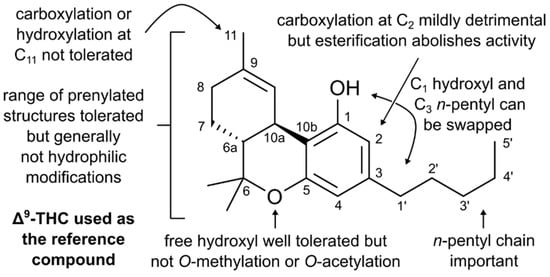
Recently, these natural products and their analogs have been screened for their antimicrobial properties, in the quest to discover new anti-infective agents. This paper seeks to review the research to date on cannabinoids in this context, including an analysis of structure-activity relationships. It is hoped that it will stimulate further interest in this important issue.”
https://pubmed.ncbi.nlm.nih.gov/32668669/
https://www.mdpi.com/2079-6382/9/7/406
Cannabinoids-Promising Antimicrobial Drugs or Intoxicants with Benefits?
“Novel antimicrobial drugs are urgently needed to counteract the increasing occurrence ofbacterial resistance.
Extracts of Cannabis sativa have been used for the treatment of several diseases since ancient times. However, its phytocannabinoid constituents are predominantly associated with psychotropic effects and medical applications far beyond the treatment of infections.
It has been demonstrated that several cannabinoids show potent antimicrobial activity against primarily Grampositive bacteria including methicillin-resistant Staphylococcus aureus (MRSA).
As first in vivo efficacy has been demonstrated recently, it is time to discuss whether cannabinoids are promising antimicrobial drug candidates or overhyped intoxicants with benefits.”
https://pubmed.ncbi.nlm.nih.gov/32498408/
https://www.mdpi.com/2079-6382/9/6/297
Association between marijuana use and electrocardiographic abnormalities by middle age The Coronary Artery Risk Development in Young Adults (CARDIA) Study

“Aims
To evaluate the prevalence of electrocardiogram (ECG) abnormalities in marijuana users as an indirect measure of subclinical cardiovascular disease (CVD).
Findings
Among the 2,585 participants with an ECG at Year 20, mean age was 46, 57% were women, 45% were black. 83% had past exposure to marijuana and 11% were using marijuana currently. One hundred and seventy‐three participants (7%) had major abnormalities and 944 (37%) had minor abnormalities. Comparing current with never use in multivariable‐adjusted models, the OR for major ECG abnormalities was 0.60 (95% CI: 0.32 to 1.15) and for minor ECG abnormalities 1.21 (95% CI: 0.87 to 1.68). Results did not change after stratifying by sex and race.
Cumulative marijuana use was not associated with ECG abnormalities.
Conclusion
In a middle‐aged US population, lifetime cumulative and occasional current marijuana use were not associated with increases in electrocardiogram abnormalities. This adds to the growing body of evidence that occasional marijuana use and cardiovascular disease events and markers of subclinical atherosclerosis are not associated.”
https://onlinelibrary.wiley.com/doi/abs/10.1111/add.15188?af=R
“Using cannabis not associated with heart abnormalities at middle age: study” https://leaderpost.com/wellness/using-cannabis-not-associated-with-heart-abnormalities-at-middle-age-study/wcm/a43cafba-42b3-4b74-9ea7-50a2cf0d62e3/
Long Term Delta-9-tetrahydrocannabinol Administration Inhibits Proinflammatory Responses in Minor Salivary Glands of Chronically Simian Immunodeficieny Virus Infected Rhesus Macaques
 “HIV/SIV-associated oral mucosal disease/dysfunction (HAOMD) (gingivitis/periodontitis/salivary adenitis) represents a major comorbidity affecting HIV patients on anti-retroviral therapy.
Using a systems biology approach, we investigated molecular changes (mRNA/microRNA) underlying HAOMD and its modulation by phytocannabinoids (delta-9-tetrahydrocannabinol (∆9-THC)) in uninfected (n = 5) and SIV-infected rhesus macaques untreated (VEH-untreated/SIV; n = 7) or treated with vehicle (VEH/SIV; n = 3) or ∆9-THC (THC/SIV; n = 3).
Relative to controls, fewer mRNAs were upregulated in THC/SIV compared to VEH-untreated/SIV macaques. Gene enrichment analysis showed differential enrichment of biological functions involved in anti-viral defense, Type-I interferon, Toll-like receptor, RIG-1 and IL1R signaling in VEH-untreated/SIV macaques. We focused on the anti-ER-stress anterior gradient-2 (AGR2), epithelial barrier protecting and anti-dysbiotic WAP Four-Disulfide Core Domain-2 (WFDC2) and glucocorticoid-induced anti-inflammatory TSC22D3 (TSC22-domain family member-3) that were significantly downregulated in oropharyngeal mucosa (OPM) of VEH-untreated/SIV macaques.
All three proteins localized to minor salivary gland acini and secretory ducts and showed enhanced and reduced expression in OPM of THC/SIV and VEH/SIV macaques, respectively. Additionally, inflammation associated miR-21, miR-142-3p and miR-29b showed significantly higher expression in OPM of VEH-untreated/SIV macaques. TSC22D3 was validated as a target of miR-29b.
These preliminary translational findings suggest that phytocannabinoids may safely and effectively reduce oral inflammatory responses in HIV/SIV and other (autoimmune) diseases.”
Receptor Mechanisms Mediating the Anti-Neuroinflammatory Effects of Endocannabinoid System Modulation in a Rat Model of Migraine
“Calcitonin gene-related peptide (CGRP), substance-P and dural mast cells are main contributors in neurogenic inflammation underlying migraine pathophysiology.
Modulation of endocannabinoid system attenuates migraine pain, but its mechanisms of action remains unclear.
We investigated receptor mechanisms mediating anti-neuroinflammatory effects of endocannabinoid system modulation in in-vivo migraine model and ex-vivo hemiskull preparations in rats.
Selective ligands targeting CB1 and CB2 receptors may provide novel and effective treatment strategies against migraine.”
Phytocannabinoids: Origins and Biosynthesis
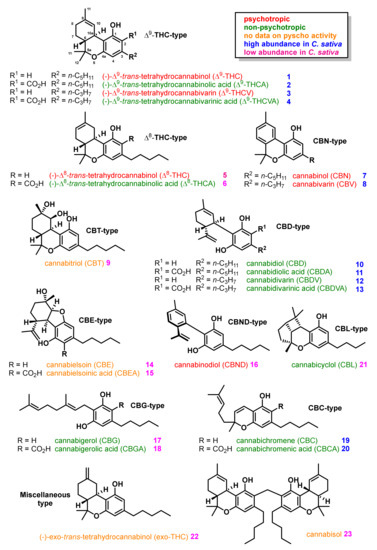
 “Phytocannabinoids are bioactive natural products found in some flowering plants, liverworts, and fungi that can be beneficial for the treatment of human ailments such as pain, anxiety, and cachexia. Targeted biosynthesis of cannabinoids with desirable properties requires identification of the underlying genes and their expression in a suitable heterologous host. We provide an overview of the structural classification of phytocannabinoids based on their decorated resorcinol core and the bioactivities of naturally occurring cannabinoids, and we review current knowledge of phytocannabinoid biosynthesis in Cannabis, Rhododendron, and Radula species. We also highlight the potential in planta roles of phytocannabinoids and the opportunity for synthetic biology approaches based on combinatorial biochemistry and protein engineering to produce cannabinoid derivatives with improved properties.”
https://pubmed.ncbi.nlm.nih.gov/32646718/
https://linkinghub.elsevier.com/retrieve/pii/S1360138520301874
Impact of Cannabis-Based Medicine on Alzheimer’s Disease by Focusing on the Amyloid β- Modifications: A Systematic Study
 “Deposition of amyloid-beta (Aβ) peptide in the brain is the leading source of the onset and progression of Alzheimer’s disease (AD). Recent studies have suggested that anti-amyloidogenic agents may be a suitable therapeutic strategy for AD.
Aim: The current review was proposed to address the beneficial effects of cannabis-based drugs for the treatment of AD, focusing primarily on Aβ modifications.
Result: A total of 17 studies were identified based on the inclusion criteria; however, nine studies qualified for this systematic review. The maximum and minimum cannabis dosages, mostly CBD and THC in animal studies, were 0.75 and 50 mg/kg, respectively. Cannabis (CBD and THC) was injected for 10 to 21 days. The findings of the 9 articles indicated that cannabis-based drugs might modulate Aβ modifications in several AD models.
Conclusion: Our findings establish that cannabis-based drugs inhibited the progression of AD by modulating Aβ modifications.”